SWP Cardan Drive Shaft
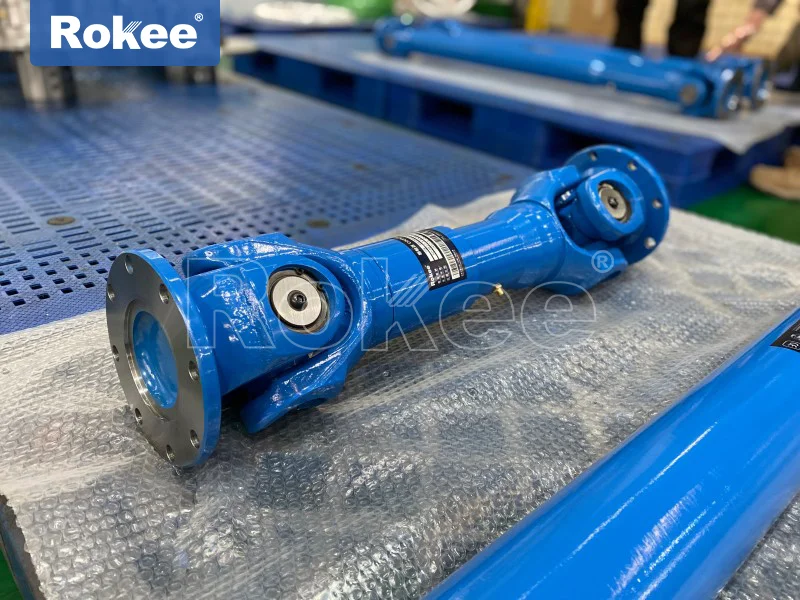
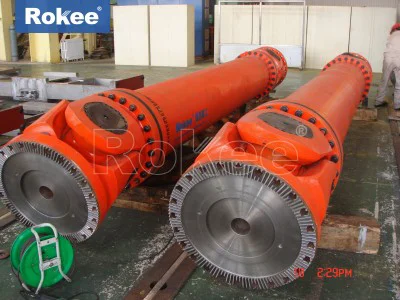
The SWP cardan drive shaft is a core mechanical transmission component specially engineered for heavy-duty industrial power transmission scenarios, serving as a critical linkage for torque and rotational motion transfer between non-collinear and angularly offset shafts. Distinguished from ordinary universal drive shafts, this type of cardan shaft features a robust integrated structural design, outstanding load-bearing performance and superior misalignment compensation capability, making it adaptable to complex and harsh operating environments that require stable high-torque transmission. Its unique mechanical structure allows it to effectively offset angular deviations and minor axial displacements generated during equipment operation, solving the transmission instability problem caused by installation errors, mechanical vibration and operational deformation of industrial machinery. Widely applied in heavy industrial equipment such as metallurgical rolling machinery, forging equipment and large conveying systems, the SWP cardan drive shaft has become an indispensable part of modern heavy industry production lines by virtue of its high transmission efficiency, strong durability and reliable continuous operation performance.
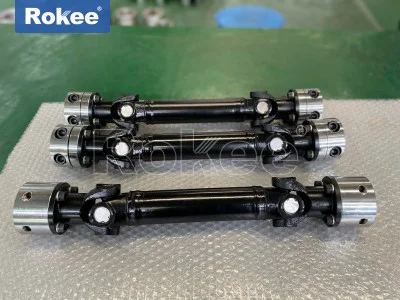
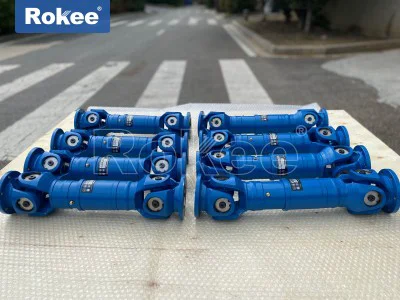
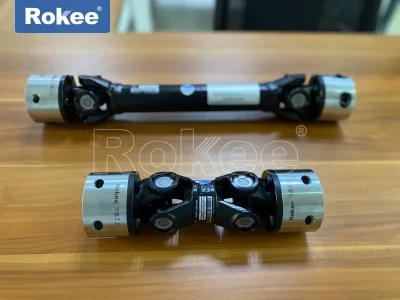
At the core of the SWP cardan drive shaft’s superior performance lies its sophisticated and optimized structural composition, which is scientifically designed to balance mechanical strength, transmission flexibility and operational stability. The entire structure mainly consists of precision-processed cross shaft assemblies, high-rigidity fork frames, reinforced bearing units and integrated flange connection structures, with each component tightly matched to form a stable spatial motion transmission system. The cross shaft, as the key force-bearing and motion-converting part, adopts an integral forging process with uniform material density and excellent mechanical toughness, enabling it to withstand instantaneous impact loads and long-term cyclic torque in heavy-duty operation. The vertically distributed shaft ends of the cross shaft form mutually perpendicular kinematic pairs with the bearing structures on both fork frames, realizing multi-plane rotational freedom. This structural layout allows the drive shaft to maintain continuous and stable power output even when the connected shafts produce obvious angular deflection, effectively avoiding transmission interruption or power loss. Meanwhile, the split bearing seat design simplifies structural assembly while improving the overall rigidity of the shaft body, reducing structural deformation under high-load working conditions and laying a solid foundation for long-term stable operation.
The working principle of the SWP cardan drive shaft is based on the spatial motion characteristics of universal joint transmission, achieving efficient torque and motion transfer between misaligned power shafts through the cooperative operation of internal components. In the actual working process, the driving end fork frame rotates synchronously with the power input shaft and drives the cross shaft to perform three-dimensional spatial rotation. Benefiting from the flexible matching between the cross shaft and the bearings, the cross shaft can adaptively adjust its motion angle according to the offset state of the two connected shafts, and further drive the driven end fork frame and the load shaft to rotate synchronously. Unlike rigid transmission components that only support coaxial rotation, this working mechanism enables the SWP cardan drive shaft to adapt to a certain range of angular misalignment and axial displacement, perfectly coping with the position changes of mechanical parts caused by equipment vibration, thermal expansion and mechanical wear during long-term operation. Even in the state of continuous variable-angle rotation, the drive shaft can maintain consistent transmission ratio and stable power output, avoiding the periodic torque fluctuation and mechanical jitter common in ordinary transmission shafts, thus ensuring the precise and efficient operation of the entire mechanical transmission system.
One of the most prominent advantages of the SWP cardan shaft is its excellent heavy-load resistance and impact resistance, which makes it stand out in high-intensity industrial transmission scenarios. Optimized for heavy-duty working conditions, its overall structural strength and component load-bearing limits are significantly improved compared with conventional universal drive shafts. The high-strength alloy materials used for the shaft body and core components have excellent compression resistance, torsion resistance and fatigue resistance, enabling the drive shaft to operate stably under long-term high-torque load without permanent deformation or structural damage. In industrial production processes, mechanical equipment often generates instantaneous impact loads during start-up, shutdown and load switching, which easily cause fatigue damage to ordinary transmission parts. The SWP cardan drive shaft’s reasonable structural stress distribution can effectively buffer and disperse instantaneous impact force, reducing the pressure on local components. In addition, its compact and integrated structural design avoids loose connection and structural shaking under heavy loads, maintaining high transmission efficiency all the time. This reliable heavy-load performance ensures the continuous and stable operation of large-scale heavy industrial equipment and reduces production interruptions caused by transmission component failure.
The SWP cardan drive shaft possesses remarkable misalignment compensation capability, which is the key to its wide adaptability in complex industrial working environments. In actual industrial equipment installation and operation, absolute coaxial alignment between power shafts is difficult to achieve due to manual installation errors, equipment foundation settlement, thermal deformation of metal parts and long-term operational wear. Ordinary rigid transmission parts are extremely sensitive to such misalignment, which is prone to cause increased transmission resistance, component wear and even equipment failure. The SWP cardan drive shaft is designed with a large-angle compensation structure, which can effectively adapt to angular offset between connected shafts and automatically compensate for minor axial displacement generated during equipment operation. This active compensation function eliminates the adverse effects of shaft misalignment on the transmission system, reduces the extra mechanical friction and torsional stress caused by position deviation, and greatly improves the fault tolerance of the mechanical system. Whether it is stable low-speed heavy-load operation or continuous high-speed rotating operation, the drive shaft can always maintain the optimal transmission state, ensuring the synchronization and accuracy of power transmission.
In terms of daily operation and maintenance, the SWP cardan drive shaft is designed with excellent maintainability and operational economy, which reduces the comprehensive use cost of industrial equipment. Its standardized and modular component structure realizes the separation and independent replacement of vulnerable parts, avoiding the overall replacement of the drive shaft caused by local component damage. The split bearing seat structure greatly simplifies the disassembly, inspection and lubrication maintenance work, allowing maintenance personnel to quickly complete daily overhaul and fault handling without disassembling the entire transmission system. The core moving parts are equipped with high-precision wear-resistant bearings and sealed structures, which can effectively isolate dust, moisture and industrial impurities in the working environment, reduce internal component wear and corrosion, and extend the service cycle of the drive shaft. Meanwhile, the optimized internal friction structure reduces operational energy consumption and mechanical loss during power transmission, improving the energy utilization rate of equipment. Long-term operational practice shows that the drive shaft has low failure rate and long maintenance cycle, which can effectively reduce equipment downtime and maintenance labor costs, bringing stable economic benefits to industrial production.
The application scenarios of the SWP cardan drive shaft cover a wide range of heavy industrial fields, becoming a universal core transmission component for large mechanical equipment. In the metallurgical industry, it is widely installed in rolling mills, continuous casting machines and pipe piercing equipment, undertaking the high-torque transmission task between power motors and rolling components, adapting to the high-load and continuous operation characteristics of metallurgical production. In heavy forging and stamping machinery, the drive shaft stably transmits power for forging tables and stamping components, resisting frequent impact loads generated by mechanical processing. It also plays an irreplaceable role in large-scale conveying equipment, mining machinery and engineering machinery, solving the power transmission problems of misaligned and spatially offset shafts in complex mechanical structures. Thanks to its strong environmental adaptability, it can operate stably in high-temperature, dusty and high-intensity working environments, fully meeting the rigorous operational requirements of modern heavy industry for transmission components.
With the continuous upgrading of modern industrial manufacturing technology, the performance optimization and technical iteration of SWP cardan drive shafts are also advancing steadily. Current optimization directions mainly focus on material upgrading, structural refinement and operational intelligence adaptation, further improving the comprehensive performance of products for more extreme industrial working conditions. New high-strength wear-resistant alloy materials are gradually applied to core components, further enhancing fatigue resistance and service life under ultra-heavy load and frequent impact conditions. The structural design is continuously optimized to reduce overall weight while ensuring structural strength, improving the dynamic balance performance of the drive shaft during high-speed operation and reducing operational vibration and noise. In addition, the structural compatibility of the drive shaft is continuously improved to adapt to more types of large-scale integrated mechanical equipment. As industrial production becomes more intelligent, efficient and high-precision, the SWP cardan drive shaft will continue to be optimized in transmission stability, environmental adaptability and maintenance convenience, providing more reliable power transmission support for the development of modern heavy industry.