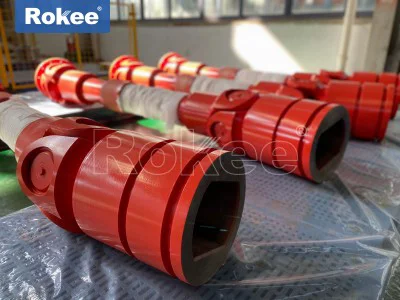
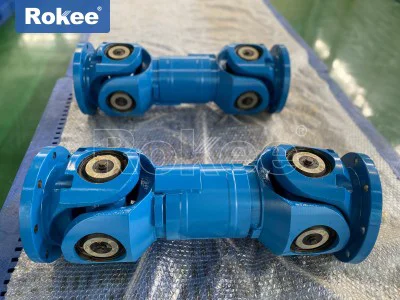
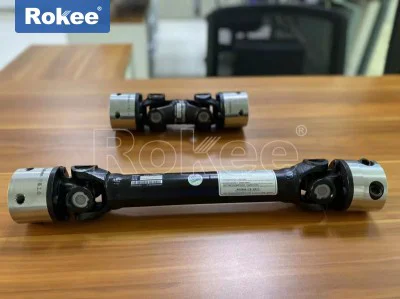
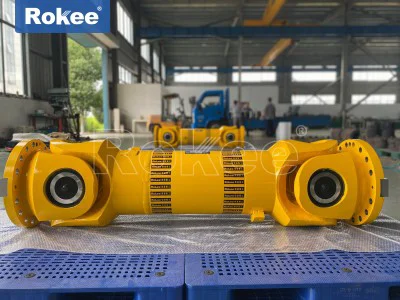
High Torque Universal Joint Coupling
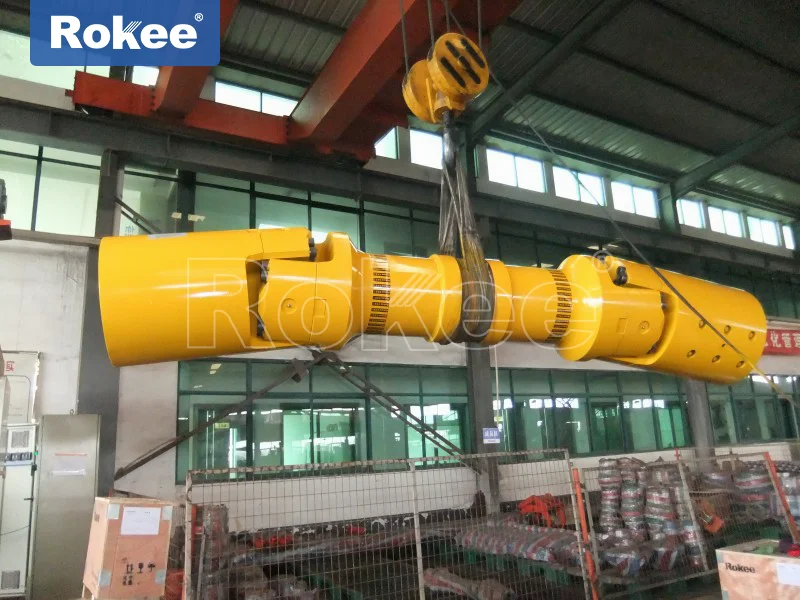
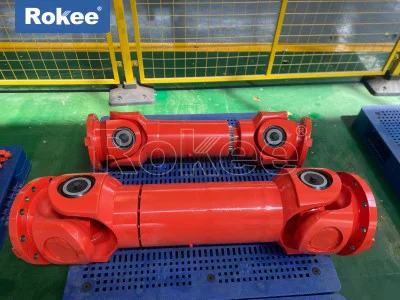
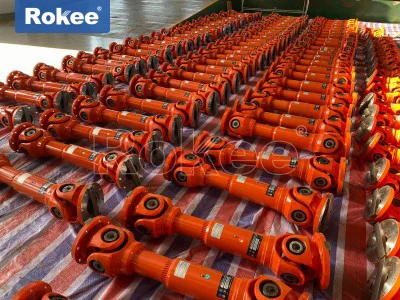
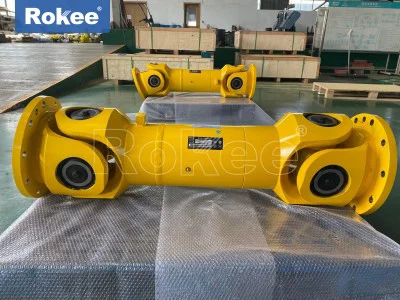
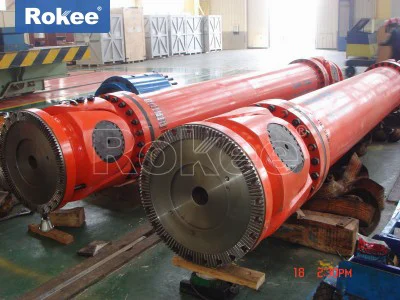
High torque universal joint coupling is a core flexible transmission component designed for heavy-duty mechanical systems, dedicated to stable torque transmission under complex operating conditions with shaft misalignment and heavy load fluctuations. Unlike conventional rigid couplings that can only work with precise shaft alignment, this specialized coupling integrates flexible articulation structural design, enabling efficient power transfer while compensating for angular, axial, and radial displacements between connected shafts. It features exceptional load-bearing capacity, excellent torsional rigidity, and outstanding operational stability, making it widely applicable in heavy industrial machinery, transportation equipment, and large mechanical transmission systems. With high transmission efficiency and strong resistance to torsional shock and vibration, it effectively solves common transmission problems such as power loss, component wear, and operational jitter caused by shaft installation deviations and dynamic operation offsets, serving as an indispensable key component for reliable long-term operation of high-load mechanical transmission systems.
The core structural composition of high torque universal joint coupling determines its superior heavy-load transmission performance, with every component optimized for high-torque working scenarios. The overall structure mainly consists of double yoke joints, a cross-shaped spider shaft, and high-precision roller bearing assemblies, forming a spatial flexible connection mechanism with multi-directional pivoting capabilities. The yoke joints adopt integrated forging molding technology, which enhances overall structural density and mechanical strength, effectively avoiding deformation or cracking under long-term high-torque torsion. The cross spider shaft, as the central force-transmitting component, bears alternating torque and multi-angle shear force during operation, so it is processed with high-strength alloy materials and special heat treatment to improve toughness and fatigue resistance. The built-in roller bearings adopt low-friction structural design, which reduces rotational resistance while evenly dispersing concentrated pressure generated by heavy torque. All connecting parts are equipped with locking and limiting structures to prevent component displacement or loosening during high-speed rotation and heavy-load operation, ensuring the overall structural stability of the coupling in complex working environments.
The working principle of high torque universal coupling is based on spatial linkage kinematics and flexible torque transmission logic, realizing continuous and stable power output under misalignment conditions. When the driving shaft rotates, the rotational torque is first transmitted to the active yoke, which drives the cross spider shaft to perform synchronous rotational motion. Relying on the orthogonal pivoting structure of the cross shaft, the motion can be flexibly transmitted to the driven yoke and the connected driven shaft, even when there is a certain angular deviation between the two shafts. During the operation process, the bearing assembly between the cross shaft and the yoke can freely rotate and pivot within a reasonable angle range, automatically adapting to real-time changes in shaft displacement caused by equipment operation, vibration, or thermal expansion and contraction. Different from ordinary universal joints, the high-torque version optimizes the force transmission path, making the torque distribution more uniform in each rotation cycle, effectively reducing periodic torque fluctuation and rotational dead zone. This working mechanism ensures that the coupling maintains high-precision and high-efficiency power transmission without being restricted by minor shaft alignment errors.
High torque universal joint coupling boasts remarkable performance advantages in load capacity and transmission efficiency, which are far superior to traditional coupling products in heavy-duty scenarios. In terms of torque bearing capacity, its optimized structural layout and high-strength material configuration enable it to withstand continuous heavy torsional loads and instantaneous impact torque, adapting to frequent start-stop and variable-load operating conditions of large mechanical equipment. Its transmission efficiency can remain at an extremely high level in long-term operation, with minimal energy loss during torque conversion and transmission, effectively improving the overall energy utilization rate of mechanical systems. In terms of operational stability, the flexible connection structure can effectively absorb and buffer mechanical vibration and torsional shock generated during equipment operation, reducing the vibration amplitude of the transmission system and avoiding resonance problems that may cause component damage. Additionally, it has excellent environmental adaptability, being able to maintain stable working performance in high-temperature, dusty, and high-vibration industrial environments, without performance attenuation caused by harsh external conditions, ensuring continuous and reliable operation of mechanical transmission systems.
The material selection and processing technology of high torque universal joint coupling are key supports for its durable and high-performance operation, with strict standards throughout the production and manufacturing process. The main load-bearing components such as yoke joints and cross shafts are made of high-quality alloy steel materials with high hardness, high toughness, and strong wear resistance, which can resist long-term torsion, friction, and impact damage. After rough forging and finish machining, these core components undergo carburizing, quenching, and tempering composite heat treatment processes to further improve surface hardness and internal toughness, achieving a perfect balance between wear resistance and impact resistance. The precision bearing parts are processed through fine grinding and surface strengthening treatment to reduce internal friction coefficient and improve wear resistance and service life. All assembly surfaces adopt high-precision machining technology to ensure the matching accuracy between components, eliminate assembly gaps, and avoid abnormal noise and wear caused by poor matching. The surface of the coupling is also treated with anti-rust and anti-corrosion coating, which delays oxidation and corrosion of materials in industrial environments and extends the overall service cycle of the equipment.
High torque universal joint coupling has a wide range of application scenarios, covering almost all mechanical fields that require heavy-load flexible transmission. In heavy industrial manufacturing, it is widely used in large mining machinery, metallurgical equipment, and engineering machinery, providing stable power transmission for heavy-duty operating mechanisms that bear huge loads and frequent dynamic displacement. In mechanical processing and automation industries, it is applied to large transmission equipment and automated production lines, compensating for shaft misalignment caused by equipment assembly errors and operational deformation to ensure the precision and stability of mechanical movement. In transportation and power machinery fields, it serves as a key transmission component for large power equipment, adapting to high-speed rotation and variable torque working conditions. Moreover, it also plays an important role in agricultural machinery, port handling equipment, and large fan systems, solving various flexible transmission problems under complex working conditions. Its strong scenario adaptability makes it a universal core transmission component in the heavy machinery industry.
Reasonable installation and standardized maintenance are crucial to giving full play to the performance of high torque universal joint coupling and extending its service life. During installation, it is necessary to ensure that the shaft alignment error is controlled within the allowable working range of the coupling, avoid excessive angular and axial displacement that exceeds the design limit, and ensure that the connecting parts are firmly fixed to prevent loose assembly. The installation position should avoid long-term forced extrusion and abnormal stress concentration, so that the coupling can operate in a balanced force state. In daily maintenance, regular inspection of component wear, bearing flexibility, and connection tightness is required to timely detect and solve minor wear and loose faults. It is necessary to regularly replace the lubricating grease inside the bearing assembly to maintain low-friction operation of moving parts and reduce wear and energy consumption. Meanwhile, the surface anti-corrosion layer should be checked regularly, and damaged coating should be repaired in time to avoid material corrosion. Standardized maintenance can effectively avoid early failure of the coupling, maintain stable transmission performance for a long time, and reduce equipment operation and maintenance costs.
With the continuous upgrading of modern heavy machinery and equipment towards high power, high precision, and high stability, the technical optimization and development of high torque universal joint coupling are constantly advancing. The current development trend focuses on structural lightweight and load maximization, realizing higher torque bearing capacity with more compact structural design to adapt to the miniaturization and integration development of mechanical equipment. At the same time, intelligent optimization and durability improvement have become important development directions. Through finite element analysis and structural simulation technology, the internal force distribution of the coupling is further optimized, eliminating structural stress concentration points and improving fatigue resistance and service life. New high-performance wear-resistant and anti-corrosion materials are gradually applied to production, enhancing the environmental adaptability and operational reliability of the product. In addition, the modular design concept is continuously promoted, making the coupling more convenient for installation, disassembly, and replacement, improving equipment maintenance efficiency. These technological advancements will further expand the application scope of high torque universal joint coupling and meet the increasingly stringent transmission performance requirements of modern heavy-duty mechanical systems.