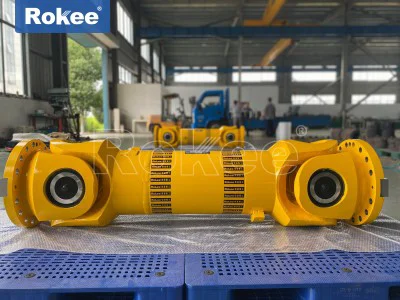
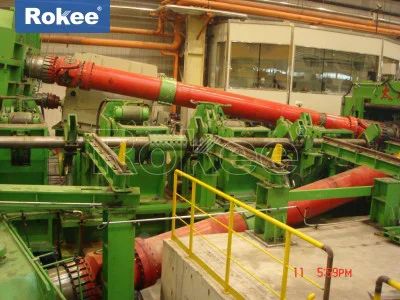
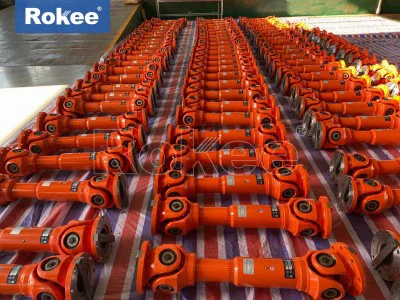
Universal Joint Coupling For Rolling Mill
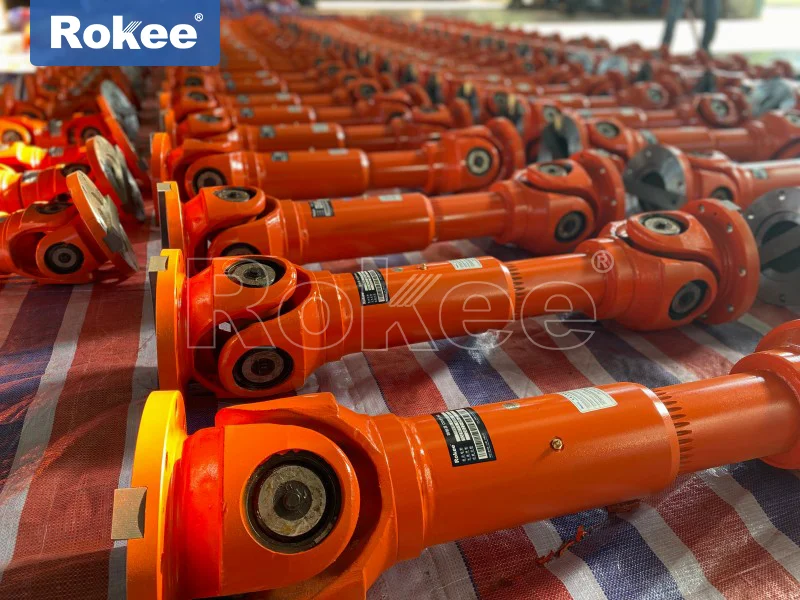
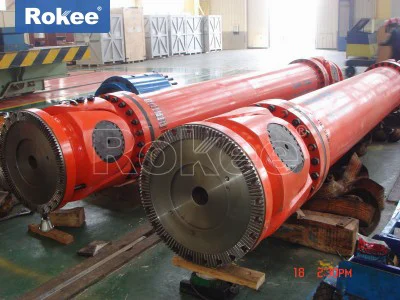
Universal joint couplings serve as the core transmission components of rolling mill systems, undertaking the critical task of torque and rotational power transmission between power units and rolling rolls in metallurgical rolling production. Unlike ordinary transmission couplings, these professional coupling devices are specially optimized to adapt to the extreme and variable working conditions of rolling mills, featuring outstanding angular displacement compensation, heavy-load resistance and vibration buffering performance. In the continuous rolling process of metal materials including steel and aluminum, rolling mills often generate axis deviation, thermal deformation and mechanical vibration due to fluctuating rolling force, high-temperature operation and frequent roll adjustment. Universal joint couplings can effectively adapt to these dynamic changes, maintain stable power output, avoid transmission stagnation and equipment abrasion caused by shaft misalignment, and greatly improve the overall operational stability and production continuity of rolling mill equipment. They are applicable to both hot rolling and cold rolling processes, covering rough rolling, intermediate rolling and finish rolling working sections, and have become an indispensable foundational component for high-efficiency and low-consumption rolling production.
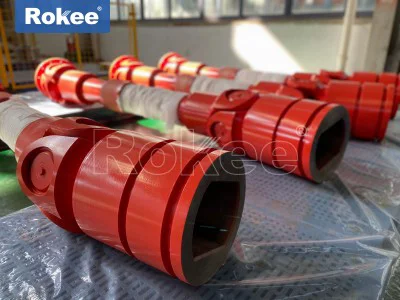
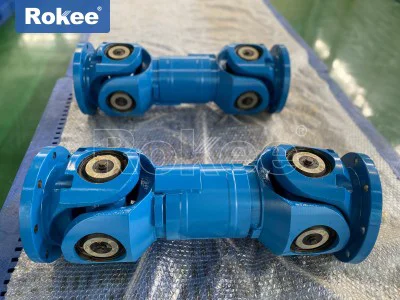
The fundamental working principle of universal couplings for rolling mills centers on the flexible transmission structure composed of cross shafts, bearing assemblies and joint forks, which enables stable power transmission between two shafts with angular deviation. The unique structural design allows the coupling to tolerate a large range of angular misalignment during operation, far exceeding the adaptive capacity of conventional gear couplings and rigid couplings. In the actual rolling process, the relative position between the rolling mill’s power input shaft and the roll output shaft is not fixed. Factors such as thermal expansion of metal equipment after long-term high-temperature operation, fine adjustment of roll spacing during production switching, and slight mechanical deformation under heavy load will cause continuous tiny changes in shaft angle and position. The universal joint coupling can flexibly adapt to these real-time changes without generating additional transmission resistance or mechanical stress. This flexible transmission mode ensures that torque can be efficiently and continuously transmitted even in non-coaxial working states, fundamentally solving the problem of unstable power transmission caused by axis offset in traditional rigid transmission structures and laying a solid foundation for the smooth operation of rolling mill equipment under complex working conditions.
Working condition adaptability is the core advantage of rolling mill universal joint couplings, which are professionally designed to cope with the harsh and changeable operating environment of metallurgical rolling workshops. Rolling mill production is characterized by long-term continuous operation, frequent load fluctuation and alternating impact load. During hot rolling production, the equipment is exposed to high-temperature radiation for a long time, accompanied by metal oxide dust, cooling water vapor and other pollutants in the working environment, which puts forward extremely high requirements on the heat resistance, sealing performance and pollution resistance of transmission components. High-quality universal joint couplings adopt high-strength heat-resistant alloy materials and integrated sealing structures, which can maintain stable mechanical properties in high-temperature environments and effectively prevent dust, water vapor and impurities from entering the internal bearing and transmission structures. In cold rolling scenarios that pursue high machining accuracy, the coupling can adapt to low-temperature and high-precision operating conditions, maintain tiny tolerance stability of the transmission structure, avoid transmission jitter, and ensure the consistent flatness and surface quality of rolled metal materials. Whether it is the heavy-load impact of rough rolling or the precise transmission of finish rolling, the coupling can achieve stable adaptive operation.
The high torque transmission performance of universal joint couplings is the key to supporting the efficient operation of rolling mill equipment. Metal rolling is a heavy-duty mechanical processing process that requires huge torque to squeeze and deform metal blanks. Especially in the rough rolling stage, the rolling force fluctuates violently with the thickness and hardness of metal blanks, and the instantaneous peak torque of the equipment can reach several times the rated operating torque. Ordinary transmission components are prone to deformation, tooth breakage and structural damage under such extreme load impact, leading to equipment shutdown and production interruption. Rolling mill universal joint couplings are structurally reinforced with thickened joint forks, high-rigidity cross shafts and wear-resistant bearing structures, which can bear long-term heavy torque load and instantaneous impact torque. Meanwhile, the optimized structural layout reduces internal friction loss during power transmission, realizing high-efficiency torque output. This excellent heavy-load transmission performance not only meets the power demand of metal plastic deformation in rolling production, but also effectively reduces the power consumption of equipment operation, improving the energy utilization efficiency of the entire rolling production line.
Vibration damping and mechanical protection functions make universal joint couplings vital protective components for rolling mill transmission systems. The rolling mill will generate continuous mechanical vibration and periodic impact during the rolling process due to uneven metal blank hardness, unstable rolling speed and alternating load changes. Long-term unbuffered vibration will cause fatigue wear of transmission shafts, bearings and other auxiliary components, loosen equipment connection structures, and even lead to premature aging and damage of key equipment. The flexible connection structure of universal joint couplings can effectively absorb and buffer the vibration and impact generated during operation, isolate the vibration transmission between the power motor and the rolling mill body, and reduce the vibration amplitude of the entire transmission system. This buffering effect greatly reduces the mechanical fatigue loss of each component of the equipment, prolongs the service life of rolling mill transmission parts, and avoids frequent equipment failures caused by vibration wear. In addition, when the equipment encounters extreme overload, the coupling can release partial structural stress through flexible deformation, avoid rigid damage to the motor and reducer, and play a reliable overload protection role for the entire transmission system.
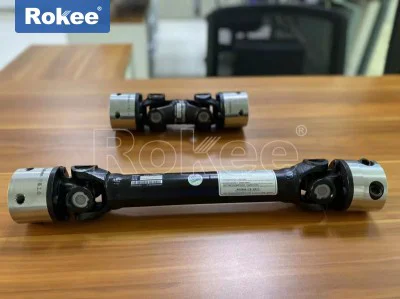
Structural optimization and operational flexibility further enhance the practical value of universal joint couplings in rolling mill production. These couplings adopt a compact and integrated structural design, which occupies a small installation space and can be perfectly adapted to the narrow assembly space of various rolling mill stands. Compared with traditional transmission structures, the overall structure is more streamlined, which is convenient for equipment layout and assembly and avoids structural interference with other rolling mill accessories. Moreover, the coupling has excellent axial and radial displacement compensation capabilities, which can adapt to the axial stretching caused by equipment thermal expansion and the radial offset caused by long-term mechanical wear. In the daily production process of rolling mills, roll replacement, production specification adjustment and equipment debugging require frequent position adjustment of rolling rolls. The flexible structure of the universal joint coupling can adapt to these position changes without disassembly and reassembly, greatly simplifying the equipment adjustment process. This high flexibility not only improves the convenience of equipment operation and maintenance, but also shortens the downtime caused by production switching and equipment debugging, effectively improving the overall production efficiency of the rolling mill line.
Long-term service stability and low maintenance characteristics are prominent advantages of rolling mill universal joint couplings in industrial continuous production. Metallurgical rolling production belongs to long-cycle uninterrupted industrial production, and equipment downtime will directly cause economic losses to production. Therefore, the stability and durability of core transmission components are crucial to production continuity. Universal joint couplings for rolling mills are manufactured with high-precision processing technology and high-wear-resistant materials, and the internal moving parts are matched with high-performance lubrication systems to reduce friction and wear during long-term operation. The optimized sealing structure can effectively isolate external pollutants, prevent lubricant deterioration and leakage, and maintain the long-term stable operating state of internal transmission structures. Under normal operating conditions, the coupling can maintain stable transmission performance for a long time, with low failure rate and no frequent maintenance. Its simple and modular structural design also brings great convenience for daily maintenance and partial replacement. When local parts are worn and aged, targeted replacement can be completed quickly without overall disassembly of the transmission system, greatly reducing maintenance time and labor costs, and ensuring the long-term stable and efficient operation of rolling mill equipment.
With the continuous upgrading of modern rolling mill production towards high speed, high precision and high automation, the application value and technical optimization space of universal joint couplings are constantly expanding. Modern metal processing industry puts forward higher requirements on the dimensional accuracy, surface quality and production efficiency of rolled products, which also raises stricter standards for the transmission stability, precision and durability of rolling mill equipment. Advanced rolling mill universal joint couplings are gradually combined with optimized structural design and high-performance new materials, further improving angular compensation accuracy, heavy-load resistance and fatigue resistance. In intelligent rolling production lines, the stable transmission performance of couplings provides reliable basic guarantee for the precise control of rolling speed and rolling force, helping to realize standardized and intelligent production of metal rolling. As an indispensable core component of rolling mill transmission systems, universal joint couplings will continue to iterate and upgrade with the development of rolling technology, continuously adapt to more complex and efficient rolling production conditions, and provide solid technical support for the high-quality development of the metallurgical rolling industry.