Flanged Universal Shaft

In modern mechanical transmission systems, the flanged universal shaft serves as a critical component that enables reliable power transfer between two shafts that may be misaligned in angle, position, or both. Unlike ordinary transmission shafts that require precise coaxial alignment, the flanged universal shaft integrates the flexibility of universal joints with the stability of flange connections, making it adaptable to a wide range of complex industrial environments. Its unique design combines structural robustness, efficient torque transmission, and excellent adaptability, allowing it to play an indispensable role in numerous fields, from heavy machinery manufacturing to precision equipment operation.
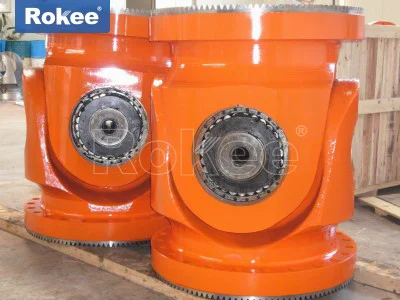
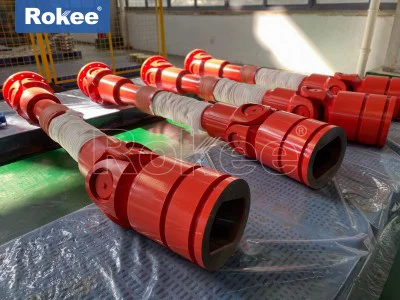
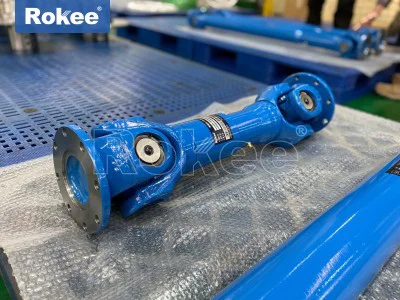
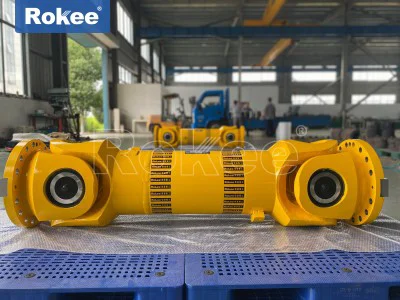
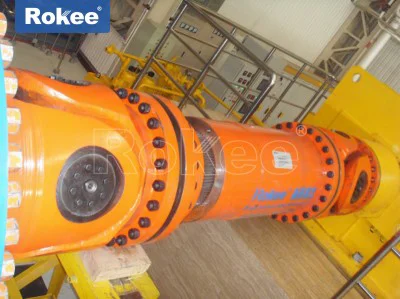
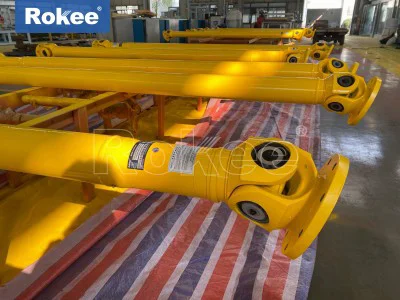
The structure of a flanged universal shaft is a sophisticated assembly of multiple components, each contributing to its overall functionality and reliability. At its core, the component consists of two main parts: the universal joint assembly and the flange connections at both ends, which are integrated with the shaft body to form a complete transmission unit. The universal joint assembly, the most critical part of the flanged universal shaft, is typically composed of a cross shaft, four needle roller bearings, and two yokes (also known as fork heads). The cross shaft, usually forged from high-strength alloy steel, features four evenly distributed shaft necks arranged in a cross shape, serving as the rotating core that enables angular deflection. The needle roller bearings are mounted on each shaft neck of the cross shaft, reducing friction between the cross shaft and the yokes during rotation, thereby ensuring smooth operation and extending the service life of the component. The yokes, which are connected to the cross shaft through the bearings, are designed to fit with the shaft body, and their shape and size are precisely machined to match the specific torque and angle requirements of different applications. The flange connections, located at both ends of the shaft body, are flat, disc-shaped structures with evenly distributed bolt holes that facilitate secure attachment to the driving and driven shafts of the mechanical system. The flange surfaces are precision-machined to ensure high flatness and perpendicularity, which is crucial for maintaining alignment during torque transmission and preventing vibration or loosening under load. In addition to these core components, many flanged universal shafts are equipped with a telescopic sleeve and spline assembly, which allows for axial length adjustment to compensate for installation errors, thermal expansion, or relative movement between the connected shafts. This telescopic feature enhances the adaptability of the component, making it suitable for applications where the distance between the driving and driven shafts may vary during operation. Sealing components, such as oil seals or dust covers, are also commonly installed at the joints of the universal shaft to prevent the entry of dust, moisture, and other contaminants, which could damage the bearings and other moving parts, and to retain lubricating oil, ensuring consistent performance over time.
The performance of a flanged universal shaft is determined by its structural design, material selection, and manufacturing precision, and it is characterized by several key attributes that make it suitable for demanding transmission applications. One of the most important performance characteristics is its high torque transmission capacity. The combination of the robust cross shaft, reinforced yokes, and secure flange connections allows the component to transmit large amounts of torque without deformation or failure, even under continuous operation. The torque capacity varies depending on the size of the shaft, the material used, and the design of the universal joint, but it can range from a few hundred Newton-meters for small, light-duty applications to tens of thousands of Newton-meters for heavy-duty industrial machinery. Another critical performance attribute is its ability to accommodate angular misalignment. Unlike rigid shafts, which require perfect coaxial alignment between the driving and driven shafts, the flanged universal shaft can transmit torque smoothly even when the two shafts are misaligned at angles ranging from a few degrees up to 35 degrees or more, depending on the design. This angular flexibility is essential in applications where the mechanical layout prevents precise coaxial installation, such as in agricultural machinery, construction equipment, and marine propulsion systems. In addition to angular misalignment, the telescopic versions of flanged universal shafts can compensate for axial displacement, allowing for relative movement between the connected shafts without affecting torque transmission. This axial compensation capability is particularly valuable in high-temperature environments where thermal expansion of the shaft may occur, as it prevents the buildup of excessive stress that could lead to component failure. The flanged universal shaft also exhibits excellent rotational stability and low vibration during operation. The precision machining of the cross shaft, bearings, and flange surfaces ensures that the component rotates smoothly, with minimal runout and vibration, which helps to protect the entire mechanical system from premature wear and damage. Low vibration also contributes to reduced noise levels, making the component suitable for applications where noise reduction is a priority, such as in precision manufacturing equipment and indoor industrial settings. Wear resistance and durability are also key performance characteristics of high-quality flanged universal shafts. The use of high-strength materials, such as alloy steel, carbon steel, and stainless steel, combined with surface treatments like carburizing, quenching, and galvanizing, enhances the hardness and wear resistance of the components, allowing them to withstand the harsh conditions of industrial operation, including heavy loads, high speeds, and exposure to corrosive substances. Proper lubrication of the bearings and moving parts further extends the service life of the component, reducing maintenance requirements and downtime. Finally, the flanged universal shaft offers good installation and maintenance convenience. The flange connections allow for quick and easy attachment to the driving and driven shafts using bolts, eliminating the need for complex alignment procedures. The modular design of many components also makes it easy to replace worn parts, such as bearings or seals, without removing the entire shaft from the system, which helps to reduce maintenance time and costs.
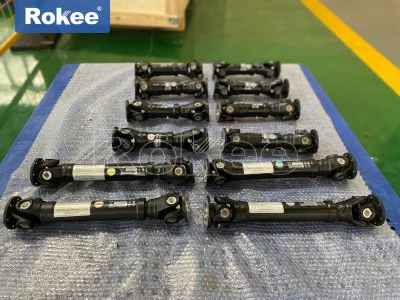
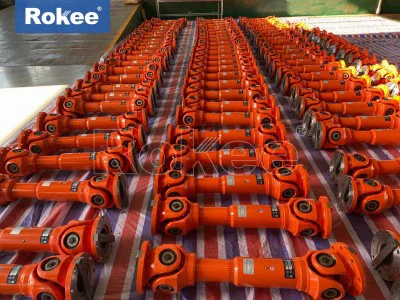
Flanged universal shafts are available in a variety of types, each designed to meet the specific requirements of different applications, based on factors such as torque capacity, angular misalignment tolerance, axial compensation needs, and operating environment. One of the most common classifications is based on the type of universal joint used, with the cross-shaft type and the ball-cage type being the two main variants. The cross-shaft flanged universal shaft, also known as the Hooke's joint type, is the most widely used due to its simple structure, high torque capacity, and reliability. It consists of a cross shaft with four bearings and two yokes, and it is capable of accommodating angular misalignment up to 35 degrees, making it suitable for both light-duty and heavy-duty applications. This type of flanged universal shaft is commonly used in industrial machinery, such as rolling mills, crushers, and conveyors, as well as in automotive and agricultural equipment. The ball-cage flanged universal shaft, on the other hand, features a cage with multiple steel balls that transmit torque between the inner and outer races, which are connected to the yokes and flanges. This design allows for higher angular misalignment (up to 45 degrees in some cases) and smoother rotation at high speeds, making it suitable for applications where precision and high-speed operation are required, such as in precision machine tools, robotics, and aerospace equipment. Another classification of flanged universal shafts is based on their ability to compensate for axial displacement, dividing them into fixed-length and telescopic types. Fixed-length flanged universal shafts have a constant length and are designed for applications where there is no axial movement between the driving and driven shafts, such as in some stationary industrial machinery. Telescopic flanged universal shafts, as mentioned earlier, are equipped with a spline and sleeve assembly that allows for axial length adjustment, making them ideal for applications where the distance between the connected shafts may vary due to installation errors, thermal expansion, or dynamic movement. These telescopic types are commonly used in automotive driveshafts, construction equipment, and marine propulsion systems. Flanged universal shafts can also be classified based on the type of flange connection used, which is determined by the load characteristics and installation requirements of the application. The pure bolt-hole flange connection is a basic type that uses high-strength bolts and self-locking nuts to secure the flanges, relying on the friction between the flange surfaces to transmit torque. This type is suitable for light-duty applications with low torque and high speed, such as in ventilation fans, centrifugal pumps, and small electric motors. The face-key flange connection adds an end key to the flange mating surface, which works with the bolts to transmit torque through both friction and the shear force of the key, significantly increasing the load-carrying capacity. This type is suitable for medium-impact load applications, such as small section rolling mills and continuous wire rolling mills. For heavy-impact loads and high-frequency forward and reverse operation, the jaw-type or face-tooth flange connection is more appropriate. The jaw-type connection uses evenly distributed convex and concave teeth on the flange surfaces to engage with each other, while the face-tooth connection uses specific angle tooth profiles, both ensuring high alignment accuracy and connection stability, as well as strong impact resistance. These types are commonly used in marine propulsion, medium-sized rolling mills, and crane main drives. In addition, flanged universal shafts can be classified based on their size and torque capacity, with light-duty, medium-duty, and heavy-duty variants available. Light-duty flanged universal shafts are small in size and have a low torque capacity, suitable for applications such as small electric motors, household appliances, and light agricultural machinery. Medium-duty variants are designed for moderate torque and speed requirements, used in equipment such as compressors, pumps, and small industrial machinery. Heavy-duty flanged universal shafts are large, robust, and capable of transmitting extremely high torque, making them suitable for heavy machinery such as large rolling mills, mining crushers, and marine engines.
The versatility of flanged universal shafts, combined with their excellent performance characteristics, makes them suitable for a wide range of applications across various industries, playing a crucial role in ensuring the smooth and efficient operation of mechanical systems. One of the primary application areas is the heavy machinery and equipment industry, where flanged universal shafts are used to transmit power in large, high-torque systems. In rolling mills, for example, they connect the motor to the rolling stands, transmitting the high torque required to shape metal into sheets, bars, or wires, while accommodating the angular misalignment between the motor and the rolling equipment. Crushers, which are used in mining and construction to break down large rocks and materials, also rely on flanged universal shafts to connect the drive motor to the crushing mechanism, withstanding the heavy loads and impact forces generated during operation. Conveyors, which are used to transport materials in factories, mines, and ports, use flanged universal shafts to drive the conveyor belts, allowing for flexibility in the layout of the conveyor system and compensating for any misalignment between the drive motor and the conveyor rollers. The automotive industry is another major user of flanged universal shafts, particularly in the drive systems of vehicles. In rear-wheel-drive and four-wheel-drive vehicles, the driveshaft, which is often a flanged universal shaft, connects the transmission to the rear differential, transmitting torque from the engine to the wheels. The telescopic feature of these shafts allows for axial movement as the vehicle suspension compresses and extends, ensuring consistent power transmission even when the vehicle is traveling over uneven terrain. Flanged universal shafts are also used in the steering systems of some vehicles, providing the flexibility needed to transmit rotational motion from the steering wheel to the steering gear, even with the angular misalignment between the steering column and the gearbox. The agricultural machinery industry also relies heavily on flanged universal shafts due to the need for flexible power transmission in complex field environments. Tractors, for example, use flanged universal shafts to connect the engine to various implements, such as plows, harrows, and mowers, allowing for angular misalignment between the tractor and the implement as it moves over uneven ground. Agricultural pumps and irrigation systems also use these shafts to transmit power, ensuring reliable operation in harsh outdoor conditions. The marine industry uses flanged universal shafts in marine propulsion systems, connecting the ship's engine to the propeller. These shafts must be able to withstand the high torque generated by the engine, as well as the angular misalignment between the engine and the propeller shaft, which may occur due to the ship's movement in the water. The corrosion resistance of marine-grade flanged universal shafts, often made from stainless steel or other corrosion-resistant materials, is crucial in this application, as they are exposed to saltwater and high humidity. The aerospace industry uses specialized flanged universal shafts in aircraft and spacecraft systems, where precision, light weight, and high reliability are essential. These shafts are used in engine systems, landing gear mechanisms, and control systems, transmitting torque with minimal weight and space requirements, while accommodating the angular misalignment between various components. The precision manufacturing of aerospace-grade flanged universal shafts ensures that they meet the strict performance and safety standards of the industry. The precision machinery and tooling industry also uses flanged universal shafts in equipment such as machine tools, robotics, and automation systems. In CNC machine tools, for example, these shafts are used to transmit power to the spindle and other moving parts, ensuring precise and smooth operation, with minimal vibration. Robotics systems use flanged universal shafts in joint mechanisms, allowing for flexible movement and torque transmission between the robot's arms and joints, enabling complex and precise movements. The energy industry, including power generation and renewable energy systems, also uses flanged universal shafts. In thermal power plants, these shafts are used in boiler feed pumps, fans, and other auxiliary equipment, transmitting power from the motors to the equipment. In wind turbines, flanged universal shafts are used to connect the turbine's rotor to the gearbox and generator, accommodating the angular misalignment between these components as the turbine rotates in the wind, and transmitting the torque generated by the rotor to the generator to produce electricity. Even in everyday applications, such as household appliances and small electric tools, small-sized flanged universal shafts are used to transmit power, ensuring smooth and reliable operation. For example, some types of electric drills, mixers, and blenders use small flanged universal shafts to connect the motor to the tool's working mechanism, allowing for flexibility in the design of the tool and ensuring efficient power transmission.
In conclusion, the flanged universal shaft is a versatile and essential component in modern mechanical transmission systems, with a structural design that combines the flexibility of universal joints with the stability of flange connections. Its core performance characteristics, including high torque transmission capacity, angular and axial misalignment compensation, rotational stability, wear resistance, and durability, make it suitable for a wide range of applications across various industries. The diverse types of flanged universal shafts, classified based on universal joint type, axial compensation capability, flange connection type, and torque capacity, ensure that there is a suitable variant for every application, from light-duty household appliances to heavy-duty industrial machinery and aerospace systems. As industrial technology continues to advance, the design and manufacturing of flanged universal shafts are also evolving, with improvements in material technology, precision machining, and lubrication systems leading to even higher performance, longer service life, and lower maintenance requirements. The ongoing development of lightweight, high-strength materials, such as carbon fiber composites, is also expanding the application range of flanged universal shafts, particularly in aerospace and automotive applications where weight reduction is a priority. With its unique combination of flexibility, reliability, and performance, the flanged universal shaft will continue to play a critical role in the development of modern machinery and industry, enabling more efficient, flexible, and reliable power transmission in an ever-wider range of applications.