Universal Joint Coupling For Test Bench
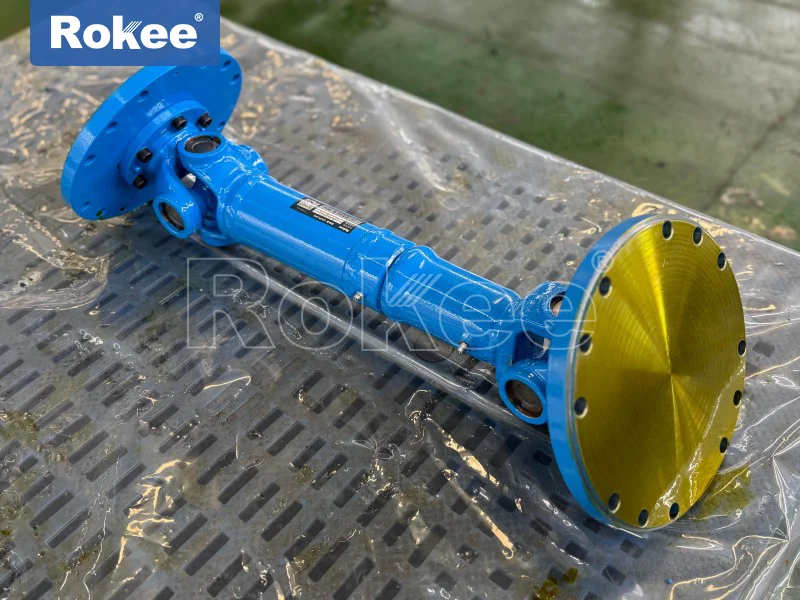
Universal joint couplings serve as indispensable core transmission components for various mechanical test benches, undertaking the critical task of torque and rotational motion transmission between power sources and tested equipment. Differing from conventional rigid couplings that require precise coaxial alignment, this specialized mechanical part is uniquely engineered to adapt to the complex dynamic operating conditions of test bench systems. It effectively compensates for angular, axial, and radial misalignments generated by installation deviations, equipment vibration, and real-time operational displacement during testing processes. By maintaining stable and continuous power transmission under non-ideal shaft alignment states, the coupling eliminates transmission dead zones and power loss fluctuations caused by shaft position offset. It lays a reliable mechanical foundation for the accuracy, repeatability, and stability of performance tests, durability experiments, and load detection for mechanical parts, power assemblies, and transmission systems, becoming a key guarantee for high-quality test bench operation.
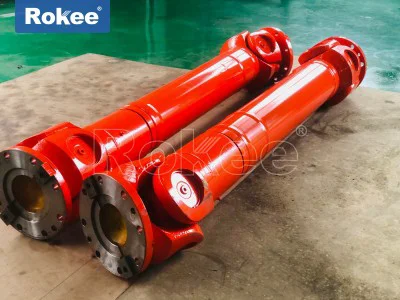
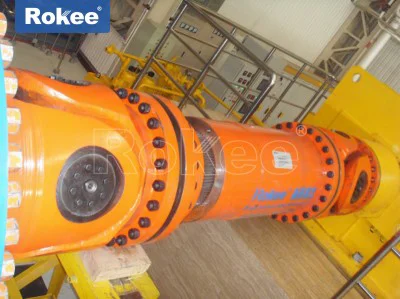
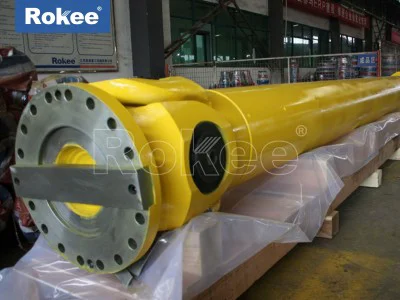
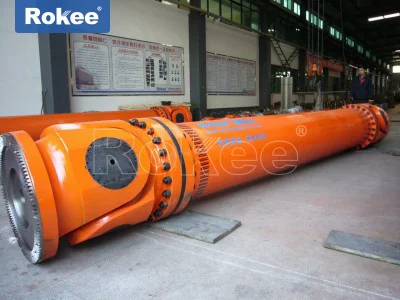
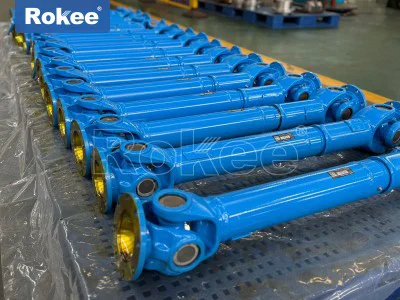
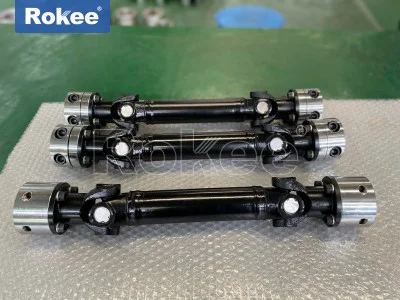
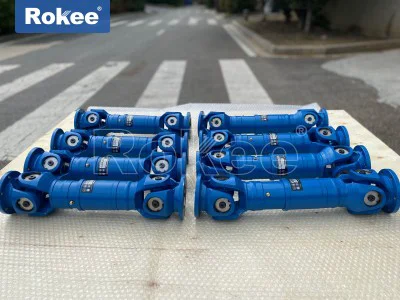
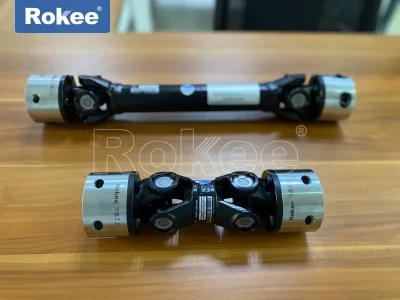
The fundamental structural design of universal couplings for test benches is optimized around flexible transmission and multi-dimensional misalignment compensation, distinguishing them from ordinary industrial universal joints with targeted performance upgrades. The basic structure consists of two symmetrical yoke components and a central cross-shaped spider mechanism, which forms a multi-directional flexible connection structure. This structural configuration allows the coupling to achieve free deflection in multiple planes, enabling stable torque transmission even when the driving shaft and driven shaft produce regular or irregular angular deviations during test operation. To adapt to the long-term continuous working state of test benches, the internal kinematic pairs adopt precision rolling structures, which reduce friction resistance during rotation and avoid transmission jitter caused by dry friction. Meanwhile, the overall integrated structural design enhances the rigidity of the coupling body, effectively resisting torsional deformation under variable load conditions. This balance of flexibility and rigidity ensures that the coupling can not only adapt to dynamic misalignment changes in test systems but also maintain accurate torque transmission without distortion, meeting the basic mechanical performance requirements of diverse test scenarios.
Material selection and surface treatment processes determine the service life, load resistance, and environmental adaptability of test bench universal joint couplings, forming the core support for their reliable operation. High-strength alloy steel is predominantly adopted as the base material for mainstream test bench dedicated couplings, which features excellent torsional strength, fatigue resistance, and impact resistance compared to ordinary carbon steel. Test bench operations often involve frequent load switching, instantaneous impact torque, and long-duration continuous rotation, and high-performance alloy materials can effectively resist metal fatigue and structural damage caused by cyclic stress. Key moving components such as cross shafts and rolling bodies undergo precision quenching and tempering heat treatment to improve surface hardness and wear resistance, reducing component abrasion after long-term high-speed operation. In addition, professional anti-corrosion and anti-oxidation surface treatments are applied to the coupling surface, which isolates air and moisture erosion, avoids surface rust and performance degradation, and ensures consistent transmission performance in conventional indoor test environments and slightly harsh industrial test conditions.
Dynamic transmission performance is the core advantage of universal joint couplings applied in test bench systems, directly affecting the authenticity and accuracy of test data. In mechanical performance testing, minor transmission errors will be amplified in final test results, so the coupling’s stable torque transmission capability is particularly critical. Test bench universal joints maintain high transmission efficiency under different rotation speeds and load levels, avoiding power attenuation and torque deviation that interfere with test data. Their unique flexible compensation function can absorb tiny vibration and displacement generated by the operation of power equipment and tested parts, reducing system resonance and mechanical jitter during testing. Unlike elastic couplings that rely on deformation for buffering and are prone to performance attenuation, universal joint couplings achieve rigid flexible transmission through mechanical structure movement, with no transmission accuracy attenuation after long-term use. This stable dynamic performance ensures that parameters such as torque, rotation speed, and power collected by test bench sensors can truly reflect the performance state of the tested products, providing accurate data support for product performance evaluation and structural optimization.
Universal joint couplings exhibit strong scenario adaptability, covering almost all mainstream mechanical test bench types and meeting diversified test working condition requirements. In motor performance test benches, they connect the test motor and loading equipment, adapting to the angular offset generated by high-speed rotation and variable load operation to ensure stable collection of motor efficiency, torque characteristics, and speed regulation performance data. In transmission component test systems, the couplings simulate the actual operating deflection state of automotive, engineering machinery, and industrial transmission parts, realizing real working condition reproduction and completing durability and fatigue tests of gears, shafts, and transmission assemblies. For power assembly test benches of electromechanical integrated equipment, their multi-dimensional compensation capability adapts to complex shaft position changes caused by equipment heating deformation and dynamic vibration. Whether it is low-speed high-torque static load testing or high-speed variable-load dynamic testing, the coupling can adjust its flexible deflection state autonomously, always maintaining efficient and accurate transmission, and fully matching the diverse working condition characteristics of different test projects.
The installation and debugging characteristics of test bench universal joint couplings further enhance their practical value in test system construction and operation. The standardized structural design simplifies the overall installation process, with compact structural size and flexible assembly forms that can adapt to various spatial layout requirements of test benches, whether for horizontal linear transmission or spatial offset transmission. During the equipment assembly stage, the coupling can tolerate reasonable installation alignment errors, reducing the precision requirements for shaft butt installation of test equipment and shortening the system debugging cycle. After long-term operation, the modular structural design facilitates daily inspection and maintenance; vulnerable parts can be independently checked and replaced without disassembling the entire transmission system, greatly improving maintenance efficiency. In addition, the coupling has good dynamic balance performance after precision processing, avoiding eccentric vibration and noise during high-speed operation, ensuring low-noise and stable operation of the test bench, and creating a stable working environment for precision testing experiments.
In the field of long-term test system operation and reliability assurance, universal joint couplings show outstanding stability and economy. Test bench equipment usually needs to run continuously for hundreds or thousands of hours for durability and aging tests, and the high fatigue resistance of universal joint couplings ensures no structural failure or performance degradation during long-cycle operation. Their pure mechanical transmission structure avoids the aging and failure problems of elastic materials, greatly extending the overall service life compared with flexible couplings relying on rubber or plastic parts. In daily operation, the coupling has low friction loss and stable transmission state, which can effectively reduce the energy consumption of the test system and avoid extra power loss interference with test energy consumption data. Its low maintenance frequency and simple maintenance mode reduce the long-term operation cost of test benches, while stable transmission performance avoids test data deviation and repeated testing caused by coupling failure, improving the overall working efficiency of test laboratories and industrial test stations.
With the continuous upgrading of mechanical testing technology, the optimization and development of universal joint couplings for test benches are always oriented to high-precision and intelligent testing requirements. Modern test systems put forward higher demands for transmission precision, dynamic response speed, and extreme working condition adaptability of supporting couplings. New optimized universal joint coupling structures adopt more precise kinematic pair matching and lightweight high-strength material design, further reducing transmission clearance and improving the sensitivity of dynamic torque transmission. Improved structural forms can adapt to higher rotation speed ranges and larger misalignment angles, meeting the extreme working condition test requirements of new energy power components, high-precision transmission parts, and intelligent mechanical equipment. In the future, with the continuous innovation of mechanical manufacturing and testing technology, test bench universal joint couplings will continue to iterate in structural optimization, performance improvement, and working condition adaptability, always serving as a reliable core transmission component for mechanical performance testing and promoting the improvement of industrial product testing accuracy and technical level.