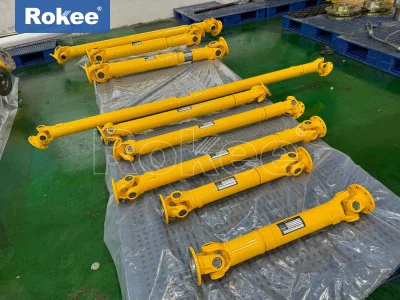
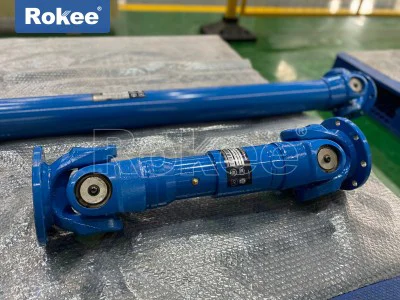
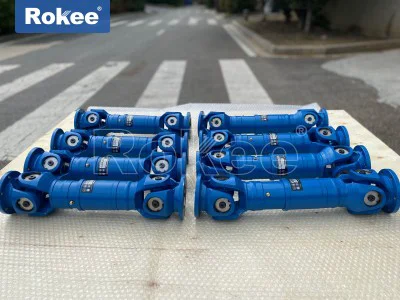
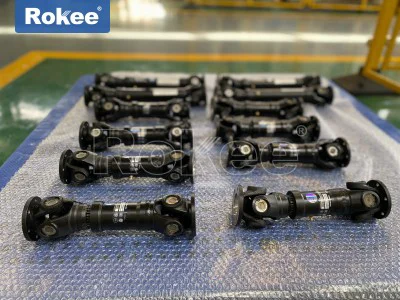
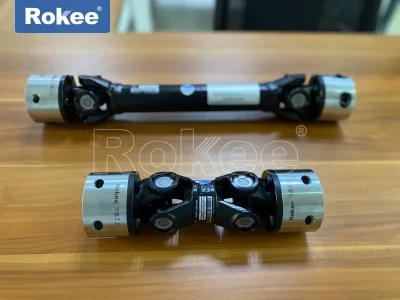
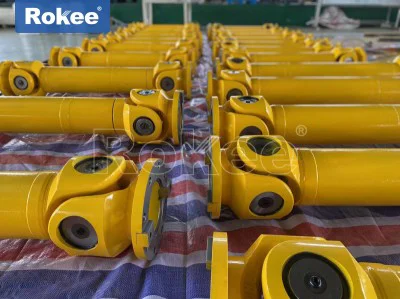
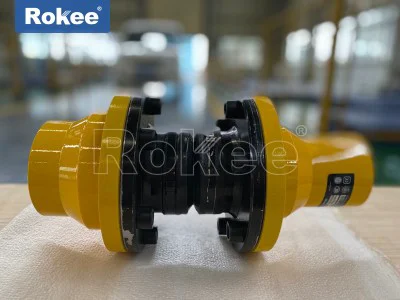
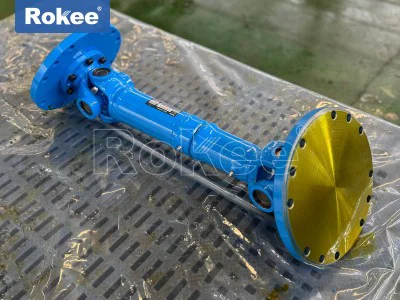
Characteristics Of Universal Shaft Coupling
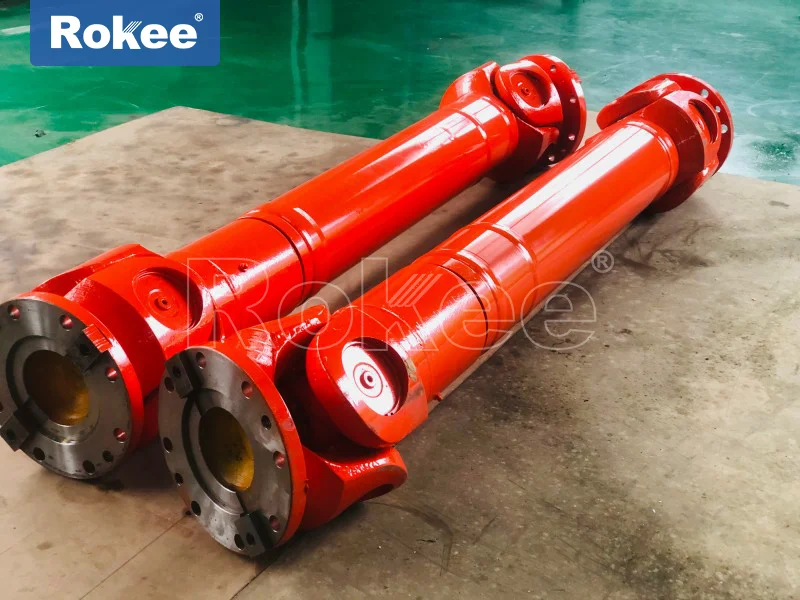
The universal shaft coupling as a key component in mechanical transmission systems, has the following significant characteristics:
Large angle compensation capability
By designing structures such as cross shafts and ball cages, an angle of 5 ° -45 ° between the two axis lines is allowed, which can effectively compensate for installation deviations or angular, radial, and axial displacements generated during operation. For example, the shaft offset caused by thermal deformation of the rolling mill in metallurgical equipment can be adaptively adjusted through universal couplings.Non concentric shaft transmission
The unique multi-directional articulated structure (such as a cross axis+bearing combination) enables power transmission between non collinear axes, making it suitable for space limited or dynamic motion scenarios such as excavator slewing mechanisms.Efficient transmission
The transmission efficiency can reach 98% -99.8%, especially suitable for high-power and heavy-duty working conditions. In heavy mining machinery, its torque transmission capacity is more than 30% higher than other couplings of the same size.Dynamic adaptability
Vibration reduction and buffering: Elastic components can absorb impact loads, reduce torsional vibrations, and protect downstream equipment.
High speed stability: Models that have undergone dynamic balancing treatment (such as SWC-BH type) can operate smoothly at speeds above 3000rpm and are used for connecting the main shaft of wind turbines.Compact design
The integral fork head and modular structure (such as SWP split) save installation space.
The cardan shaft coupling, through its unique structural design and material technology, achieves efficient and reliable power transmission under complex working conditions, and is an indispensable core transmission component of modern industrial equipment.
In the intricate landscape of mechanical power transmission systems, the universal shaft coupling stands as a foundational and versatile component, engineered to bridge the gap between two rotating shafts that are not aligned along a single linear axis. Unlike rigid couplings that demand perfect shaft alignment and offer no tolerance for positional deviations, universal shaft couplings are purpose-built to accommodate angular, parallel, and axial misalignments while sustaining consistent torque transmission and rotational motion transfer. This core adaptive trait has cemented their role across countless industrial, automotive, agricultural, and heavy machinery applications, where flawless shaft alignment is often impractical to achieve or maintain due to manufacturing tolerances, installation errors, thermal expansion, load-induced deformation, or operational vibrations. Delving into the multifaceted characteristics of universal shaft couplings reveals a blend of mechanical ingenuity, material resilience, functional adaptability, and operational reliability that makes them indispensable in modern mechanical engineering.
At the heart of the universal shaft coupling’s design lies its exceptional angular misalignment compensation capability, a defining feature that sets it apart from conventional coupling types. Standard rigid couplings fail catastrophically even with minor angular offsets between driving and driven shafts, as they cannot absorb or accommodate the resulting stress, leading to premature bearing failure, shaft bending, or component fracture. Universal shaft couplings, by contrast, are engineered to handle substantial angular deviations, with typical models supporting misalignment angles ranging from a few degrees to over forty-five degrees, depending on their structural design and intended application. This flexibility stems from their articulated joint structure, which allows the coupling to pivot and swivel as the shafts rotate, maintaining uninterrupted power transfer without imposing excessive bending stress on the connected shafts or supporting bearings. Whether in heavy-duty industrial machinery like rolling mills, crushers, and conveyor systems, or in precision equipment such as machine tools and textile machinery, this angular adaptability ensures smooth operation even when shaft axes intersect at a noticeable angle, eliminating the need for overly precise and costly installation procedures.
Beyond angular misalignment compensation, universal shaft couplings exhibit remarkable versatility in addressing parallel and axial misalignments, further enhancing their functional scope. Parallel misalignment, where two shafts run parallel but are offset horizontally or vertically, and axial misalignment, involving slight longitudinal movement of shafts along their central axis, are common challenges in dynamic mechanical systems. Many universal shaft coupling designs integrate telescopic or sliding elements that enable limited axial movement, absorbing shaft elongation or contraction caused by temperature fluctuations or operational loading. For parallel misalignment, the coupling’s articulated joint geometry, often paired with dual joint configurations, distributes the offset stress evenly across the component, preventing localized wear and maintaining balanced torque transmission. This multi-faceted misalignment tolerance means a single universal shaft coupling can resolve multiple alignment issues simultaneously, reducing the need for specialized coupling combinations and simplifying system design and maintenance.
Torque transmission efficiency and load-bearing capacity are equally prominent characteristics of universal shaft couplings, tailored to meet the demands of both light-duty precision applications and heavy-duty high-load operations. Constructed from high-strength alloy steels, carbon steels, or forged metals with rigorous heat treatment, these couplings boast exceptional tensile strength, shear resistance, and fatigue durability, enabling them to transmit substantial torque loads without deformation, slippage, or structural failure. The internal joint mechanisms—whether cross-type, ball-cage, or ball-fork designs—are precision-engineered to distribute torque evenly across contact surfaces, minimizing friction and energy loss during operation. Even under fluctuating load conditions, including sudden shock loads and cyclic stress, universal shaft couplings maintain consistent torque delivery, protecting upstream and downstream mechanical components from damage. High-performance variants deliver transmission efficiency rates exceeding 98%, ensuring minimal power wastage and optimizing overall system energy usage. This balance of high load capacity and efficient power transfer makes them suitable for applications spanning small-scale precision instruments to large-scale industrial heavy machinery, where reliable torque delivery is non-negotiable.
Structural diversity and design flexibility are key attributes that allow universal shaft couplings to adapt to a vast array of operational environments and performance requirements. The market features a spectrum of designs, each optimized for specific misalignment ranges, speed thresholds, load capacities, and spatial constraints. Cross-type universal joints, the most prevalent design, feature a robust cross-shaped pivot and fork assembly, offering simplicity, high load tolerance, and ease of maintenance, ideal for heavy-duty, low-to-medium speed applications. Ball-cage constant-velocity couplings, with precision-engineered ball bearings and cage assemblies, eliminate rotational speed fluctuations inherent in single cross-type joints, delivering smooth, constant-velocity motion perfect for high-speed precision equipment. Ball-fork couplings strike a balance between load capacity and compactness, suited for medium-duty applications with moderate misalignment requirements. Additionally, specialized designs such as triple-pin, convex-block, and telescopic universal couplings cater to niche needs, including extreme angular misalignment, heavy shock absorption, or extended axial movement. This design variability ensures engineers can select a universal shaft coupling tailored precisely to their system’s unique parameters, avoiding over-engineering or under-performance.
Operational resilience and environmental adaptability further define the practical value of universal shaft couplings, enabling them to perform reliably in harsh and demanding working conditions. The robust, sealed construction of many models shields internal components from contaminants like dust, dirt, moisture, grease, and abrasive particles, preventing premature wear and corrosion. Heat-treated surfaces and wear-resistant bearing materials enhance resistance to abrasion, extending service life even in high-friction, high-temperature environments. Whether operating in heavy industrial settings with extreme temperatures and heavy particulate matter, outdoor agricultural machinery exposed to moisture and debris, or marine and offshore equipment facing corrosive conditions, universal shaft couplings maintain structural integrity and functional performance. Their durable construction reduces the risk of unexpected breakdowns, minimizing unplanned downtime and boosting overall equipment productivity. While regular lubrication is required for optimal performance, the design of most universal shaft couplings simplifies maintenance tasks, with accessible lubrication points and durable sealing systems that retain lubricants effectively, reducing the frequency of servicing interventions.
Smooth dynamic performance and vibration damping capabilities are often underappreciated yet critical characteristics of universal shaft couplings, contributing to enhanced system stability and longevity. In rotating mechanical systems, unbalanced forces, misalignment-induced stress, and load fluctuations generate vibrations that can degrade component performance, increase noise levels, and shorten equipment lifespan. Universal shaft couplings act as passive dampers, absorbing and dissipating minor vibrational energy through their articulated joints and flexible structure, reducing the transmission of harmful vibrations between driving and driven shafts. This damping effect not only lowers operational noise but also reduces stress on bearings, gears, and shafts, preventing fatigue failure and extending the service life of the entire transmission system. In high-speed applications, precision-balanced universal shaft couplings minimize rotational imbalance, ensuring stable operation at elevated RPMs without compromising smoothness or inducing destructive resonance. This combination of vibration damping and dynamic stability makes them a preferred choice for systems requiring quiet, steady, and reliable rotational motion.
Long-term durability and cost-effectiveness round out the core characteristics of universal shaft couplings, making them a pragmatic choice for engineering projects across industries. The use of high-grade, wear-resistant materials, coupled with precision manufacturing and heat treatment, results in a long operational lifespan, even under continuous heavy use. Unlike fragile or specialized components that require frequent replacement, universal shaft couplings are built to withstand years of reliable service, reducing replacement costs and maintenance overhead. Their ability to compensate for misalignment also eliminates the need for costly realignment procedures and reduces wear on other system components, delivering additional long-term savings. While initial manufacturing costs vary by design and material, the balance of durability, adaptability, and performance ensures a strong return on investment. Even in high-precision or heavy-duty variants, the long service life and minimal maintenance requirements offset upfront expenses, positioning universal shaft couplings as a cost-efficient solution for diverse power transmission needs.
In summary, the universal shaft coupling’s characteristics—superior misalignment compensation, high torque transmission efficiency, diverse structural designs, environmental resilience, vibration damping, and long-lasting durability—collectively make it a cornerstone of modern mechanical power transmission. Its ability to adapt to imperfect shaft alignment, handle variable loads, and operate reliably in harsh conditions addresses the most pressing challenges in mechanical system design and operation. From small-scale precision machinery to large industrial heavy equipment, the universal shaft coupling delivers consistent performance, enhances system stability, and reduces maintenance burdens. As mechanical engineering advances and equipment demands grow more rigorous, the inherent adaptability and functional excellence of universal shaft couplings ensure they will remain a vital component, evolving alongside technological innovations to meet the ever-changing needs of global industries.