Universal Coupling Boosts Efficient Transmission Of Sandwich Panel Production Line

In the modern manufacturing industry, the production efficiency and product quality of sandwich panel production lines are closely related to the stability and efficiency of the transmission system. As a key mechanical component connecting different mechanisms in the production line, the universal coupling plays an irreplaceable role in optimizing power transmission, reducing energy loss, and ensuring the smooth operation of the entire production process. Unlike ordinary couplings that can only transmit power between coaxial shafts, the universal coupling is designed to accommodate angular deviations, axial displacements, and parallel misalignments between the driving shaft and the driven shaft, making it particularly suitable for the complex working environment of sandwich panel production lines, where multiple equipment units need to be coordinated and synchronized. With the continuous development of the construction and industrial fields, the demand for sandwich panels is increasing, and the requirements for production efficiency, product precision, and equipment stability are also rising. In this context, the application of universal couplings has become an important measure to enhance the competitiveness of sandwich panel production lines, effectively solving the problems of unstable transmission, high energy consumption, and frequent equipment failures that have long plagued the production process.
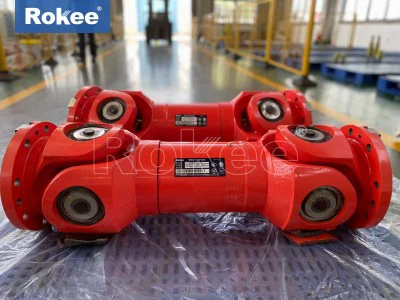
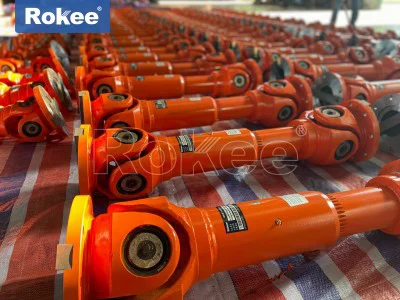
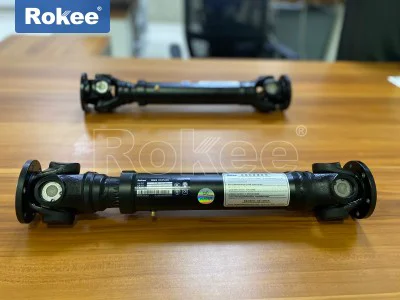
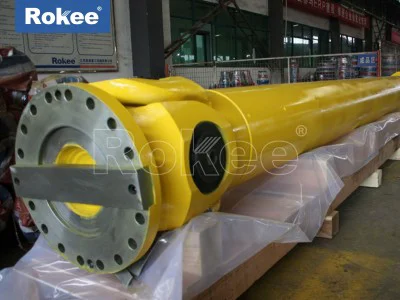
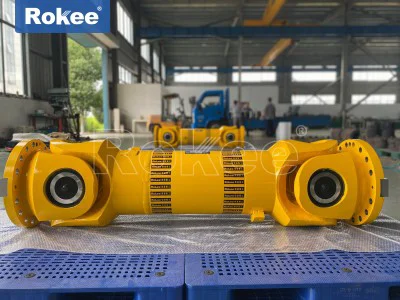
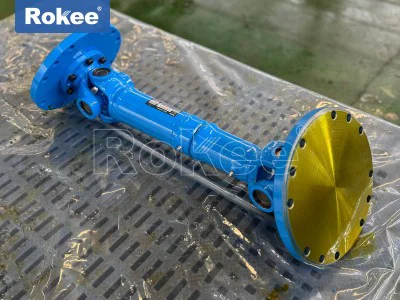
To understand how universal couplings boost the efficient transmission of sandwich panel production lines, it is first necessary to clarify the working principle and structural characteristics of universal couplings. A universal coupling, also known as a universal joint or U-joint, is a mechanical component used to connect two rigid shafts whose axes are inclined to each other, enabling the reliable transmission of rotary motion and torque between them. Its basic structure consists of a pair of hinges located close to each other, oriented at 90 degrees to each other, and connected by a cross shaft. This unique structural design allows the coupling to compensate for angular deviations between the two shafts, with the allowable angle between the axes usually ranging from 5 degrees to 45 degrees depending on the structural type, which is crucial for the complex layout of sandwich panel production lines. In practical applications, a single universal coupling may experience periodic speed fluctuations during transmission, which can affect the stability of the production line. To solve this problem, a double-joint form is often adopted, where two universal couplings are arranged 90 degrees out of phase at both ends of an intermediate shaft, ensuring the synchronization of the driving and driven shafts and eliminating the impact of speed fluctuations. This improvement makes the transmission process more stable and precise, laying a solid foundation for the efficient operation of the sandwich panel production line.
The sandwich panel production line is a complex integrated system composed of multiple links, including raw material feeding, forming, bonding, pressing, cutting, and conveying. Each link relies on the stable transmission of power to ensure the coordination and synchronization of operations. In the past, many production lines used ordinary rigid couplings or chain transmission methods, which had obvious limitations. For example, rigid couplings could not compensate for the misalignment between shafts caused by manufacturing errors, installation deviations, or equipment vibration, leading to increased friction, excessive wear of components, and even frequent shutdowns for maintenance. Chain transmission, on the other hand, had problems such as low transmission efficiency, high noise, and easy wear, which not only affected the production speed but also increased the maintenance cost and labor intensity. The application of universal couplings has effectively solved these problems, as their excellent angle compensation and displacement compensation capabilities can adapt to the misalignment between different equipment shafts in the production line, reducing the additional load caused by misalignment, minimizing friction loss, and improving the overall transmission efficiency.
In the raw material feeding link of the sandwich panel production line, the universal coupling plays a key role in connecting the motor and the feeding mechanism. The feeding mechanism needs to adjust the feeding speed according to the production rhythm, and the universal coupling can transmit the power of the motor stably and flexibly to the feeding roller, ensuring that the raw materials (such as metal plates, insulation cores, and adhesives) are fed evenly and continuously. Due to the large volume and heavy weight of some raw materials, the feeding mechanism needs to bear a large load during operation. The universal coupling, made of high-quality alloy steel after heat treatment, has high strength, wear resistance, and fatigue resistance, which can withstand high torque transmission and avoid damage caused by overload. At the same time, the compact structure of the universal coupling allows it to be installed in a limited space, adapting to the dense layout of the feeding link, and reducing the overall volume of the equipment, which is conducive to the rational utilization of the production site.
The forming and bonding links are the core parts of the sandwich panel production line, requiring high precision and stability of the transmission system. The forming mechanism needs to shape the metal plates into the required cross-sectional shape through rolling, and the bonding mechanism needs to evenly coat the adhesive and bond the metal plates with the insulation core. Both processes require the transmission system to provide stable and precise power, ensuring that the forming size is accurate and the bonding is firm. The universal coupling can effectively eliminate the impact of shaft misalignment on the transmission precision, making the rotation speed of the forming roller and the bonding roller stable and consistent, avoiding problems such as uneven forming, insufficient bonding, or excessive adhesive waste. In addition, the universal coupling has good buffering and vibration reduction performance, which can absorb the vibration generated during the operation of the motor and the forming mechanism, reducing the noise in the production workshop and improving the working environment. At the same time, the reduction of vibration also reduces the wear of the forming and bonding equipment, extending the service life of the equipment and reducing the frequency of maintenance.
The pressing and conveying links are important links to ensure the quality and production efficiency of sandwich panels. After forming and bonding, the sandwich panels need to be pressed by a pressing mechanism to enhance the bonding strength and flatness, and then conveyed to the cutting link by a conveying roller. The pressing mechanism and the conveying mechanism need to maintain strict speed synchronization to avoid damage to the sandwich panels due to speed mismatch. The universal coupling, with its high transmission efficiency (which can reach more than 98% in practical applications), can ensure that the power is transmitted from the motor to the pressing roller and the conveying roller without significant energy loss, making the speed of each link consistent. Moreover, the universal coupling can adapt to the axial displacement caused by the thermal expansion and contraction of the equipment during long-term operation, avoiding the deformation of the transmission shaft or the damage of the coupling due to thermal stress. This adaptability is particularly important for the sandwich panel production line, which often needs to operate continuously for a long time, ensuring the stability and continuity of the production process.
The cutting link of the sandwich panel production line requires high precision of the transmission system, as the cutting accuracy directly affects the size and quality of the final product. The cutting mechanism usually adopts a high-speed rotating cutting tool, which needs to be driven by a motor with stable power and precise speed control. The universal coupling can transmit the power of the motor to the cutting tool stably, ensuring that the rotating speed of the cutting tool is constant, avoiding cutting errors caused by speed fluctuations. At the same time, the universal coupling can compensate for the angular deviation between the motor shaft and the cutting tool shaft, ensuring that the cutting tool rotates smoothly, reducing the wear of the cutting tool and improving the service life of the tool. In addition, the universal coupling has a simple structure and is easy to disassemble and maintain, which can reduce the maintenance time when the cutting mechanism fails, ensuring that the production line can resume operation quickly, reducing the loss caused by downtime.
In addition to improving transmission efficiency and stability, the application of universal couplings also helps to reduce the energy consumption of the sandwich panel production line. In the traditional transmission system, due to the large friction loss and low transmission efficiency, a large part of the energy is wasted in the transmission process. The universal coupling, with its optimized structural design and high-precision manufacturing process, minimizes friction loss, making more energy used for the actual production process rather than being wasted in the form of heat or noise. According to practical application data, the use of universal couplings in sandwich panel production lines can reduce energy consumption by 10% to 15% compared with traditional transmission methods, which not only reduces the production cost but also conforms to the concept of energy conservation and environmental protection in modern manufacturing.
The service life and maintenance cost of the transmission system are important factors affecting the economic benefits of the sandwich panel production line. The universal coupling, made of high-quality materials and advanced manufacturing technology, has a long service life. Under normal working conditions and regular maintenance, the service life of the universal coupling can reach more than 20,000 hours, which is much longer than that of ordinary couplings. At the same time, the maintenance of the universal coupling is relatively simple. Regular lubrication, inspection, and cleaning can ensure its stable operation. The lubrication of the universal coupling usually uses lithium-based grease or molybdenum disulfide, and the lubrication cycle is adjusted according to the working conditions: once every 300 to 500 hours under normal working conditions, and shortened to once every 100 to 200 hours under harsh working conditions such as high temperature, dust, and heavy load. Regular inspection mainly includes checking whether the cross shaft, bearing, and other components are worn, rusted, or cracked, and whether the bolts are loose. Timely replacement of worn components and tightening of loose bolts can avoid major failures of the coupling, reduce maintenance costs, and ensure the continuous operation of the production line.
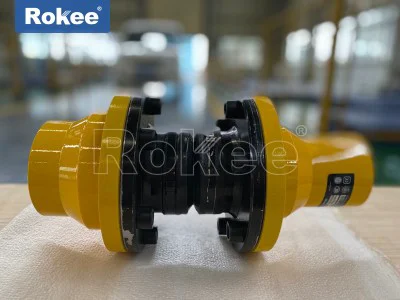
It is worth noting that the selection and installation of universal couplings in the sandwich panel production line also need to be carried out according to the actual working conditions. Different types of universal couplings have different performance characteristics and application scopes. For example, cross-axis universal couplings have the advantages of simple structure and low cost, which are suitable for medium and low-speed transmission scenarios; double universal couplings have better stability and are suitable for high-precision and high-speed transmission scenarios. When selecting a universal coupling, it is necessary to comprehensively consider factors such as the transmission torque, rotating speed, angular deviation, and installation space of the production line to ensure that the selected coupling can fully adapt to the working requirements of the production line. In the installation process, it is necessary to ensure the accurate alignment of the coupling and the shaft, avoid excessive initial misalignment, which will increase the additional load and reduce the transmission efficiency. At the same time, the use of appropriate fasteners and anti-loosening measures can prevent the coupling from loosening during operation, ensuring the safety and stability of the transmission system.
With the continuous advancement of manufacturing technology, the performance of universal couplings is also constantly improving. New materials such as high-strength stainless steel and special alloys are gradually applied to the manufacturing of universal couplings, further improving their strength, wear resistance, and corrosion resistance, making them suitable for more harsh working environments. At the same time, the combination of universal couplings with intelligent monitoring technology has become a new development trend. By installing vibration sensors, temperature sensors, and other monitoring devices on the universal coupling, the operating status of the coupling can be monitored in real-time, and potential faults can be predicted in advance, realizing predictive maintenance, which further reduces the downtime of the production line and improves the overall efficiency of the production line.
In conclusion, the universal coupling, as a key component in the transmission system of the sandwich panel production line, plays a crucial role in boosting efficient transmission. Its unique structural design and excellent performance characteristics enable it to adapt to the complex working environment of the sandwich panel production line, solve the problems of unstable transmission, high energy consumption, and frequent equipment failures in the traditional transmission system, and improve the production efficiency, product quality, and economic benefits of the production line. From the raw material feeding link to the cutting link, the universal coupling ensures the stable and efficient operation of each link, providing a strong guarantee for the continuous production of sandwich panels. With the continuous development of the sandwich panel industry, the application of universal couplings will become more extensive and in-depth, and their role in promoting the efficient transmission of the production line will become more prominent. Enterprises engaged in the production of sandwich panels should pay full attention to the role of universal couplings, select and use them scientifically, and continuously optimize the transmission system to enhance their core competitiveness in the market.