Universal Joint Coupling Manufacturer
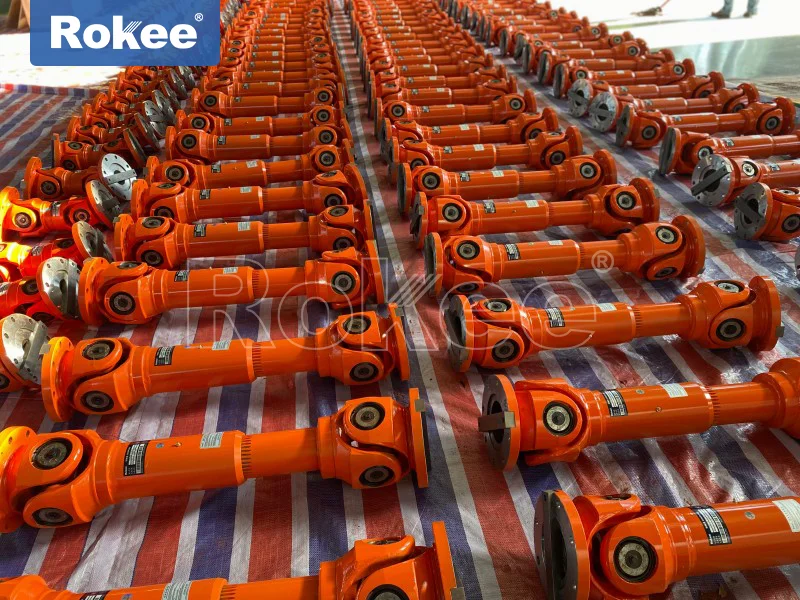
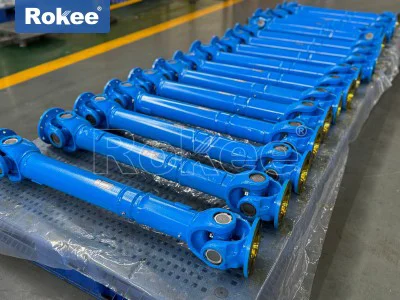
Universal joint couplings stand as indispensable core components in modern mechanical transmission systems, serving as flexible connecting devices designed to transmit torque and rotational motion between non-collinear rotating shafts. Differing greatly from rigid coupling structures that require precise shaft alignment, these specialized couplings excel at compensating angular misalignment, minor axial displacement and radial deviation during equipment operation, ensuring stable and continuous power transmission even in complex and dynamic working conditions. As professional manufacturers focus on optimizing structural design, material selection and processing technology, modern universal joint couplings have evolved to feature high load resistance, durable service life and flexible adaptability. They are widely adopted across automotive, industrial manufacturing, construction machinery, metallurgy and agricultural equipment fields, effectively solving the transmission instability problems caused by installation deviations, equipment vibration and operational displacement. With the continuous upgrading of mechanical equipment toward high efficiency and high stability, professional manufacturing of universal joint couplings has become a key support for improving the overall performance and operational reliability of mechanical transmission systems.
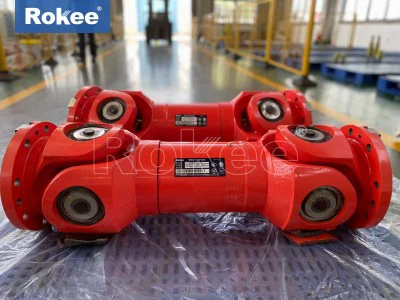
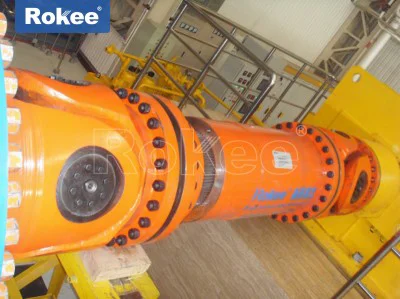
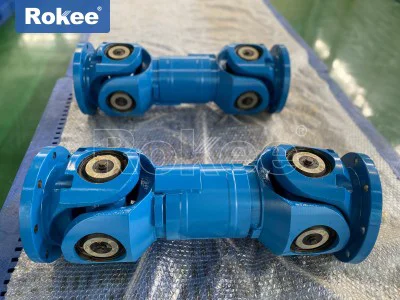
The core operational principle of universal couplings lies in their unique flexible mechanical structure, which enables adaptive power transmission under variable angular deflection conditions. The basic structural composition includes two symmetrical yoke components and a central cross spider fitted with precision bearings, forming a multi-directional movable connection mechanism. When the driving shaft rotates, the cross spider drives the driven shaft to synchronously rotate, while allowing free angular deflection within a certain range between the two shafts. This structural design fundamentally breaks the limitation of traditional rigid transmission, which can only work under strictly coaxial conditions. During the operation of mechanical equipment, factors such as equipment vibration, thermal expansion and contraction, mechanical wear and external load impact will cause real-time changes in the relative position of transmission shafts. Universal joint couplings can buffer and adapt to these dynamic changes in real time, avoiding transmission jitter, torque loss and component abrasion caused by shaft misalignment. Professional manufacturers optimize the geometric parameters of cross spiders and yokes through repeated mechanical simulation tests, ensuring uniform force distribution during rotation, reducing local stress concentration, and laying a solid foundation for stable long-term operation of the coupling under variable working conditions.
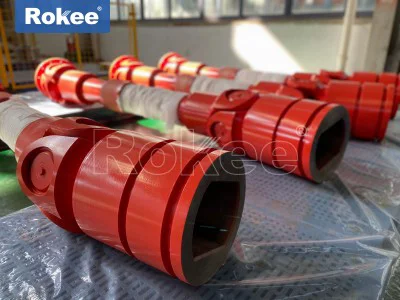
Professional universal joint coupling manufacturers focus on structural optimization design to enrich product adaptability and meet the differentiated needs of diverse mechanical equipment. Traditional single-structured universal joints are mostly suitable for low-load and low-speed transmission scenarios, while modern optimized products adopt reinforced integral structures
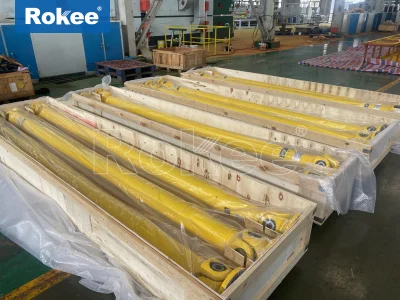
The application scenarios of universal joint couplings cover almost all fields that require flexible mechanical power transmission, showing extremely high industrial practicality and universality. In the automotive industry, they serve as key connecting components of vehicle transmission systems, connecting gearboxes and drive axles, and adapting to the jitter and displacement of vehicle suspension during driving to ensure uninterrupted power output. In heavy industrial fields such as metallurgy, mining and rolling mills, heavy-duty universal joint couplings undertake high-torque transmission tasks, stably driving large-scale rolling equipment and mining machinery to operate continuously under heavy load. In construction machinery including excavators and loaders, the couplings adapt to the frequent angle changes and vibration impacts of mechanical arms and walking systems, maintaining the stability of power transmission. Agricultural machinery, port handling equipment and automated production lines also rely on the flexible compensation capability of universal joint couplings to adapt to complex and changeable working environments. Professional manufacturers conduct targeted product performance debugging for different industry scenarios to ensure that each type of product can match the corresponding load, speed and environmental operation requirements.
Precision manufacturing and strict quality control systems are the core competitiveness of professional universal joint coupling manufacturers, which guarantee the consistency and reliability of batch products. In the production process, manufacturers adopt advanced CNC precision machining equipment to complete the cutting, polishing and assembly of core components, ensuring the dimensional accuracy and assembly tightness of each part. High-precision machining effectively avoids transmission jitter and noise problems caused by dimensional deviation of parts, and improves the smoothness of torque transmission. After the completion of product processing, manufacturers will carry out multiple performance tests, including rotational stability test, load fatigue test, angular deflection adaptability test and wear resistance test. Unqualified products will be screened out strictly to ensure that all delivered products meet the practical operation standards of industrial equipment. In addition, manufacturers will optimize the production process flow, realize standardized and modular production, effectively improve production efficiency, and ensure the stability of product quality while meeting large-scale market demand.
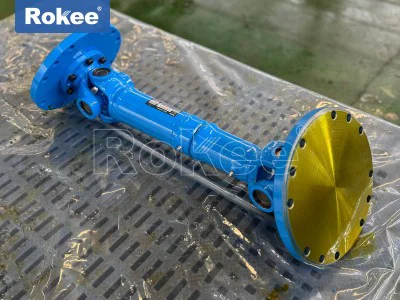
Professional universal joint coupling manufacturers provide comprehensive customized service solutions to solve the personalized transmission needs of special mechanical equipment. In actual industrial production, some special equipment has non-standard installation space, extreme operating angles and special load requirements, and standardized universal joint products cannot meet their operational needs. Relying on professional mechanical design capabilities and rich production experience, manufacturers can carry out personalized design and production according to customers’ equipment parameters, installation conditions and working environment requirements. Customized services cover structural size adjustment, material performance optimization, deflection angle range customization and special anti-wear and anti-corrosion treatment. Before formal production, the technical team will conduct mechanical simulation analysis on the customized scheme to verify the rationality of the structural design and the stability of the transmission performance, ensuring that the customized products can perfectly adapt to the special working conditions of customer equipment. This personalized customized service mode enables universal joint couplings to be applied to more specialized mechanical fields and expands the application boundary of flexible transmission components.
With the continuous development of intelligent and high-efficiency mechanical equipment, the technological upgrading and industry development of universal joint couplings are also accelerating constantly. Modern manufacturers keep investing in technological research and development, committed to developing new-type couplings with higher transmission efficiency, lower wear rate and stronger environmental adaptability. The application of new composite materials and intelligent processing technology further optimizes the structural performance of products, reduces the overall weight of couplings while improving load-bearing capacity, and realizes energy-saving and efficient power transmission. At the same time, manufacturers pay more attention to the durability and low maintenance design of products, optimizing the internal lubrication structure and sealing performance to reduce daily maintenance costs for users. In the future, with the continuous iteration of industrial machinery technology, universal joint coupling manufacturing will develop toward high precision, high durability and intelligent customization, continuously providing reliable core component support for the upgrading and development of various mechanical transmission systems.