Welded Drive Shaft
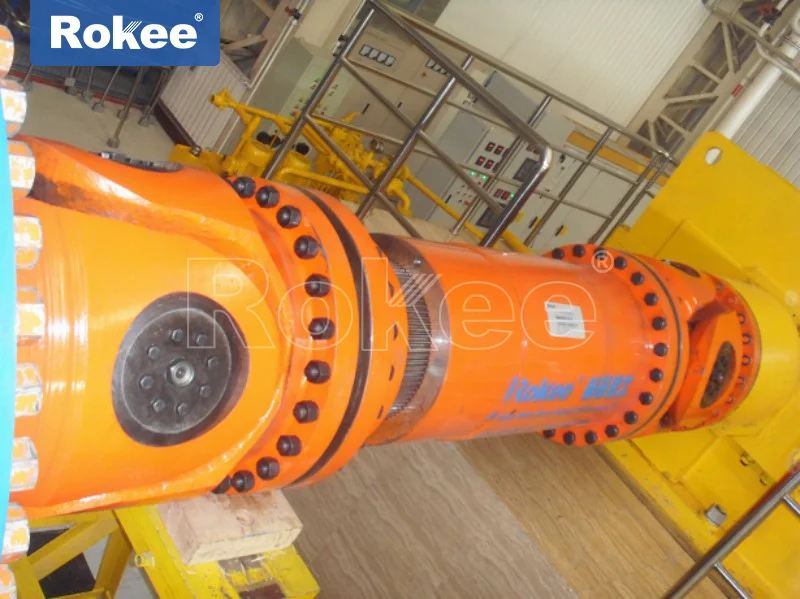
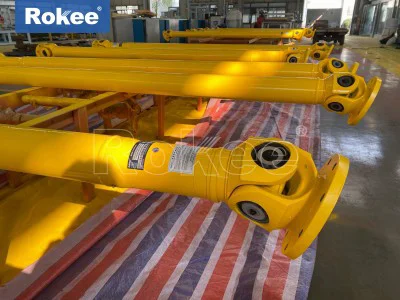
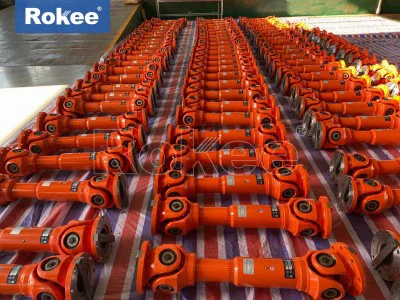
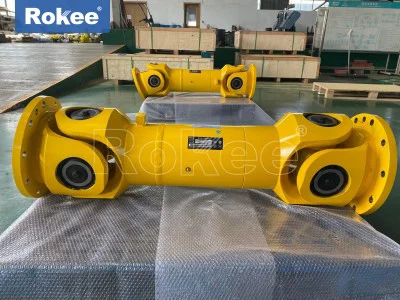
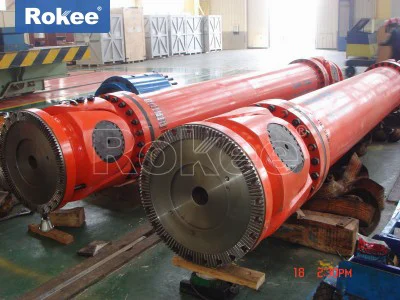
Welded drive shafts are core mechanical transmission components widely adopted in mobile machinery and industrial transmission systems, serving as vital connectors for torque and power transfer between disjointed power units. Unlike integrally machined drive shafts, they are fabricated through precision welding processes that combine multiple independent structural parts into a unified whole, balancing structural flexibility and mechanical stability in complex operating scenarios. This type of drive shaft features a composite structure that integrates tubular shafts, connecting yokes, spline segments and flange components via professional welding techniques, effectively adapting to axial displacement, angular deviation and radial offset during equipment operation. With inherent advantages in structural customization, load resistance and cost performance, welded drive shafts have gradually replaced traditional integral shafts in most medium and heavy-duty transmission scenarios. They deliver stable power output under high-speed rotation and heavy-load working conditions, while retaining lightweight structural characteristics and excellent fatigue resistance to meet the diverse operational demands of modern mechanical equipment.
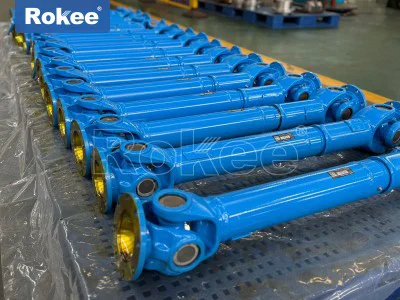
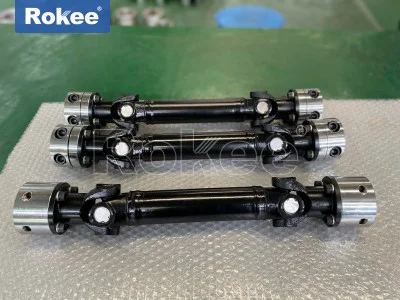
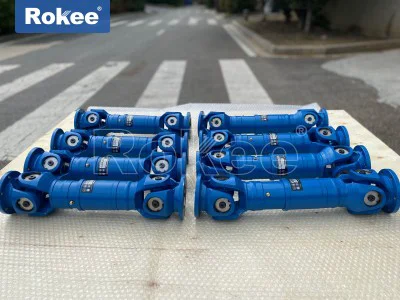
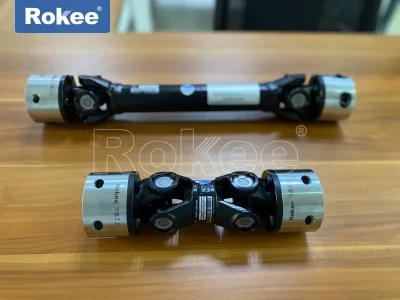
The structural composition of welded drive shafts is scientifically designed to adapt to complex power transmission needs, with each component cooperating closely to ensure efficient and stable mechanical operation. The main body generally adopts a hollow tubular steel structure, which greatly reduces overall weight compared with solid shafts while maintaining outstanding torsional rigidity, effectively lowering the inertial resistance generated during high-speed rotation. Both ends of the tubular main body are welded with precision-processed connecting accessories, including universal joint yokes, flanges and spline shafts, which form the core connection and transmission structure of the entire component. The spline structure enables flexible axial telescopic adjustment, automatically compensating for the distance changes between power components caused by equipment vibration, mechanical deformation or operating displacement. The universal joint matching the welded yoke allows the drive shaft to maintain continuous and stable torque transmission under variable angular deflection. All welding joints are arranged at the stress-relieved positions of the structure, avoiding concentrated load impact on the welding area, which lays a solid foundation for the long-term reliable operation of the component in variable working environments.
The core manufacturing process of welded drive shafts focuses on precise welding forming and post-weld precision processing, which directly determines the mechanical performance and service life of the finished product. The mainstream manufacturing process adopts solid-state friction welding technology, which generates high temperature through continuous friction between contact surfaces of components to plasticize metal materials and complete bonding under stable pressure, without melting the base metal structure. This welding method effectively avoids common defects such as weld pores, cracks and inclusion impurities in traditional fusion welding, ensuring the uniformity and compactness of the welding joint structure. Before welding, all raw material components undergo strict preprocessing, including surface polishing, impurity removal and precision calibration to ensure the alignment accuracy of assembled parts. After welding, the components will go through multiple processes such as stress relief treatment, overall straightening and dynamic balance calibration. Stress relief treatment eliminates residual internal stress generated during welding and processing to prevent structural deformation in subsequent use. Dynamic balance correction ensures that the drive shaft maintains stable rotation without obvious vibration and noise under high-speed operating conditions.
Welded drive shafts possess unique mechanical performance advantages that make them highly adaptable to various harsh industrial working conditions. First of all, their composite welding structure supports dissimilar metal combination design, enabling manufacturers to configure high-wear-resistant and high-strength materials at key force-bearing parts such as connecting ends and spline areas, while using lightweight and cost-effective materials for the tubular main body. This targeted material collocation optimizes overall performance and reduces unnecessary material consumption, achieving a perfect balance between structural strength and lightweight design. In terms of load resistance, the integrated welding joint forms an integral force-bearing structure, with excellent torsional shear resistance and impact resistance, capable of withstanding instantaneous peak torque and frequent variable load impacts during equipment start-stop and operation. Meanwhile, the optimized structural design endows the welded drive shaft with good fatigue resistance, enabling it to maintain stable mechanical performance after long-term high-frequency cyclic operation, greatly reducing the probability of structural failure and component damage caused by fatigue aging.
In practical industrial and mechanical applications, welded drive shafts demonstrate remarkable functional flexibility and scene adaptability, covering most medium and heavy-duty power transmission scenarios. In engineering machinery and transportation equipment, they undertake the core task of power transmission between power engines and execution components, adapting to the bumpy operating environment and frequent working condition changes of mobile equipment. Their adjustable telescopic structure and angular compensation capability can effectively offset the position deviation and angle change of mechanical parts caused by road vibration and equipment deformation, ensuring uninterrupted power transmission. In fixed industrial equipment such as production transmission lines and heavy processing machinery, welded drive shafts maintain high-efficiency and low-loss power transmission under long-term continuous operation. Their compact structural form saves installation space and is convenient for modular assembly and layout of mechanical systems. In addition, the customizable welding structure allows flexible adjustment of shaft body length, connection specifications and structural types according to different equipment parameters, meeting the personalized transmission needs of diversified mechanical equipment.
Compared with traditional integrally forged and cast drive shafts, welded drive shafts have prominent comprehensive advantages in production economy and structural practicability. In terms of production and processing, the split component welding mode lowers the processing difficulty of large-size and special-specification drive shafts. Integral large-diameter and long-distance drive shafts require complex integral forging and precision machining equipment, with high processing difficulty and low yield. In contrast, welded drive shafts split the whole into multiple small parts for separate processing, which improves processing precision and production efficiency while reducing production costs. Structurally, the welded composite design avoids the overall scrapping problem of integral shafts after local wear and damage. When local components such as splines and connecting yokes are worn and failed, targeted replacement and partial repair can be carried out, which greatly reduces later maintenance costs and equipment downtime. Moreover, the hollow welding structure effectively reduces the overall weight of the transmission system, lowers the energy consumption of equipment operation, and improves the overall operating efficiency of mechanical equipment.
To ensure the long-term stable operation of welded drive shafts, standardized daily maintenance and scientific fault inspection are essential links in the service cycle. In daily use, regular inspection of welding joints is required to check for subtle cracks, surface abrasion and structural loosening caused by long-term load operation. Although the welding joint has high structural strength, long-term impact load and harsh environmental erosion may cause gradual aging of local structures, and early inspection can effectively avoid sudden failure accidents. It is also necessary to regularly check the lubrication state of movable parts such as spline telescopic structures and universal joints, and replenish professional lubricating oil in time to reduce friction and wear between moving parts and avoid transmission jitter and power loss caused by poor lubrication. Regular dynamic balance detection and overall straightening calibration should be carried out for shafts that have been used for a long time to correct slight structural deformation caused by operation, ensuring stable rotation accuracy. Scientific maintenance can effectively extend the service life of welded drive shafts and maintain consistent transmission performance in the full service cycle.
With the continuous upgrading of modern mechanical manufacturing technology, the production and application technology of welded drive shafts is also constantly optimized and iterated, showing broader development potential. At present, intelligent welding equipment and automated processing lines have been widely used in the production of welded drive shafts, realizing precise control of welding temperature, pressure and speed, further improving the consistency and stability of product quality. The continuous innovation of material technology also promotes the performance upgrading of welded drive shafts, and the application of new high-strength and corrosion-resistant alloy materials makes the products more adaptable to extreme working environments such as high temperature, high humidity and strong corrosion. In terms of structural optimization, lightweight and high-power density design has become the mainstream development direction. By optimizing the welding structure layout and material matching, the drive shaft can achieve higher transmission efficiency and load-bearing performance with a lighter weight. In the future, with the continuous development of intelligent machinery and high-end equipment manufacturing, welded drive shafts will be further optimized in precision, durability and environmental adaptability, and will be more widely used in more sophisticated mechanical transmission fields.