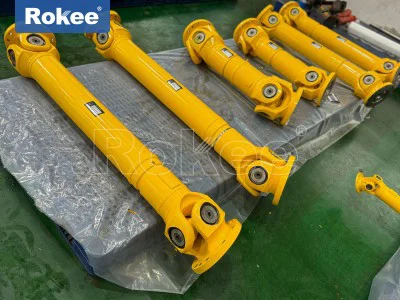
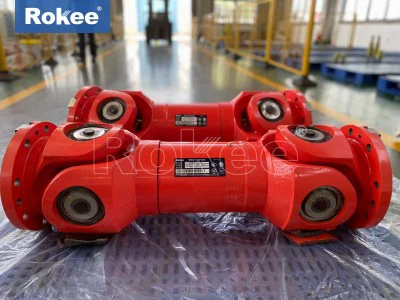
Splined Cardan Drive Shaft
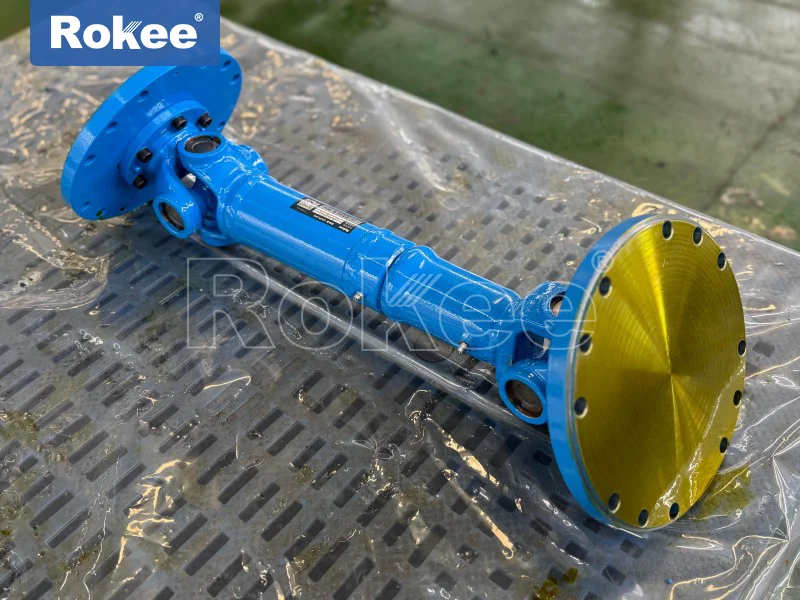
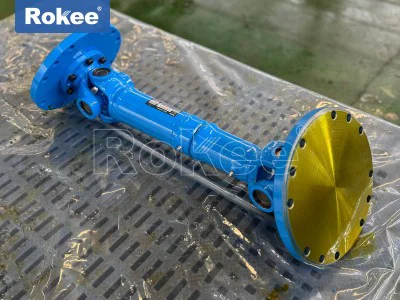
The splined cardan drive shaft stands as a core flexible transmission component widely adopted in mechanical power systems, integrating the adaptive angle adjustment capability of cardan universal joints and the axial telescoping compensation function of spline structures. This specialized mechanical part is designed to resolve common operational challenges in power transmission, including non-coaxial alignment, angular deflection, and variable axial distances between driving and driven components. Unlike rigid drive shafts that rely on fixed linear connection, it combines cross-shaft universal joint assemblies and precision spline meshing structures to deliver stable, continuous torque transmission under dynamic working conditions. Its unique structural combination enables effective compensation for mechanical displacement generated during equipment operation, while reducing transmission vibration and mechanical friction. Serving as a critical link in industrial and mobile mechanical transmission chains, it balances transmission efficiency, structural flexibility, and operational durability, making it indispensable for various mechanical systems requiring adaptive power delivery under complex motion states.
The working principle of the splined cardan drive shaft relies on the synergistic operation of universal joint angle adaptation and spline axial compensation to realize uninterrupted power transmission in dynamic mechanical systems. When mechanical equipment initiates operation, torque and rotational motion are transmitted from the driving end to the cardan drive shaft’s input yoke, driving the cross shaft to rotate synchronously. The articulated design of the cross shaft allows the input and output yokes to maintain effective torque transmission even when a spatial angular offset exists between the driving and driven shafts, overcoming the limitation of rigid shafts that require strict coaxial alignment. During continuous operation, mechanical vibration, component deformation, or structural displacement will cause real-time changes in the axial distance between the two connected ends. At this moment, the meshed spline pair slides axially within a designed range, automatically adapting to distance variations without interrupting power transmission. This dual compensation mechanism ensures that the drive shaft maintains stable transmission performance under combined conditions of angular deflection, axial displacement, and minor radial offset, avoiding power interruption or transmission failure caused by mechanical position changes.
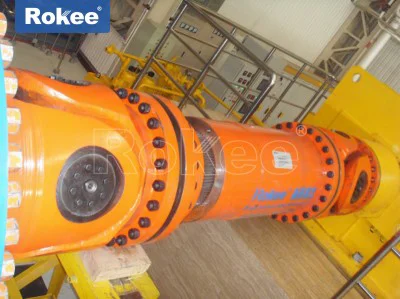
Material selection and manufacturing craftsmanship are pivotal factors determining the service performance and service life of splined cardan drive shafts, with strict requirements for strength, toughness, and wear resistance of all core components. High-strength alloy steel is predominantly used for manufacturing main shaft bodies, cross shafts, and spline pairs, as the material delivers excellent tensile strength and fatigue resistance to withstand long-term alternating torque and impact loads in high-intensity operation. The spline tooth surfaces undergo precision finishing and hardening treatment to improve surface hardness, reducing abrasive wear and tooth surface fatigue peeling caused by frequent meshing and sliding. Bearing components adopt high-precision wear-resistant materials with optimized internal structures to lower rolling friction coefficients and maintain rotational stability under high-speed operation. In terms of processing technology, CNC precision machining is applied to ensure the dimensional accuracy of spline tooth profiles and universal joint assembly gaps, guaranteeing tight meshing clearance and consistent rotation. Fine surface treatment processes also enhance the component’s resistance to oxidation and corrosion, enabling stable operation in diverse working environments with varying temperature and humidity conditions.
The prominent performance advantages of splined cardan drive shafts distinguish them from traditional rigid drive shafts and ordinary universal drive shafts in complex mechanical transmission scenarios. First, their dual adaptive compensation capability achieves multi-dimensional error correction for angular, axial, and minor radial displacements, greatly improving the tolerance of mechanical transmission systems to assembly errors and operational deformation. Second, the spline telescopic structure effectively buffers mechanical impact generated by sudden startup, shutdown, and load fluctuation, reducing transmission system vibration and noise to improve overall mechanical operation stability. Additionally, the integrated structural design features high transmission efficiency, with the precision spline meshing and low-friction universal joint structure minimizing power loss during torque transmission. The modular component layout also endows the product with excellent structural compatibility, allowing flexible adaptation to different transmission stroke and angle requirements. Moreover, the optimized wear-resistant and anti-fatigue design extends the service cycle of the drive shaft, reducing frequent maintenance and component replacement costs for mechanical equipment.
Splined cardan drive shafts are widely applied in diverse mechanical transmission fields that require flexible adaptive power delivery, covering both industrial fixed equipment and mobile mechanical devices. In general industrial machinery, they serve as key transmission components for rotating and reciprocating equipment, solving power transmission problems between non-coaxial and dynamically displaced components in production lines. In mobile mechanical equipment such as engineering machinery and agricultural machinery, they adapt to the complex terrain-induced structural deformation and component displacement during equipment travel, ensuring stable power output for walking and operating mechanisms. In power transmission systems of special mechanical devices, the drive shaft’s adjustable transmission angle and telescopic stroke meet the dynamic motion demands of multi-degree-of-freedom mechanical structures. Thanks to its strong environmental adaptability, it can operate stably in dusty, humid, and variable-temperature working conditions, providing reliable transmission support for various high-load and high-frequency operating mechanical systems.
Daily maintenance and fault prevention are essential to sustain the long-term stable operation of splined cardan drive shafts and maximize their comprehensive performance. Regular inspection focuses on the operating state of spline meshing parts and universal joint bearings, checking for abnormal rotation jitter, transmission noise, or axial sliding jamming that indicate wear or lubrication failure. Timely replacement of high-quality lubricating grease for bearing assemblies and spline pairs is critical, as effective lubrication can reduce friction wear, prevent tooth surface rust and bearing aging, and maintain flexible telescoping and rotating performance. It is also necessary to regularly check the sealing and dust-proof components of the drive shaft to avoid external dust, impurities, and moisture from entering the meshing and rotating gaps, which may cause component abrasion and corrosion. During equipment operation, excessive overload and long-term high-frequency variable-angle operation should be avoided to prevent fatigue damage to cross shafts and spline tooth surfaces. Standardized maintenance routines can effectively reduce failure rates, extend component service life, and ensure consistent and efficient power transmission of the drive shaft system.
With the continuous upgrading of modern mechanical transmission technology, the optimization and innovation of splined cardan drive shafts are advancing toward high precision, high durability, and lightweight integration. Current optimization directions focus on structural lightweight redesign, adopting improved section structures and high-performance new materials to reduce self-weight while ensuring structural strength, thereby lowering mechanical operating energy consumption. Precision manufacturing technology is further upgraded to enhance the machining accuracy of spline tooth profiles and universal joint assembly gaps, minimizing transmission backlash and improving power transmission accuracy and stability. In addition, integrated anti-wear, anti-corrosion, and self-lubricating surface treatment technologies are gradually applied to extend the service life of components under harsh working conditions. Intelligent structural optimization is also emerging, with improved structural designs that enhance the drive shaft’s adaptive capacity for extreme working conditions, enabling it to meet the increasingly stringent performance requirements of modern high-efficiency, high-precision, and high-reliability mechanical transmission systems.