Long Universal Shaft Coupling
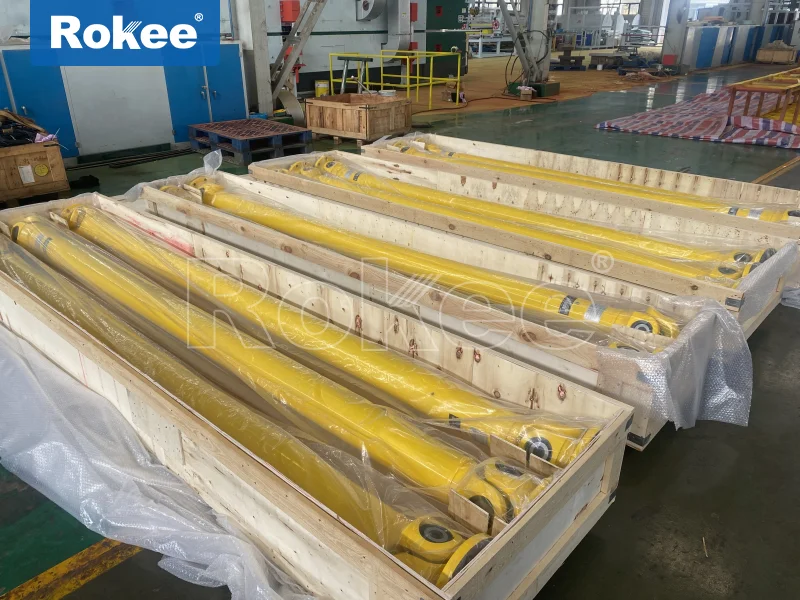
Long universal shaft coupling is a specialized flexible transmission component designed to address complex shaft connection challenges in modern mechanical systems. Differentiated from standard short universal couplings, it features an extended intermediate shaft structure paired with dual universal joint assemblies, enabling stable torque transmission over longer shaft distances while accommodating multi-dimensional shaft misalignments. This mechanical device primarily compensates for angular deviation, axial displacement and parallel offset between driving and driven shafts, solving the transmission instability issues caused by large installation spacing and irregular shaft alignment. Widely adaptable to various heavy-duty and special installation mechanical scenarios, it balances transmission efficiency, structural flexibility and operational durability. Its unique structural design makes it indispensable in mechanical transmission systems that require long-span connection and dynamic misalignment adaptation, laying a solid foundation for continuous and stable equipment operation under complex working conditions.
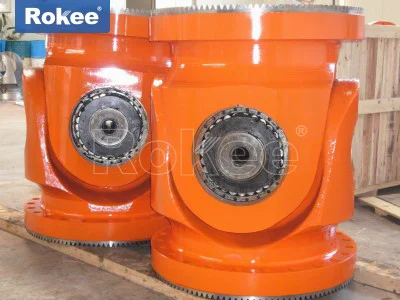
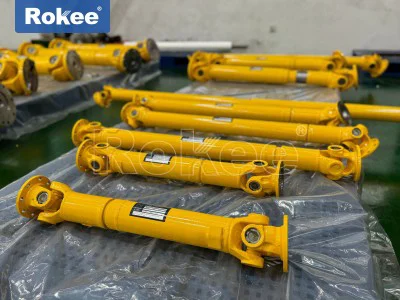
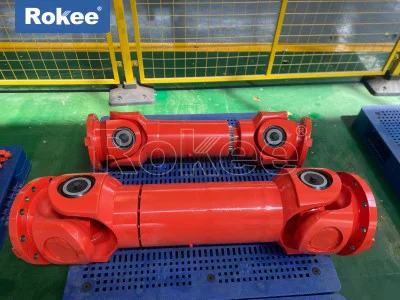
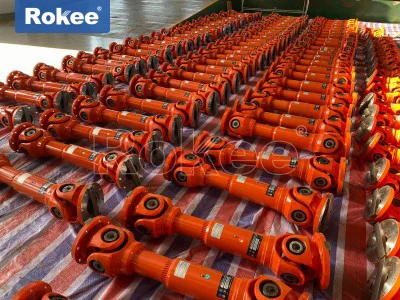
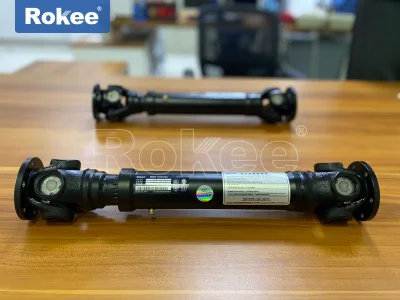
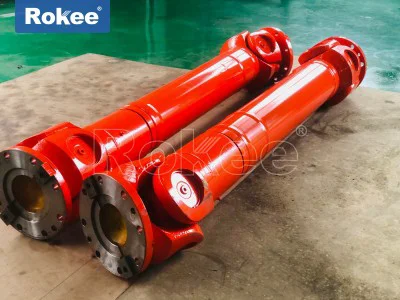
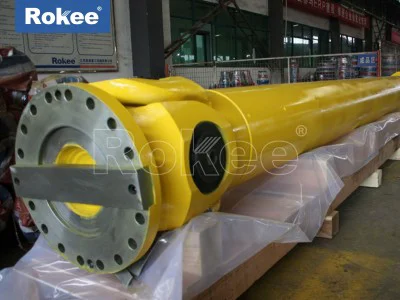
The structural composition of long universal shaft coupling is scientifically optimized based on conventional universal coupling mechanisms, forming a three-core integrated structure with complete functional logic. The entire assembly mainly consists of two symmetric universal joint forks, a central cross pivot component, high-precision bearing units and an extended intermediate shaft body. The bilateral universal joint forks serve as the core connecting ends, stably locking with the driving and driven shafts respectively to ensure synchronous rotation output. The central cross pivot acts as the flexible core of the coupling, realizing multi-angle rotational deflection and eliminating transmission dead angles during shaft movement. The extended intermediate shaft, the most distinctive part of this product, is forged with high-strength metal materials to ensure overall rigidity while extending the effective connection distance between shafts. All internal bearing units adopt wear-resistant structural design, which can reduce friction loss during high-speed rotation and avoid mechanical jitter caused by long-span transmission. Every structural part is precisely matched and assembled, enabling the coupling to maintain structural integrity and transmission stability under long-distance connection conditions that ordinary couplings cannot adapt to.
The working principle of long universal shaft coupling follows the basic kinematic theory of multi-body flexible transmission, with optimized dynamic adaptability for long-span operation. During equipment operation, when the connected two shafts produce angular deflection, axial stretching or parallel offset due to installation errors, thermal expansion or load changes, the dual universal joint assemblies can synchronously perform flexible deflection and position compensation. The cross pivot inside the universal joint converts the irregular displacement between the two shafts into smooth rotational motion, ensuring that torque and rotational speed can be continuously and evenly transmitted without power loss. The extended intermediate shaft plays a key role in isolating vibration and balancing stress distribution in long-distance transmission. Unlike short couplings that are prone to concentrated stress and vibration amplification under long-span working conditions, the lengthened shaft body disperses operating stress and weakens resonance generated by high-speed rotation. This working mechanism allows the coupling to always maintain stable transmission state regardless of static installation misalignment or dynamic operating displacement, effectively improving the overall operation stability of mechanical transmission systems.
Long universal shaft coupling possesses prominent performance advantages in adaptability compared with traditional coupling products, making it suitable for diverse complex working scenarios. Its most core advantage lies in the ultra-wide misalignment compensation capability, which can cope with larger angular deviation and longer axial displacement range than conventional universal couplings, perfectly adapting to mechanical equipment with large shaft spacing and variable operating positions. In terms of transmission performance, it maintains high transmission accuracy and efficiency even under long-distance connection, avoiding the problems of torque attenuation and rotational speed fluctuation common in long-span transmission. The overall structural rigidity is reasonably matched, with strong resistance to torsion and impact load, and can operate stably for a long time under heavy-duty and intermittent working conditions. Additionally, the optimized structural layout effectively reduces operating vibration and noise, improving the working environment of mechanical equipment. Its flexible connection characteristic also buffers and absorbs part of the impact load generated during equipment start-up and operation, protecting the driving and driven equipment from rigid impact damage and extending the service life of the entire transmission system.
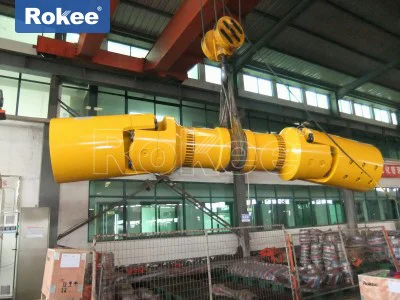
The application scenarios of long universal shaft coupling cover numerous mechanical fields that require long-span flexible transmission, with strong industrial versatility. In heavy engineering machinery, it is widely used in the transmission systems of large walking equipment and telescopic mechanical structures, solving the transmission difficulties caused by variable shaft distance and angle during equipment operation. In material handling and processing machinery, the coupling stably connects the power source and execution components with spaced installation positions, ensuring continuous and efficient power output during long-cycle equipment operation. It also shows excellent adaptability in special working environments such as floating mechanical structures and movable transmission devices, where shaft positions change frequently. For mechanical systems with large installation space span and unavoidable shaft misalignment, it can effectively make up for the defects of rigid couplings with no compensation ability and short couplings with limited spacing adaptation. With its reliable performance, it has become a key matching component for medium and large mechanical transmission systems, meeting the diversified and high-precision operation requirements of modern mechanical equipment.
Material selection and manufacturing process determine the core durability and operational reliability of long universal shaft coupling. The main shaft body and universal joint forks are made of high-strength alloy metal materials with excellent tensile strength, torsional resistance and fatigue resistance, which can resist long-term mechanical friction and alternating load impact. The surface of key components is treated with professional anti-wear and anti-corrosion processes, effectively avoiding component aging and performance degradation caused by long-term exposure to complex working environments such as dust and humidity. The cross pivot and bearing core components adopt precision machining technology to ensure high fitting accuracy between parts, reduce internal friction and wear, and maintain long-term stable flexible rotation. The integral forging and integrated molding process eliminate structural gaps and stress concentration points inside the coupling, improving the overall structural uniformity and load-bearing capacity. Strict dimensional calibration and dynamic balance detection are carried out after assembly to ensure that the coupling will not produce eccentric vibration during high-speed operation. The scientific material matching and refined manufacturing process enable the product to maintain stable performance in long-term continuous operation and harsh working conditions, reducing the probability of mechanical failure.
The installation and daily maintenance of long universal shaft coupling follow standardized operation norms, with convenient operation and low comprehensive use cost. During installation, workers only need to align the connecting ends of the coupling with the driving and driven shafts, complete positioning and fastening, and fine-tune the shaft alignment state to ensure the coupling operates within a reasonable deflection range. Its structural design reserves sufficient installation adjustment space, which can tolerate certain installation errors and reduce the difficulty of on-site construction. In daily operation, the coupling does not require frequent maintenance, and regular visual inspection of component fastening state and surface wear can meet daily use requirements. For long-term operating equipment, only regular lubrication of internal bearing and pivot parts is needed to maintain flexible rotation and reduce friction loss. When individual parts are worn and aged, targeted replacement of accessories can be realized without overall disassembly of the transmission system, greatly improving maintenance efficiency. Simple installation process and low maintenance difficulty make it have higher practical value in industrial application, saving time and labor costs for equipment operation and maintenance.
With the continuous upgrading of modern mechanical equipment towards high precision, high load and large-scale operation, the technical optimization direction of long universal shaft coupling is becoming increasingly clear. The future development focuses on further improving dynamic balance performance and high-speed adaptability to meet the transmission needs of high-precision and high-speed mechanical systems. Structural lightweight optimization will be carried out on the premise of ensuring rigidity and strength, reducing the self-weight load of the transmission system and improving equipment operating efficiency. In addition, the integration of wear-resistant and corrosion-resistant new materials will further enhance the environmental adaptability and service life of the product, realizing stable operation in more extreme working conditions. Intelligent structural design will also become an important development trend, enabling the coupling to adapt to more complex dynamic misalignment changes. As a key basic transmission component, long universal shaft coupling will continue to iterate and upgrade with mechanical manufacturing technology, providing more reliable and efficient support for the stable operation of modern industrial mechanical systems.