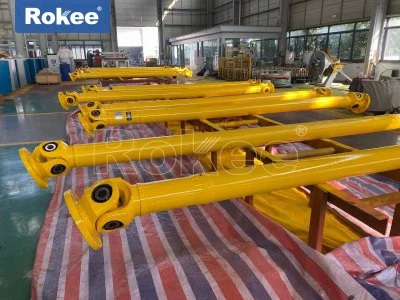
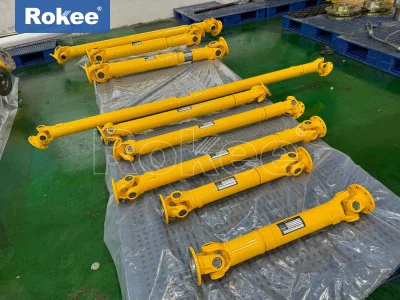
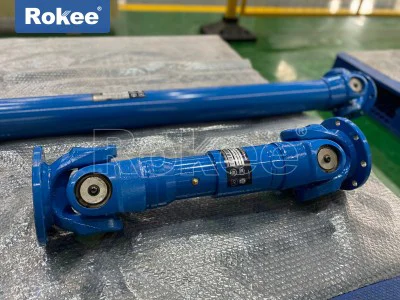
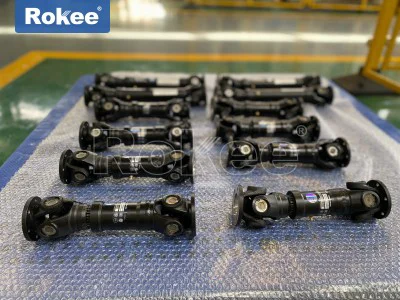
Cross Shaft Universal Coupling
Cross shaft universal coupling is a fundamental and widely adopted mechanical transmission component designed to solve the power transmission problem between two shafts with relative displacement and angular deviation. As a flexible connection device in mechanical transmission systems, it primarily relies on the cooperative movement of its cross shaft core and paired yoke structures to stably transmit torque and rotational motion under non-coaxial working conditions. This coupling stands out among various transmission accessories due to its simple and compact structure, strong load-bearing capacity, and excellent environmental adaptability. It can effectively compensate for angular, axial, and radial misalignments generated during equipment operation, avoiding transmission failure or component damage caused by rigid shaft connection. Widely applied in mobile machinery, engineering equipment, and industrial transmission systems, it adapts to complex working conditions such as frequent start-stop, variable load operation, and vibration impact, serving as an indispensable core component to ensure the stable and efficient operation of mechanical transmission structures.
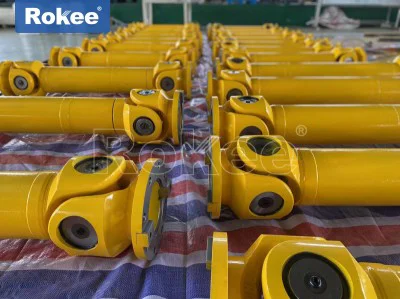
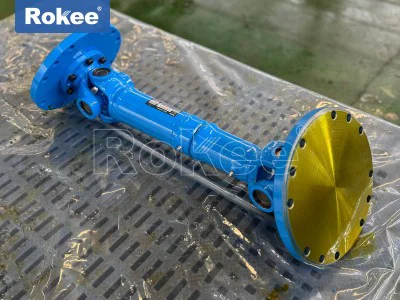
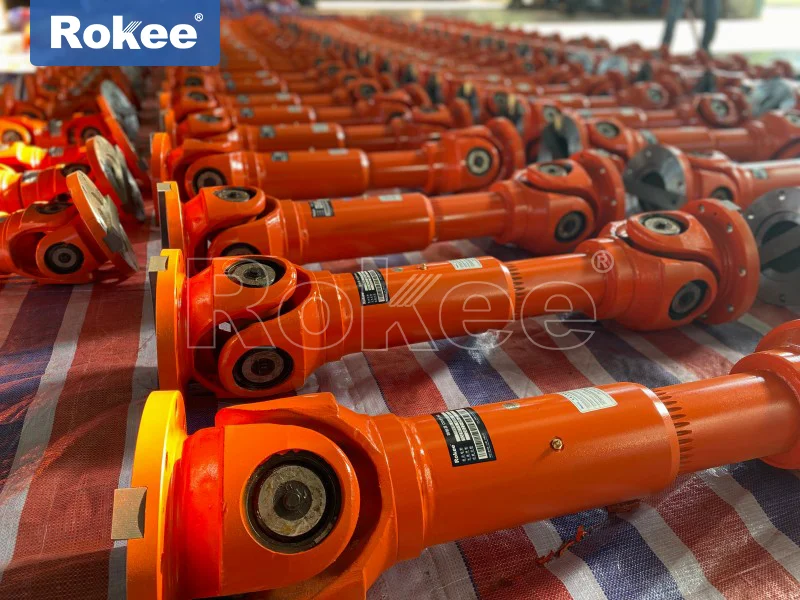
The overall structural composition of cross shaft universal coupling is precise and practical, with all components cooperating closely to complete flexible power transmission. The core of the entire device is the cross shaft component, a cross-shaped structural part with four symmetrical shaft necks, which acts as the intermediate transmission pivot connecting the driving and driven ends. Matched with the cross shaft are two fork-shaped universal joint yokes, which are respectively fixed to the driving shaft and driven shaft of the transmission system. Four sets of precision needle roller bearings are installed at the connection positions between the four shaft necks of the cross shaft and the two yokes, enabling flexible rotational friction between components while bearing transmission torque. In addition, the coupling is equipped with auxiliary structures such as sealing rings and lubrication accessories. The sealing structures can block external dust, moisture and impurities from entering the friction clearance, while the lubrication system maintains smooth operation of the bearings and contact parts. All structural parts adopt high-strength mechanical processing technology, ensuring the overall rigidity and structural stability of the coupling, and laying a solid foundation for long-term stable operation under complex load conditions.
The working principle of cross shaft universal coupling follows classic mechanical transmission logic, realizing flexible torque transmission through the hinged cooperation of internal components. In the working state, the rotational power of the driving shaft is first transmitted to the driving end yoke, which drives the cross shaft to perform synchronous rotational motion through the connected bearings. The cross shaft then transfers the torque to the driven end yoke, further driving the driven shaft to rotate and complete power transmission. The unique structural design of the cross shaft allows the two connected yokes to form a certain included angle during operation, enabling the coupling to adapt to angular misalignment between the driving and driven shafts. A single cross shaft universal coupling will produce slight speed fluctuation during operation with angular deviation, which is a normal mechanical characteristic of the structure. In practical industrial applications, double-section cross shaft universal couplings are often used in combination. By reasonably setting the installation angle of the two groups of universal joints, the speed fluctuation generated by a single joint can be mutually offset, realizing approximate constant-speed power transmission and effectively improving the stability of the entire transmission system.
Cross shaft universal coupling possesses remarkable performance advantages that make it adaptable to diverse complex mechanical working conditions. First of all, it has excellent misalignment compensation capability, which can effectively adapt to angular deviation, axial displacement and radial offset between shafts caused by equipment vibration, structural deformation or assembly errors during operation. This compensation performance avoids additional mechanical stress on the transmission shaft and bearings, greatly reducing the risk of component wear and fracture. Secondly, the coupling has strong heavy-load resistance and impact resistance. Made of high-strength alloy materials and processed by precise heat treatment, it can stably bear large torque and instantaneous impact load, suitable for high-intensity operation scenarios. In addition, its simple structural design brings outstanding practicability, with fewer internal vulnerable parts and stable mechanical performance. Compared with other flexible transmission components, it has lower operation failure rate and stronger environmental adaptability, and can work normally in high-dust, high-vibration and variable-temperature working environments, meeting the long-term operation needs of various industrial mechanical equipment.
The application scope of cross shaft universal coupling covers multiple industrial fields and mechanical equipment types, becoming a key transmission component in mobile and industrial machinery. In transportation machinery, it is applied to the power transmission structure of mobile equipment, used to connect the transmission shaft and the driving part, and compensate the relative position change of the shaft system caused by chassis vibration and walking displacement during equipment operation, ensuring continuous and stable power output. In engineering machinery such as loaders, excavators and cranes, the coupling copes with frequent angle changes and alternating impact loads during equipment operation, maintaining the reliability of the power transmission system under complex working actions. In metallurgy, mining and industrial processing equipment, it is used in the transmission structure of rolling mills, conveyors and heavy-duty reducers, adapting to high-torque and continuous operation conditions. At the same time, it is also widely used in agricultural machinery, textile machinery and general mechanical transmission systems, providing stable flexible connection solutions for various shaft transmission scenarios with misalignment requirements.
Material selection and processing technology are critical factors that determine the service performance and service life of cross shaft universal coupling. High-quality couplings mostly adopt high-strength alloy steel as the base material for core components such as cross shafts and yokes. This material has excellent tensile strength, wear resistance and fatigue resistance, which can resist long-term friction and alternating load damage in the transmission process. After rough machining, all core components will undergo strict heat treatment processes including quenching and tempering, which can effectively improve the surface hardness and internal toughness of the parts, avoid deformation and wear during high-load operation, and enhance the overall structural durability. The needle roller bearings matched with the cross shaft are made of high-precision wear-resistant materials, with smooth surface and low friction coefficient, reducing mechanical loss during power transmission. The sealing and lubrication auxiliary parts are selected according to different working environments, adopting wear-resistant and aging-resistant rubber and high-temperature and pressure-resistant lubricating grease to ensure that the coupling can maintain stable lubrication and sealing performance in different working scenarios and delay component aging and failure.
Daily maintenance and reasonable use methods directly affect the operating efficiency and service life of cross shaft universal coupling, and standardized maintenance can effectively reduce equipment failure rates. In the daily operation process, regular lubrication maintenance is the core link. It is necessary to regularly inject special lubricating grease into the bearing and hinge gaps to avoid dry friction between components, reduce wear and reduce transmission noise. At the same time, regular visual inspection and disassembly inspection should be carried out to check whether there is abnormal wear, deformation, looseness or damage on the cross shaft, yoke and bearings, and replace damaged accessories in a timely manner to avoid hidden dangers of transmission failure. It is also necessary to check the sealing state regularly to prevent the aging and falling off of sealing parts, which may cause dust and impurities to enter the interior and accelerate component wear. In the use process, overload operation should be avoided for a long time, and the working angle of the coupling should be controlled within a reasonable range to prevent excessive angular deviation from causing excessive torque fluctuation and mechanical fatigue damage, so as to ensure the long-term stable and efficient operation of the coupling.
With the continuous upgrading of modern mechanical equipment towards high efficiency, high precision and high durability, the optimization and development of cross shaft universal coupling technology are also advancing steadily. At present, the industry continues to optimize the structural design of the coupling, adopting integrated processing technology to reduce assembly gaps, improve the overall matching precision of components, and further reduce vibration and noise during transmission. In terms of material innovation, new high-strength and wear-resistant alloy materials and composite surface treatment processes are gradually applied, which significantly improve the fatigue resistance and corrosion resistance of the coupling and expand its adaptable working environment. In addition, the structural optimization of lightweight and high-load integration has become a development trend, which can reduce the self-weight of the coupling while ensuring load-bearing performance, reduce the overall energy consumption of mechanical operation, and improve transmission efficiency. In the future, with the continuous progress of mechanical manufacturing technology, cross shaft universal coupling will achieve more precise transmission performance and longer service life, and be more widely used in intelligent and high-end mechanical equipment fields.