High Speed Drive Shaft

High speed drive shafts are pivotal mechanical transmission components designed to deliver stable, efficient torque and rotational motion transfer in high-velocity operating environments. Unlike conventional drive shafts built for low to medium speed operation, these specialized parts are structurally optimized to tackle core challenges including high-frequency vibration, centrifugal force amplification, power transmission loss, and mechanical deformation under extreme rotational speeds. Widely applied in high-end industrial equipment, high-performance power systems, precision testing machinery and advanced transportation devices, they serve as the critical connecting bridge between power sources and execution components. Their core design logic balances structural rigidity, lightweight performance and dynamic stability, ensuring continuous and reliable power output while minimizing energy consumption and mechanical wear. With the continuous upgrading of modern mechanical equipment toward high efficiency and high precision, high speed drive shafts have become an indispensable core component restricting the overall performance and service life of high-speed mechanical systems.
The core functional principle of high speed drive shafts revolves around adaptive power transmission and dynamic balance maintenance during high-speed rotation. In mechanical operation scenarios, power generated by prime movers needs to be stably transmitted to load components through intermediate transmission structures, and high speed drive shafts undertake this key transmission task under ultra-high rotational frequencies. Different from ordinary drive shafts that only need to bear basic torque and static load, high speed working conditions will produce huge centrifugal force and alternating dynamic load, which puts forward higher requirements on the force-bearing performance of the shaft body. The flexible connection structures equipped at both ends of the shaft body can effectively compensate for tiny angular deflection and axial displacement between connected components caused by equipment operation vibration and installation errors. This adaptive compensation capability avoids rigid friction and stress concentration during high-speed operation, preventing abnormal power jitter and mechanical impact. Meanwhile, the streamlined structural design of the shaft body greatly reduces air resistance during high-speed rotation, ensuring that mechanical energy is transmitted with minimal loss and maintaining consistent transmission efficiency in long-term continuous operation.
Material selection is the fundamental determinant of the comprehensive performance and service life of high speed drive shafts, directly adapting to their extreme operating characteristics. Traditional carbon structural steels are difficult to meet the requirements of high-speed operation due to insufficient fatigue resistance and low specific stiffness, so high-performance alloy materials and advanced composite materials have become the mainstream choices in current manufacturing. High-strength alloy steels feature excellent torsional resistance, bending stiffness and fatigue resistance, which can resist repeated alternating loads and micro-deformation generated by long-term high-speed rotation, effectively avoiding shaft body fracture or torsional failure. In recent years, composite materials represented by carbon fiber reinforced polymers have been increasingly applied to high-end high speed drive shafts. Such materials have the advantages of light weight and high specific strength, which can significantly reduce the self-weight of the shaft body, thereby lowering centrifugal inertia force and inhibiting vibration amplification at high speeds. Reasonable material matching can not only improve the dynamic stability of the drive shaft, but also enhance its temperature resistance and corrosion resistance, adapting to complex and harsh industrial operating environments.
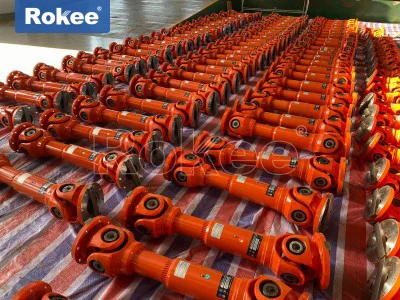
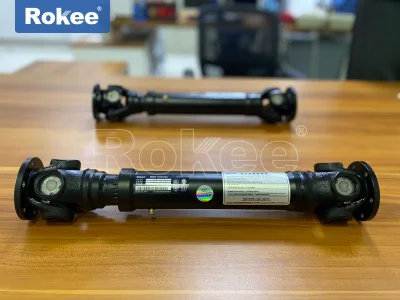
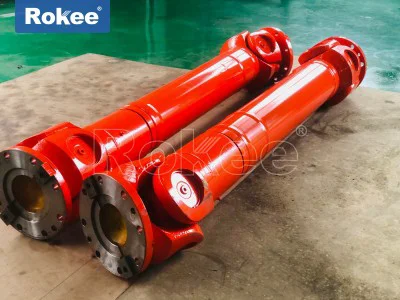
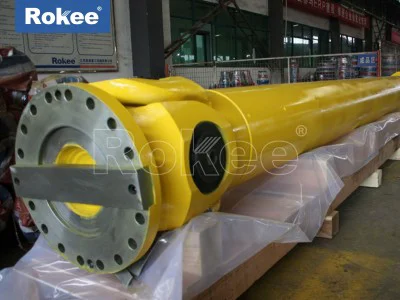
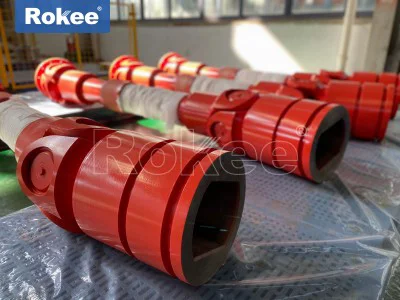
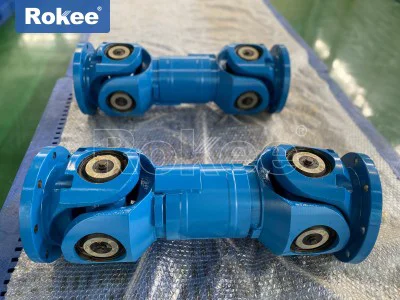
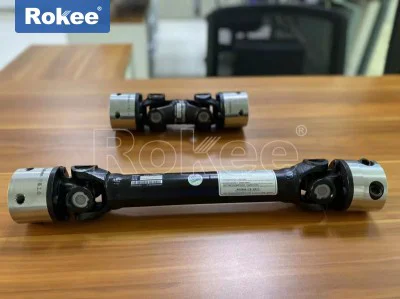
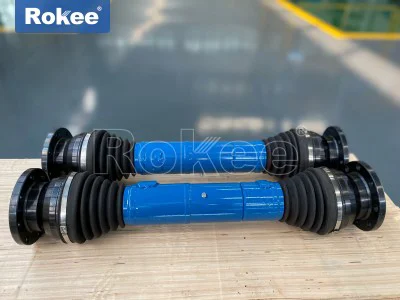
Structural optimization design is the core means to improve the dynamic performance of high speed drive shafts and avoid operational failures. The overall structure of high speed drive shafts usually adopts a hollow tubular design, which is far superior to solid shaft structures in high-speed operation. The hollow structure effectively reduces the overall mass and rotational inertia of the shaft body, greatly weakening the centrifugal effect during high-speed rotation, while maintaining sufficient torsional and bending rigidity to ensure no structural distortion under high load. The universal joint components at both ends are refinedly optimized in structure, with precision-processed cross-shaped frameworks and matching rolling bearings, which can realize multi-angle flexible rotation and reduce friction resistance during power transmission. In addition, the transition parts of the shaft body are designed with smooth arc structures to eliminate stress concentration points that are prone to failure. The integrated forming process of the overall structure reduces assembly gaps and dimensional errors, ensuring high coaxiality of the shaft body during rotation. These structural optimization measures work together to suppress high-frequency vibration and resonance risks, enabling the drive shaft to maintain stable operation even at ultra-high rotational speeds.
Dynamic balance performance is a key technical index that determines the operational stability of high speed drive shafts. In the manufacturing and processing process, tiny dimensional deviations, material density differences and assembly errors will lead to uneven mass distribution of the shaft body. When rotating at high speed, this unbalanced mass will generate periodic centrifugal force, causing mechanical vibration, noise and periodic impact on the transmission system, which will not only reduce power transmission efficiency, but also accelerate the wear of matching parts and even trigger equipment failure in severe cases. For this reason, all high speed drive shafts need to undergo professional dynamic balance calibration after processing and assembly. Precision balancing equipment is used to detect the unbalanced amount of the shaft body at different rotational speeds, and material removal or counterweight correction is carried out at designated positions to minimize the unbalanced error. Excellent dynamic balance performance can effectively isolate vibration generated by the drive shaft itself, prevent vibration from spreading to the whole mechanical system, and create a stable operating environment for high-precision mechanical equipment.
High speed drive shafts face unique operational challenges in extreme working environments, and their environmental adaptability is a key part of performance evaluation. In high-speed continuous operation, the friction of internal connecting components and the aerodynamic friction of the shaft body will generate a large amount of heat, leading to rapid temperature rise of local parts. Long-term high-temperature operation will deteriorate the lubrication state of bearings and universal joints, accelerate material aging, and reduce structural rigidity and fatigue resistance. In addition, industrial operating environments often contain dust, moisture and corrosive media, which may erode the surface of the shaft body and internal precision structures, causing increased friction, rust and functional failure. To cope with these challenges, high speed drive shafts adopt targeted protective designs, including high-temperature resistant lubricating materials, closed protective structures and anti-corrosion surface treatments. These designs can effectively isolate external pollutants, maintain stable lubrication performance in high-temperature environments, and ensure that the drive shaft can maintain consistent transmission performance and structural stability in long-term, high-load and complex environmental working conditions.
The application scenarios of high speed drive shafts cover multiple high-precision and high-efficiency mechanical fields, showing strong industry adaptability. In industrial precision testing equipment such as engine dynamometers, high speed drive shafts are used to connect testing equipment and power units, achieving high-precision transmission of rotational motion and torque data, ensuring the accuracy and stability of test results. In high-speed rotating power equipment including turbine machinery and high-speed motors, they undertake the core power transmission task, supporting the efficient operation of equipment under ultra-high speed conditions. In advanced transportation equipment, high speed drive shafts adapt to frequent speed changes and dynamic load fluctuations, realizing smooth power output and improving overall operation stability. In addition, they are also widely used in high-speed processing machinery, aerospace auxiliary power systems and other fields. Different application scenarios put forward differentiated requirements for the size, rigidity, vibration resistance and environmental adaptability of drive shafts, promoting the continuous iterative optimization of product design and manufacturing technology.
The future development of high speed drive shafts focuses on lightweight, high-precision integration and intelligent performance optimization. With the continuous improvement of mechanical equipment's requirements for energy conservation and efficiency, lightweight design represented by advanced composite materials will become the mainstream development direction, which can further reduce rotational inertia, improve transmission efficiency and reduce equipment energy consumption. In terms of processing technology, ultra-precision machining and integrated molding technology will continuously improve the dimensional accuracy and structural consistency of products, effectively reducing assembly errors and unbalanced factors. At the same time, the combination of structural design optimization and dynamic simulation technology can accurately predict the operating state of drive shafts under different working conditions, realize targeted performance improvement. In addition, the application of intelligent monitoring technology will enable high speed drive shafts to have real-time perception of operating vibration, temperature and wear state, realizing early warning of potential failures and greatly improving the safety and reliability of long-term operation of high-speed mechanical systems.