Long Telescopic Universal Joint Coupling
Long telescopic universal joint coupling is a sophisticated mechanical transmission component specially optimized for complex and dynamic industrial transmission scenarios. Integrating the classic angular compensation advantages of universal joints and the flexible axial displacement adjustment function of telescopic structures, this coupling effectively solves common transmission problems such as shaft misalignment, installation position deviation, and real-time axial distance changes during equipment operation. Unlike conventional fixed-length couplings that rely on precise mounting positioning and rigid transmission, it features adaptive length expansion and contraction, stable torque transmission, and strong environmental adaptability. Widely applied in heavy machinery, automated production lines, material handling equipment and various industrial transmission systems, it serves as a core connecting medium for power transmission between disjointed or dynamically moving shafts. Its modular and robust structural design ensures reliable long-term operation under variable working conditions, greatly reducing equipment failure rates and maintenance costs while improving the overall stability and continuity of mechanical transmission systems.
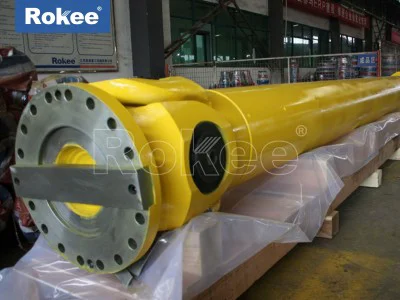
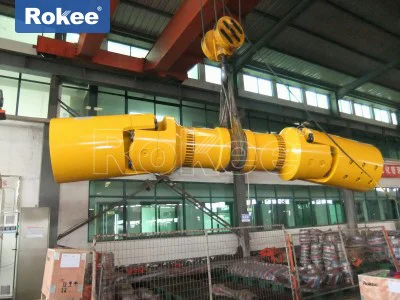
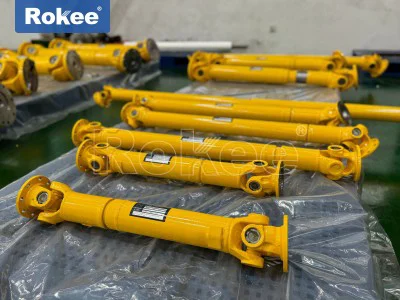
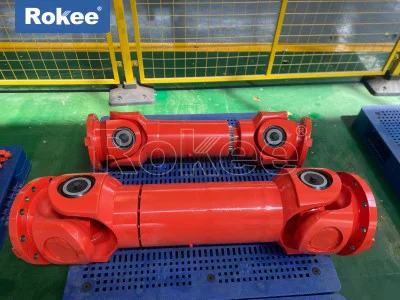
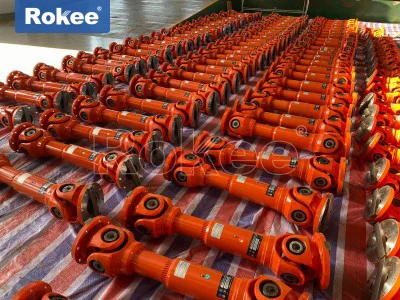
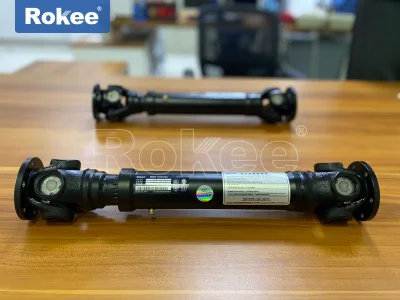
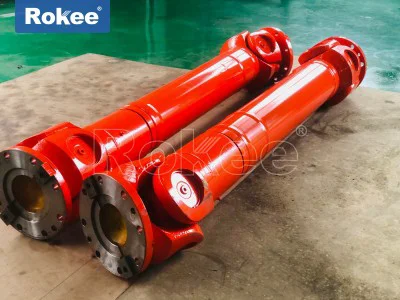
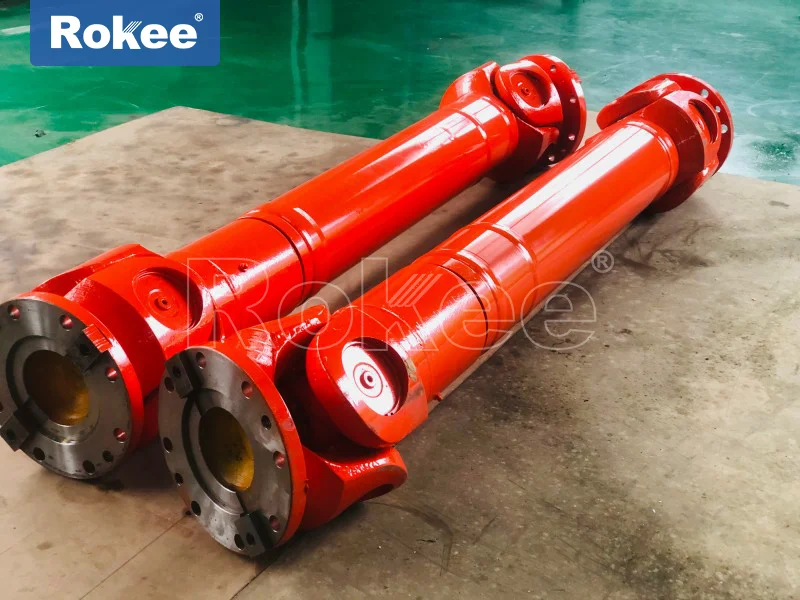
The structural composition of long telescopic universal coupling adopts a highly integrated and functional modular design, with every component precisely engineered to coordinate transmission movements and compensate for displacement deviations. The core structure mainly consists of universal joint assemblies at both ends, a middle telescopic spline transmission mechanism, and high-precision connecting components. The universal joint assembly, built with cross shaft and fork body structures, forms the angular compensation unit of the coupling. The mutually perpendicular cross shaft bearing structure allows the two fork bodies to produce flexible relative rotation within a certain angle range, realizing stable power output under angular deflection conditions. The middle telescopic part is composed of matched inner and outer spline sleeves, which is the key to realizing axial length adjustment. The spline structure adopts precision machining technology to ensure smooth sliding and fitting clearance, enabling the coupling to freely extend and contract according to the dynamic distance change between transmission shafts. All connecting parts are designed with high-strength fastening structures to avoid loose connection and power loss during long-term high-load operation, and the overall structural layout balances flexibility and rigidity perfectly to adapt to diverse complex working environments.
The core working principle of long telescopic universal joint coupling is based on the dual mechanical compensation mechanism of angular deflection adaptation and axial dynamic adjustment, which realizes uninterrupted and efficient power transmission in variable transmission states. In terms of angular compensation, the cross shaft universal joint structure breaks the limitation of coaxial transmission. When the driving shaft and driven shaft produce angular deviation due to equipment vibration, installation errors or mechanical operation displacement, the cross shaft bearing set can flexibly rotate and adjust the force transmission angle, ensuring that torque can be continuously and evenly transmitted without obvious power attenuation or transmission jitter. In terms of axial compensation, the nested spline telescopic structure responds in real time to the axial distance change between the two shafts. When the equipment operates, thermally expands and contracts or generates position displacement, the inner spline shaft slides linearly along the outer spline sleeve, automatically adjusting the overall effective length of the coupling. This dual compensation mechanism enables the coupling to maintain a stable transmission state in non-coaxial and variable-distance working conditions, completely different from rigid couplings that are prone to deformation and damage under displacement interference, and fundamentally improves the fault tolerance of mechanical transmission systems.
Long telescopic universal joint coupling boasts prominent performance advantages compared with traditional transmission couplings, making it more suitable for high-demand industrial working conditions. First of all, it has excellent multi-dimensional displacement compensation capability, which can simultaneously cope with angular deviation, axial displacement and a small amount of radial offset, solving various misalignment problems in transmission systems that cannot be adapted by single-function couplings. Secondly, its long telescopic design greatly expands the effective working stroke, meeting the transmission requirements of large-range axial distance changes in long-distance mechanical transmission equipment, which fills the performance gap of ordinary short-telescopic universal joints in long-stroke scenarios. In terms of transmission stability, the precision-machined spline matching structure and high-precision bearing assembly effectively reduce transmission friction and rotational clearance, ensuring smooth torque output and low vibration and noise during high-speed and high-load operation. In addition, the overall structure adopts high-strength wear-resistant materials, which has strong resistance to abrasion, impact and fatigue aging, greatly extending the service life under continuous industrial operation, and significantly reducing the frequency of equipment shutdown maintenance caused by coupling failure.
The application scenarios of long telescopic universal joint coupling cover a wide range of industrial fields that require dynamic and flexible power transmission, showing strong scene adaptability. In heavy industrial machinery such as metallurgical equipment, mining machinery and engineering machinery, it undertakes the power transmission task of large-scale operating components. These devices often produce frequent position changes and vibration deviations during operation, and the coupling’s dual compensation performance can well adapt to such harsh working conditions to ensure continuous operation of heavy-load equipment. In automated industrial production lines, it is applied to the transmission connection of conveyor equipment, lifting devices and mobile processing mechanisms. The telescopic adjustment function can adapt to the position change of moving parts in automated operations, maintaining the synchronization and stability of power transmission. It also plays an important role in port handling equipment, agricultural machinery and special industrial transmission equipment. Whether it is long-distance fixed transmission or dynamic mobile transmission, the coupling can adjust its working state in real time according to mechanical movement changes, effectively improving the operational flexibility and working efficiency of the whole equipment system.
Reasonable installation and daily maintenance are crucial to giving full play to the performance of long telescopic universal joint coupling and extending its service life. During installation, workers need to ensure that the connecting shafts are aligned within the allowable deviation range, avoid excessive initial angular offset and axial tension, and check the fitting tightness of spline parts and the flexibility of universal joint rotation to eliminate installation dead points. The fastening bolts of all connecting parts should be locked symmetrically to prevent uneven stress caused by unilateral looseness. In daily equipment operation, regular inspection of the coupling’s operating state is required, including checking for abnormal vibration, noise and jitter during rotation, observing whether the telescopic sliding of spline parts is smooth and free of jamming, and confirming that the universal joint bearing parts have no abnormal wear. Regular lubrication maintenance is essential; filling professional lubricating grease into bearings and spline sliding parts can reduce friction wear, prevent rust and corrosion, and ensure flexible telescopic and rotating movement. Timely cleaning of dust and sundries on the coupling surface can avoid foreign matter abrasion affecting transmission precision, forming a complete set of maintenance specifications to ensure long-term stable operation of the coupling.
With the continuous upgrading of modern industrial machinery towards high automation, high load and high precision, the market demand for long telescopic universal joint coupling is constantly improving, and its technical optimization direction is also more targeted. At present, the iterative upgrading of the coupling mainly focuses on structural lightweight, transmission precision improvement and environmental adaptability enhancement. The optimized hollow tubular shaft structure effectively reduces the overall weight while ensuring structural strength, reducing the operational load of mechanical equipment and improving transmission efficiency. The ultra-precision machining process of spline and bearing parts further reduces transmission clearance, realizing more accurate and synchronous power transmission, which meets the high-precision operation requirements of modern automated equipment. In addition, targeted structural and material optimization has been carried out for high-temperature, dusty and humid harsh working environments, improving the coupling’s corrosion resistance and high-temperature resistance. In the future, with the development of intelligent manufacturing, long telescopic universal joint coupling will also integrate more intelligent monitoring structures to realize real-time feedback of operating status, providing more reliable guarantee for the safe and efficient operation of industrial transmission systems.
As an indispensable flexible transmission component in modern mechanical systems, long telescopic universal joint coupling effectively makes up for the defects of traditional rigid and single-function couplings with its unique dual compensation performance and long-stroke telescopic advantages. Its stable transmission capacity, strong working condition adaptability and long service life enable it to play an irreplaceable role in multiple industrial fields. From basic heavy machinery transmission to high-precision automated production equipment, it provides reliable power connection support for dynamic and variable mechanical operation. With the continuous progress of industrial manufacturing technology, the structural design and performance parameters of long telescopic universal joint coupling will continue to be optimized and upgraded, further adapting to the increasingly complex and diversified industrial transmission needs, promoting the stable operation and efficiency improvement of various mechanical equipment systems, and bringing more value to modern industrial production and mechanical manufacturing industries.