Cardan Coupling Empowers PU Sandwich Panel Line To Achieve Green Production
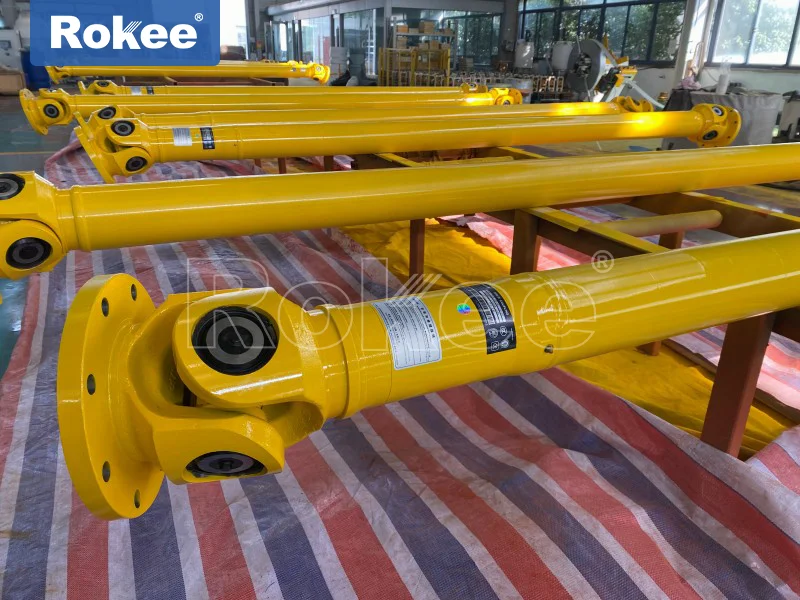
The global manufacturing sector is undergoing a profound and comprehensive transformation centered on low-carbon operation, energy conservation, and sustainable production optimization, and the building material manufacturing industry, as a fundamental supporting sector for infrastructure construction and green building development, is actively promoting the upgrading of production models to reduce resource consumption and environmental impact throughout the entire production chain. PU sandwich panels, as a core lightweight, thermal-insulating, and energy-saving building material, are widely applied in prefabricated buildings, cold storage engineering, industrial plant construction, and modern public facility renovation, and their production efficiency, energy consumption level, and waste discharge status directly determine the green attribute and sustainable development potential of the entire downstream building application scenario. In the actual operation of traditional PU sandwich panel production lines, mechanical transmission instability, frequent equipment vibration, unreasonable power loss, and frequent component wear have long been prominent pain points restricting green and efficient production. These common operational problems not only lead to ineffective waste of electric energy and raw material resources but also cause frequent production line shutdowns for maintenance, increase the overall carbon footprint of the production process, and generate additional industrial waste and noise pollution that are not conducive to clean production. As a high-efficiency and reliable mechanical transmission core component, cardan coupling, with its unique structural design and excellent transmission performance, effectively solves the long-standing misalignment and unstable power transmission problems of various rotating shafts in PU sandwich panel production lines. It optimizes the overall operating state of the production equipment from the basic link of mechanical power transmission, fundamentally reduces invalid energy consumption, cuts down mechanical wear and subsequent maintenance resource investment, stabilizes continuous and standardized production operations, and comprehensively empowers PU sandwich panel production lines to realize high-quality green production that balances production efficiency, resource conservation, and environmental friendliness.
The production process of PU sandwich panels involves multiple continuous and coordinated mechanical processes, including raw material conveying, substrate unwinding, continuous foaming compounding, roller pressing shaping, fixed-length cutting, finished product conveying, and stacking storage, and each production link relies on stable and consistent power transmission between various driving motors, reduction gears, transmission rollers, and conveying equipment to ensure synchronous operation and consistent processing accuracy. In the actual layout and long-term operation of the production line, affected by equipment installation errors, long-term operational mechanical deformation, thermal expansion and contraction of metal components during continuous production, and slight foundation settlement of the production workshop, various degrees of angular deviation, axial displacement, and radial misalignment are inevitably formed between the driving shaft and driven shaft of each transmission node of the production line. Traditional rigid transmission connecting components cannot adapt to these inevitable displacement and deviation changes in the production process; rigid connection will generate strong mechanical vibration and impact friction during equipment operation, resulting in a large amount of electric energy being converted into useless heat energy and vibration energy instead of being used for effective production and processing. This invalid energy dissipation not only increases the overall power consumption of the production line per unit of finished product but also accelerates the wear and aging of key mechanical parts such as bearings, transmission shafts, and roller components. Frequent component damage requires regular replacement of parts and frequent equipment shutdown maintenance, which not only interrupts the continuous production rhythm and reduces production operational efficiency but also consumes a large number of spare parts resources and maintenance auxiliary materials, generating additional industrial solid waste and increasing the comprehensive energy consumption and carbon emissions of the entire production cycle. At the same time, unstable transmission and continuous mechanical vibration will also affect the processing accuracy of PU sandwich panel foaming and compounding, leading to uneven foaming density, inconsistent panel thickness, and unqualified composite bonding strength of individual products, resulting in an increase in production waste and rework volume, further causing waste of PU raw materials, metal substrates, and chemical auxiliary materials, and forming a vicious cycle of high energy consumption, high waste, and low efficiency in production operation.
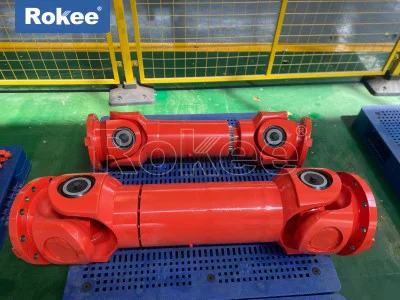
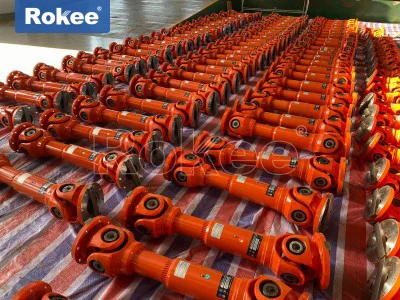
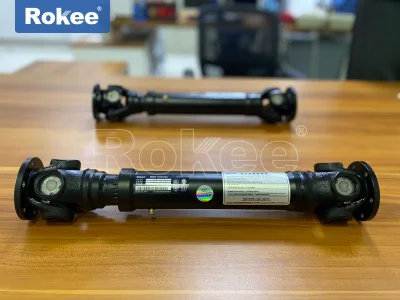
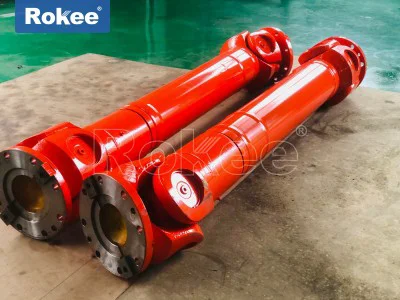
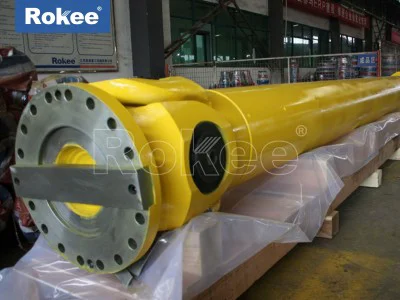
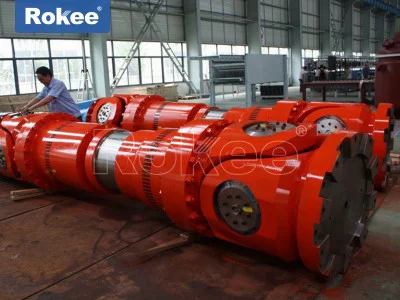
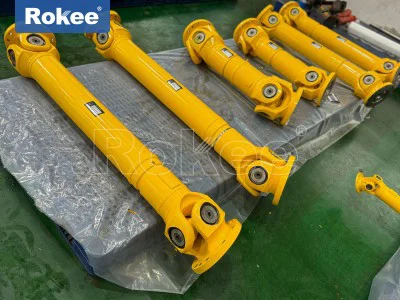
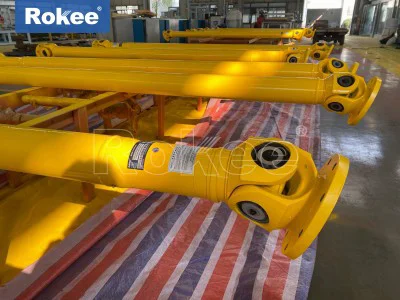
The core value of cardan coupling applied in PU sandwich panel line lies in its excellent adaptive transmission performance and efficient power transfer capability, which perfectly matches the continuous and stable operation requirements of large-scale continuous production equipment for building materials. Composed of precision-processed cross shaft components, fork joints, and high-strength needle bearing assemblies, the cardan coupling relies on a mature and reliable mechanical structure to realize flexible connection between the driving shaft and the driven shaft. Its unique structural design can effectively compensate for angular deviation, axial displacement, and radial misalignment between shafts generated during the installation and long-term operation of PU sandwich panel production equipment within a reasonable range, ensuring that the power output by the driving motor can be continuously, stably, and efficiently transmitted to each driven production component without being affected by slight mechanical displacement and deformation during operation. Unlike rigid transmission parts that generate rigid impact and friction when facing shaft misalignment, the flexible connection mode of cardan coupling can effectively absorb mechanical vibration and buffer instantaneous impact load generated during equipment start-up, shutdown, and variable-speed operation. This vibration damping and buffering effect greatly reduces the friction resistance between transmission components and the heat generated by mechanical friction in the production process, fundamentally curbing invalid energy loss in the power transmission link. More electric energy is accurately converted into effective power for raw material conveying, panel pressing, and finished product transportation, directly reducing the power consumption per square meter of produced PU sandwich panels and realizing immediate energy-saving and consumption-reducing effects in the production link, which lays a solid foundation for the production line to achieve low-carbon green operation.
In addition to direct energy saving and consumption reduction in power transmission, the application of cardan coupling also brings significant green production advantages in reducing equipment maintenance frequency, extending the service life of production line components, and reducing industrial waste generation. The stable transmission state and effective vibration absorption function greatly reduce the eccentric wear and impact damage of key mechanical parts such as drive shafts, bearings, and reduction gears caused by long-term vibration and misalignment operation. Under the protection of cardan coupling, all transmission components of the PU sandwich panel production line operate under stable and low-friction working conditions, the aging and wear rate of mechanical parts is significantly slowed down, and the service cycle of core equipment and spare parts is effectively prolonged. The extension of component service life directly reduces the frequency of equipment shutdown maintenance and the number of spare parts replacements, reducing the consumption of metal materials, lubricating oil, and other maintenance auxiliary materials required for equipment operation and maintenance. At the same time, fewer maintenance operations mean less production downtime, the production line can maintain a continuous and stable continuous production state, avoiding production efficiency loss and additional energy waste caused by frequent start and stop of the equipment. Each start and stop of large-scale industrial production equipment will produce additional power surge consumption and mechanical wear, and stable continuous production maintained by high-efficiency transmission effectively avoids such repeated energy consumption and resource loss. Moreover, the reduction in the number of replaced worn parts also greatly reduces the output of industrial solid waste generated by production equipment operation, realizing waste reduction in the production process from the source and making the overall production operation of the PU sandwich panel line more in line with the requirements of clean and green manufacturing.
The stable transmission effect brought by cardan coupling also plays an important role in improving the yield rate of PU sandwich panel products and reducing raw material waste, which is an indispensable part of the green production system of the production line. The production and processing quality of PU sandwich panels has extremely high requirements on the synchronization accuracy and operating stability of each roller pressing, conveying, and foaming equipment in the production line. Slight speed fluctuation and mechanical vibration in the transmission process will directly affect the uniformity of PU material foaming reaction, the bonding tightness between the upper and lower substrates and the foaming core material, and the flatness and dimensional accuracy of the finished panel. Unstable traditional transmission often leads to inconsistent operating speeds of different sections of the production line, resulting in deviations in the feeding amount of PU foaming raw materials and uneven pressing force during panel compounding, producing a large number of defective and substandard products that cannot be put into use. These unqualified products can only be scrapped and treated, not only wasting a large amount of polyurethane raw materials, color steel plates, and other core production materials but also requiring additional energy consumption for subsequent waste disposal and treatment, increasing the environmental burden of production activities. After the application of cardan coupling, the power transmission of each link of the production line is more stable, the operating speed of each processing equipment is synchronized and consistent, the mechanical vibration interference in the foaming and compounding process is eliminated, the processing accuracy and product forming stability of PU sandwich panels are significantly improved, the product yield rate is maintained at a high level, and the scrap rate of defective products is minimized. The reduction in production scrap directly reduces the waste of various production raw materials, realizes the efficient utilization of raw material resources, avoids the environmental pollution and resource waste caused by product scrapping and reprocessing, and further deepens the green production connotation of the PU sandwich panel production line.
From the perspective of long-term sustainable operation and comprehensive carbon reduction in production enterprises, the popularization and application of cardan coupling in PU sandwich panel production lines also helps optimize the overall production and operation management model of enterprises and promote the standardized and low-carbon upgrading of the entire production system. In the context of increasingly strict environmental protection and low-carbon development requirements in the manufacturing industry, building material production enterprises need to continuously reduce the comprehensive carbon emission intensity of production per unit product and reduce the negative impact of production operations on the surrounding ecological environment. The traditional PU sandwich panel production model relying on frequent equipment maintenance, high energy consumption operation, and high product scrap rate not only increases the production and operation costs of enterprises but also brings greater pressure on enterprise environmental protection assessment and carbon emission management. By virtue of its reliable transmission performance and long-term stable operation advantages, cardan coupling helps the production line achieve low energy consumption, low wear, low waste, and high-efficiency continuous operation, enabling enterprises to effectively reduce comprehensive energy consumption and carbon emissions in the production process without relying on large-scale equipment renovation and huge investment in energy-saving equipment. This mild and efficient green transformation method based on the optimization of basic transmission components has low transformation cost and obvious comprehensive benefits, which is suitable for the green upgrading needs of various existing PU sandwich panel production lines. At the same time, the stable operating state of the equipment also reduces noise pollution generated by mechanical vibration and friction during production, improving the on-site production working environment, reducing the impact of production noise on the surrounding environment and staff, and realizing the coordinated development of production efficiency, economic benefits, and environmental protection benefits.
With the continuous advancement of green building construction and the continuous improvement of the market's requirements for low-carbon and environmentally friendly building materials, the PU sandwich panel manufacturing industry will continue to move towards more efficient, low-carbon, and resource-saving intelligent green production. As a key basic mechanical transmission component, cardan coupling will continue to play an irreplaceable important role in the green upgrading process of PU sandwich panel production lines. Its excellent performance in adapting to shaft misalignment, reducing transmission energy consumption, reducing equipment wear, stabilizing production operation, and reducing raw material waste makes it an important starting point for building material production enterprises to carry out green production transformation from the basic mechanical operation link. In the future, with the continuous optimization and upgrading of cardan coupling manufacturing technology and structural design, its transmission efficiency and adaptive operation performance will be further improved, and it will provide more solid technical support for the long-term stable green operation of various continuous building material production lines. For PU sandwich panel production enterprises, attaching importance to the optimization and upgrading of basic transmission components such as cardan coupling, giving full play to the empowering role of high-performance mechanical parts in energy saving, consumption reduction, and emission reduction of production lines, can not only effectively reduce production operation costs and improve core market competitiveness but also firmly grasp the development opportunity of green manufacturing, realize the organic unity of production development, resource conservation, and environmental protection, and promote the entire building material manufacturing industry to move towards a more sustainable and high-quality green development path.