Universal Shaft Coupling Escorts Efficient Operation Of Sandwich Panel Line
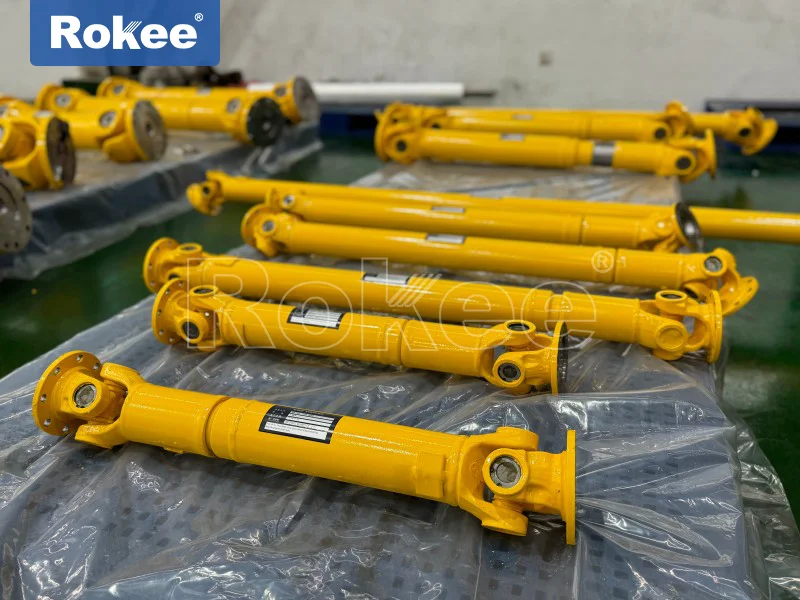
In the modern construction and manufacturing industry, sandwich panels have become an indispensable core material due to their excellent thermal insulation, sound insulation, light weight and high structural strength. They are widely used in industrial workshops, warehouses, cold storage, prefabricated buildings and other fields, driving the continuous development and upgrading of sandwich panel production lines. As the core component of the transmission system in the production line, the universal shaft coupling undertakes the important task of connecting different mechanical equipment, transmitting torque and motion, and its stable and efficient operation directly determines the production efficiency, product quality and operation stability of the entire sandwich panel line. In the complex and continuous production process of sandwich panels, the universal shaft coupling, with its unique structural advantages and excellent performance, silently escorts the efficient operation of the production line, becoming an invisible backbone supporting the mass production of sandwich panels.
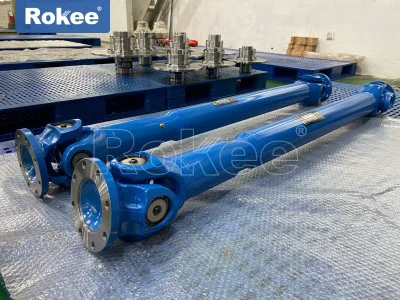
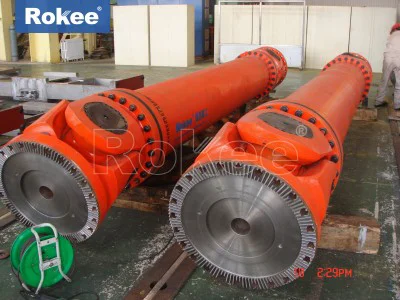
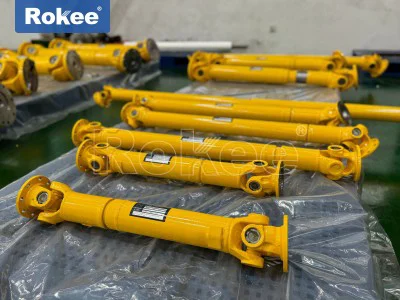
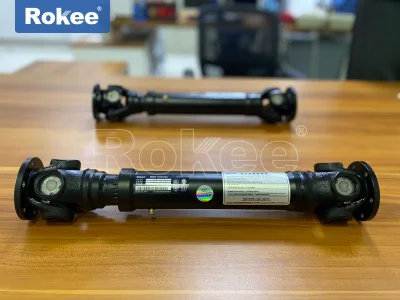
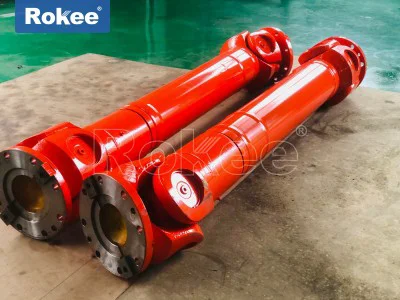
To understand the important role of universal shaft couplings in sandwich panel production lines, it is first necessary to clarify the working principle and structural characteristics of universal shaft couplings. A universal shaft coupling is a key mechanical component designed to connect two shafts (driving shaft and driven shaft) in different mechanisms, enabling them to rotate synchronously and transmit torque and motion reliably. Unlike ordinary rigid couplings that require strict coaxiality of the two connected shafts, the most prominent feature of universal shaft couplings is their strong angular compensation capability, which can achieve stable power transmission even when the two shafts are not on the same axis and there is an angle between the axes. According to the actual working conditions, the allowable angle between the two axes of universal shaft couplings of different structural types is usually between 5° and 45°, which enables them to flexibly adapt to various complex installation environments and working conditions in the sandwich panel production line. The basic working principle of the universal shaft coupling is based on the theory of spatial linkage mechanism. Taking the most commonly used cross-axis universal shaft coupling as an example, it uses a special structure composed of cross shafts, bearings and fork head components to convert the rotational motion of the input shaft into the swing motion of the cross shaft, and then transmit the swing motion to the output shaft, thereby realizing efficient torque transmission. It is worth noting that a single universal shaft coupling may have speed fluctuations during transmission, and the speed of the output shaft may change periodically, which may affect the stability of the production line. Therefore, in practical applications, a double-joint form is usually adopted. By reasonably arranging the spatial geometric relationship between the two universal shaft couplings, the synchronization of the driving and driven shafts is ensured, and the impact of speed fluctuations is eliminated, laying a foundation for the stable operation of the sandwich panel production line.
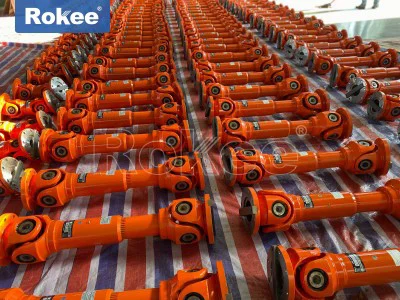
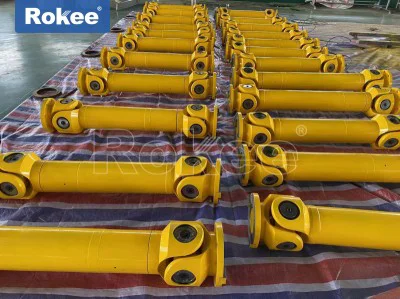
From the perspective of material selection, universal shaft couplings are mostly made of high-quality alloy steels such as 45 steel, 45 forged steel and 40 chromium. After appropriate heat treatment, these materials have excellent properties such as high strength, wear resistance and long fatigue life, which can withstand the high torque and long-term continuous operation requirements in the sandwich panel production line. For heavy-duty working conditions in some large-scale sandwich panel production lines, universal shaft couplings will also use alloy cast steel or forged steel parts to further improve their load-bearing capacity and adapt to the demand for high-torque transmission. With the continuous advancement of materials science, new materials such as high-strength stainless steel and special alloys have also been gradually applied to universal shaft couplings, which can adapt to special working environments such as high temperature, humidity and corrosion in some sandwich panel production links, further expanding the application scope of universal shaft couplings and enhancing their service life and stability. The structural design of universal shaft couplings is also constantly optimized. The integrated fork head layout and modular structure make the overall volume compact, which can adapt to the limited installation space in the sandwich panel production line, while also facilitating installation, disassembly and maintenance, reducing the difficulty of daily operation and maintenance of the production line.
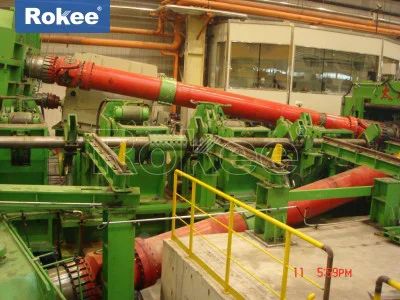
The sandwich panel line is a complex continuous automatic production system, which involves multiple links such as uncoiling of face sheet materials, roll forming, core material feeding, gluing, compound pressing, curing, cutting, conveying and stacking. Each link is closely connected, and the coordination and synchronization between various mechanical equipment directly affect the production efficiency and product quality of the entire line. In this process, the universal shaft coupling plays a key connecting role, connecting the power source (such as motor) with various functional equipment (such as uncoiler, roll forming machine, double belt press, cutting machine, conveyor, etc.), realizing the efficient transmission of power and motion, and ensuring the coordinated operation of each link. For example, in the uncoiling link of the sandwich panel production line, the uncoiler needs to continuously and stably uncoil the metal coil (such as color steel coil) into a flat sheet, and the power of the uncoiler is transmitted through the universal shaft coupling. Due to the influence of the installation position and structural layout of the uncoiler, there may be a certain angle deviation between the output shaft of the motor and the input shaft of the uncoiler. At this time, the universal shaft coupling can rely on its excellent angle compensation capability to eliminate the impact of the angle deviation, ensure the stable transmission of torque, make the uncoiler run at a uniform speed, and avoid problems such as uneven uncoiling, material jamming or surface scratches of the face sheet, which lays a good foundation for the subsequent roll forming link.
In the roll forming link, the metal sheet needs to be pressed into the required profile through the roll forming machine. The roll forming machine requires stable and uniform power transmission to ensure that the profile of the sheet is consistent, the thickness is uniform, and there is no deformation or damage. The universal shaft coupling connects the motor and the roll forming machine, which can not only transmit sufficient torque to meet the pressure requirements of roll forming, but also adapt to the slight position deviation caused by the vibration of the equipment during operation, reduce the impact of vibration on the transmission system, and ensure the stable operation of the roll forming machine. For different types of sandwich panels (such as PU sandwich panels, rock wool sandwich panels, EPS sandwich panels), the roll forming machine needs to adjust the forming pressure and speed according to the thickness and material of the face sheet. The universal shaft coupling can adapt to the speed adjustment of the motor, realize the stepless speed change transmission, and cooperate with the roll forming machine to complete the forming of different specifications of face sheets, improving the flexibility and adaptability of the production line.
The core material feeding and compound pressing links are the key links affecting the quality of sandwich panels. Whether it is the injection of liquid PU foam, the placement of solid rock wool or EPS core materials, it is necessary to coordinate with the movement of the face sheet to ensure that the core material is evenly distributed between the two face sheets, and the bonding between the core material and the face sheet is firm. The power of the core material feeding system and the double belt press is also transmitted through the universal shaft coupling. The double belt press needs to apply stable pressure and temperature to the composite sheet to ensure the bonding strength and flatness of the sandwich panel. The universal shaft coupling can transmit stable torque to the double belt press, making the pressure of the press uniform and stable, avoiding problems such as uneven bonding, delamination or warpage of the sandwich panel due to unstable pressure. At the same time, during the operation of the double belt press, the temperature change may cause slight deformation of the equipment, leading to deviation between the shafts. The universal shaft coupling can compensate for this deviation in time through its own angle and displacement compensation capability, ensuring the continuous and stable operation of the press, and improving the qualified rate of sandwich panels.
In the cutting and conveying links of the sandwich panel production line, the universal shaft coupling also plays an indispensable role. After the composite sandwich panel is cured, it needs to be cut into the required length by a flying saw or a reciprocating saw, and then conveyed to the stacking area by the conveyor for packaging. The cutting machine and the conveyor need to maintain a high degree of synchronization with the production line to avoid problems such as inaccurate cutting length, material waste or blockage of the conveyor. The universal shaft coupling connects the motor with the cutting machine and the conveyor, which can ensure the synchronous transmission of power, make the cutting speed and conveying speed match the running speed of the production line, improve the cutting accuracy and conveying efficiency. At the same time, the conveyor may have a certain angle during installation to adapt to the layout of the production line. The universal shaft coupling can adapt to this angle deviation, ensure the stable operation of the conveyor, and avoid the phenomenon of material slipping or jamming during the conveying process, ensuring the smooth progress of the entire production process.
The efficient operation of the sandwich panel production line not only requires the universal shaft coupling to have excellent transmission performance, but also requires it to have good reliability and durability, so as to reduce the frequency of equipment failure and non-planar shutdown. In the long-term continuous operation of the sandwich panel production line, the universal shaft coupling is in a high-load, high-frequency working state, and is affected by factors such as vibration, friction and temperature change, which is prone to wear, fatigue and other problems. However, due to its reasonable structural design and high-quality material selection, the universal shaft coupling can effectively resist these influences, maintain stable performance, and reduce the failure rate. For example, the cross shaft and bearing, the core components of the universal shaft coupling, are treated with special heat treatment, which improves their wear resistance and fatigue life. The use of high-quality lubricating materials can reduce the friction between components, reduce wear, and extend the service life of the universal shaft coupling. In addition, the universal shaft coupling has the characteristics of convenient maintenance. The core components adopt standardized design, and the vulnerable parts such as bearings and cross shafts can be easily replaced without complex disassembly procedures, which can quickly restore the operation of the equipment in case of failure, reduce the shutdown time of the production line, and ensure the continuous and efficient operation of the sandwich panel production line.
In practical application, the selection and installation of universal shaft couplings in sandwich panel production lines also need to be combined with the actual working conditions to maximize their role. Different types of sandwich panel production lines have different requirements for torque, speed, installation space and working environment. Therefore, it is necessary to select the appropriate type and specification of universal shaft couplings according to the specific parameters of the production line. For example, large-scale sandwich panel production lines with high production capacity and large torque need to select heavy-duty universal shaft couplings with strong load-bearing capacity; for production lines with limited installation space, compact universal shaft couplings should be selected; for production links with high temperature or corrosion, universal shaft couplings made of special materials should be selected to ensure their adaptability to the working environment. In the installation process, it is necessary to strictly follow the installation specifications, adjust the angle and position of the universal shaft coupling to ensure that the coaxiality of the connected shafts is within the allowable range, avoid excessive angle deviation leading to increased wear and reduced transmission efficiency, and at the same time ensure the firmness of the connection to prevent accidents caused by loose connections during operation.
Regular maintenance and maintenance of universal shaft couplings is also an important link to ensure the efficient operation of the sandwich panel production line. Regular lubrication is the key to maintaining the performance of the universal shaft coupling. According to the working conditions of the production line, appropriate lubricating grease (such as lithium-based lubricating grease) should be selected, and the lubrication cycle should be formulated. For ordinary working conditions, lubrication should be carried out every 300-500 hours or every 3 months; for harsh working conditions such as high temperature, high dust and high load, the lubrication cycle should be shortened to 100-200 hours or every month. When lubricating, the old lubricating grease should be cleaned to avoid blockage and affect the lubrication effect. At the same time, it is necessary to regularly check the wear and damage of the universal shaft coupling, including whether the cross shaft, bearing, fork head and other components have rust, cracks, wear or excessive clearance, whether the fasteners such as bolts are loose, and whether the sealing parts are intact. If any abnormality is found, it should be handled in time, such as replacing worn parts, tightening loose bolts, and replacing damaged seals, to avoid small faults developing into major failures and affecting the operation of the production line. In addition, regular alignment calibration of the connected shafts should be carried out to ensure that the angle deviation and radial deviation are within the allowable range, and for high-speed operation of the universal shaft coupling, regular dynamic balance detection should be carried out to avoid vibration caused by imbalance, which affects the stability of the production line.
With the continuous development of the sandwich panel industry, the requirements for the production line are getting higher and higher, and higher requirements are put forward for the performance of the universal shaft coupling. In the future, with the advancement of mechanical manufacturing technology, material science and intelligent technology, the universal shaft coupling will be further optimized and upgraded. For example, the application of new materials will further improve the wear resistance, corrosion resistance and fatigue life of the universal shaft coupling; the optimization of structural design will make it have better angle compensation capability and transmission efficiency, and adapt to more complex working conditions; the combination of intelligent technology will enable the universal shaft coupling to realize real-time monitoring of working status, timely predict potential faults, and provide support for the intelligent operation and maintenance of the sandwich panel production line. At the same time, with the continuous improvement of energy conservation and environmental protection requirements, the universal shaft coupling will also develop in the direction of high efficiency and energy saving, reducing energy loss during transmission, and helping the sandwich panel production line achieve green and efficient production.
In conclusion, the universal shaft coupling, as a key component in the transmission system of the sandwich panel production line, plays an irreplaceable role in ensuring the efficient, stable and continuous operation of the production line. It connects various functional equipment of the production line through its excellent angle compensation capability, high-efficiency torque transmission performance, good reliability and durability, realizes the coordinated operation of each link, improves production efficiency, ensures product quality, and reduces production costs. From the uncoiling of the face sheet to the cutting and stacking of the finished product, every link of the sandwich panel production line cannot do without the escort of the universal shaft coupling. With the continuous development of the sandwich panel industry, the universal shaft coupling will continue to optimize and upgrade, closely follow the development needs of the production line, and provide more reliable support for the efficient operation of the sandwich panel production line, promoting the sustainable development of the sandwich panel industry.