Precision Universal Joint Coupling
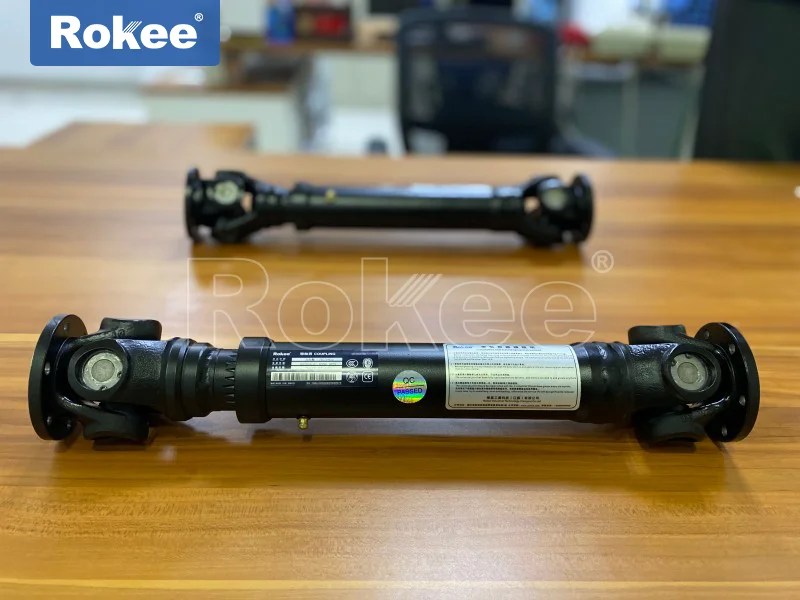
Precision universal joint coupling is a high-performance mechanical transmission component designed to deliver stable torque and rotational motion transmission between misaligned drive and driven shafts in sophisticated mechanical systems. Unlike conventional rigid couplings that require precise shaft alignment and lack adaptive flexibility, this precision-engineered component integrates articulated mechanical structures to accommodate angular, axial, and radial shaft deviations during equipment operation. It effectively resolves common operational problems such as transmission jitter, mechanical vibration, and component wear caused by shaft misalignment, which are prevalent in precision machinery and industrial transmission systems. With refined structural optimization and high-precision manufacturing craftsmanship, the coupling maintains consistent transmission accuracy even under dynamic working conditions including high-speed rotation, alternating loads, and minor structural displacement. Widely adaptable to diverse precision mechanical scenarios, it serves as a core connecting unit that balances transmission efficiency, operational stability, and structural flexibility, laying a solid foundation for the long-term stable operation of automated equipment, precision processing devices, and special industrial transmission systems.
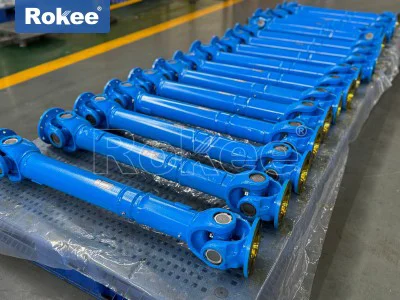
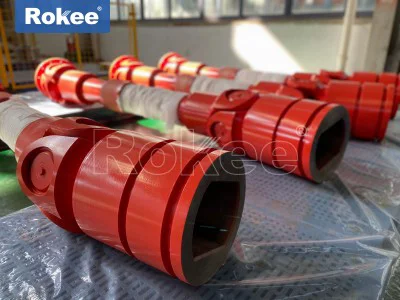
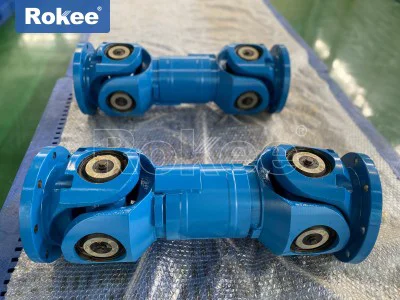
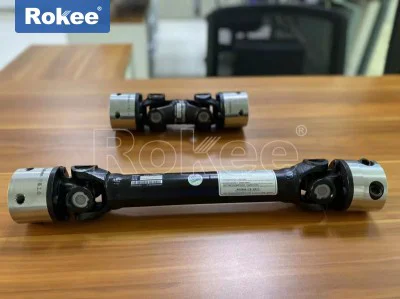
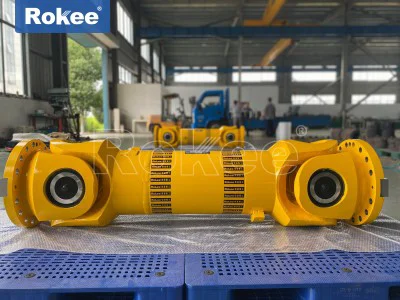
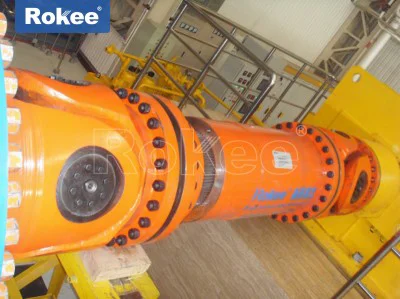
The core operational logic of precision universal joint coupling stems from the spatial linkage transmission mechanism, which realizes flexible and efficient power transfer through the cooperative movement of internal precision components. The basic structural composition includes symmetric joint yokes installed on input and output shafts, a central cross-shaped spider, and high-precision rolling bearing assemblies embedded at the connection positions of the spider and yokes. Each component undergoes fine machining and surface treatment to ensure minimal assembly clearance and accurate motion coordination. When the driving shaft outputs rotational power, the joint yoke drives the cross spider to perform composite spatial rotation and swing movements, and the spider further transmits torque to the driven yoke and shaft. This unique mechanical structure allows the two connected shafts to operate normally at a certain angular offset, eliminating the transmission dead zone and rigid stress concentration of traditional connecting parts. Different from ordinary universal joints, precision models adopt tighter manufacturing tolerances and optimized bearing matching structures, which greatly reduce instantaneous velocity fluctuation during rotation. Even in continuous cyclic operation, it can maintain smooth torque output, avoid abnormal mechanical impact, and ensure the consistency and accuracy of power transmission in precision equipment.
Material selection and precision manufacturing processes are the fundamental guarantees for the superior performance of precision universal joint couplings, determining their durability, stability, and adaptability to complex working conditions. High-strength alloy materials with excellent rigidity, toughness, and fatigue resistance are predominantly adopted for the main body and core transmission components. These materials effectively resist torsional shear force, mechanical impact, and long-term cyclic load damage during high-intensity operation, avoiding structural deformation or component failure. Key moving parts such as bearing rollers and cross spiders undergo precision grinding, heat treatment, and anti-wear surface treatment processes, which significantly improve surface smoothness and hardness, reduce friction loss during relative movement, and extend the service life of the whole machine. In addition, the overall structural design abandons redundant configurations and adopts a compact integrated layout, which not only reduces the overall volume and weight of the coupling but also improves structural rigidity and motion synchronization. Every processing link strictly controls dimensional accuracy and assembly precision to eliminate installation errors, ensuring that the coupling can maintain stable transmission performance in high-speed, high-precision, and high-load working environments without accuracy attenuation or abnormal vibration.
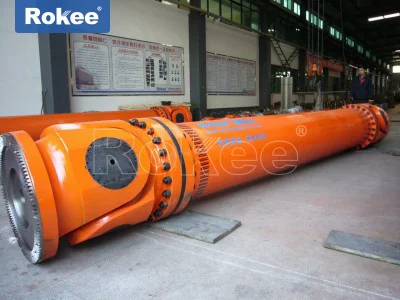
One of the most prominent advantages of precision universal coupling is its powerful multi-dimensional misalignment compensation capability, which solves the pain points of difficult shaft alignment and poor adaptability in mechanical transmission systems. In actual equipment operation, affected by installation errors, mechanical vibration, thermal expansion and contraction of components, and structural slight displacement, the connecting shafts of transmission systems often produce angular deflection, axial spacing deviation, and radial offset. Rigid couplings cannot adapt to these deviations, which will lead to increased transmission resistance, aggravated component wear, and even equipment jamming and shutdown. Precision universal joint couplings rely on their flexible articulated structure to freely adapt to angular misalignment within a reasonable range, and some optimized telescopic structures can also compensate for axial and radial displacement changes in real time. This multi-dimensional compensation function avoids additional mechanical stress on the shaft, bearing, and equipment body caused by misalignment, protects the core transmission components from fatigue damage, and greatly improves the fault tolerance of the transmission system. Whether in static installation state or dynamic operation process, it can always maintain accurate power transmission, ensuring the continuous and stable operation of precision mechanical equipment.
Precision universal joint couplings exhibit excellent dynamic operation performance, making them highly suitable for high-speed and high-precision mechanical transmission scenarios. In high-speed rotating working conditions, ordinary connecting components are prone to problems such as rotational jitter, torque fluctuation, and large noise due to insufficient structural precision and poor motion synchronization. In contrast, precision universal joint couplings achieve ultra-low clearance assembly through precise component matching and structural optimization, ensuring synchronous and consistent rotation of input and output ends. The optimized bearing friction structure reduces rolling resistance and heat generation during high-speed operation, avoiding performance degradation caused by overheating. Meanwhile, the symmetrical force-bearing design enables the coupling to evenly disperse torsional load and centrifugal force during rotation, effectively suppressing mechanical vibration and resonance phenomena. This stable dynamic performance ensures that the coupling can maintain accurate torque transmission and rotational speed consistency in long-term high-speed operation, without amplitude deviation or transmission delay. It fully meets the strict precision requirements of automated processing equipment, precision testing instruments, and high-speed transmission machinery for power connection, and guarantees the processing accuracy and operational stability of the whole equipment.
The application scenarios of precision universal joint couplings cover numerous high-precision and high-end industrial fields, thanks to their comprehensive performance advantages in stability, flexibility, and accuracy. In precision mechanical processing equipment, they are used for power connection of transmission shafts of numerical control machine tools, grinding machines, and precision cutting equipment, ensuring stable power output and processing dimensional accuracy during high-precision machining. In automated production lines and robotic transmission systems, the couplings adapt to the dynamic displacement and angle change of mechanical arms and transmission mechanisms, realizing flexible and accurate power transmission during continuous cyclic movement. In high-end testing and instrumentation equipment, their low-vibration and high-stability transmission characteristics avoid interference with testing accuracy caused by mechanical transmission errors. Additionally, they are widely applied in light industrial processing, intelligent logistics transmission, and special mechanical equipment fields, adapting to different working conditions such as continuous operation, intermittent impact load, and dynamic structural change. Their strong scenario adaptability makes them indispensable core connecting components in modern precision mechanical transmission systems.
In terms of daily operation and maintenance, precision universal joint couplings have obvious practical advantages, reducing equipment operation costs and improving system operational efficiency. The compact and modular structural design enables simple and fast installation and disassembly without the need for complex professional tools and tedious calibration processes, greatly shortening equipment assembly and maintenance time. The high-precision wear-resistant structure and high-quality materials endow the coupling with excellent anti-fatigue and anti-aging capabilities, reducing the frequency of component replacement and failure maintenance in long-term operation. Under normal working conditions, it can maintain stable performance for a long time without frequent debugging and parameter correction. Moreover, the flexible compensation structure can effectively buffer instantaneous impact load and torsional vibration in the transmission process, reducing the impact of sudden load changes on equipment components, lowering the failure rate of the entire transmission system, and extending the service life of matching mechanical equipment. This low-maintenance and high-reliability feature makes it more cost-effective than traditional coupling products in long-term industrial application.
With the continuous upgrading of modern precision machinery and intelligent equipment, the performance optimization and technical iteration of precision universal joint couplings are also advancing steadily, showing broader application prospects. Current optimization directions mainly focus on lightweight structural design, higher transmission precision, stronger environmental adaptability, and lower energy consumption. Through continuous structural simulation optimization and process innovation, the latest coupling products achieve smaller clearance, higher motion synchronization, and lower friction loss while ensuring structural rigidity. Meanwhile, targeted structural improvements are made for special working environments such as high temperature, low temperature, and high dust, enhancing the stability and durability of products in extreme working conditions. In the future, with the rapid development of intelligent manufacturing, precision processing, and high-end mechanical equipment, the demand for high-precision, high-stability, and high-adaptability transmission connecting components will continue to grow. Precision universal joint couplings will further expand their application scope, continuously meet the upgrading needs of modern industrial transmission systems, and provide more reliable basic component support for the high-quality development of precision machinery industry.