Cardan Driveshaft Adapts To Different Types Of PU Sandwich Panel Production Equipment
In the modern manufacturing industry, polyurethane (PU) sandwich panels have become an indispensable material in construction, cold storage, logistics and other fields due to their excellent thermal insulation, sound insulation, light weight and structural stability. The production of these panels relies on a variety of specialized equipment, each designed to meet specific production needs, from small-scale manual operation machines to large-scale fully automated production lines. Amidst the complex components that ensure the smooth operation of these production equipment, the cardan driveshaft stands out as a critical transmission component, whose unique structural design and superior performance enable it to adapt to the diverse working conditions of different types of PU sandwich panel production equipment, ensuring stable, efficient and continuous power transmission throughout the production process. The adaptability of the cardan driveshaft is not only reflected in its ability to match different equipment structures and working parameters, but also in its capacity to cope with the harsh operating environment of PU sandwich panel production, making it an irreplaceable core part in the entire production system.
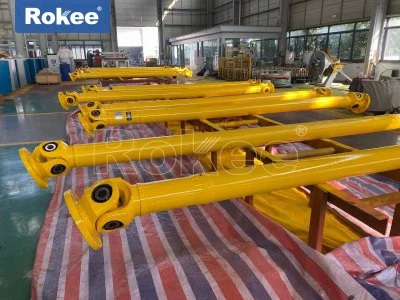
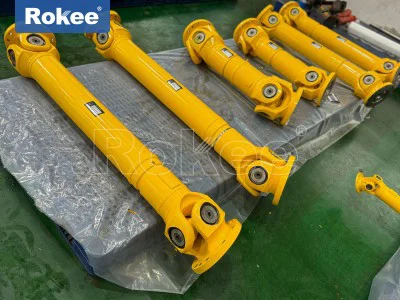
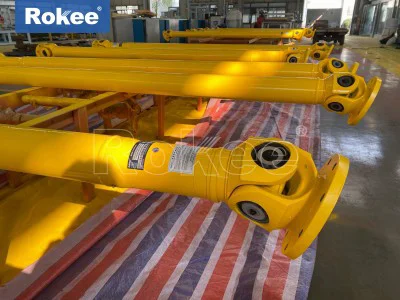
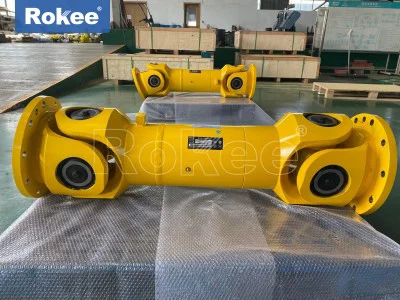
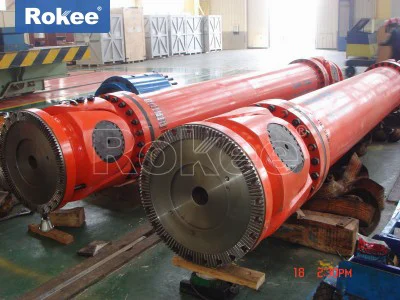
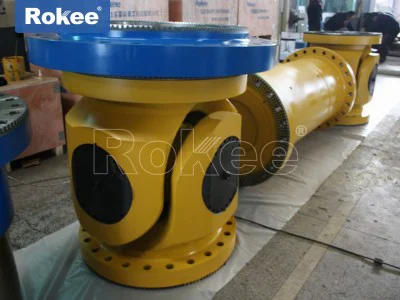
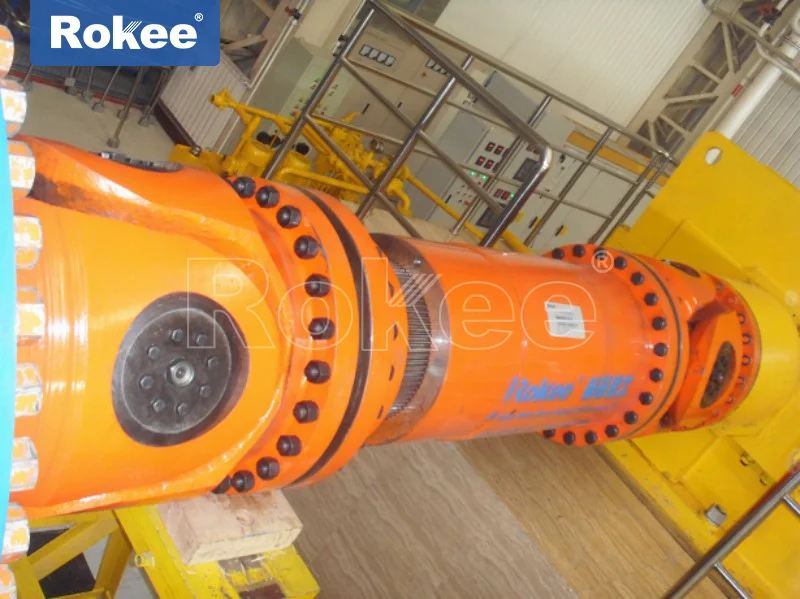
To understand how the cardan driveshaft adapts to different types of PU sandwich panel production equipment, it is first necessary to clarify the basic structure and working principle of the cardan driveshaft. A typical cardan driveshaft consists of universal joints at both ends, a shaft body, a sliding spline connection, and supporting bearings, among other components. The universal joints, also known as U-joints, are the core components that enable angular compensation, allowing the driveshaft to transmit torque stably even when there is an angular deviation between the driving and driven shafts. The shaft body, usually made of high-strength heat-treated steel, is designed to withstand high torque and continuous mechanical loads, ensuring structural integrity during long-term operation. The sliding spline connection allows the driveshaft to adjust its length slightly, compensating for axial displacement caused by thermal expansion, vibration or equipment installation errors. This combination of components gives the cardan driveshaft exceptional flexibility and robustness, laying the foundation for its adaptability to different types of production equipment. Unlike rigid transmission components that require precise alignment, the cardan driveshaft can accommodate small misalignments and displacements, which is particularly important in PU sandwich panel production equipment where multiple subsystems are often arranged in non-coaxial positions due to process requirements.
PU sandwich panel production equipment varies widely in structure and working mode, depending on factors such as production scale, product specifications, and automation level. These equipment can be roughly divided into three categories: small-scale semi-automatic production equipment, medium-sized automatic production lines, and large-scale fully automated production systems with integrated functions. Each type of equipment has distinct characteristics in terms of power requirements, transmission distance, operating speed, and working environment, which puts different demands on the cardan driveshaft. The cardan driveshaft, through its flexible structural design and adjustable performance parameters, can perfectly match these different requirements, ensuring that each type of equipment operates at its optimal efficiency.
Small-scale semi-automatic PU sandwich panel production equipment is often used in small workshops or production sites with limited space and low output requirements. This type of equipment usually consists of separate modules, such as uncoiling devices, foaming machines, laminating machines, and cutting tools, which are connected by simple transmission mechanisms. The power required for each module is relatively small, and the transmission distance between components is short, but the installation position is often flexible and may have frequent adjustments. For such equipment, the cardan driveshaft is usually designed as a single-section structure with a small diameter and light weight, which not only reduces the overall weight of the equipment but also facilitates installation and adjustment. The universal joints at both ends of the driveshaft are designed to have a large angular compensation range, allowing for easy alignment between different modules even when the installation position changes. In addition, since small-scale equipment often operates intermittently and the load changes frequently, the cardan driveshaft is equipped with wear-resistant bearings and reinforced universal joint components to ensure durability under alternating loads. For example, in small-scale laminating machines, the cardan driveshaft connects the motor to the laminating roller, transmitting torque stably while accommodating the slight angular deviation caused by the adjustment of the roller position, ensuring that the PU sandwich panel is pressed evenly and smoothly.
Medium-sized automatic PU sandwich panel production lines are widely used in medium-sized enterprises, featuring continuous production capacity and relatively high automation. This type of production line integrates multiple processes such as uncoiling, roll forming, preheating, PU foaming, laminating, curing, and cutting into a coherent system, requiring synchronized operation of each subsystem. The power requirements of such production lines are higher than those of small-scale equipment, and the transmission distance between subsystems is longer, which puts higher demands on the torque transmission capacity and stability of the cardan driveshaft. For medium-sized automatic production lines, the cardan driveshaft is usually designed as a two-section or multi-section structure, connected by intermediate supporting bearings to enhance stability during long-distance transmission. The shaft body is made of high-strength alloy steel, which can withstand higher torque and reduce deformation during operation. The universal joints are equipped with precision bearings and sealing structures to prevent dust, foam residues, and other contaminants from entering, ensuring smooth operation in the production environment. In addition, the cardan driveshaft for medium-sized production lines is often equipped with a length adjustment mechanism, which can compensate for the axial displacement caused by thermal expansion during long-term continuous operation, avoiding damage to the transmission system. For instance, in the foaming section of the production line, the cardan driveshaft transmits power from the main motor to the mixing head and the conveyor belt, ensuring that the foaming raw materials are mixed evenly and the conveyor belt runs at a constant speed, which is crucial for the quality of the PU sandwich panel core.
Large-scale fully automated PU sandwich panel production systems represent the highest level of production technology in the industry, integrating advanced technologies such as PLC control, intelligent monitoring, and automatic material handling. These systems have high production efficiency, large output, and strict requirements for product quality consistency, which place extremely high demands on the performance and reliability of the cardan driveshaft. In such systems, the cardan driveshaft is not only a power transmission component but also needs to coordinate with the intelligent control system to achieve precise speed and torque control. The driveshafts used in large-scale systems are usually designed with modular structures, allowing for easy maintenance and replacement. The shaft body is subjected to precision balancing treatment to minimize vibration during high-speed operation, which is essential for protecting the precision components of the production system and ensuring the smoothness of the PU sandwich panel surface. The universal joints are equipped with high-precision angular sensors, which can real-time monitor the angular deviation between the driving and driven shafts and feed back the data to the control system, enabling automatic adjustment to ensure stable power transmission. Moreover, large-scale production systems often operate continuously for 24 hours, so the cardan driveshaft is designed with a long service life and low maintenance requirements, using wear-resistant materials and advanced lubrication systems to reduce downtime. For example, in the automatic cutting section of the production system, the cardan driveshaft transmits power to the cutting tool, ensuring that the tool rotates at a constant speed and cuts the PU sandwich panel into precise lengths, which directly affects the final product quality.
The adaptability of the cardan driveshaft to different types of PU sandwich panel production equipment is also reflected in its ability to cope with the special working environment of PU sandwich panel production. The production process of PU sandwich panels involves the use of foaming agents, adhesives, and other chemical materials, which may produce corrosive gases or residues. In addition, the production site may have dust, high temperature, and high humidity, which can easily damage the transmission components. To address these issues, the cardan driveshaft is treated with special surface coatings, such as anti-corrosion and anti-wear coatings, to prevent corrosion and wear caused by chemical substances and dust. The sealing structure of the universal joints and bearings is also optimized to prevent the entry of dust, moisture, and foam residues, ensuring the internal components are protected. For example, in the high-temperature curing section of the production line, the cardan driveshaft is equipped with high-temperature resistant bearings and lubricants, which can maintain stable performance even in high-temperature environments, avoiding lubricant failure and component damage.
Another key aspect of the cardan driveshaft's adaptability is its ability to adjust to different product specifications of PU sandwich panels. PU sandwich panels come in various thicknesses, widths, and surface materials, which require the production equipment to adjust its working parameters accordingly. The cardan driveshaft, through its flexible design, can adapt to these parameter adjustments without the need for major modifications. For example, when producing PU sandwich panels of different thicknesses, the laminating pressure and conveyor speed of the production equipment need to be adjusted. The cardan driveshaft can transmit the adjusted torque and speed stably, ensuring that the equipment operates normally under different working conditions. In addition, some cardan driveshafts are designed with adjustable torque limits, which can be set according to the specific requirements of the production process, preventing overload damage to the equipment and ensuring the safety of the production process.
The performance of the cardan driveshaft directly affects the efficiency and quality of PU sandwich panel production. A well-designed and properly maintained cardan driveshaft can reduce equipment failure rates, improve production efficiency, and ensure the consistency of product quality. On the contrary, a poorly adapted or damaged cardan driveshaft may lead to unstable power transmission, equipment vibration, and even production stoppages, resulting in economic losses. Therefore, when selecting and using cardan driveshafts for PU sandwich panel production equipment, it is necessary to fully consider the structural characteristics, working parameters, and operating environment of the equipment, and choose the appropriate type and specification of the cardan driveshaft. At the same time, regular maintenance and inspection of the cardan driveshaft are essential, including lubrication, cleaning, and damage detection, to ensure its long-term stable operation.
In recent years, with the continuous development of PU sandwich panel production technology, the requirements for production equipment have become increasingly strict, which has also promoted the continuous improvement and innovation of cardan driveshaft technology. Manufacturers are constantly optimizing the structural design of cardan driveshafts, using new materials and processing technologies to improve their performance and adaptability. For example, the use of lightweight and high-strength composite materials can reduce the weight of the cardan driveshaft while improving its torque transmission capacity; the adoption of precision machining technology can improve the accuracy and stability of the driveshaft; the integration of intelligent monitoring technology can realize real-time monitoring of the working state of the driveshaft, facilitating timely maintenance and fault handling. These technological innovations have further enhanced the adaptability of cardan driveshafts to different types of PU sandwich panel production equipment, providing strong support for the development of the PU sandwich panel industry.
In conclusion, the cardan driveshaft is a key transmission component that adapts to different types of PU sandwich panel production equipment, with its unique structural design, superior performance, and strong environmental adaptability. It can match the working requirements of small-scale semi-automatic equipment, medium-sized automatic production lines, and large-scale fully automated production systems, ensuring stable, efficient, and continuous power transmission. The adaptability of the cardan driveshaft not only lies in its ability to adjust to different equipment structures and working parameters but also in its capacity to cope with the harsh operating environment of PU sandwich panel production and the changing product specifications. With the continuous advancement of technology, the cardan driveshaft will continue to be optimized and upgraded, playing an even more important role in the development of the PU sandwich panel production industry. Its reliability and adaptability will help manufacturers improve production efficiency, reduce costs, and produce high-quality PU sandwich panels that meet the diverse needs of the market.