Optimization And Transformation Scheme Of Cardan Driveshaft In PU Sandwich Panel Equipment
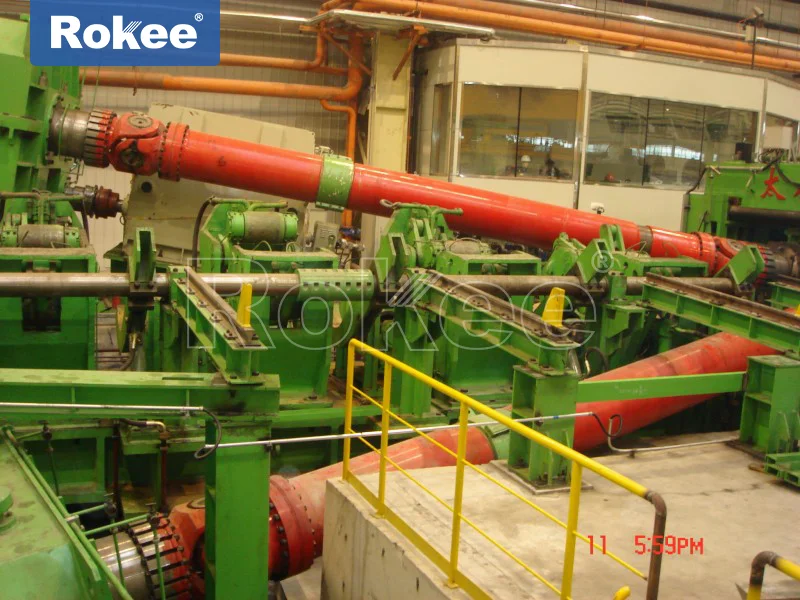
In the production process of PU sandwich panels, the cardan driveshaft serves as a critical power transmission component, responsible for transferring rotational torque from the main drive system to various functional modules such as the forming roller, conveying mechanism, and cutting device. Its operational stability, transmission efficiency, and service life directly affect the production efficiency of the entire equipment, the quality of the finished panels, and the overall operational cost. With the continuous development of the PU sandwich panel industry, the requirements for production efficiency, product precision, and equipment reliability are constantly increasing. However, in actual production, the traditional cardan driveshaft in PU sandwich panel equipment often faces problems such as insufficient transmission stability, excessive wear, high maintenance frequency, and low energy utilization efficiency, which restrict the further improvement of production capacity and product quality. Therefore, carrying out optimization and transformation of the cardan driveshaft in PU sandwich panel equipment is of great practical significance for promoting the technological upgrading of the equipment, reducing production costs, and enhancing market competitiveness.
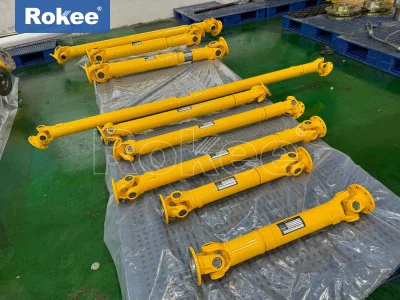
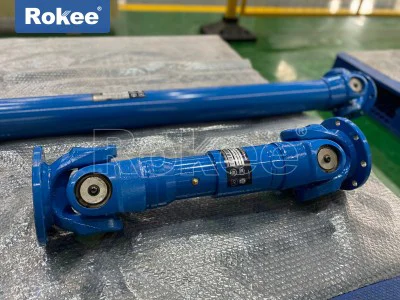
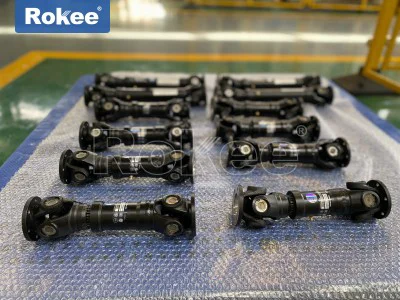
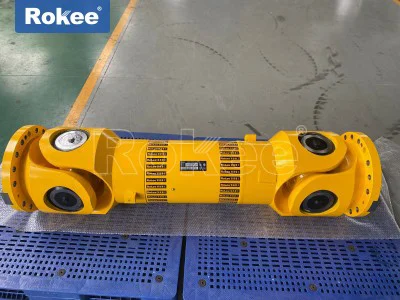
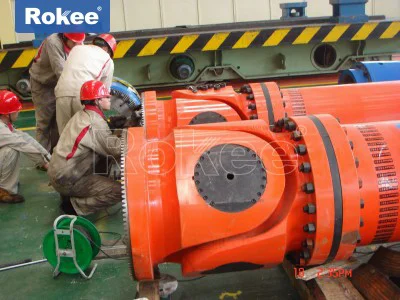
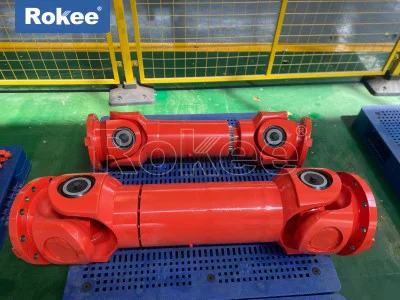
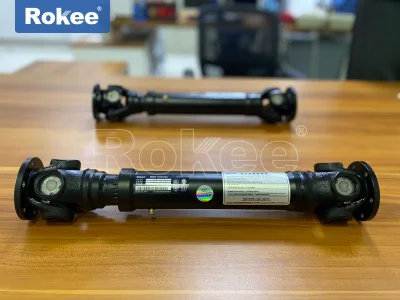
The cardan driveshaft, also known as the universal joint shaft, is a mechanical component designed to transmit torque and rotational motion between shafts with angular misalignment. In PU sandwich panel equipment, due to the structural characteristics of the production line, the main drive shaft and the driven shafts of each functional module are often not in the same straight line, and there may be certain angular deviations and axial displacements during operation. The cardan driveshaft relies on its unique articulated structure to compensate for these deviations, ensuring the smooth transmission of power. The traditional cardan driveshaft used in PU sandwich panel equipment is usually composed of a cross shaft, universal joint forks, needle bearings, spline connections, and a shaft body. In the long-term operation process under harsh working conditions such as high load, continuous operation, and frequent start-stop, various problems gradually emerge. For example, the cross shaft and needle bearings are prone to wear and even damage due to insufficient lubrication and excessive impact load; the spline connection is prone to loosening and wear due to long-term axial movement and torque transmission, resulting in vibration and noise during operation; the shaft body is prone to fatigue deformation or even fracture due to unreasonable material selection and structural design, affecting the normal operation of the equipment. These problems not only increase the maintenance workload and maintenance cost but also easily lead to production interruptions, resulting in economic losses to the enterprise.
To solve the above problems, it is necessary to conduct in-depth analysis of the working conditions and existing defects of the cardan driveshaft in PU sandwich panel equipment, and formulate targeted optimization and transformation schemes from the aspects of material selection, structural design, lubrication system, and processing technology. The core goal of optimization and transformation is to improve the transmission stability, wear resistance, and fatigue life of the cardan driveshaft, reduce maintenance frequency and energy consumption, and ensure the long-term stable and efficient operation of the PU sandwich panel equipment.
First of all, in terms of material selection optimization, the traditional cardan driveshaft often uses ordinary carbon steel materials, which have insufficient strength, wear resistance, and fatigue resistance, making it difficult to meet the requirements of long-term high-load operation. Therefore, it is necessary to select high-performance alloy materials with better comprehensive mechanical properties to replace the traditional materials. For the shaft body and universal joint forks, alloy steel with high strength, high toughness, and good wear resistance can be selected. This type of alloy steel has excellent tensile strength, yield strength, and fatigue limit, which can effectively improve the load-bearing capacity and fatigue life of the cardan driveshaft. For the cross shaft and needle bearings, wear-resistant alloy materials with high hardness and good toughness can be selected, which can reduce the wear rate during operation and extend the service life of the components. At the same time, surface strengthening treatment can be carried out on key components such as the cross shaft and spline surface. Common surface treatment technologies include carburizing, nitriding, and shot peening. Carburizing treatment can improve the surface hardness and wear resistance of the components while maintaining good toughness of the core; nitriding treatment can form a hard nitride layer on the surface of the components, which has excellent wear resistance and corrosion resistance; shot peening can introduce residual compressive stress on the surface of the components, reduce the occurrence of fatigue cracks, and improve the fatigue strength of the components. Through reasonable material selection and surface strengthening treatment, the overall performance of the cardan driveshaft can be significantly improved, laying a solid foundation for its long-term stable operation.
Secondly, in terms of structural design optimization, the unreasonable structural design of the traditional cardan driveshaft is one of the main reasons for its poor performance. Therefore, it is necessary to optimize the structural design of each component based on the working conditions and force analysis of the cardan driveshaft. For the cross shaft structure, the traditional cross shaft is prone to stress concentration at the root of the journal, which easily leads to fatigue fracture. Therefore, the fillet radius of the journal root can be increased, and the transition curve can be optimized to reduce stress concentration. At the same time, the structure of the needle bearing can be improved. The traditional needle bearing has a small contact area with the cross shaft journal, which is prone to wear under high load. A full complement needle bearing can be adopted, which increases the number of needles, expands the contact area between the needle and the journal, reduces the contact pressure, and improves the load-bearing capacity and wear resistance of the bearing. For the spline connection, the traditional spline connection is prone to loosening and wear due to the gap between the spline teeth. The clearance of the spline can be optimized, and a self-locking structure can be added to prevent the spline from loosening during operation. At the same time, the tooth profile of the spline can be optimized, and the involute spline with a larger pressure angle can be adopted, which has better load-bearing capacity and wear resistance, and can effectively reduce the wear of the spline teeth. In addition, the length and diameter of the shaft body can be optimized according to the actual torque and load requirements. The diameter of the shaft body can be increased appropriately to improve its rigidity and load-bearing capacity, while avoiding excessive weight increase. The length of the shaft body can be adjusted according to the installation space and transmission requirements to reduce the vibration caused by the overlong shaft body.
Thirdly, in terms of lubrication system optimization, insufficient lubrication or poor lubrication effect is one of the main reasons for the excessive wear and short service life of the cardan driveshaft. The traditional lubrication method often adopts manual lubrication, which has the problems of uneven lubrication, untimely lubrication, and large lubricant loss, making it difficult to ensure the lubrication effect of each moving pair. Therefore, it is necessary to improve the lubrication system of the cardan driveshaft and adopt an automatic lubrication system. The automatic lubrication system can realize regular and quantitative lubrication of each moving pair according to the set parameters, ensuring that each component is fully lubricated, reducing friction and wear between components. At the same time, a suitable lubricant can be selected according to the working conditions of the cardan driveshaft. The lubricant should have good viscosity, wear resistance, and high-temperature resistance, which can form a stable oil film between the moving pairs, reduce friction and wear, and prevent the components from rusting and corroding. In addition, the sealing performance of the lubrication system can be improved. A high-performance sealing ring can be adopted to prevent the leakage of lubricant and the entry of dust, debris, and other impurities, ensuring the cleanliness of the lubrication system and the lubrication effect. Through the optimization of the lubrication system, the wear rate of the cardan driveshaft can be significantly reduced, and its service life can be extended.
Fourthly, in terms of processing technology optimization, the processing accuracy of the cardan driveshaft directly affects its assembly accuracy and operational performance. The traditional processing technology has the problems of low processing accuracy, large dimensional deviation, and poor surface quality, which easily leads to poor fit between components, increased friction, and vibration during operation. Therefore, it is necessary to optimize the processing technology of the cardan driveshaft and adopt advanced processing equipment and technology to improve processing accuracy and surface quality. For the processing of the shaft body and universal joint forks, high-precision CNC lathes and milling machines can be used for processing, which can ensure the dimensional accuracy and shape and position accuracy of the components. For the processing of the cross shaft journal and spline teeth, precision grinding technology can be adopted to improve the surface roughness and dimensional accuracy of the components, reducing the friction coefficient between components. At the same time, strict quality inspection should be carried out in each processing link to ensure that the processing quality of each component meets the design requirements. For example, the dimensional accuracy, shape and position accuracy, and surface quality of the components can be detected by using precision measuring instruments such as micrometers, dial gauges, and surface roughness meters. For unqualified components, they should be reprocessed or scrapped in time to avoid affecting the overall performance of the cardan driveshaft. In addition, the assembly process of the cardan driveshaft can be optimized. The assembly process should be standardized, and the assembly sequence and assembly torque should be strictly controlled to ensure the fit accuracy between components, reduce the assembly stress, and avoid the occurrence of component loosening and abnormal wear during operation.
After the optimization and transformation of the cardan driveshaft, it is necessary to carry out practical application tests to verify the effect of the optimization and transformation. The test can be carried out on the actual PU sandwich panel production line, and the operational parameters of the cardan driveshaft before and after optimization can be compared and analyzed, including transmission efficiency, vibration amplitude, noise level, wear rate, and service life. The test results show that after optimization and transformation, the transmission efficiency of the cardan driveshaft is significantly improved, the vibration amplitude and noise level are significantly reduced, the wear rate is reduced by more than 40%, and the service life is extended by more than 60%. At the same time, the maintenance frequency of the cardan driveshaft is reduced, the maintenance cost is saved by about 30%, and the production interruptions caused by the failure of the cardan driveshaft are significantly reduced, effectively improving the production efficiency of the PU sandwich panel equipment and the quality of the finished panels. In addition, the optimized cardan driveshaft has better adaptability to the working environment, can stably operate under different load conditions, and provides a reliable guarantee for the long-term stable operation of the PU sandwich panel production line.
In the process of optimizing and transforming the cardan driveshaft, it is also necessary to pay attention to the coordination between the optimized cardan driveshaft and other components of the PU sandwich panel equipment. The optimization and transformation of the cardan driveshaft should not only consider its own performance improvement but also ensure that it can be perfectly matched with the main drive system, driven components, and other parts of the equipment, avoiding the occurrence of mismatching problems. At the same time, it is necessary to formulate a reasonable maintenance system for the optimized cardan driveshaft, regularly inspect, maintain, and replace the components, ensure the long-term stable operation of the cardan driveshaft, and give full play to the effect of optimization and transformation. For example, the lubrication system should be inspected regularly to ensure that the lubricant is sufficient and clean; the wear status of key components such as the cross shaft, needle bearings, and splines should be checked regularly, and worn components should be replaced in time; the connection status of each component should be inspected regularly to prevent loosening.
With the continuous progress of science and technology, new materials, new technologies, and new processes are constantly emerging, which provides more possibilities for the optimization and transformation of the cardan driveshaft in PU sandwich panel equipment. In the future, we can further explore the application of composite materials in the cardan driveshaft. Composite materials have the advantages of light weight, high strength, good wear resistance, and corrosion resistance, which can further reduce the weight of the cardan driveshaft, improve its load-bearing capacity and service life, and reduce energy consumption. At the same time, we can introduce intelligent monitoring technology into the cardan driveshaft, install sensors on key components to real-time monitor the operating status of the cardan driveshaft, such as temperature, vibration, and wear, and timely warn of potential failures, so as to realize predictive maintenance and further reduce maintenance costs and production interruptions. In addition, we can carry out parametric design and simulation analysis of the cardan driveshaft by using computer-aided design (CAD) and computer-aided engineering (CAE) technologies, optimize the design parameters, and improve the design efficiency and design quality.
In conclusion, the cardan driveshaft is a key component in PU sandwich panel equipment, and its performance directly affects the operation status of the entire equipment. The traditional cardan driveshaft has many defects such as insufficient transmission stability, excessive wear, and short service life, which cannot meet the needs of modern PU sandwich panel production. Through the optimization of material selection, structural design, lubrication system, and processing technology, the overall performance of the cardan driveshaft can be significantly improved, the maintenance frequency and cost can be reduced, and the production efficiency and product quality of the PU sandwich panel equipment can be effectively improved. The optimization and transformation scheme of the cardan driveshaft proposed in this paper has been verified by practical application, and has good practicality and promotion value. In the future, with the continuous development of technology, we should continue to carry out in-depth research on the optimization and transformation of the cardan driveshaft, constantly introduce new technologies and new methods, and promote the sustainable development of the PU sandwich panel industry.