Double Cardan Coupling
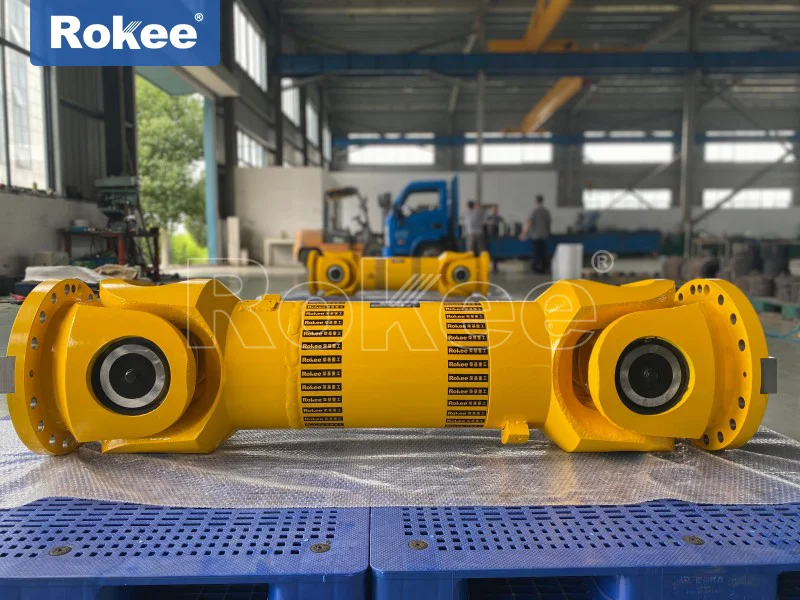
A double cardan coupling, also known as a double universal joint, is a sophisticated mechanical component designed to transmit rotational power and motion between two shafts that are not perfectly aligned, addressing the limitations of single cardan joints by eliminating speed fluctuations and reducing vibration. Unlike rigid couplings that require precise coaxial alignment, the double cardan coupling offers a high degree of angular flexibility, making it indispensable in numerous industrial, automotive, and heavy machinery applications where shaft misalignment is inevitable due to manufacturing tolerances, assembly errors, thermal expansion, or dynamic load-induced movement. Its unique design, which builds on the basic principles of the single cardan joint, has been refined over centuries, evolving from the early inventions of Gerolamo Cardano and Robert Hooke to become a cornerstone of modern power transmission systems. This article explores the intricate structure, key performance characteristics, various types, and wide-ranging applications of the double cardan coupling, providing a comprehensive overview of its role in ensuring efficient and reliable power transfer across diverse industries.
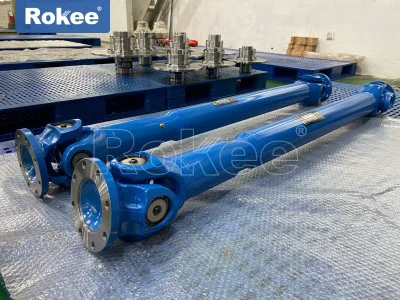
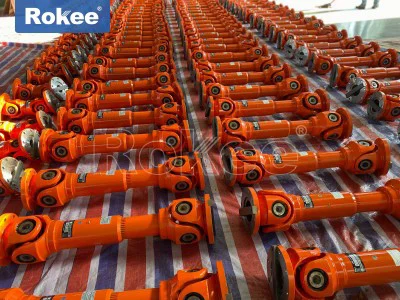
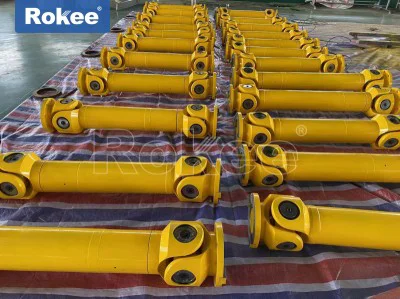
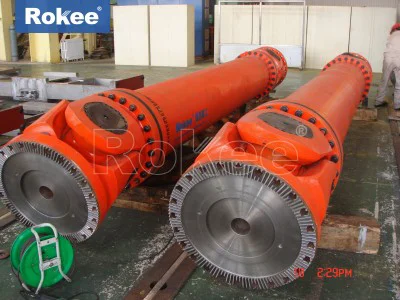
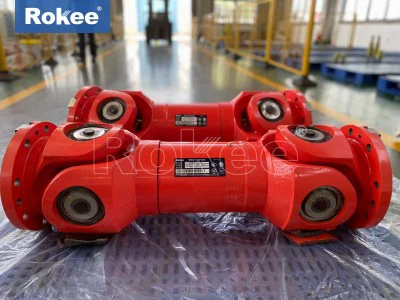
The structure of a double cardan coupling is a refined iteration of the single cardan joint, consisting of two universal joints connected in series by an intermediate component, which may be a short shaft, a centering yoke, or a sleeve, depending on the specific design and application requirements. At the core of each universal joint within the double cardan assembly are two yoke-shaped end fittings and a central cross-shaped member, commonly referred to as a spider. Each yoke is a robust, U-shaped component engineered to attach securely to the driving and driven shafts, typically through splines, flanges, or keyed joints that eliminate slippage and ensure full torque transfer. The spider, positioned at the junction of the two yokes, features four perpendicular arms that fit precisely into bearing housings machined into the open ends of each yoke; these bearings facilitate smooth rotational and oscillatory movement between the spider and the yokes, minimizing friction and wear while maintaining mechanical rigidity. The critical distinction between a single and double cardan coupling lies in the arrangement of these two universal joints: in a double cardan design, the two joints are phased 90 degrees apart, and the intermediate component is designed to maintain equal angles between the driving shaft, intermediate shaft, and driven shaft, thereby canceling out the speed variations inherent in single cardan joints. This centering mechanism is essential for achieving constant velocity transmission, as it ensures that the angular velocity of the driven shaft matches that of the driving shaft, even when the shafts are misaligned at significant angles. In some designs, the intermediate component may include a ball and socket assembly or a sliding mechanism to accommodate axial displacement, further enhancing the coupling’s flexibility and adaptability to dynamic operating conditions.
The performance characteristics of a double cardan coupling are directly influenced by its structural design, materials, and manufacturing precision, making it well-suited for applications that demand high reliability, smooth operation, and resistance to harsh conditions. One of the most notable performance advantages of the double cardan coupling is its ability to maintain constant velocity transmission regardless of angular misalignment. Unlike single cardan joints, which cause the output shaft to fluctuate in rotational speed even when the input shaft rotates at a constant rate—with this fluctuation increasing as the angle between the shafts grows—the double cardan design eliminates these speed variations through the coordinated action of the two phased universal joints. This constant velocity transmission minimizes vibration, reduces stress on connected components, and ensures smooth operation, even at high rotational speeds and large angular misalignments. Another key performance attribute is its angular flexibility, with most double cardan couplings capable of accommodating angular misalignments between 5 and 45 degrees, depending on the design and size. This flexibility makes it ideal for applications where shafts are prone to misalignment due to suspension movement, thermal expansion, or structural deflection, such as in off-road vehicles and heavy machinery. Additionally, double cardan couplings exhibit excellent torque transmission capacity, with the ability to handle both static and dynamic torque loads, including impulsive torque spikes that are common in heavy-duty applications. The use of high-strength materials, such as alloy steels, stainless steel, and in some cases, lightweight materials like aluminum or composite materials, further enhances their load-bearing capacity and durability. Friction and wear resistance are also critical performance factors, achieved through the use of high-quality bearings, lubrication systems, and surface treatments that reduce contact friction and prevent premature component failure. In comparison to other types of flexible couplings, double cardan couplings offer superior stability at high speeds, with minimal power loss, making them efficient for long-term operation in demanding environments.
While the basic structure of a double cardan coupling remains consistent—two universal joints connected by an intermediate component—there are several distinct types, each optimized for specific applications, operating conditions, and performance requirements. These types are primarily differentiated by the design of the intermediate component, the method of attachment to the shafts, and the presence of additional features to accommodate axial or radial displacement. One common type is the back-to-back double cardan coupling, where the two universal joints are mounted with their yokes facing each other, and the intermediate component is a short, rigid shaft or yoke that maintains the 90-degree phasing between the joints. This type is widely used in automotive steering columns, as it eliminates the need to precisely phase the universal joints at the ends of the intermediate shaft, simplifying packaging around other engine bay components. Another type is the offset double cardan coupling, which features an intermediate component that allows for a small offset between the driving and driven shafts, in addition to angular misalignment. This design is particularly useful in applications where space constraints prevent coaxial alignment, such as in compact industrial machinery or aerospace components. A third type is the sliding double cardan coupling, which incorporates a telescoping intermediate shaft or a splined connection that allows for axial displacement between the two universal joints. This type is ideal for applications where shafts are prone to axial movement due to thermal expansion or vibration, such as in marine propulsion systems or large industrial turbines. Additionally, there are specialized double cardan couplings designed for high-temperature or corrosive environments, which use materials like stainless steel or exotic alloys and feature sealed bearing systems to prevent contamination. Each type is engineered to balance flexibility, torque capacity, and durability, ensuring optimal performance in its intended application.
The versatility of the double cardan coupling makes it suitable for a wide range of applications across multiple industries, where reliable power transmission under conditions of misalignment is essential. One of the most common applications is in the automotive industry, particularly in four-wheel drive vehicles, off-road vehicles, and heavy-duty trucks. In these vehicles, the double cardan coupling is used in driveshafts and halfshafts to transfer power from the engine to the wheels, even as the suspension articulates and the angle of the drive shaft changes during steering and movement. Unlike single cardan joints, which can cause vibration and driveline issues at large angles, the double cardan design ensures smooth power delivery, reducing wear on transmission components and improving overall vehicle performance. It is also used in steering columns, where its ability to eliminate speed fluctuations and accommodate angular misalignment simplifies the design and improves steering feel. Beyond automotive applications, the double cardan coupling is widely used in industrial machinery, including manufacturing equipment, conveyor systems, and heavy-duty machinery such as excavators, cranes, and bulldozers. In these applications, it connects motors, gearboxes, and other components, compensating for misalignments caused by installation errors or dynamic loads and ensuring efficient power transmission. The coupling’s ability to handle high torque and large angular misalignments makes it particularly valuable in heavy machinery, where reliability and durability are critical to operational efficiency. Another important application area is aerospace and defense, where double cardan couplings are used in aircraft engines, helicopter rotor systems, and military vehicles. In these high-performance applications, the coupling must meet strict requirements for weight, strength, and precision, with designs that minimize vibration and ensure consistent performance under extreme conditions such as high speeds, temperature variations, and mechanical stress. Marine applications also benefit from double cardan couplings, which are used in ship propulsion systems to connect engines to propellers, accommodating misalignments caused by hull flexure and ensuring reliable power transfer in harsh marine environments. Additionally, the double cardan coupling is used in robotics and automation systems, where it connects motors to robotic arms and other moving components, providing the flexibility needed to achieve precise movements while maintaining constant velocity transmission. In agricultural machinery, such as tractors and harvesters, the coupling is used to transfer power between different components, accommodating the misalignments that occur during operation in uneven terrain.
The selection of a double cardan coupling for a specific application depends on several key factors, including the required torque capacity, angular misalignment range, operating speed, environmental conditions, and space constraints. Torque capacity is a critical consideration, as the coupling must be able to handle the maximum static and dynamic torque loads of the application without failure. Angular misalignment range determines the suitability of the coupling for applications where shafts are significantly misaligned, with larger angles requiring specialized designs. Operating speed is also important, as high-speed applications require couplings that are balanced to minimize vibration and reduce wear. Environmental conditions, such as temperature, humidity, and exposure to corrosive substances, influence the choice of materials and lubrication systems, with specialized coatings and sealed bearings used in harsh environments. Space constraints may require compact designs, such as back-to-back or offset double cardan couplings, that can fit into limited spaces while maintaining performance. Proper installation and maintenance are also essential to ensure the long-term performance and durability of the double cardan coupling. Installation requires precise alignment of the two universal joints to maintain the 90-degree phasing needed for constant velocity transmission, as improper phasing can lead to speed fluctuations, vibration, and premature component failure. Regular maintenance, including lubrication of bearings, inspection of yokes and spiders for wear or damage, and replacement of worn components, helps to extend the service life of the coupling and prevent unexpected downtime. In some applications, lubrication-free designs are available, reducing maintenance requirements and improving reliability in hard-to-reach locations.
In conclusion, the double cardan coupling is a versatile and essential mechanical component that plays a critical role in power transmission systems across a wide range of industries. Its unique structure, which combines two phased universal joints with an intermediate component, eliminates the speed fluctuations and vibration associated with single cardan joints, ensuring constant velocity transmission even at large angular misalignments. The coupling’s superior performance characteristics, including high torque capacity, angular flexibility, and durability, make it well-suited for demanding applications in automotive, industrial, aerospace, marine, and robotic systems. With various types optimized for specific operating conditions and requirements, the double cardan coupling continues to be a preferred choice for engineers seeking reliable and efficient power transmission solutions. As technology advances, materials and manufacturing processes are continuously refined, further enhancing the performance and versatility of the double cardan coupling, ensuring its continued relevance in modern machinery and equipment. Whether in a heavy-duty truck navigating rough terrain, an aircraft engine operating at high speeds, or a robotic arm performing precise movements, the double cardan coupling remains a vital component that enables smooth, reliable, and efficient power transfer, contributing to the performance and longevity of the systems it serves.