Material Upgrading And Performance Improvement Of Universal Coupling In PUR Sandwich Panel Production Line
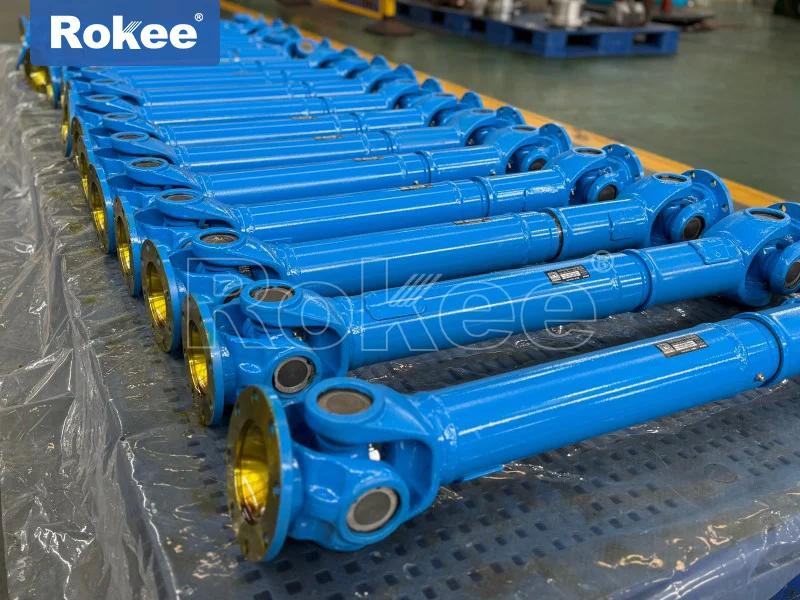
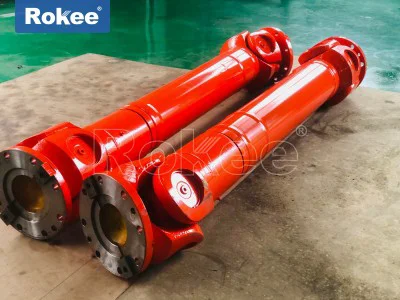
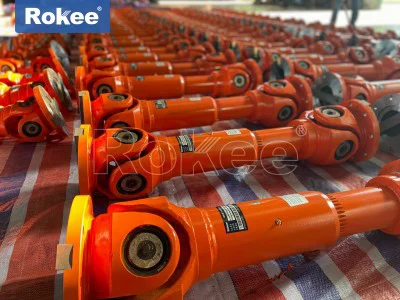
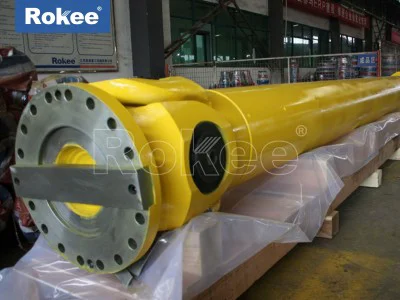
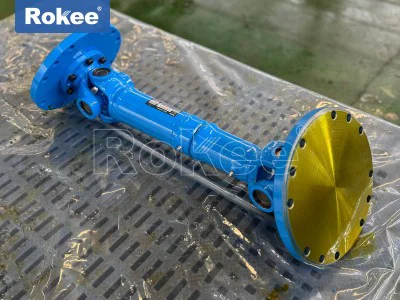
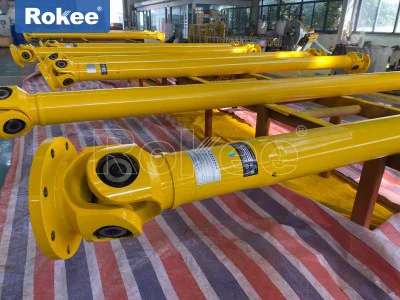
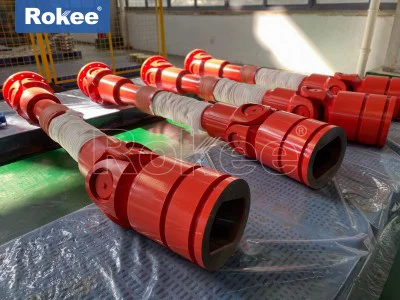
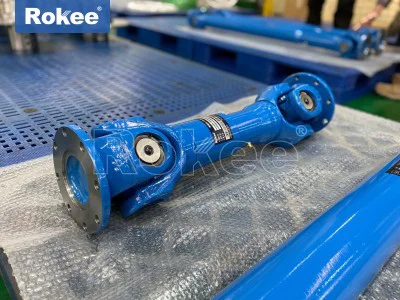
In the modern manufacturing industry, the PUR sandwich panel production line is widely recognized for its high automation, continuous operation, and stable product quality, playing an indispensable role in the construction, cold storage, and prefabricated building fields. As a core transmission component in the production line, the universal coupling undertakes the key task of connecting non-coaxial shafts, transmitting torque and motion stably, and compensating for angular deviations, axial displacements, and parallel offsets between shafts caused by installation errors, equipment vibration, and thermal expansion. The performance of the universal coupling directly affects the synchronization of the entire production line, the consistency of product quality, and the operational efficiency, and even determines the service life of the entire production system. With the continuous development of the PUR sandwich panel industry, the production line is developing towards higher speed, heavier load, and more stable operation, which puts forward more stringent requirements for the bearing capacity, wear resistance, fatigue life, and environmental adaptability of the universal coupling. Traditional universal couplings, which are mostly made of ordinary carbon steel or general alloy steel, have gradually exposed defects such as insufficient wear resistance, poor fatigue performance, and short service life under the long-term harsh working conditions of the PUR sandwich panel production line, leading to frequent maintenance, increased production downtime, and increased production costs. Therefore, carrying out research on material upgrading and performance improvement of universal couplings in PUR sandwich panel production lines has important practical significance for improving production efficiency, reducing maintenance costs, and promoting the high-quality development of the PUR sandwich panel industry.
To understand the necessity of material upgrading and performance improvement of universal couplings, it is first necessary to clarify the working characteristics of the PUR sandwich panel production line and the harsh working environment faced by universal couplings. The PUR sandwich panel production line is a complex integrated system that integrates multiple processes such as uncoiling of facing materials, roll forming, preheating, PUR foaming, lamination, curing, and cutting, requiring coordinated operation of multiple subsystems, each of which is driven by an independent power source. The universal coupling is widely used in the connection between the motor and the reducer, between the reducer and the execution components (such as uncoilers, roll forming machines, and cutting machines), and between different transmission shafts in the production line. Due to the limitations of the production process and equipment layout, the shafts connected by the universal coupling often have a certain angular deviation, which generally ranges from 5° to 45° according to the actual working conditions. At the same time, during the continuous operation of the production line, the equipment will generate continuous vibration, and the high-pressure foaming process will produce a certain amount of heat, resulting in thermal expansion of the transmission shafts, which further increases the relative position change between the shafts. In addition, the production line operates continuously for a long time, usually 24 hours a day, which makes the universal coupling in a state of continuous load-bearing operation, bearing alternating torque and shear force, and the cross shaft, yoke, and bearing components are subject to continuous friction and impact. The working environment of the production line also contains a small amount of foaming agent residues, dust, and moisture, which will corrode the surface of the universal coupling and accelerate the wear and failure of the components. Under such working conditions, traditional universal couplings often have problems such as wear of the cross shaft and bearing, fatigue cracking of the yoke, and corrosion of the surface, which not only affects the normal operation of the production line but also increases the labor intensity of maintenance personnel and the cost of spare parts replacement.
The root cause of the performance defects of traditional universal couplings lies in the limitations of material selection and processing technology. Traditional universal couplings are mainly made of 45 steel, 40 chromium, and other common alloy steels. Although these materials have a certain strength and toughness after heat treatment, their wear resistance, fatigue resistance, and corrosion resistance are difficult to meet the long-term harsh working requirements of the PUR sandwich panel production line. For example, 45 steel has good toughness but low surface hardness, and the cross shaft and bearing made of it are prone to wear and deformation under long-term friction and impact; 40 chromium alloy steel has higher strength than 45 steel, but its fatigue limit is limited, and it is easy to produce fatigue cracks under alternating load. In addition, the traditional heat treatment process of universal couplings, such as ordinary quenching and tempering, can only improve the overall mechanical properties of the material to a certain extent, but it is difficult to form a high-hardness, wear-resistant surface layer, resulting in the surface of the component being the first to fail during operation. Therefore, material upgrading is the core way to improve the performance of universal couplings, and selecting appropriate high-performance materials and matching advanced processing and heat treatment technologies can fundamentally solve the performance defects of traditional universal couplings.
In the process of material upgrading of universal couplings, the selection of materials should fully consider the working characteristics of the PUR sandwich panel production line, focusing on improving the wear resistance, fatigue resistance, corrosion resistance, and impact toughness of the material, while ensuring that the material has good processability and cost-effectiveness. Based on this, a variety of high-performance materials have been gradually applied to the production of universal couplings, including high-strength alloy steel, composite materials, and nanotechnology-enhanced alloys, each of which has its unique advantages and application scenarios. High-strength alloy steel, such as 20CrMnTi, 40CrNiMoA, and other materials, has excellent comprehensive mechanical properties. After reasonable heat treatment, it can obtain high strength, high hardness, and good toughness, which can significantly improve the bearing capacity and fatigue life of the universal coupling. Among them, 20CrMnTi is a carburizing steel with good hardenability. After carburizing, quenching, and tempering, the surface hardness can reach HRC 58-62, while the core maintains good toughness, which is especially suitable for the production of cross shafts and yokes that need both wear resistance and impact resistance. 40CrNiMoA is a high-strength alloy steel with high fatigue limit and impact toughness, which can withstand large alternating loads and is suitable for heavy-duty universal couplings in high-speed operation sections of the production line.
Composite materials, such as aluminum oxide composite, E-Glass composite, and carbon fiber composite, have the advantages of light weight, high strength, wear resistance, corrosion resistance, and low density, which can not only improve the performance of the universal coupling but also reduce the overall weight of the component, thereby reducing the inertia load during operation and improving the transmission efficiency. For example, the cross shaft made of carbon fiber composite has a weight reduction of 30%-40% compared with the traditional steel cross shaft under the same bearing capacity, which can effectively reduce the energy consumption of the transmission system and the wear of the bearing. At the same time, the composite material has good corrosion resistance, which can effectively resist the corrosion of foaming agent residues and moisture in the production environment, extending the service life of the universal coupling. However, the application of composite materials is limited by factors such as processing difficulty and cost, and it is mainly used in some high-demand sections of the production line, such as the high-speed cutting section and the foaming molding section.
Nanotechnology-enhanced alloys are a new type of high-performance material developed in recent years, which improve the microstructure of the alloy by integrating nanomaterials, thereby significantly enhancing the wear resistance, toughness, and fatigue life of the material. For example, adding a small amount of nano-alumina or nano-titanium dioxide to the traditional alloy steel can refine the grain structure of the alloy, improve the hardness and wear resistance of the material, and at the same time enhance the corrosion resistance of the material. Studies have shown that the wear resistance of nanotechnology-enhanced alloys is 2-3 times that of traditional alloy steels, and the fatigue life can be increased by more than 50%, which is very suitable for the harsh working environment of the PUR sandwich panel production line. In addition, self-lubricating polymer compounds are also gradually applied to the surface treatment of universal couplings, which can form a self-lubricating film on the surface of the component, reduce friction between components, reduce wear, and at the same time reduce the frequency of lubrication maintenance, reducing the downtime of the production line.
Material upgrading is the foundation for improving the performance of universal couplings, and advanced processing and heat treatment technologies are the key to exerting the performance advantages of high-performance materials. Traditional processing technologies, such as ordinary turning, milling, and drilling, have low processing accuracy and poor surface quality, which cannot fully exert the mechanical properties of high-performance materials. Therefore, in the process of performance improvement of universal couplings, it is necessary to match advanced processing technologies, such as precision forging, CNC machining, and surface treatment technologies. Precision forging technology can make the metal streamline of the component continuous, improve the density and strength of the material, and reduce the occurrence of internal defects. For example, the cross shaft and yoke of the universal coupling are processed by precision forging technology, which can make the fatigue strength of the component increase by 20%-30% compared with the traditional casting process. CNC machining technology, such as five-axis CNC machining, can improve the processing accuracy of the component, ensure the dimensional accuracy and shape accuracy of the cross shaft, yoke, and bearing installation position, reduce the backlash between components, and improve the transmission accuracy and stability of the universal coupling. The surface treatment technology is an important means to improve the wear resistance and corrosion resistance of the universal coupling, including carburizing, nitriding, chrome plating, and laser cladding.
Carburizing and nitriding are common surface hardening technologies. Carburizing can form a high-hardness carburized layer on the surface of the component, improving the wear resistance and fatigue resistance of the surface. For example, the cross shaft and yoke made of 20CrMnTi are processed by carburizing, quenching, and tempering, and the surface carburized layer thickness can reach 0.8-1.2mm, the surface hardness is HRC 58-62, and the core hardness is HRC 30-35, which not only ensures the wear resistance of the surface but also maintains the toughness of the core. Nitriding technology can form a hard nitride layer on the surface of the component, which has good wear resistance and corrosion resistance, and the treatment temperature is low, which can avoid the deformation of the component. Laser cladding technology is a new surface treatment technology that can clad a high-performance alloy layer on the surface of the component, which has the advantages of high bonding strength, good wear resistance, and corrosion resistance. For example, cladding a layer of wear-resistant alloy on the surface of the cross shaft bearing seat can significantly improve the wear resistance of the component, extending the service life by 2-3 times. In addition, the use of advanced heat treatment simulation technology can optimize the parameters of heating, carburizing, quenching, and other processes, control the deformation of the component within the micron level, ensuring the dimensional accuracy of the component.
In addition to material upgrading and processing technology improvement, structural optimization is also an important way to improve the performance of universal couplings. The traditional universal coupling has a simple structure, but there are problems such as uneven stress distribution and large speed fluctuation during operation. For example, a single universal coupling will produce periodic speed fluctuation during transmission, which will cause vibration of the production line and affect the stability of the production process. To solve this problem, a double-joint universal coupling is usually adopted in practical applications. By reasonably arranging the spatial geometric relationship between the two universal couplings, the synchronization of the driving and driven shafts is ensured, and the influence of speed fluctuation is eliminated. At the same time, based on finite element analysis and multi-body dynamics simulation, the topology optimization of the yoke and cross shaft is carried out to reduce stress concentration and improve fatigue life. For example, optimizing the structure of the yoke can reduce the stress concentration at the root of the yoke, avoiding fatigue cracking under alternating load. The optimization of the cross shaft structure can make the stress distribution more uniform, improving the bearing capacity and service life of the component. In addition, the design of the bearing component is also optimized. By selecting high-performance bearings and optimizing the roller profile modification, the contact stress distribution is improved, and the wear of the bearing is reduced. The use of a double-seal structure can prevent dust, moisture, and foaming agent residues from entering the bearing, extending the service life of the bearing.
To verify the effect of material upgrading and performance improvement of universal couplings, a comparative test was carried out in a PUR sandwich panel production line. The test selected two groups of universal couplings: one group was the traditional universal coupling made of 45 steel with ordinary heat treatment, and the other group was the upgraded universal coupling made of 20CrMnTi with precision forging, carburizing, and quenching, and structural optimization. The two groups of universal couplings were installed in the same position of the production line, and the operation parameters, wear status, and service life were monitored continuously for 6 months. The test results show that the upgraded universal coupling has significant advantages in various performance indicators compared with the traditional one. In terms of wear resistance, the wear amount of the cross shaft and bearing of the upgraded universal coupling is only 1/3 of that of the traditional one, and there is no obvious wear phenomenon after 6 months of operation. In terms of fatigue performance, the upgraded universal coupling can withstand larger alternating loads, and no fatigue cracking occurs during the test period, while the traditional universal coupling has slight fatigue cracks at the root of the yoke after 4 months of operation. In terms of transmission stability, the upgraded universal coupling has smaller speed fluctuation, the vibration amplitude of the production line is reduced by 40% compared with the traditional one, and the synchronization of the production line is significantly improved. In terms of service life, the service life of the upgraded universal coupling is expected to reach more than 24 months, while the service life of the traditional universal coupling is only 12-18 months. In addition, the maintenance frequency of the upgraded universal coupling is reduced by 60% compared with the traditional one, which significantly reduces the maintenance cost and production downtime, improving the production efficiency of the production line.
The material upgrading and performance improvement of universal couplings in the PUR sandwich panel production line not only brings significant economic benefits but also has important environmental and social benefits. From the economic point of view, the extension of the service life of the universal coupling reduces the cost of spare parts replacement and maintenance, reduces the production downtime, and improves the production efficiency of the production line. Taking a medium-sized PUR sandwich panel production line as an example, after upgrading the universal coupling, the annual maintenance cost can be reduced by 30%-40%, and the production efficiency can be improved by 15%-20%, bringing considerable economic benefits to the enterprise. From the environmental point of view, the reduction of the replacement frequency of universal couplings reduces the generation of waste mechanical parts, and the use of high-performance materials and advanced processing technologies reduces energy consumption and environmental pollution. For example, the use of lightweight composite materials can reduce the energy consumption of the transmission system, and the use of self-lubricating materials can reduce the use of lubricating oil, reducing environmental pollution. From the social point of view, the improvement of the performance of the universal coupling promotes the technological progress of the PUR sandwich panel industry, promotes the development of the upstream and downstream industries of high-performance materials and precision processing, and creates more employment opportunities.
With the continuous development of the PUR sandwich panel industry, the production line will develop towards higher speed, heavier load, intelligence, and greenization, which will put forward higher requirements for the performance of universal couplings. In the future, the material upgrading and performance improvement of universal couplings will focus on several aspects. First, the research and application of new high-performance materials will be further strengthened, such as the development of more high-strength, wear-resistant, and corrosion-resistant composite materials and nanotechnology-enhanced alloys, to further improve the performance of universal couplings. Second, the integration of intelligent technologies will be accelerated, such as embedding vibration, temperature, and other sensors in the universal coupling, realizing real-time monitoring of the operation status of the coupling, and realizing predictive maintenance, which can timely find potential faults and avoid non-planned downtime. Third, the greenization of the universal coupling will be emphasized, such as the development of lightweight, energy-saving, and recyclable universal couplings, to meet the requirements of the "double carbon" goal. Fourth, the optimization of the design and processing technology will be further promoted, such as the use of more advanced finite element analysis and simulation technology to optimize the structure of the universal coupling, and the use of intelligent processing equipment to improve the processing accuracy and efficiency.
In conclusion, the universal coupling is a key transmission component in the PUR sandwich panel production line, and its performance directly affects the operation stability and production efficiency of the production line. The traditional universal coupling has obvious performance defects under the harsh working conditions of the production line, which cannot meet the needs of the high-quality development of the industry. Through material upgrading, selecting high-performance materials such as high-strength alloy steel, composite materials, and nanotechnology-enhanced alloys, matching advanced processing and heat treatment technologies such as precision forging, CNC machining, and surface treatment, and optimizing the structure of the universal coupling, the wear resistance, fatigue resistance, transmission stability, and service life of the universal coupling can be significantly improved. The test results show that the upgraded universal coupling has significant advantages in various performance indicators, which can reduce maintenance costs, improve production efficiency, and bring considerable economic, environmental, and social benefits. In the future, with the continuous progress of material science and processing technology, the performance of universal couplings will be further improved, providing stronger support for the high-quality development of the PUR sandwich panel industry.