Excavator Cardan Shaft
The excavator cardan shaft, also known as a universal joint shaft or propeller shaft, is a critical mechanical component that serves as the core of power transmission in excavators, bridging the gap between the engine, transmission system, and the driving mechanisms such as tracks or wheels. In the harsh and dynamic operating environments where excavators are commonly used—including construction sites, mining areas, road construction zones, and agricultural fields—this component must withstand extreme loads, frequent angular adjustments, and exposure to dust, moisture, and varying temperatures. Its ability to transmit torque and rotational motion efficiently while accommodating misalignments between connected shafts directly determines the excavator’s overall performance, operational stability, and service life. Unlike rigid shafts that require precise coaxial alignment, the cardan shaft’s unique design allows it to adapt to the relative movement between different components of the excavator, making it an indispensable part of modern excavating machinery.
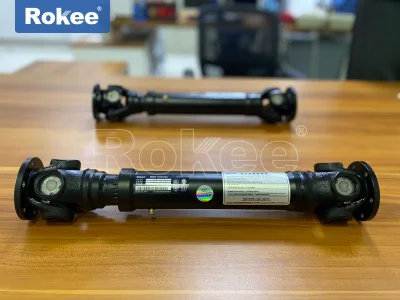
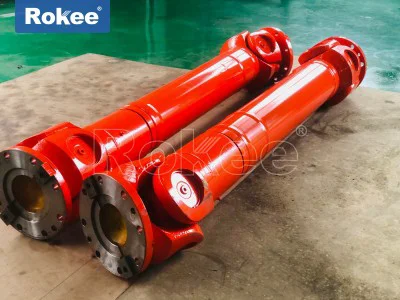
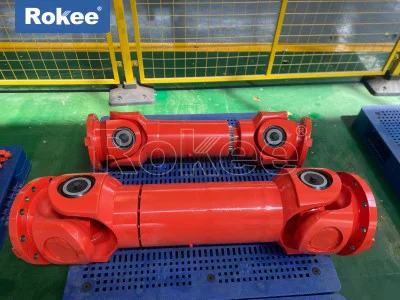
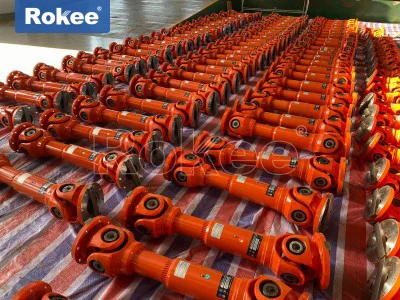
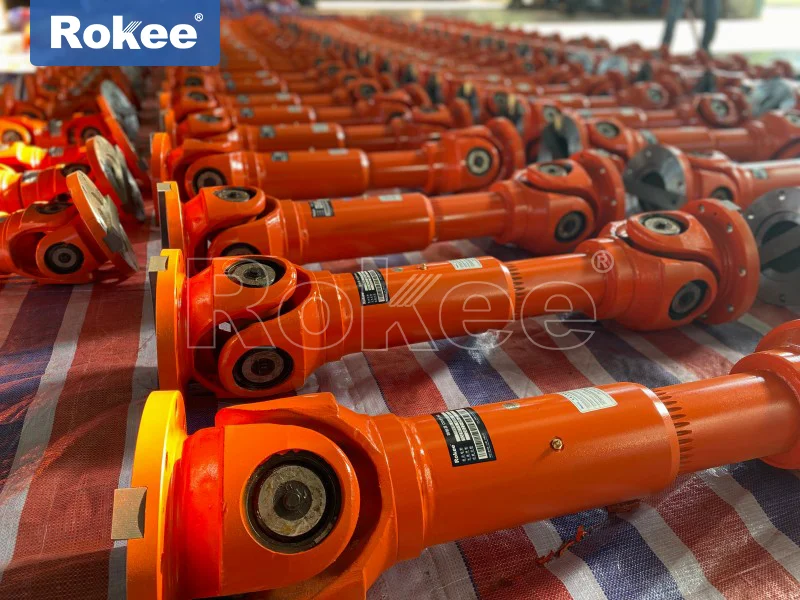
The structure of an excavator cardan shaft is a sophisticated assembly of interconnected parts, each designed to fulfill specific functions that ensure reliable power transmission and flexibility. At its most basic configuration, a standard cardan shaft consists of three primary components: universal joints (also called U-joints or cardan joints), a shaft tube, and connecting yokes. The universal joint is the key element that enables angular flexibility, allowing the shaft to transmit torque even when the driving and driven shafts are not perfectly aligned. A typical universal joint comprises two yoke-shaped end fittings and a central cross-shaped member, often referred to as a spider. Each yoke is a robust U-shaped component that attaches securely to the driving and driven shafts, usually through splines, flanges, or keyed joints to eliminate slippage and ensure full torque transfer. The spider, positioned at the junction of the two yokes, features four perpendicular arms that fit precisely into bearing housings machined into the open ends of each yoke. These bearings facilitate smooth rotational and oscillatory movement between the spider and the yokes, minimizing friction and wear while maintaining mechanical rigidity. The geometric arrangement of these parts is critical: the rotational axes of the two yokes intersect at the exact center of the spider, allowing the joint to deflect within an angle range of 5° to 45° while maintaining continuous motion.
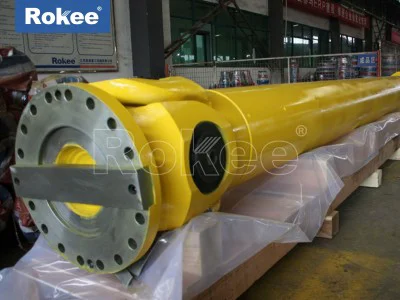
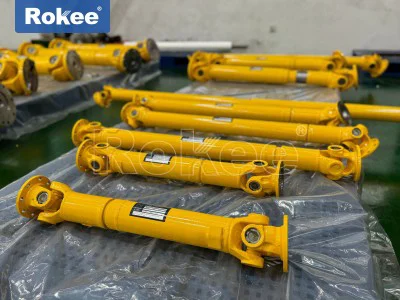
The shaft tube, which forms the main body of the cardan shaft, is responsible for transmitting torque over distance and providing structural support. It is typically fabricated from high-strength steel or alloy steel through processes such as forging, rolling, or welding, ensuring it can withstand the high torsional and bending stresses generated during excavator operation. The thickness and diameter of the shaft tube vary depending on the size of the excavator and the torque requirements, with larger excavators requiring thicker, more robust shaft tubes to handle higher loads. In some designs, the shaft tube may be hollow to reduce weight while maintaining structural integrity, as excessive weight would increase inertia and reduce the efficiency of power transmission. Additionally, many cardan shafts incorporate splined connections or telescopic sections to accommodate axial movement between components, which can occur due to thermal expansion, suspension travel, or changes in the excavator’s posture during operation. These telescopic sections consist of nested shafts that can slide within each other, allowing for length adjustment without losing torque transmission capability. Sealing components, such as rubber boots or oil seals, are also integrated into the structure to protect the universal joints and bearings from dust, dirt, and moisture, which can cause premature wear and failure.
The performance of an excavator cardan shaft is defined by a set of key characteristics that determine its ability to function effectively in the demanding conditions of excavator operation. Torque transmission capacity is one of the most critical performance metrics, as the cardan shaft must transfer the full torque generated by the engine to the drivetrain components, enabling the excavator to perform heavy-duty tasks such as digging, lifting, and hauling. The torque capacity is determined by factors such as the material strength of the shaft tube and universal joints, the design of the splined connections, and the size of the bearings. High-quality cardan shafts are engineered to handle torque loads ranging from several thousand to hundreds of thousands of Newton-meters, depending on the excavator’s size and application. Another essential performance characteristic is angular compensation capability, which refers to the shaft’s ability to accommodate misalignment between the driving and driven shafts. This misalignment can occur due to the excavator’s articulation, uneven terrain, or manufacturing and assembly tolerances. The universal joints allow the cardan shaft to operate at varying angles while maintaining smooth torque transmission, reducing stress on other components such as the transmission and differential.
Vibration and noise reduction are also crucial performance factors, as excessive vibration can lead to operator fatigue, damage to other mechanical components, and reduced overall efficiency. A well-designed cardan shaft minimizes vibration through precise balancing, high-quality bearings, and optimized universal joint geometry. Dynamic balancing during manufacturing ensures that the shaft rotates evenly at high speeds, reducing centrifugal forces that cause vibration. Additionally, the use of high-grade bearings with low friction coefficients helps to dampen vibration and ensure smooth operation. Durability and wear resistance are essential for the cardan shaft to withstand the harsh operating conditions of excavators. The components are typically treated with surface hardening processes such as carburizing, nitriding, or quenching to enhance their resistance to wear, corrosion, and impact. The bearings are lubricated with high-temperature, heavy-duty lubricants to reduce friction and extend their service life, while the sealing systems prevent contaminants from entering and causing damage. Fatigue resistance is another key performance attribute, as the cardan shaft is subjected to repeated cycles of torque and stress during operation. The material selection and design must ensure that the shaft can withstand these cyclic loads without developing cracks or failing prematurely.
Efficiency of power transmission is also a critical performance factor, as any energy loss in the cardan shaft reduces the overall efficiency of the excavator. The design of the universal joints, the precision of the splined connections, and the smoothness of the bearings all contribute to minimizing energy loss. A well-maintained cardan shaft can achieve power transmission efficiency of over 95%, ensuring that most of the engine’s power is transferred to the drivetrain. Finally, adaptability to extreme operating conditions is essential, as excavators often work in environments with wide temperature variations, high levels of dust and moisture, and rough terrain. The cardan shaft must be able to operate reliably in temperatures ranging from -40°C to 120°C, resist corrosion from water and chemicals, and withstand impacts from rocks and other debris.
Excavator cardan shafts are available in a variety of types, each designed to meet specific application requirements based on the excavator’s size, operating conditions, and torque needs. The classification of these shafts is typically based on their structure, design, and intended use. One common classification is based on the number of universal joints, resulting in single cardan shafts and double cardan shafts. Single cardan shafts, which feature a single universal joint, are primarily used in small to medium-sized excavators where the misalignment between shafts is minimal. They are simple in design, lightweight, and cost-effective, making them suitable for applications with lower torque requirements and less demanding operating conditions. However, their lack of flexibility can be a limitation in situations where significant angular misalignment occurs, as they may transmit vibration and cause uneven torque distribution.
Double cardan shafts, also known as double universal joint shafts, incorporate two universal joints connected by an intermediate shaft. This design significantly improves angular compensation capability, allowing the shaft to accommodate larger misalignments while reducing vibration and ensuring smoother torque transmission. The two universal joints work in tandem to cancel out the angular velocity fluctuations that occur in single cardan shafts, resulting in more stable operation. Double cardan shafts are commonly used in large excavators, mining excavators, and other heavy-duty equipment where high torque transmission and significant misalignment are common. They are particularly well-suited for applications where the excavator operates on uneven terrain or performs tasks that require frequent articulation, such as digging in tight spaces or grading slopes.
Another classification of excavator cardan shafts is based on their structural design, including solid shafts, hollow shafts, split shafts, and telescopic shafts. Solid shafts are made from a single piece of material, typically high-strength steel, and are known for their high rigidity and strength. They are suitable for applications that require high torque transmission and minimal flexing, such as small excavators or those used in light-duty tasks. However, their solid construction makes them heavier, which can increase inertia and reduce efficiency. Hollow shafts, on the other hand, have a hollow core, which reduces weight while maintaining structural integrity. This design is ideal for larger excavators where weight reduction is important to improve fuel efficiency and reduce stress on other components. Hollow shafts also dissipate heat more effectively than solid shafts, making them suitable for high-temperature operating conditions.
Split shafts consist of two separate pieces joined at a midpoint, which allows for easier installation and maintenance. Unlike solid or hollow shafts, which require the entire drivetrain to be disassembled for maintenance or replacement, split shafts can be taken apart without removing other components. This feature is particularly beneficial for large excavators where access to the cardan shaft is limited, reducing downtime and maintenance costs. Split shafts are commonly used in excavators with modular or disassemblable drivetrain layouts, as they provide greater flexibility in maintenance and repair. Telescopic shafts, as mentioned earlier, feature nested sections that can slide within each other to accommodate changes in length. This design is essential for excavators with adjustable width or length requirements, or those where axial movement between components is significant. Telescopic shafts are often used in excavators with suspension systems that allow for vertical movement, ensuring that the cardan shaft can maintain torque transmission even as the distance between the engine and drivetrain changes.
Constant velocity (CV) shafts are another type of cardan shaft commonly used in excavators, particularly those with high-speed or precise control requirements. CV shafts are designed to transmit torque smoothly without sudden changes in rotational speed, regardless of the angular misalignment between shafts. They typically consist of two CV joints connected by an intermediate shaft, and their design ensures that the output speed remains constant even as the angle between the driving and driven shafts changes. This feature makes CV shafts ideal for excavators that operate at high speeds or require precise control, such as those used in road construction or precision digging applications. CV shafts also improve overall machine stability and reduce vibration, enhancing operator comfort and reducing wear on other components.
In addition to these main types, cardan shafts can also be classified based on their torque capacity, with light-duty, medium-duty, heavy-duty, and super heavy-duty variants available. Light-duty cardan shafts are used in small excavators and have a torque capacity ranging from 180 to 22,000 Newton-meters, with flange diameters between 58 and 225 millimeters. They are suitable for light-duty tasks such as landscaping, small-scale construction, and agricultural digging. Medium-duty cardan shafts are designed for medium-sized excavators and have a higher torque capacity, making them suitable for general construction tasks such as digging foundations, trenching, and loading materials. Heavy-duty cardan shafts are used in large excavators and mining equipment, with torque capacities ranging from 40,000 to 225,000 Newton-meters and flange diameters between 160 and 390 millimeters. They are built to withstand extreme loads and harsh operating conditions, such as mining, quarrying, and large-scale earthmoving. Super heavy-duty cardan shafts are designed for the largest excavators and specialized equipment, with torque capacities exceeding 225,000 Newton-meters and flange diameters up to 640 millimeters. They are used in applications such as large-scale mining, tunnel construction, and heavy industrial earthmoving.
The applications of excavator cardan shafts are closely tied to the functions and operating environments of excavators themselves, as they are an integral part of the machine’s power transmission system. Excavators are versatile machines used in a wide range of industries, and the cardan shaft plays a critical role in enabling their various functions. In the construction industry, excavators are used for tasks such as digging foundations, trenches, and holes, as well as loading and unloading materials. The cardan shaft transmits power from the engine to the tracks, allowing the excavator to move smoothly across construction sites and position itself accurately for digging. It also transfers torque to the hydraulic system, which powers the excavator’s arm, bucket, and other attachments. In this context, the cardan shaft must withstand the frequent starts, stops, and changes in direction that are common in construction applications, as well as the high torque required for digging through hard soil, rock, and concrete.
Mining is another major application area for excavators, and in this environment, the cardan shaft is subjected to some of the most demanding conditions. Mining excavators are used to extract minerals, coal, and other resources from the earth, often working in deep mines or open-pit quarries. These machines are large, heavy, and require high torque to move and operate, making the cardan shaft a critical component. The cardan shaft must withstand extreme loads, constant vibration, and exposure to dust, dirt, and moisture, which can cause rapid wear and failure if not properly designed and maintained. In mining applications, double cardan shafts and heavy-duty telescopic shafts are commonly used, as they offer the necessary torque capacity and angular compensation to handle the harsh conditions. The cardan shaft also enables the excavator to navigate uneven terrain and maintain stability while carrying heavy loads, ensuring efficient and safe operation.
Road construction is another important application for excavators, where they are used to grade roads, dig ditches for drainage and utilities, and prepare the ground for pavement. In road construction, excavators often operate at higher speeds than in construction or mining, requiring cardan shafts with good dynamic balance and vibration reduction. CV shafts are particularly suitable for this application, as they transmit torque smoothly at high speeds and reduce vibration, improving operator comfort and machine efficiency. The cardan shaft also allows the excavator to adjust its position quickly and accurately, ensuring that the road surface is graded evenly and the ditches are dug to the correct depth and width.
Agricultural applications also utilize excavators for tasks such as digging irrigation ditches, clearing land, and constructing farm structures. In agricultural environments, excavators may operate in muddy, wet conditions, requiring cardan shafts with effective sealing systems to prevent moisture and dirt from entering the universal joints and bearings. Telescopic cardan shafts are often used in agricultural excavators, as they can accommodate the axial movement caused by the uneven terrain and the excavator’s articulation. Light-duty and medium-duty cardan shafts are typically sufficient for agricultural applications, as the torque requirements are lower than in mining or heavy construction.
In addition to these main application areas, excavators are also used in specialized fields such as tunnel construction, port handling, and disaster relief. In tunnel construction, excavators are used to dig tunnels and underground chambers, requiring cardan shafts that can operate in confined spaces and withstand the high torque needed to break through rock. Port handling excavators are used to load and unload ships and containers, requiring cardan shafts with high efficiency and reliability to ensure continuous operation. In disaster relief situations, excavators are used to clear debris, rescue victims, and reconstruct damaged infrastructure, requiring cardan shafts that can withstand extreme conditions and operate reliably in emergency situations.
The importance of the excavator cardan shaft cannot be overstated, as it is a critical component that directly impacts the performance, reliability, and safety of the excavator. A well-designed and properly maintained cardan shaft can extend the service life of the excavator, reduce maintenance costs, and improve operational efficiency. Conversely, a poorly designed or worn cardan shaft can lead to frequent breakdowns, increased downtime, and even safety hazards for operators. To ensure optimal performance, it is essential to select the appropriate type of cardan shaft based on the excavator’s size, operating conditions, and torque requirements, and to implement a regular maintenance schedule that includes lubrication, inspection, and replacement of worn components.
In conclusion, the excavator cardan shaft is a sophisticated and essential mechanical component that enables the efficient transmission of torque and rotational motion in excavators. Its structure, consisting of universal joints, a shaft tube, and connecting yokes, is designed to provide flexibility, durability, and reliability in harsh operating conditions. The performance characteristics of the cardan shaft, including torque capacity, angular compensation, vibration reduction, and durability, determine its ability to function effectively in various applications. With a variety of types available—including single and double cardan shafts, solid and hollow shafts, split and telescopic shafts, and CV shafts—there is a cardan shaft suitable for every type of excavator and operating environment. From construction and mining to road building and agriculture, the cardan shaft plays a critical role in enabling the versatile and efficient operation of excavators, making it an indispensable part of modern heavy machinery. As technology advances, the design and manufacturing of excavator cardan shafts continue to evolve, with improvements in materials, precision machining, and sealing systems further enhancing their performance and reliability.