Construction Machinery Cardan Shaft

In the complex and demanding field of construction machinery, the cardan shaft, also commonly referred to as a universal drive shaft, serves as a critical and indispensable component in power transmission systems. It plays a vital role in ensuring the smooth and efficient transfer of rotational motion and torque between non-collinear shafts, which is a common scenario in various construction equipment due to their articulated designs and dynamic operating conditions. Unlike rigid drive shafts that require perfect alignment between driving and driven components, the cardan shaft is engineered to accommodate angular, parallel, and axial misalignments, making it an essential element that enables the reliable operation of construction machinery even in harsh and rugged working environments. From excavators and loaders to bulldozers and concrete pumps, the cardan shaft is quietly working behind the scenes, bridging the gap between power sources and functional components, and ensuring that every movement of the machinery is precise, powerful, and consistent.
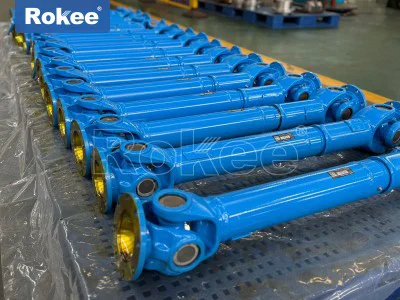
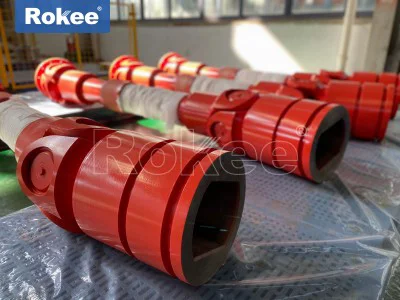
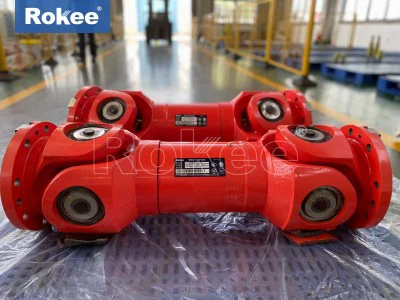
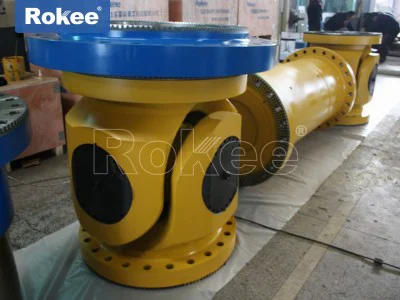
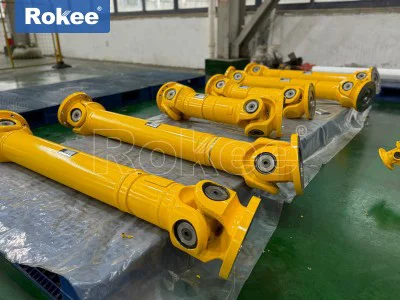
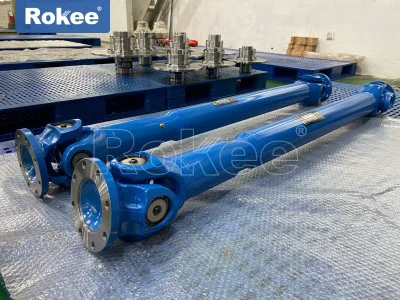
The structure of a cardan shaft used in construction machinery is a sophisticated assembly of interconnected components, each designed to work in harmony to withstand heavy loads, compensate for misalignments, and ensure efficient power transmission. At the core of its structure are the universal joints, often referred to as U-joints, which are the key elements that provide the necessary flexibility. A typical universal joint consists of two fork-shaped yokes, one attached to the input shaft (connected to the power source such as the engine or hydraulic motor) and the other to the output shaft (connected to the driven component such as the axle, gearbox, or working mechanism). These yokes are connected by a central cross-shaped component known as a spider or cross shaft, which fits into precision-machined bearing seats within each yoke. The cross shaft is equipped with bearings at each of its four ends, usually needle roller bearings or high-strength sliding bearings, which reduce frictional resistance and enable smooth pivoting movement in two perpendicular planes. This design allows the cardan shaft to accommodate angular misalignments between the input and output shafts, which can occur due to the articulation of the machinery, uneven terrain, or structural flexing during operation. In addition to the universal joints, the cardan shaft also includes a central shaft body, which serves as the main channel for torque transmission. The central shaft is typically constructed from high-grade alloy steel or carbon steel that has undergone specialized heat treatment processes such as quenching and tempering, which enhance its strength, toughness, and resistance to fatigue and wear. Depending on the load requirements, the central shaft can be either solid or tubular; tubular shafts are often preferred for heavy-duty construction applications as they offer an optimal strength-to-weight ratio, reducing the overall mass of the component while maintaining high torsional rigidity. To accommodate axial movement caused by thermal expansion, contraction, or suspension travel, many cardan shafts feature a telescopic design, achieved through spline connections or sliding sleeves. This telescopic mechanism allows the length of the shaft to adjust dynamically during operation, preventing damage to the shaft or connected components. Furthermore, the cardan shaft is equipped with fastening hardware and sealing components to ensure the stability of the assembly and protect the internal bearings and joints from contamination by dust, moisture, and debris commonly found on construction sites. These sealing components, such as rubber boots or grease seals, help to extend the service life of the cardan shaft by preventing lubricant leakage and reducing wear caused by foreign particles.
The performance of a cardan shaft for construction machinery is defined by a set of key characteristics that determine its ability to withstand the harsh operating conditions of construction sites and deliver reliable power transmission. One of the most critical performance parameters is torque capacity, which refers to the maximum amount of rotational force that the shaft can transmit without suffering deformation or failure. Construction machinery often operates under heavy loads, requiring cardan shafts to have high torque capacity to handle the power generated by large engines and hydraulic systems. The torque capacity of a cardan shaft is influenced by factors such as the material strength, cross-sectional dimensions of the central shaft, design of the universal joints, and quality of the bearings. Another essential performance characteristic is angular deflection capacity, which is the maximum angle at which the shaft can accommodate misalignment between the input and output shafts while maintaining efficient power transmission. Construction machinery, such as excavators and articulated dump trucks, often experience significant angular misalignments during operation, so the cardan shaft must be able to handle these deflections without compromising performance. Typically, cardan shafts used in construction machinery can accommodate angular misalignments ranging from 5 degrees to 45 degrees, depending on the design and application. Torsional rigidity is also a key performance factor, as it determines the shaft’s ability to resist twisting under torque. High torsional rigidity ensures that the shaft maintains its shape and transmits torque efficiently, reducing energy loss and ensuring precise control of the machinery. Additionally, the cardan shaft must exhibit excellent durability and wear resistance to withstand the constant stress, vibration, and impact encountered in construction environments. The use of high-quality materials, precision machining, and effective lubrication systems contributes to the durability of the cardan shaft, extending its service life and reducing maintenance requirements. Vibration damping is another important performance characteristic, as excessive vibration can cause damage to the cardan shaft and other components of the machinery. A well-designed cardan shaft minimizes vibration through balanced shaft profiles and high-quality bearings, ensuring smooth operation and reducing noise levels. Finally, the cardan shaft must have good adaptability to extreme operating conditions, including high and low temperatures, humidity, and exposure to dust, dirt, and chemicals. This adaptability is achieved through the use of corrosion-resistant materials, protective coatings, and robust sealing systems, ensuring that the cardan shaft can perform reliably in any construction environment.
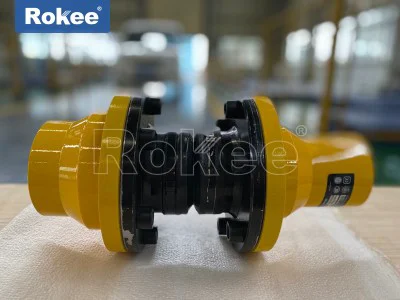
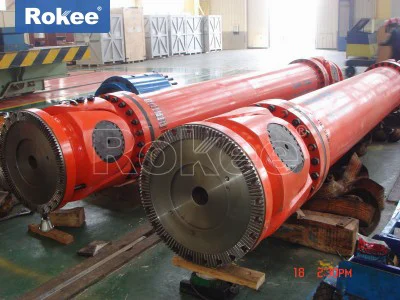
There are several types of cardan shafts designed to meet the diverse requirements of different construction machinery and applications, each with unique features and design characteristics. The classification of cardan shafts is often based on their structure, design, and intended use. One common type is the single universal joint cardan shaft, which consists of a single universal joint at one end and a fixed connection at the other. This type of cardan shaft is suitable for applications with minimal angular misalignment, such as small loaders, compact excavators, and some auxiliary equipment. It is simple in design, lightweight, and cost-effective, making it ideal for light to medium-duty applications. Another widely used type is the double universal joint cardan shaft, which features two universal joints connected by an intermediate shaft. This design allows for greater angular misalignment compensation and reduces angular velocity fluctuations, ensuring smoother power transmission. Double universal joint cardan shafts are commonly used in heavy-duty construction machinery, such as large excavators, bulldozers, articulated dump trucks, and concrete pumps, where significant misalignments and high torque loads are common. The intermediate shaft in this type of cardan shaft also helps to distribute the torque evenly, reducing stress on individual components. Telescopic cardan shafts are another important type, characterized by their ability to adjust in length to accommodate axial movement. This type of shaft is equipped with a splined connection or sliding sleeve that allows the central shaft to extend or retract, making it suitable for applications where the distance between the input and output shafts changes during operation, such as in the suspension systems of off-road construction vehicles or the articulated joints of excavators. Telescopic cardan shafts are often used in combination with double universal joints to provide both angular and axial flexibility. Flanged cardan shafts are designed with flanges at both ends, which allow for easy and secure connection to the input and output shafts using bolts. This type of cardan shaft is commonly used in stationary or semi-stationary construction equipment, such as crushers, conveyor systems, and rotary kilns, where a rigid and stable connection is required. Additionally, there are specialized cardan shafts designed for specific applications, such as high-temperature resistant cardan shafts used in equipment operating near furnaces or rotary kilns, and corrosion-resistant cardan shafts used in marine or coastal construction environments. These specialized designs incorporate unique materials and coatings to meet the specific challenges of their intended applications.
The applications of cardan shafts in construction machinery are extensive and diverse, as they are essential for the operation of nearly all types of construction equipment that require power transmission between non-collinear shafts. One of the most common applications is in excavators, where cardan shafts are used to transmit power from the engine to the hydraulic pumps, which in turn power the boom, arm, and bucket movements. They also connect the engine to the travel motors, enabling the excavator to move across rough terrain. Due to the excavator’s articulated design, the cardan shafts must accommodate significant angular misalignments as the machine rotates and moves its various components. Loaders, both wheeled and tracked, also rely heavily on cardan shafts for power transmission. In wheeled loaders, cardan shafts transmit power from the gearbox to the drive axles, allowing the machine to move and carry heavy loads. In tracked loaders, they connect the engine to the track drives, ensuring smooth and powerful movement even on uneven ground. Bulldozers use cardan shafts to transmit power from the engine to the transmission and then to the track drives, enabling the machine to push large amounts of soil, rock, and debris. The cardan shafts in bulldozers must be able to withstand high torque loads and significant vibrations, as the machine operates in some of the harshest construction environments. Articulated dump trucks, which are used to transport materials across construction sites, rely on cardan shafts to connect the engine to the transmission and the transmission to the drive axles. The articulated design of these trucks requires cardan shafts with high angular deflection capacity to accommodate the movement of the cab and chassis. Concrete pumps, which are used to transport concrete to high-rise buildings or remote construction sites, use cardan shafts to transmit power from the engine to the hydraulic system that drives the pump. The cardan shafts in concrete pumps must be reliable and efficient, as any failure could result in costly delays in construction projects. Other construction equipment that uses cardan shafts includes cranes, graders, pavers, and crushers. In cranes, cardan shafts transmit power to the hoist and slewing mechanisms, enabling the crane to lift heavy loads and rotate. In graders, they are used to power the blade and travel systems, ensuring precise grading of the terrain. In pavers, cardan shafts drive the conveyor systems that transport asphalt or concrete, and the screed that levels the material. In crushers, they transmit power from the engine to the crushing mechanism, allowing the machine to break down large rocks and aggregates. Beyond these specific applications, cardan shafts are also used in various auxiliary systems of construction machinery, such as power take-off (PTO) systems, which allow the machinery to power additional equipment such as generators, compressors, or hydraulic tools. The versatility and reliability of cardan shafts make them an indispensable component in the construction industry, enabling the efficient and safe operation of a wide range of equipment.
In conclusion, the cardan shaft is a critical component in construction machinery, playing a vital role in power transmission by accommodating misalignments and delivering torque efficiently. Its sophisticated structure, composed of universal joints, a central shaft body, telescopic mechanisms, and sealing components, is designed to withstand the harsh operating conditions of construction sites. The key performance characteristics, including high torque capacity, angular deflection capacity, torsional rigidity, durability, and adaptability, ensure that the cardan shaft can meet the rigorous demands of heavy-duty construction applications. The diverse types of cardan shafts, such as single joint, double joint, telescopic, and flanged, cater to the specific needs of different construction machinery, from compact excavators to large bulldozers and concrete pumps. Their extensive applications across nearly all types of construction equipment highlight their importance in the construction industry, as they enable the smooth, powerful, and reliable operation of machinery that is essential for building infrastructure, roads, bridges, and other critical projects. As construction machinery continues to evolve and become more advanced, the design and performance of cardan shafts will also continue to improve, incorporating new materials, technologies, and manufacturing processes to meet the ever-increasing demands of the industry. Whether in the heat of a construction site or the precision of a concrete pumping operation, the cardan shaft remains a silent but essential workhorse, ensuring that power is transmitted efficiently and reliably, every step of the way.