Metallurgical Cardan Shaft
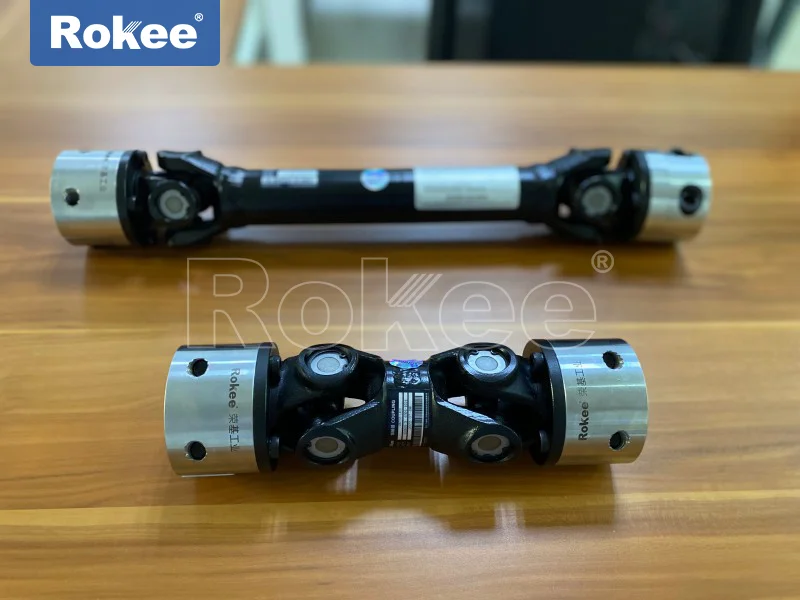
In the complex and demanding field of metallurgical industry, the efficient and reliable transmission of power is a core requirement that directly affects production efficiency, operational safety, and equipment service life. Among the numerous mechanical components that support this transmission process, the metallurgical cardan shaft, also known as the universal joint shaft, plays an irreplaceable role. Unlike ordinary cardan shafts used in general industrial scenarios, metallurgical cardan shafts are specifically designed to withstand the harsh working conditions of metallurgical production, including high temperature, heavy load, strong vibration, and frequent misalignment. They serve as the key connection between various heavy-duty equipment, ensuring the stable operation of the entire production line by transmitting torque and rotational motion between two shafts that are not perfectly aligned.
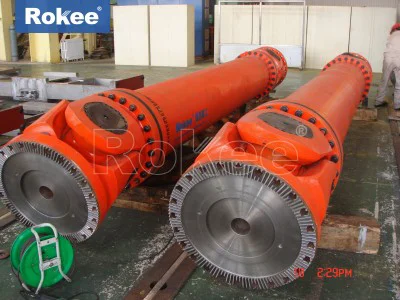
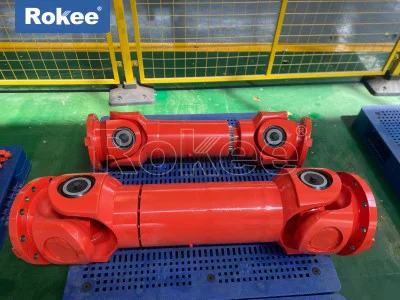
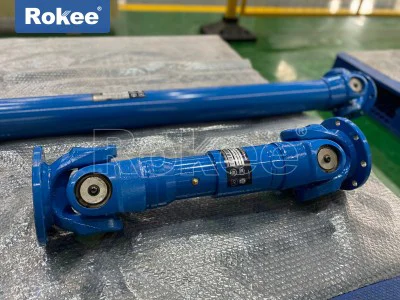
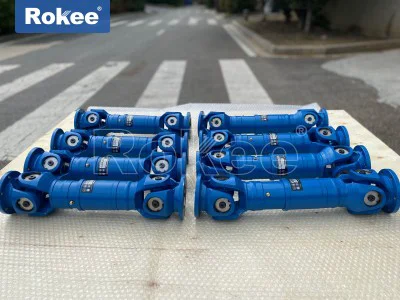
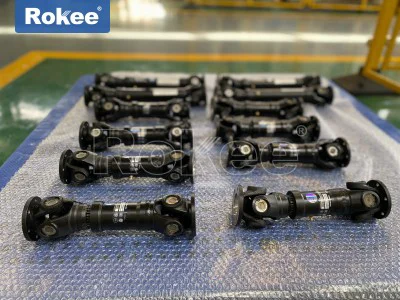
The structure of a metallurgical cardan shaft is a sophisticated integration of multiple components, each of which plays a crucial role in ensuring its overall performance and service life. At the core of its structure is the universal joint assembly, which is the key component that enables the cardan shaft to accommodate angular, axial, and radial misalignment between the driving and driven shafts. The universal joint typically consists of two yoke-shaped end fittings and a central cross-shaped member, commonly referred to as a spider. Each yoke is a robust U-shaped component that is securely attached to the driving shaft and the driven shaft respectively, usually through rigid connections such as splines, flanges, or keyed joints to eliminate slippage and ensure full torque transfer. The spider, positioned at the junction of the two yokes, features four perpendicular arms that fit precisely into bearing housings machined into the open ends of each yoke. These bearing interfaces are critical, as they facilitate smooth rotational and oscillatory movement between the spider and the yokes, minimizing friction and wear while maintaining mechanical rigidity. The geometric arrangement of these parts is precise: the rotational axes of the two yokes intersect at the exact center of the spider, allowing the two shafts to deflect within a certain angle range while maintaining the continuity of motion.
In addition to the universal joint assembly, the central shaft body is another key structural component of the metallurgical cardan shaft. The central shaft, often referred to as the drive shaft tube, serves as the main channel for torque transmission, and its structure and material selection directly determine the shaft’s load-bearing capacity and durability. In metallurgical applications, the central shaft is usually made of high-strength alloy steel or carbon steel subjected to specialized heat treatment, such as quenching and tempering, to enhance its tensile strength, hardness, and fatigue resistance. The shaft tube may be designed as a solid shaft or a hollow shaft, depending on the specific load requirements and installation space. Hollow shaft designs are more commonly used in metallurgical scenarios because they offer a better balance between weight and strength, reducing the overall weight of the shaft while maintaining sufficient torsional rigidity. Some central shafts also feature a telescopic design, achieved through spline or sliding sleeve connections, which allows for axial length compensation to address installation tolerances and thermal expansion or contraction that occur during continuous high-temperature operation.
Auxiliary components also play an important role in the structure of metallurgical cardan shafts, ensuring their stable operation and long service life. Bearing components, usually needle roller bearings or high-strength sliding bearings, are installed at the connection points between the spider and the yokes to reduce friction and wear during rotational movement. These bearings are often equipped with sealed cavities to prevent contamination from dust, moisture, molten metal splashes, and other pollutants commonly found in metallurgical environments, which can significantly extend the bearing service life. Fastening hardware, such as high-strength bolts and nuts, are used to secure the various components of the cardan shaft, ensuring that the connection is tight and reliable even under high vibration and variable torque conditions. In some cases, protective covers are also installed around the universal joint and other key components to prevent damage from external impacts and to further enhance the sealing performance of the bearings.
The performance of metallurgical cardan shafts is specifically optimized to meet the harsh working conditions of the metallurgical industry, and their key performance indicators include torque capacity, angular compensation capability, fatigue resistance, high-temperature resistance, and vibration resistance. Torque capacity is one of the most important performance indicators, as metallurgical equipment such as rolling mills and continuous casting machines require the transmission of large torques during operation. Metallurgical cardan shafts are designed to handle both nominal torque and peak torque, with a sufficient safety factor to withstand instantaneous torque spikes that may occur during startup, shutdown, or sudden load changes. The torque capacity of a cardan shaft is determined by factors such as the material strength of the central shaft and yokes, the size and design of the universal joint, and the quality of the connections between components.
Angular compensation capability is another critical performance characteristic of metallurgical cardan shafts. In metallurgical production, due to factors such as equipment installation errors, thermal expansion, and dynamic load-induced movement, it is difficult to ensure that the driving and driven shafts are perfectly aligned. The cardan shaft must be able to compensate for angular, axial, and radial misalignments between the two shafts to ensure smooth and reliable power transmission. The allowable angular deviation range of metallurgical cardan shafts typically ranges from 5° to 45°, depending on the specific design and model. This flexibility allows the cardan shaft to adapt to the dynamic changes in shaft alignment during operation, avoiding excessive stress on the equipment and reducing the risk of component failure.
Fatigue resistance is essential for metallurgical cardan shafts, as they operate under continuous cyclic loads and vibrations for long periods of time. The repeated application of torque and the occurrence of misalignment can lead to fatigue damage, such as cracks in the yokes, central shaft, or spider, which can ultimately result in shaft failure. To enhance fatigue resistance, metallurgical cardan shafts are made of high-quality materials with excellent fatigue properties, and undergo precise machining and heat treatment processes to eliminate internal defects and improve the material’s toughness. The design of the components is also optimized to distribute stress evenly, reducing stress concentration points that are prone to fatigue cracks. For example, the transition between the yoke and the central shaft is often designed with rounded corners to minimize stress concentration.
High-temperature resistance is a key performance requirement for metallurgical cardan shafts, as they are often used in high-temperature environments such as hot rolling mills and continuous casting machines, where the ambient temperature can reach several hundred degrees Celsius. In such environments, the material properties of the cardan shaft components can be significantly affected, leading to reduced strength, increased wear, and accelerated aging. To address this, metallurgical cardan shafts are made of heat-resistant materials that can maintain their mechanical properties at high temperatures. Additionally, the bearings and other moving components are equipped with high-temperature lubricants to ensure smooth operation and prevent seizing. Some cardan shafts also feature thermal insulation or cooling structures to reduce the impact of high temperatures on the components.
Vibration resistance is also an important performance indicator, as metallurgical equipment generates strong vibrations during operation. Excessive vibration can affect the stability of power transmission, increase noise, and accelerate the wear of components. Metallurgical cardan shafts are designed with precise dynamic balancing to minimize centrifugal vibration at high rotational speeds. The dynamic balancing process involves adjusting the mass distribution of the shaft to ensure that its center of mass coincides with its rotational axis, reducing vibration and noise. Additionally, the use of high-strength materials and rigid connections helps to enhance the overall stiffness of the cardan shaft, making it more resistant to vibration-induced deformation.
Metallurgical cardan shafts can be classified into different types based on their structural design, torque capacity, and application scenarios, each with its own unique characteristics and scope of application. One common classification method is based on the type of universal joint, which includes cross-type universal joints and ball-and-socket universal joints. Cross-type universal joints are the most widely used type in metallurgical applications due to their simple structure, high torque capacity, and reliable performance. They consist of a cross-shaped spider and two yokes, and are suitable for applications with moderate angular misalignment. Ball-and-socket universal joints, on the other hand, feature a spherical joint that allows for a larger angular deviation range, making them suitable for applications where the shafts have significant misalignment. However, they have a lower torque capacity compared to cross-type universal joints and are more complex in structure.
Another classification method is based on the presence of a telescopic structure, dividing metallurgical cardan shafts into fixed-length cardan shafts and telescopic cardan shafts. Fixed-length cardan shafts have a fixed length and are suitable for applications where the distance between the driving and driven shafts is constant and there is no need for axial compensation. They are simple in structure and have high torsional rigidity, making them suitable for applications such as cold rolling mills where precise torque transmission is required. Telescopic cardan shafts, also known as slip-type cardan shafts, feature a telescopic central shaft that can adjust its length to accommodate axial displacement between the two shafts. This type of cardan shaft is widely used in hot rolling mills, continuous casting machines, and other equipment where thermal expansion and contraction cause changes in the distance between the shafts. The telescopic function is usually achieved through a spline connection between the inner and outer shaft tubes, which allows for smooth axial movement while maintaining torque transmission.
Based on torque capacity, metallurgical cardan shafts can be divided into light-duty, medium-duty, and heavy-duty types. Light-duty cardan shafts are designed for applications with relatively low torque requirements, such as small-scale rolling mills and auxiliary equipment. They have a smaller diameter and are made of lighter materials, making them more compact and cost-effective. Medium-duty cardan shafts are suitable for applications with moderate torque loads, such as medium-sized rolling mills and continuous casting machines. Heavy-duty cardan shafts are designed to handle extremely high torque loads, typically used in large-scale hot rolling mills, heavy-duty crushers, and other equipment that requires the transmission of large amounts of power. They are made of high-strength alloy steel with a larger diameter and thicker wall thickness, and feature reinforced universal joints and connections to ensure reliability under heavy loads.
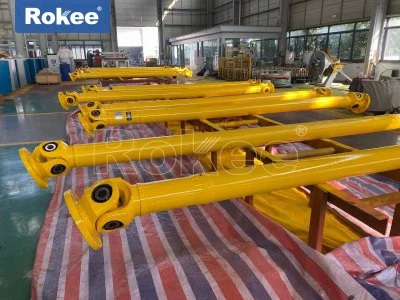
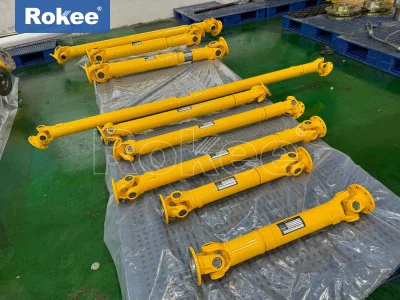
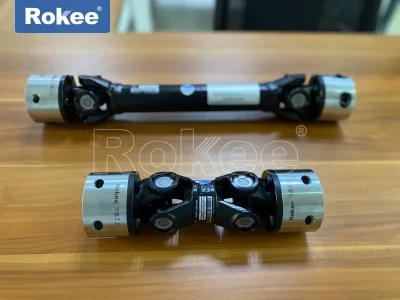
Additionally, there are specialized types of metallurgical cardan shafts designed for specific applications. For example, cardan shafts with long compensation feature a lightweight design, low inertia, maximum bearing life, and high torsional rigidity, making them suitable for coilers, pumping equipment, and large paper machines used in metallurgical auxiliary processes. Short cardan shafts are specifically designed to be shorter in length than standard cardan shafts, making them more compact and easier to fit into tight spaces, such as in the narrow gaps between equipment components in rolling mills. These specialized types of cardan shafts are tailored to meet the unique requirements of specific metallurgical processes, ensuring optimal performance and reliability.
The applications of metallurgical cardan shafts are closely related to the various processes of the metallurgical industry, covering almost all key links from raw material processing to finished product production. One of the most important applications is in rolling mills, which are the core equipment in steel production. Rolling mills are used to reduce the thickness of steel billets or slabs through pressure, and can be divided into hot rolling mills and cold rolling mills based on the processing temperature. In hot rolling mills, the cardan shaft is used to connect the motor and the rolling stand, transmitting the large torque required for rolling. Due to the high temperature and strong vibration in hot rolling mills, the cardan shaft must have excellent high-temperature resistance, fatigue resistance, and vibration resistance. Telescopic cardan shafts are commonly used in hot rolling mills to accommodate the axial displacement caused by thermal expansion of the rolling stand and the central shaft.
In cold rolling mills, the requirements for torque transmission precision are higher, as cold rolling requires more accurate control of the steel strip thickness and surface quality. Fixed-length cardan shafts are often used in cold rolling mills due to their high torsional rigidity and precise torque transmission capability. They connect the motor to the rolling rolls, ensuring that the torque is transmitted evenly and stably, which is crucial for maintaining the quality of the cold-rolled steel strip. Cardan shafts are also used in other types of rolling mills, such as bar and wire rod mills, strip processing lines, and slitting and leveling lines, playing a key role in power transmission.
Continuous casting machines are another important application scenario for metallurgical cardan shafts. Continuous casting is a process that converts molten steel into solid steel billets or slabs continuously, and it requires the stable operation of various components such as the casting mold, withdrawal rolls, and cutting equipment. Cardan shafts are used to connect the motor to the withdrawal rolls, transmitting the torque required to pull the solidified steel billet out of the casting mold. In continuous casting machines, the cardan shaft must be able to accommodate the angular and axial misalignment between the motor and the withdrawal rolls, and withstand the high temperature and vibration generated during the casting process. The cardan shafts used in continuous casting machines are often designed with length compensation and high flexibility to adapt to the dynamic changes in the equipment during operation.
Metallurgical cardan shafts are also widely used in other heavy-duty metallurgical equipment, such as billet shears, crop shears, electric arc furnaces, ladle furnaces, rotary kilns, and drum dryers. Billet shears and crop shears are used to cut steel billets or slabs to the required length, and the cardan shaft transmits the torque required for the shearing operation. Electric arc furnaces and ladle furnaces are used for melting and refining steel, and the cardan shaft is used to drive the stirring mechanism or other auxiliary components, ensuring the uniform mixing of molten steel. Rotary kilns and drum dryers are used in the processing of raw materials such as iron ore, and the cardan shaft connects the motor to the kiln or dryer, transmitting the torque required for rotation.
In addition to the main metallurgical production processes, cardan shafts are also used in auxiliary equipment such as bridge cranes, roller conveyors, and piercing mills. Bridge cranes are used to lift and transport heavy materials such as steel billets and slabs, and the cardan shaft is used to drive the crane’s lifting and traveling mechanisms. Roller conveyors are used to transport materials between different equipment, and the cardan shaft transmits the torque required to drive the rollers. Piercing mills are used to produce seamless steel pipes, and the cardan shaft connects the motor to the piercing rolls, ensuring the stable operation of the piercing process.
The importance of metallurgical cardan shafts in the metallurgical industry cannot be overstated. Their reliable performance ensures the continuous and stable operation of the production line, reducing the risk of equipment failure and production interruptions. A well-designed and properly maintained cardan shaft can significantly extend the service life of the entire equipment system, reduce maintenance costs, and improve production efficiency. With the continuous development of the metallurgical industry, the requirements for cardan shafts are becoming increasingly strict. Future metallurgical cardan shafts will be developed towards higher torque capacity, better high-temperature resistance, longer service life, and more intelligent monitoring. For example, the integration of sensors into cardan shafts can enable real-time monitoring of torque, temperature, vibration, and other parameters, allowing for predictive maintenance and reducing the risk of unexpected failures.
In conclusion, the metallurgical cardan shaft is a key mechanical component in the metallurgical industry, with a sophisticated structure that is tailored to meet the harsh working conditions of metallurgical production. Its excellent performance characteristics, including high torque capacity, angular compensation capability, fatigue resistance, high-temperature resistance, and vibration resistance, make it suitable for a wide range of applications in various metallurgical processes. The different types of cardan shafts, each with its own unique characteristics, can meet the specific requirements of different equipment and processes. As the metallurgical industry continues to develop, the metallurgical cardan shaft will continue to play an important role in ensuring efficient, safe, and reliable production, and its design and performance will continue to be optimized to adapt to the changing needs of the industry.