Crane Cardan Shaft
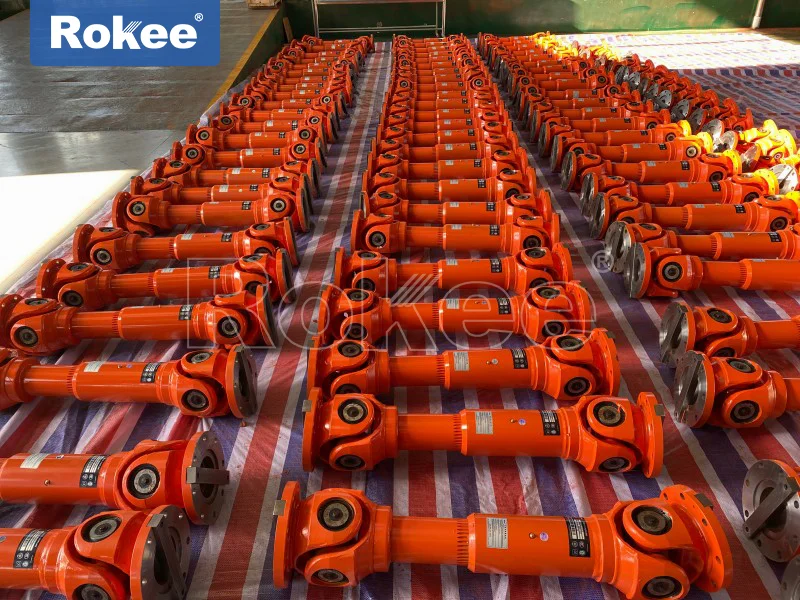
A crane cardan shaft, also known as a universal joint shaft, is an indispensable mechanical component in crane transmission systems, designed to transfer torque and rotational motion between two non-collinear shafts with varying degrees of angular, axial, and radial misalignment. Unlike rigid drive shafts that require perfect coaxial alignment and fail to accommodate positional shifts during operation, crane cardan shafts integrate robust structural design, precise machining, and durable material selection to ensure stable and efficient power transmission under the harsh working conditions commonly encountered by cranes, such as heavy loads, frequent start-stop cycles, and dynamic positional changes. These components play a critical role in bridging the gap between the crane’s power source—whether diesel engine or electric motor—and its functional mechanisms, including hoisting winches, luffing jibs, and slewing platforms, making them a cornerstone of modern crane operation across various industrial sectors.
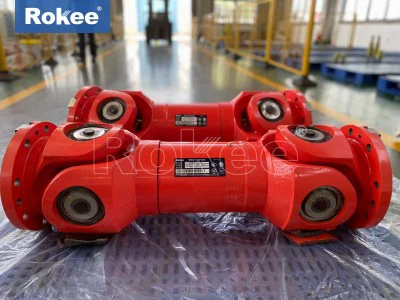
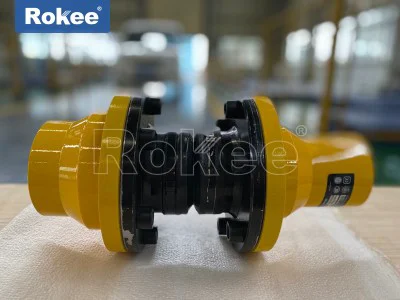
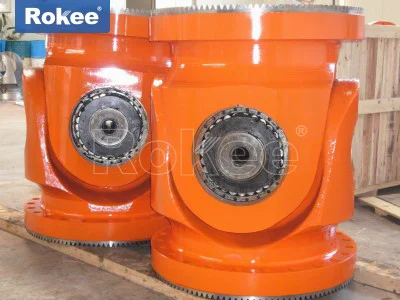
The structural design of a crane cardan shaft is meticulously engineered to balance flexibility, load-bearing capacity, and transmission efficiency, with each component tailored to withstand the mechanical stress, friction, and environmental wear inherent in crane operations. At its core, a typical crane cardan shaft consists of several interconnected key parts, each serving a specific purpose to ensure reliable performance. The universal joint, often referred to as the heart of the cardan shaft, is the critical component that enables angular misalignment compensation. Most commonly designed as a cross-type (spider) joint in crane applications, it features a rigid cross-shaped pivot that connects two perpendicular fork heads (yokes) attached to the input and output shafts. Each end of the cross-shaped spider is fitted with precision bearings—usually needle roller bearings or high-strength sliding bearings—that facilitate smooth rotational movement and reduce frictional resistance even under heavy loads and repeated angular adjustments. These bearings are enclosed in sealed cavities to prevent contamination from dust, moisture, and debris, which are prevalent in construction, port, and industrial environments, thereby extending the service life of the joint.
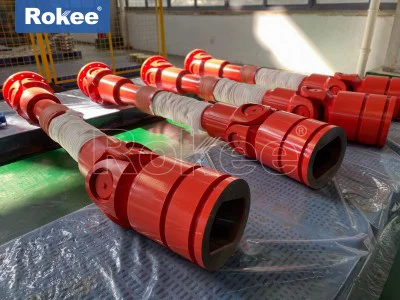
The central drive shaft, also known as the shaft tube, serves as the main channel for torque transmission and is typically constructed from high-grade alloy steel or carbon steelthat has undergone specialized heat treatment to enhance its tensile strength, torsional rigidity, and wear resistance. Heat treatment processes such as quenching and tempering are commonly applied to improve the material’s mechanical properties, ensuring it can withstand the high torque and dynamic loads generated during crane operation without deformation or failure. In many crane cardan shaft designs, the central shaft features a telescopic structure, achieved through spline or sliding sleeve connections, which allows for axial length compensation. This telescopic capability is crucial for accommodating installation tolerances, thermal expansion and contraction during continuous operation, and the dynamic positional changes that occur when the crane’s jib luffs or slews. The spline connections are precision-machined to ensure tight engagement, minimizing backlash and ensuring efficient torque transfer while allowing for smooth axial movement.
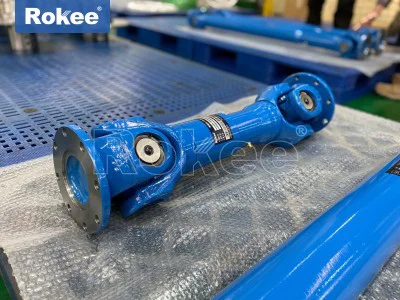
Fork heads (yokes) are another essential structural component, acting as the interface between the universal joint and the crane’s power source or driven mechanisms. These fork heads are typically designed as integrated or welded structures to eliminate weak points that could fail under dynamic stress, and their mating surfaces are precision-machined to ensure tight, stable connections with adjacent components. Depending on the crane’s design and application requirements, fork heads may be connected to the shafts via flange bolts or direct welding, with flange connections offering the advantage of easier assembly and disassembly for maintenance. Fastening hardware, such as high-strength bolts and locking mechanisms, are used to secure all components together, ensuring the structural integrity of the cardan shaft under high loads and vibration.
In addition to these core components, many crane cardan shafts incorporate auxiliary features to enhance their performance and durability. Balanced shaft profiles are often employed to minimize centrifugal vibration at high rotational speeds, which can cause premature wear of bearings and other components, as well as reduce noise during operation. Sealed bearing cavities, as mentioned earlier, prevent the ingress of contaminants, while specialized coatings—such as zinc-epoxy layers—may be applied to the shaft surface to improve corrosion resistance, particularly in marine or coastal environments where saltwater exposure is a concern. Lubrication systems, including grease nipples, are also integrated into many designs to allow for regular lubrication of bearings and spline connections, reducing friction and extending the service life of the component.
The performance of a crane cardan shaft is defined by a set of key characteristics that determine its suitability for specific crane applications and operating conditions. Torsional rigidity is one of the most critical performance metrics, as it refers to the shaft’s ability to resist twisting under torque. High torsional rigidity ensures that the shaft maintains its shape and transmits torque efficiently without excessive deformation, which is essential for precise control of the crane’s hoisting, luffing, and slewing movements. A lack of sufficient torsional rigidity can lead to power loss, vibration, and premature component failure, particularly in heavy-duty cranes that handle large loads.
Load-bearing capacity, or torque rating, is another fundamental performance characteristic, referring to the maximum torque that the cardan shaft can transmit without damage. Crane cardan shafts are designed to handle a wide range of torque levels, from moderate to extremely high, depending on the size and type of crane. The nominal torque rating indicates the maximum continuous torque the shaft can withstand during normal operation, while the peak torque rating represents the maximum torque it can handle during short-duration events such as sudden start-ups or load shocks. The load-bearing capacity is determined by factors such as the material strength, cross-sectional area of the central shaft, and the design of the universal joint and fork heads.
Angular misalignment compensation is a defining performance feature of crane cardan shafts, allowing them to transfer torque between shafts that are not perfectly aligned. The maximum angular offset that a cardan shaft can accommodate varies depending on its design, with typical values ranging from 15 to 25 degrees for standard models. This capability is crucial in crane applications, where the relative positions of the power source and driven mechanisms change frequently—for example, when the crane’s jib is raised or lowered, or when the slewing platform rotates. A single universal joint may cause periodic fluctuations in the driven shaft’s speed, but using a pair of universal joints arranged 90 degrees out of phase can offset these fluctuations, achieving near-constant speed transmission, which is essential for precise crane operation.
Transmission efficiency is another key performance metric, referring to the percentage of input torque that is successfully transmitted to the output shaft. High transmission efficiency is critical for reducing energy consumption and ensuring the crane operates efficiently, particularly in electric cranes where energy efficiency is a primary concern. Crane cardan shafts typically achieve transmission efficiency levels between 98 and 99.8%, with losses primarily attributed to friction in the bearings and spline connections. Proper lubrication and precision machining of these components are essential for maintaining high transmission efficiency over the shaft’s service life.
Durability and wear resistance are also vital performance characteristics, given the harsh operating conditions that crane cardan shafts endure. These components are exposed to heavy loads, frequent vibration, and environmental contaminants, making it essential that they are constructed from durable materials and designed to resist wear, corrosion, and fatigue. The use of high-grade alloy steels, specialized heat treatment, and protective coatings all contribute to the durability of crane cardan shafts, ensuring they can operate reliably for extended periods with minimal maintenance. Fatigue resistance is particularly important, as the cardan shaft is subjected to repeated cycles of stress during crane operation, which can lead to cracks and failure over time if not properly addressed.
Vibration and noise reduction are additional performance considerations, as excessive vibration and noise can affect the overall performance of the crane and the comfort of the operator. Balanced shaft designs, precision machining, and high-quality bearings all help to minimize vibration and noise, ensuring smooth operation. This is particularly important in indoor or urban crane applications, where noise pollution is a concern, as well as in precision cranes that require stable and quiet operation to handle delicate loads.
Crane cardan shafts can be classified into several types based on their structural design, load capacity, and application requirements, each tailored to specific crane types and operating conditions. One common classification is based on the number of universal joints, with single cardan shafts and double cardan shafts being the most prevalent. Single cardan shafts feature a single universal joint and are typically used in applications where the angular misalignment between shafts is relatively small, such as in light-duty cranes or specific components of heavy-duty cranes where positional changes are minimal. These shafts are simple in design, cost-effective, and easy to maintain, making them suitable for a wide range of light to moderate load applications.
Double cardan shafts, also known as telescopic cardan shafts, feature two universal joints connected by an intermediate shaft. This design allows for greater angular misalignment compensation and eliminates the speed fluctuations associated with single universal joints, providing near-constant speed transmission. Double cardan shafts are commonly used in heavy-duty cranes, such as gantry cranes, overhead cranes, and mobile cranes, where large angular misalignments are common and precise torque transmission is essential. The intermediate shaft may be telescopic, allowing for axial length adjustment, which further enhances the shaft’s flexibility and adaptability to dynamic positional changes.
Another classification is based on load capacity, with crane cardan shafts divided into light-duty, medium-duty, heavy-duty, and super heavy-duty types. Light-duty cardan shafts are designed for low torque applications, typically used in small cranes, such as jib cranes used in workshops or small construction sites. These shafts have a small diameter, low inertia, and are lightweight, making them suitable for applications where space is limited and load requirements are moderate. Medium-duty cardan shafts are used in cranes with moderate load capacities, such as some overhead cranes and mobile cranes used in general construction, and feature a balance of strength, flexibility, and efficiency.
Heavy-duty cardan shafts are engineered for high torque applications, used in large cranes such as gantry cranes, container cranes, and heavy-duty mobile cranes. These shafts are constructed from high-strength alloy steels, feature reinforced universal joints and fork heads, and have a larger cross-sectional area to withstand the high loads and dynamic stresses associated with heavy lifting. Super heavy-duty cardan shafts are designed for extreme load applications, such as offshore cranes used in the oil and gas industry or large port cranes that handle oversized and heavy containers. These shafts are built to withstand extremely high torque, corrosion, and harsh environmental conditions, with specialized designs to ensure reliability and durability in the most demanding scenarios.
Crane cardan shafts can also be classified based on their connection type, with flange-connected and spline-connected shafts being the most common. Flange-connected cardan shafts use flange bolts to connect the fork heads to the input and output shafts, offering a secure and rigid connection that is easy to assemble and disassemble for maintenance. This type of connection is commonly used in heavy-duty cranes where high torque transmission and stability are essential. Spline-connected cardan shafts use spline joints to connect the components, allowing for axial movement while maintaining torque transmission. This design is particularly suitable for telescopic cardan shafts, where axial length adjustment is required to accommodate positional changes.
The applications of crane cardan shafts are closely tied to the diverse types of cranes used across various industrial sectors, as they are essential for the proper functioning of virtually all crane systems. One of the most common applications is in mobile cranes, including truck-mounted cranes, crawler cranes, and rough-terrain cranes. In these cranes, the cardan shaft transmits torque from the engine or hydraulic system to the hoisting winch, luffing mechanism, and slewing platform, allowing the crane to move, lift, and position loads with precision. Mobile cranes operate in dynamic environments, often on uneven terrain, making the angular and axial misalignment compensation capabilities of cardan shafts essential for reliable operation.
Overhead cranes, which are widely used in factories, warehouses, and manufacturing facilities, also rely heavily on cardan shafts. These cranes typically use cardan shafts to connect the electric motor to the hoisting winch and trolley drive system, ensuring efficient torque transmission and smooth movement of the trolley and hook. The ability of cardan shafts to accommodate minor misalignments between the motor and driven components is crucial in overhead cranes, where installation tolerances and structural deflection can lead to shaft misalignment.
Gantry cranes, used in ports, shipyards, and large construction sites, are another major application for crane cardan shafts. These cranes are used to lift and move heavy loads, such as containers, steel beams, and machinery, and require robust cardan shafts to transmit high torque from the power source to the hoisting and slewing mechanisms. In port applications, gantry cranes are often exposed to harsh environmental conditions, including saltwater, humidity, and dust, making corrosion-resistant cardan shafts essential to ensure long-term reliability.
Offshore cranes, used in the oil and gas industry for offshore platform construction, maintenance, and supply, require specialized cardan shafts designed to withstand extreme conditions. These cranes operate in corrosive marine environments, with high winds, waves, and saltwater exposure, making durability and corrosion resistance critical. Offshore crane cardan shafts are typically constructed from high-strength, corrosion-resistant alloys, with protective coatings and sealed bearings to prevent contamination and corrosion. They are also designed to handle high torque and large angular misalignments, as offshore cranes often have complex mechanical systems with varying shaft positions.
Jib cranes, both fixed and mobile, are another application for crane cardan shafts. These cranes are used in workshops, construction sites, and warehouses for light to moderate lifting tasks, and their compact design requires cardan shafts that are lightweight yet durable. The cardan shafts in jib cranes transmit torque from the motor to the hoisting winch and jib rotation mechanism, allowing for precise control of the load.
In addition to these specific crane types, cardan shafts are also used in specialized crane systems, such as container cranes, stacker cranes, and overhead traveling cranes, where they play a critical role in ensuring efficient and reliable power transmission. Beyond crane applications, cardan shafts similar in design to crane cardan shafts are used in other heavy machinery, but the focus here remains on their role in crane systems, where their unique combination of flexibility, load-bearing capacity, and misalignment compensation is particularly valuable.
The importance of crane cardan shafts in modern industrial operations cannot be overstated. They are essential components that enable cranes to perform their core functions—lifting, moving, and positioning heavy loads—with precision, efficiency, and reliability. Without cardan shafts, cranes would be limited by rigid shaft connections, unable to accommodate the dynamic positional changes required for effective operation, and prone to premature component failure under heavy loads and misalignment. As cranes continue to evolve, with larger load capacities, more complex designs, and operation in increasingly harsh environments, the demand for high-performance crane cardan shafts will continue to grow.
Advancements in material science, machining technology, and design engineering are driving improvements in crane cardan shaft performance, making them more durable, efficient, and adaptable to a wider range of applications. The use of advanced alloys, precision CNC machining, and computer-aided design (CAD) tools has allowed manufacturers to optimize the structural design of cardan shafts, enhancing their load-bearing capacity, torsional rigidity, and durability while reducing weight and energy consumption. Additionally, the development of specialized coatings and lubrication systems has improved the corrosion resistance and service life of cardan shafts, particularly in harsh environments such as marine and offshore applications.
In conclusion, crane cardan shafts are vital mechanical components that play a critical role in the operation of various crane systems across industrial sectors. Their structural design, which includes universal joints, a central drive shaft, fork heads, and auxiliary components, is engineered to balance flexibility, load-bearing capacity, and transmission efficiency. Key performance characteristics such as torsional rigidity, load-bearing capacity, angular misalignment compensation, transmission efficiency, and durability ensure that they can withstand the harsh operating conditions of crane applications. Classified based on the number of universal joints, load capacity, and connection type, crane cardan shafts are tailored to specific crane types and operating requirements, from light-duty jib cranes to super heavy-duty offshore cranes. Their applications are diverse, encompassing mobile cranes, overhead cranes, gantry cranes, offshore cranes, and jib cranes, where they enable efficient and reliable power transmission. As industrial operations continue to demand more powerful and versatile cranes, the ongoing development and optimization of crane cardan shafts will remain essential to ensuring the safety, efficiency, and reliability of crane systems worldwide.