High Torque Cardan Coupling

In the field of mechanical power transmission, high torque cardan couplings play an irreplaceable role as critical components that bridge the gap between misaligned shafts while ensuring efficient and reliable torque transfer. Unlike ordinary couplings that are designed for light or medium load scenarios, high torque cardan couplings are engineered to withstand extreme rotational forces, making them indispensable in heavy-duty industrial, automotive, and marine applications where precision, durability, and flexibility are non-negotiable. These couplings, also commonly referred to as high torque universal joints, are designed to address the core challenge of transmitting high levels of torque between two shafts that are not perfectly aligned—whether due to angular deviation, radial offset, or axial displacement—without compromising transmission efficiency or structural integrity.
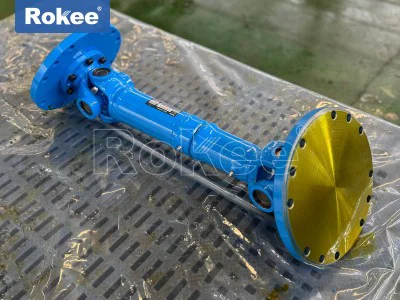
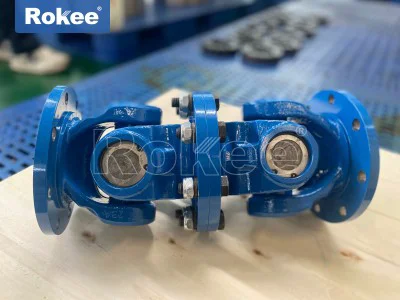
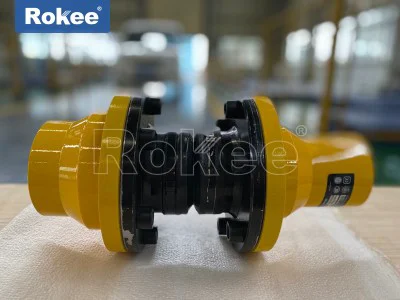
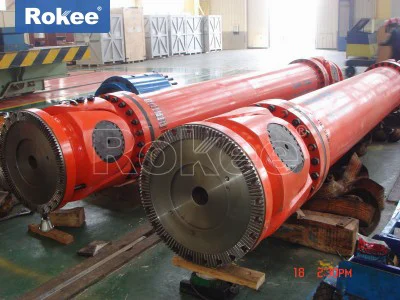
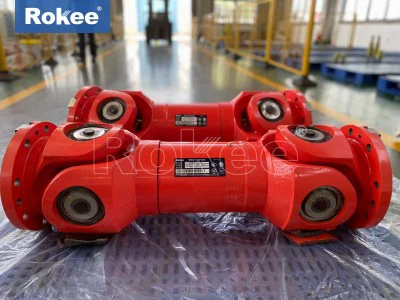
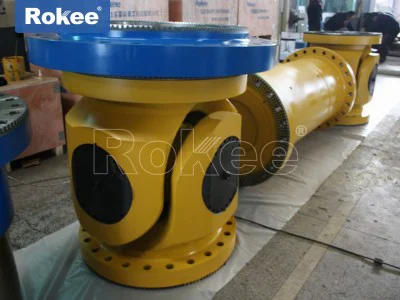
The structure of a high torque cardan coupling is a sophisticated integration of precision-engineered components, each serving a specific function to ensure optimal performance under high load conditions. At its core, a basic high torque cardan coupling consists of three primary components: two yoke-shaped end fittings and a central cross-shaped member, commonly known as a spider. The yokes, typically designed in a U-shape, are securely attached to the driving and driven shafts respectively, using rigid connection methods such as splines, keyed joints, or flanges to eliminate slippage and ensure full torque transfer. These yokes are engineered to be robust and rigid, capable of withstanding the high torsional forces generated during operation without deformation or failure. The spider, positioned at the junction of the two yokes, features four perpendicular arms that fit precisely into bearing housings machined into the open ends of each yoke. The bearing interfaces between the spider arms and yoke housings are critical to the coupling’s performance, as they facilitate smooth rotational and oscillatory movement while minimizing friction and wear. In high torque designs, these bearings are often needle roller bearings, which offer high load-carrying capacity and low friction, making them ideal for withstanding the extreme forces and repeated movements associated with high-torque transmission. Additionally, many high torque cardan couplings incorporate a telescopic central shaft or splined connection to accommodate axial displacement, allowing the coupling to adjust to changes in shaft length caused by thermal expansion, vibration, or installation errors. The materials used in constructing these components are carefully selected to ensure strength and durability; high-strength alloy steels are commonly used for the yokes and spider, as they offer excellent tensile strength, fatigue resistance, and toughness, while the bearings are made from hardened steel or other wear-resistant materials to extend service life. The overall structural design is optimized through advanced engineering techniques such as finite element analysis, which ensures that stress is evenly distributed across all components, reducing the risk of premature failure and enhancing the coupling’s ability to handle high torque loads consistently.
The performance of high torque cardan couplings is defined by a set of key characteristics that enable them to excel in high-load, misaligned transmission scenarios. One of the most critical performance attributes is torque capacity, which refers to the maximum amount of rotational force the coupling can transmit without suffering permanent damage or deformation. High torque cardan couplings are specifically engineered to handle torque levels significantly higher than standard cardan couplings, with capacities ranging from several thousand to hundreds of thousands of Newton-meters, depending on their size, design, and material composition. This high torque capacity is achieved through the use of robust materials, reinforced component designs, and precision manufacturing processes that ensure structural integrity under extreme loads. Another essential performance characteristic is angular misalignment compensation, which allows the coupling to accommodate deviations between the axes of the driving and driven shafts. Unlike rigid couplings that require perfect coaxial alignment, high torque cardan couplings can typically compensate for angular misalignments ranging from 5 degrees to 45 degrees, depending on the design, making them highly adaptable to installations where perfect alignment is impossible due to manufacturing tolerances, assembly errors, or dynamic movement during operation. In addition to angular misalignment, these couplings can also compensate for radial and axial displacements, further enhancing their flexibility in complex machinery setups. Transmission efficiency is another key performance metric, with high torque cardan couplings boasting efficiency levels between 98% and 99.8%, ensuring that minimal energy is lost during torque transfer. This high efficiency is attributed to the low-friction bearing design and the precise alignment of components, which reduces energy waste due to friction and vibration. Durability and wear resistance are also critical performance factors, as high torque applications often involve continuous operation under harsh conditions such as high temperatures, heavy vibrations, and exposure to dust, moisture, or corrosive substances. To address these challenges, high torque cardan couplings are treated with specialized surface coatings or heat treatment processes to enhance wear resistance, corrosion resistance, and fatigue strength, ensuring a long service life even in the most demanding environments. Additionally, these couplings exhibit excellent torsional stiffness, which minimizes rotational backlash and ensures precise torque transmission, making them suitable for applications where accuracy and consistency are essential, such as precision machining or heavy industrial equipment.
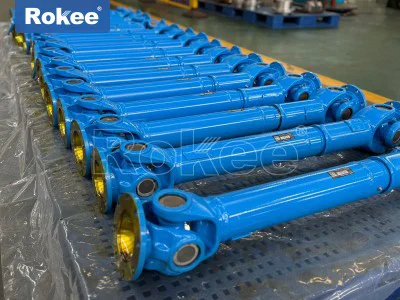
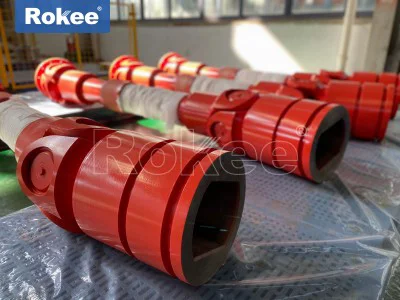
High torque cardan couplings are available in a variety of types, each designed to cater to specific application requirements, operating conditions, and torque demands. The most common type is the single cardan coupling, which features the basic structure of two yokes and a central spider. This type is simple in design, compact, and cost-effective, making it suitable for applications with moderate angular misalignment and high torque requirements, such as agricultural machinery, construction equipment, and small industrial pumps. However, single cardan couplings have a limitation: when the input shaft rotates at a constant speed, the output shaft may experience slight speed variations, which can cause vibration in some applications. To address this issue, double cardan couplings are designed with two single cardan joints connected by an intermediate shaft. This configuration eliminates the speed variation problem by ensuring that the angular displacement of one joint is canceled out by the other, resulting in constant velocity transmission. Double cardan couplings are ideal for applications where smooth, consistent torque transfer is critical, such as automotive drivetrains, marine propulsion systems, and high-speed industrial machinery. Another type of high torque cardan coupling is the offset cardan coupling, which is designed to accommodate both angular misalignment and radial offset between shafts. This type features a modified yoke design that allows for greater flexibility in handling non-parallel, non-intersecting shafts, making it suitable for applications such as conveyor systems, printing machinery, and textile equipment. Constant velocity (CV) cardan couplings are a specialized variant that combines the flexibility of a cardan coupling with the constant velocity transmission of a CV joint. These couplings are designed to maintain a constant output speed regardless of angular misalignment, making them ideal for high-speed, high-precision applications such as aerospace auxiliary systems, precision machine tools, and robotics. Heavy-duty reinforced cardan couplings are another important type, engineered with thicker yokes, larger spiders, and heavy-duty bearings to handle extreme torque loads. These couplings are commonly used in heavy industrial applications such as steel mills, mining equipment, and power generation systems, where torque requirements are extremely high and operating conditions are harsh. Additionally, there are telescopic cardan couplings, which incorporate a splined central shaft that allows for axial adjustment, making them suitable for applications where shaft length varies due to thermal expansion or dynamic movement, such as in large industrial fans, pumps, and turbines. Each type of high torque cardan coupling is designed with specific structural modifications to address the unique challenges of its intended application, ensuring optimal performance, reliability, and longevity.
The applications of high torque cardan couplings are vast and diverse, spanning across numerous industries where high-torque transmission and shaft misalignment compensation are essential. In the automotive industry, these couplings are widely used in the drivetrains of heavy-duty vehicles such as trucks, buses, and off-road vehicles. They transmit torque from the transmission to the differential, accommodating the angular misalignment caused by suspension movement and ensuring smooth power delivery even when the vehicle is navigating uneven terrain. In addition, they are used in automotive testing equipment and custom vehicle builds where high torque and flexibility are required. The marine industry also relies heavily on high torque cardan couplings, particularly in ship propulsion systems. They connect the ship’s engine to the propeller shaft, accommodating the angular misalignment between the engine and the propeller while transmitting the high torque required to propel large vessels. These couplings are designed to withstand the harsh marine environment, including exposure to saltwater, humidity, and extreme temperatures, ensuring reliable performance even in challenging conditions. In the industrial sector, high torque cardan couplings are essential components in heavy machinery such as steel mills, mining equipment, and power generation systems. In steel mills, they are used in rolling mills, continuous casting machines, and other equipment that requires high torque to process raw materials, accommodating the misalignment between different components of the machinery. In mining operations, they are used in crushers, conveyors, and drilling equipment, transmitting high torque while handling the vibrations and misalignments caused by the harsh operating conditions. Power generation systems, including thermal power plants, hydroelectric plants, and wind turbines, also use high torque cardan couplings to connect turbines to generators, ensuring efficient torque transmission even when there is slight misalignment between the two components. The agricultural industry uses high torque cardan couplings in farm machinery such as tractors, harvesters, and irrigation systems. These couplings transmit torque from the tractor’s engine to various implements, accommodating the angular misalignment caused by the movement of the implements and the uneven terrain of farmland. Additionally, high torque cardan couplings find applications in precision machinery such as machine tools, robotics, and aerospace auxiliary systems. In machine tools, they are used to transmit torque from the motor to the spindle, ensuring precise and consistent rotation even when there is slight misalignment, which is critical for achieving high machining accuracy. In robotics, they are used in the joints of industrial robots, allowing for flexible movement while transmitting high torque to drive the robot’s arms and end effectors. In aerospace applications, they are used in auxiliary systems such as landing gear mechanisms and engine accessories, where reliability, high torque capacity, and compact design are essential. Beyond these industries, high torque cardan couplings are also used in construction equipment, material handling systems, and custom industrial applications, where their ability to handle high torque, accommodate misalignment, and withstand harsh conditions makes them indispensable components.
The ongoing development of high torque cardan couplings is driven by the increasing demand for more efficient, durable, and flexible power transmission solutions in modern machinery. Advances in materials science have led to the use of high-strength, lightweight alloys and composite materials, which reduce the overall weight of the coupling while maintaining or enhancing its torque capacity and durability. Precision manufacturing technologies, such as computer numerical control (CNC) machining and 3D printing, have improved the accuracy and consistency of component production, ensuring that high torque cardan couplings meet the strict tolerances required for high-performance applications. Additionally, the integration of advanced bearing technologies, such as self-lubricating bearings and ceramic bearings, has further enhanced the performance and service life of these couplings by reducing friction, wear, and maintenance requirements. As industries continue to evolve and demand higher torque capacities, greater misalignment compensation, and more compact designs, high torque cardan couplings will continue to be refined and optimized to meet these challenges. Their versatility and reliability make them a critical component in the global mechanical power transmission landscape, supporting the operation of countless heavy-duty machines and systems that drive modern industry and infrastructure.
In summary, high torque cardan couplings are essential mechanical components that enable efficient, reliable torque transmission between misaligned shafts in high-load applications. Their sophisticated structure, characterized by robust yokes, a central spider, and precision bearings, provides the foundation for their exceptional performance, including high torque capacity, misalignment compensation, and high transmission efficiency. The diverse types of high torque cardan couplings, from single and double cardan designs to offset and CV variants, cater to a wide range of application requirements, ensuring that there is a suitable coupling for every high-torque transmission scenario. Their widespread applications across automotive, marine, industrial, agricultural, and precision machinery sectors highlight their versatility and importance in modern engineering. As technology continues to advance, high torque cardan couplings will remain at the forefront of power transmission solutions, evolving to meet the ever-increasing demands of complex and demanding operating environments. Whether in heavy industrial machinery, automotive drivetrains, or precision robotics, these couplings play a vital role in ensuring the smooth, efficient, and reliable operation of the machines that power our world.