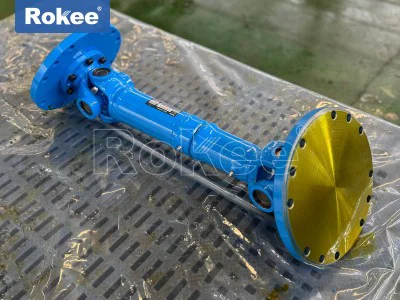
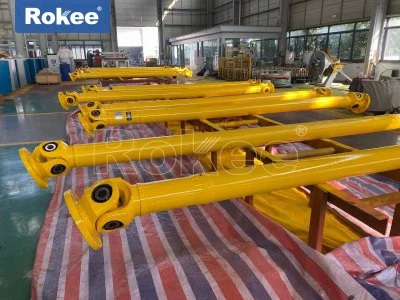
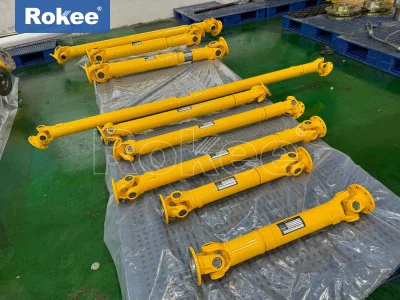
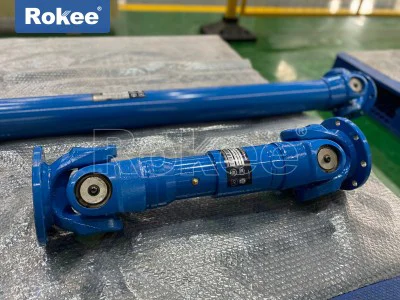
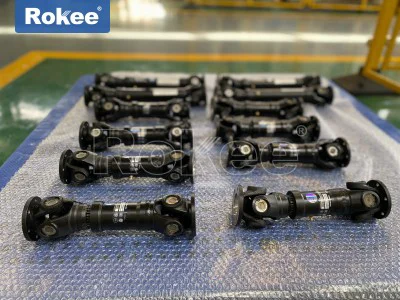
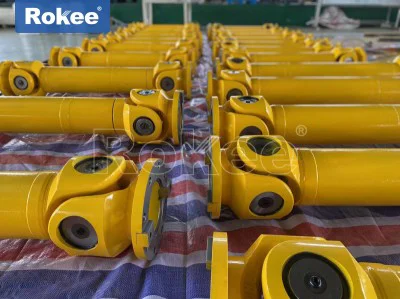
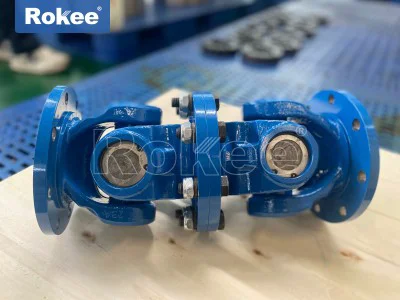
Cardan Drive Shaft For Steel Mill
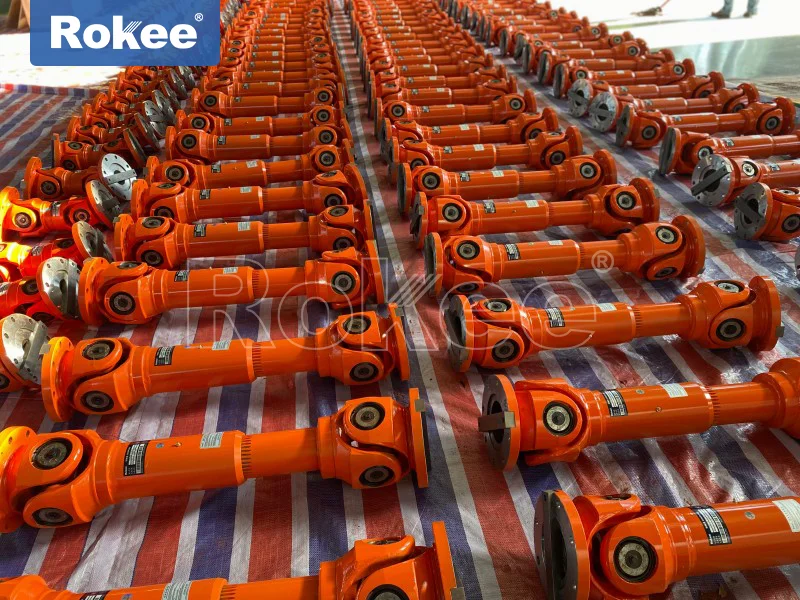
Cardan drive shafts stand as indispensable core transmission components in modern steel mill production systems, undertaking the critical task of power transmission between driving devices and rolling mill equipment. Tailored exclusively for the extreme and harsh operating environments of steel manufacturing, these specialized universal drive shafts differ vastly from ordinary industrial transmission shafts, featuring exceptional load resistance, misalignment compensation, and environmental adaptability. Steel mill production involves continuous heavy-duty operation, violent mechanical vibration, high-temperature radiation, and pervasive dust and oxide debris, all of which impose stringent demands on transmission component stability and durability. The cardan drive shaft effectively solves the transmission challenges caused by angular deviation, axial displacement, and equipment deformation during steel rolling processes, ensuring continuous and stable torque output for roughing mills, finishing mills, and auxiliary metallurgical equipment. As a key guarantee for the smooth operation of steel production lines, it directly influences production efficiency, equipment failure rates, and overall operational safety of steel mills.
The fundamental operational principle of cardan drive shafts for steel mills centers on the universal joint transmission structure, which enables efficient power transfer between non-coaxial mechanical components under dynamic operating conditions. Unlike rigid transmission structures that rely on fixed axis alignment, the cross universal joint core design allows the shaft to maintain stable torque transmission within a certain angular deflection range, perfectly adapting to the frequent axis offset changes in steel mill equipment. During steel rolling production, equipment generates subtle structural deformation under long-term heavy load stress, while thermal expansion from high-temperature rolling environments further causes relative displacement between motors, gearboxes, and rolling mill stands. The telescopic structure integrated into the cardan drive shaft can automatically compensate for axial displacement, eliminating additional mechanical stress caused by axis misalignment. This flexible transmission mechanism avoids the vibration, noise, and component wear common in rigid transmission systems, ensuring consistent power output even in dynamically changing working states and laying a solid foundation for stable long-term operation of steel rolling equipment.
High torque transmission capacity is the most prominent performance advantage of cardan drive shafts in steel mill applications, meeting the ultra-high power demand of heavy steel rolling processes. Steel rolling requires enormous extrusion and rolling force to deform thick steel billets, profiles, and steel plates, generating instantaneous peak torques far exceeding those of ordinary industrial transmission scenarios. Professionally customized cardan drive shafts for steel mills are structurally optimized for high-load torque transmission, with enlarged structural size of key load-bearing parts and improved stress distribution, enabling them to stably bear and transmit ultra-large torques without permanent deformation or structural damage. In the working process of roughing mills with the heaviest load and strongest impact, the drive shaft can instantly absorb and buffer violent load shocks, avoiding instantaneous torque overload damage to transmission systems and driving equipment. This reliable high-torque bearing performance ensures that steel rolling equipment can maintain sufficient power output during high-strength operation, supporting the efficient production of various heavy steel products.
The dynamic compensation performance of cardan drive shafts effectively reduces equipment operating vibration and improves the overall stability of steel mill production lines. During continuous steel rolling production, factors such as uneven material stress of steel products, frequent start-stop of equipment, and alternating load changes will cause continuous vibration of rolling mill equipment, which easily leads to axis deviation and stress concentration of transmission components. The multi-directional compensation capability of cardan drive shafts can effectively absorb angular deflection, radial deviation and axial displacement generated during equipment operation, offsetting the vibration impact of the transmission system. By balancing the stress distribution of the entire transmission structure, it avoids local excessive wear of bearings, joints and connecting parts, and reduces mechanical vibration and operating noise of the production line. Stable transmission operation not only extends the service life of the drive shaft itself but also protects matching core equipment such as gearboxes and motors, reduces the overall vibration failure rate of the production line, and creates a stable operating environment for high-precision steel rolling production.
Reasonable maintenance and scientific application management are key to extending the service life of cardan drive shafts and maintaining long-term stable performance in steel mills. Although steel mill cardan drive shafts are designed with high strength and high durability, long-term continuous heavy-load operation and harsh working environments will still cause gradual wear of internal bearings and sealing components. Daily maintenance work focuses on regular lubrication of universal joint bearings and telescopic structures, using high-temperature and wear-resistant special lubricants to ensure flexible operation of rotating parts and reduce friction wear. It is also necessary to regularly check the tightness of connecting parts and the integrity of sealing structures, replace aging sealing accessories in a timely manner to prevent impurity intrusion, and clean surface dust and oxide deposits regularly to avoid local stress concentration caused by foreign matter accumulation. In addition, regular professional detection of structural deformation and fatigue damage of the drive shaft can realize early warning of potential failures, avoid sudden shutdown accidents caused by drive shaft damage, and effectively improve the continuous operation efficiency of steel mill production lines.
With the continuous upgrading and intelligent development of modern steel manufacturing technology, the application value and performance requirements of cardan drive shafts in steel mills are constantly improving. Modern steel production is developing towards large-scale, high-speed and continuous operation, which puts forward higher standards for the load capacity, transmission accuracy, fatigue resistance and intelligent monitoring performance of transmission components. Advanced steel mill cardan drive shafts are gradually integrating intelligent monitoring structures, which can real-time feed back operating parameters such as transmission torque, operating temperature and vibration frequency during equipment operation, providing data support for intelligent equipment management and predictive maintenance. The continuous optimization of material processes and structural design further improves the adaptability of the drive shaft to extreme working conditions, reduces comprehensive operating costs, and improves the overall operational efficiency and safety level of steel production lines. As a key basic transmission component, the cardan drive shaft will continue to play an irreplaceable core role in the high-quality development of the steel industry.