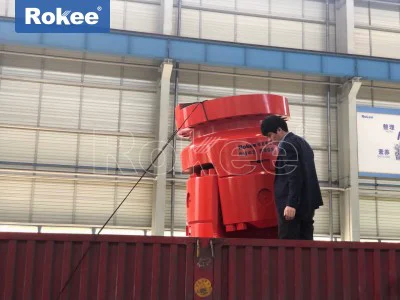
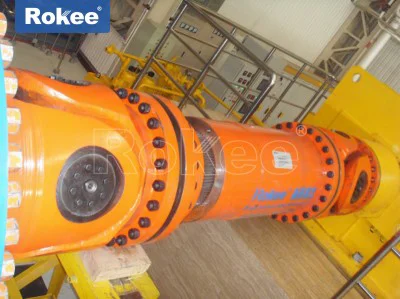
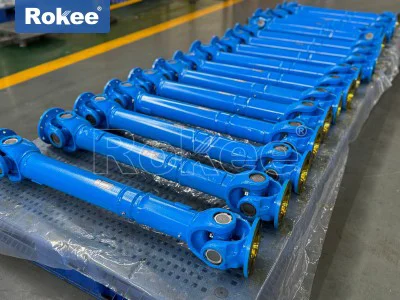
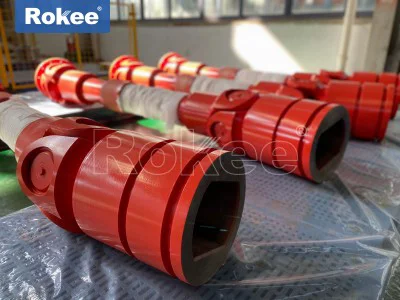
Cardan Drive Shaft For Construction Machinery
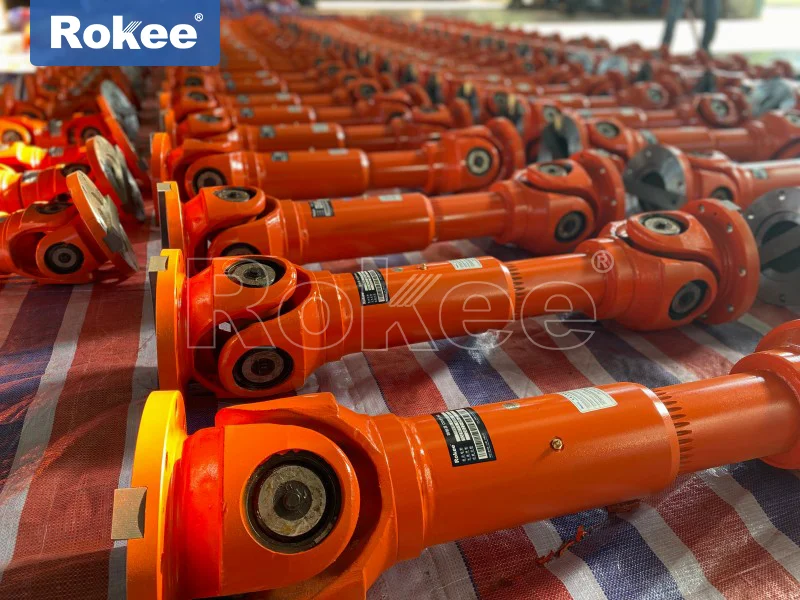
Cardan drive shafts stand as a core flexible power transmission component widely applied in modern construction machinery, serving as a vital bridge connecting power sources and operating execution parts of engineering equipment. Unlike rigid transmission shafts that require precise axis alignment, this component adopts a unique universal joint hinge structure, which can effectively compensate for angular deviation, axial displacement and radial offset generated between mechanical parts during dynamic operation. Construction machinery typically works in harsh and complex site environments with frequent vibration, load fluctuation and attitude adjustment, and rigid transmission structures are prone to power interruption and component wear under such working conditions. In contrast, cardan drive shafts maintain stable and continuous torque and rotational power transmission, ensuring the normal start, operation and load bearing of core equipment such as excavators, loaders, road rollers and cranes. With excellent flexibility, impact resistance and environmental adaptability, it has become an indispensable basic part to guarantee the efficient and reliable operation of various construction machinery.
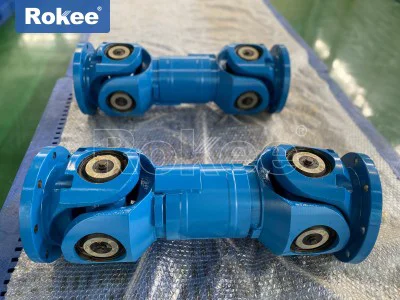
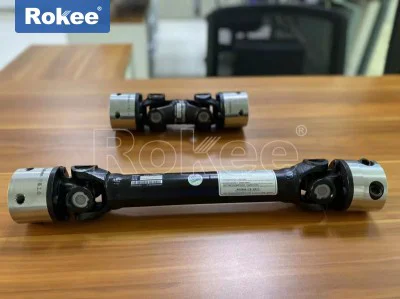
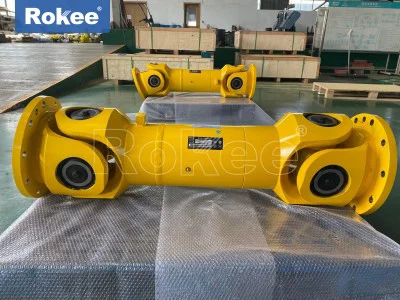
The fundamental working principle of cardan drive shafts for construction machinery centers on the flexible coordination of universal joint assemblies and intermediate shaft structures, which fundamentally solves the power transmission dilemma of non-coaxial mechanical operation. A complete cardan drive shaft is mainly composed of universal joints, cross shaft assemblies, telescopic sleeves and high-strength shaft bodies, where the cross shaft is the core force-bearing and movable unit that connects the driving end and driven end joints. When construction machinery operates with attitude changes or component displacement, the universal joint can freely deflect within a certain angle range, and the telescopic sleeve adaptively adjusts the overall length of the shaft body to offset axial distance changes between transmission parts. During the power transmission process, the rotational torque output by the engine or gearbox is stably transmitted to the hydraulic system, walking mechanism or working device through the sequential coordination of each structural unit. Even under intermittent impact loads and high-frequency vibration generated by earthwork, road construction and hoisting operations, the shaft body can avoid rigid stress concentration, ensuring that power output is not attenuated or distorted, and laying a solid foundation for the continuous and stable operation of construction machinery under variable working conditions.
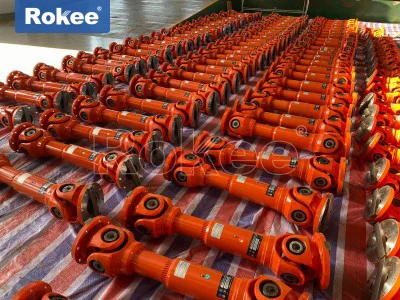
Material selection and structural optimization determine the extreme working performance and service life of cardan drive shafts for construction machinery, adapting to the high-load and high-intensity operating characteristics of engineering equipment. Most high-quality cardan drive shafts adopt high-tensile alloy steel as the base material, which undergoes precise forging and multiple heat treatment processes to integrate high hardness, tensile strength and fatigue resistance. This material characteristic enables the shaft body to withstand long-term heavy torque impact and frequent alternating load changes, and effectively resist structural deformation and metal fatigue damage. In terms of structural design, the double universal joint layout is widely used in construction machinery dedicated models, which greatly improves the angular compensation capacity compared with single joint structures, meeting the large deflection power transmission demand of equipment in complex terrain operations. Meanwhile, the surface of key components is equipped with anti-corrosion, wear-resistant and dust-proof protective layers, which can isolate the erosion of dust, mud, rainwater and humid air on construction sites, reduce the friction loss of movable joints, and effectively extend the overall service cycle of the drive shaft while maintaining long-term stable transmission efficiency.
Cardan drive shafts exhibit extremely high scenario adaptability, covering almost all mainstream types of construction machinery and adapting to diversified engineering operation scenarios. In earthmoving machinery such as excavators and loaders, they undertake the power transmission task between the engine and walking system, as well as between the hydraulic pump and working arm mechanism, coping with frequent starting, stopping and steering actions during earthwork excavation and material handling. In road construction equipment including road rollers and pavers, the drive shaft maintains stable power output during continuous linear operation and vibration compaction, ensuring uniform and consistent construction operation. For large hoisting machinery such as mobile cranes, it adapts to the attitude changes of the boom and the impact load generated by heavy lifting, realizing accurate and reliable power transmission. In addition, it also performs well in mining engineering machinery and foundation construction equipment, stably operating in low-temperature, high-dust and high-humidity harsh environments. Its versatile adaptability makes it a unified core transmission component for multi-type construction machinery, greatly reducing the matching difficulty of mechanical transmission systems.
The outstanding operational advantages of cardan drive shafts in construction machinery are mainly reflected in stable power transmission, low mechanical loss and strong anti-interference ability, which effectively improve the overall working efficiency of engineering equipment. Different from fixed transmission parts that are sensitive to installation errors and mechanical vibration, cardan drive shafts can tolerate certain installation deviations and dynamic displacement changes during equipment operation, avoiding power transmission jitter and mechanical stuck failures caused by axis misalignment. The dynamically balanced shaft body structure effectively reduces rotational vibration and running noise during high-speed operation, optimizing the overall operating stability of construction machinery. Moreover, the flexible transmission characteristic can buffer the instantaneous impact force generated by equipment starting, load switching and terrain fluctuation, protect core components such as engines and gearboxes from sudden load damage, and reduce the failure rate of the entire mechanical transmission system. While ensuring efficient power transmission, it minimizes mechanical energy loss, enables construction machinery to convert power into working power to the maximum extent, and achieves energy-saving and efficient operation in long-term engineering construction.
Daily maintenance and scientific use are crucial to maintaining the long-term performance stability of cardan drive shafts for construction machinery, and standardized management can effectively avoid premature failure and frequent equipment downtime. In daily construction operation, operators need to avoid long-term overload operation of the equipment, because excessive torque load will cause irreversible wear of cross shaft bearings and universal joint structures, and even lead to shaft body deformation. Regular inspection work includes checking the tightness of connecting fasteners, the flexibility of telescopic structures and the wear degree of movable joints, timely replenishing professional lubricating grease for friction parts to reduce dry friction loss. For construction machinery working in muddy and dusty environments for a long time, regular cleaning of the drive shaft surface and dust-proof structure maintenance are required to prevent foreign matter from entering the movable gap and causing structural jamming. In seasonal operation, targeted maintenance such as low-temperature lubrication replacement in winter and anti-rust reinforcement in rainy seasons should be carried out. Scientific maintenance can not only maintain the efficient transmission performance of the drive shaft, but also greatly reduce the frequency of replacement parts and equipment maintenance costs.
With the continuous upgrading of construction machinery towards large-scale, intelligent and high-efficiency development, the technical iteration of cardan drive shafts is also advancing continuously, driving the overall optimization of engineering mechanical transmission systems. Modern construction machinery has higher requirements for load bearing capacity, transmission accuracy and environmental adaptability of transmission components under the trend of increasing operating load and diversified working scenarios. The new generation of cardan drive shafts adopts optimized structural topology design, further improving angular compensation range and torque bearing limit, and adapting to the high-intensity operation demand of large engineering equipment. At the same time, the application of new wear-resistant and anti-fatigue materials and precision processing technology effectively reduces component wear rate and improves transmission stability. In addition, the integrated and lightweight design is gradually popularized, which reduces the self-weight of the transmission structure without reducing performance, helps improve the operating flexibility of construction machinery, and reduces equipment energy consumption. This continuous technical improvement enables cardan drive shafts to always adapt to the upgrading and development of construction machinery, and maintain their core position in the field of engineering mechanical power transmission.
Looking at the development prospect of construction machinery supporting components, cardan drive shafts will still occupy an irreplaceable core position in the industry in the long run, with broad application space and development potential. As infrastructure construction continues to advance globally, the market demand for various construction machinery remains stable growth, which directly drives the continuous demand for supporting cardan drive shafts. Compared with other transmission components, it has obvious comprehensive advantages in structural simplicity, operational reliability and scenario adaptability, and is more suitable for the complex and variable working conditions of construction machinery. In the future, with the in-depth development of intelligent manufacturing and green construction concepts, cardan drive shafts will further develop in the direction of higher precision, longer service life, lower energy consumption and intelligent fault prediction. Continuous technological innovation and performance optimization will make it better match the high-efficiency and low-consumption operation requirements of modern construction machinery, and provide more solid technical support for the stable and efficient operation of engineering construction equipment.