Welded Type Cardan Coupling
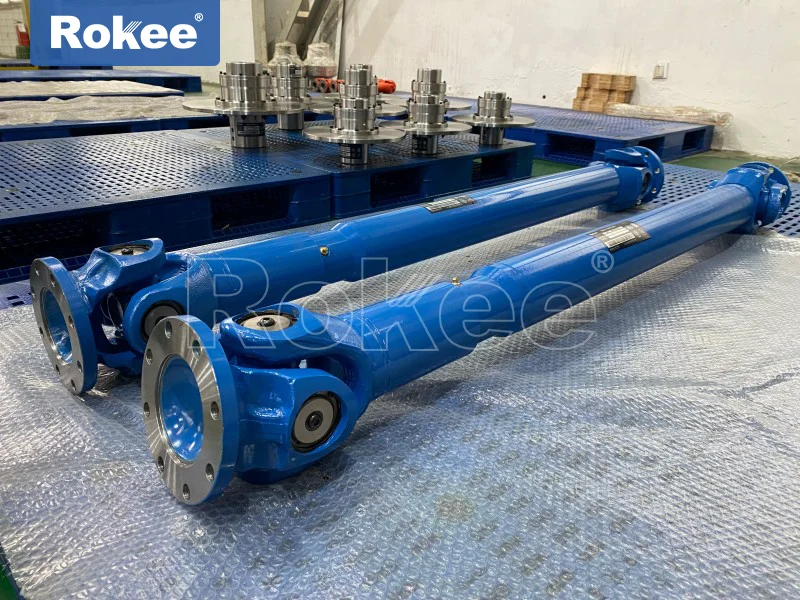
Welded type cardan coupling is a robust and integrated power transmission component widely adopted in modern mechanical drive systems, designed to connect two misaligned shafts and achieve stable torque and motion transmission. Unlike traditional assembled cardan couplings that rely on bolted or detachable connections, this type of coupling features an integral welded structure that fuses core components into a unified whole, eliminating loose assembly gaps and structural looseness. It excels in adapting to angular, radial and axial shaft misalignments, delivering high transmission efficiency, excellent structural rigidity and strong load-bearing capacity. Suited for heavy-duty, high-frequency and long-term continuous operation scenarios, it effectively solves the instability and short service life problems of ordinary couplings under complex working conditions. Its streamlined structure and reliable mechanical performance make it a core transmission part for various industrial mechanical equipment.
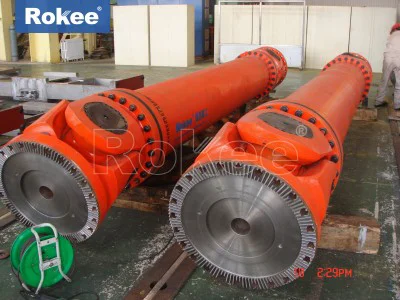
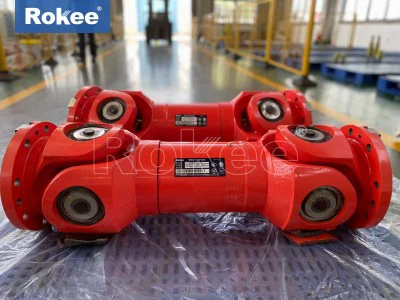
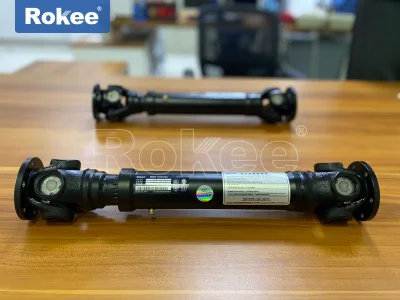
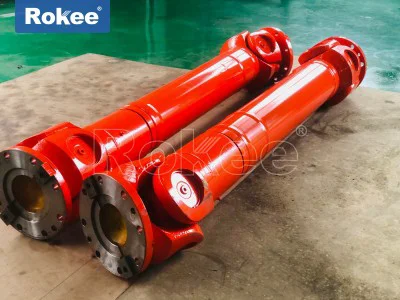
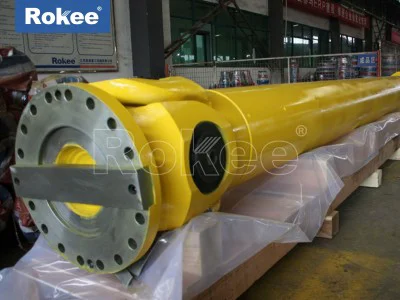
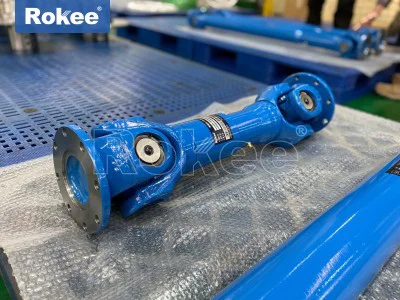
The structural composition of welded type cardan coupling is refined and compact, with every component designed to optimize overall stability and transmission performance. The core structure consists of welded integral yokes, cross shaft assemblies, precision bearing sets and sealed protective structures, all integrated through professional welding processes rather than conventional splicing methods. The driving and driven yokes are permanently welded to the main shaft body, forming an integrated stress-bearing structure that avoids the relative displacement and vibration caused by detachable connections. The cross shaft, as the central force-transmitting component, is matched with high-precision needle roller bearings to reduce friction resistance during rotation, while the sealing structure effectively isolates internal moving parts from external dust, moisture and abrasive impurities. This integrated structural design simplifies the overall mechanical layout, reduces the number of auxiliary parts, and greatly enhances the structural compactness and overall rigidity of the coupling, laying a solid foundation for stable operation under heavy load and variable working conditions.
The working principle of welded type cardan coupling follows the classic universal joint transmission mechanism, with its welded structure further optimizing transmission stability and continuity. During equipment operation, the driving shaft drives the welded integrated yoke to rotate, and the rotational torque is stably transmitted to the cross shaft through the bearing assembly. The cross shaft converts the single-direction rotational motion of the driving end into flexible multi-directional motion, adapting to the angular deviation and spatial displacement between the driving and driven shafts. The integrated welded structure ensures synchronous stress application of the yoke and shaft body, avoiding torque loss and motion delay caused by assembly gaps. Even when the connected two shafts produce continuous dynamic misalignment due to equipment vibration, load changes or installation errors, the coupling can still maintain uninterrupted torque transmission. The uniform stress distribution of the welded integral structure prevents local stress concentration, ensuring consistent transmission accuracy and mechanical stability throughout the long-term operation cycle.
Welding process technology is the core advantage that distinguishes welded type cardan coupling from ordinary assembled couplings, directly determining its mechanical performance and service life. Professional high-precision welding technology is adopted for all key connection parts, with strict control over welding temperature, welding speed and weld forming quality to ensure full penetration and seamless fusion of the joint surfaces. After welding, targeted stress relief treatment is carried out to eliminate residual welding stress inside the component, effectively preventing structural deformation, crack generation and fatigue damage in subsequent high-load operation. The formed weld has uniform texture and high tensile and torsional strength, which can bear instantaneous impact load and cyclic alternating load without structural failure. Compared with bolted connections that are prone to loosening and thread wear, the welded integrated connection achieves permanent and stable fixation, fundamentally solving the problem of structural failure caused by long-term vibration and improving the overall durability of the coupling.
Welded type cardan coupling possesses outstanding mechanical performance advantages that make it adaptable to harsh industrial working environments. Its integrated welded structure provides excellent torsional rigidity and load-bearing capacity, enabling it to stably withstand high torque output and frequent impact loads in heavy-duty mechanical systems. The optimized internal friction structure and precise assembly process ensure extremely high transmission efficiency, with minimal energy loss during power transmission, which helps reduce equipment operation energy consumption and improve overall mechanical working efficiency. In terms of misalignment compensation, it can adapt to a large range of angular and axial misalignment changes, effectively tolerating installation errors and dynamic shaft displacement during equipment operation. Additionally, the overall structural stability greatly reduces operation vibration and noise, realizing low-noise and stable operation. The compact and integrated design also improves the structural shock resistance, allowing it to operate normally in high-vibration and complex working scenarios for a long time.
The application scope of welded type cardan coupling covers numerous heavy industrial mechanical fields, relying on its superior comprehensive performance. It is widely used in mining machinery to provide stable power transmission for large conveying and crushing equipment, adapting to the high-load and high-vibration working characteristics of mining sites. In metallurgical equipment, it serves as a key transmission component for rolling and forging machinery, stably transmitting power under high-temperature and heavy-load operating conditions. It also plays an irreplaceable role in engineering machinery, textile and papermaking equipment, and chemical transmission systems, meeting the continuous operation needs of various mechanical transmission systems. For mechanical equipment that requires long-term uninterrupted operation, high transmission accuracy and strong environmental adaptability, this coupling can always maintain stable working performance, effectively reducing equipment failure rates and improving the continuous operation capacity of the entire production line.
In terms of daily operation and maintenance, welded type cardan coupling has obvious practical advantages, reducing equipment operation costs and maintenance workload. The integrated welded structure avoids common faults such as bolt loosening, gasket aging and assembly dislocation of traditional couplings, greatly reducing daily inspection and maintenance frequency. The matched high-performance sealing structure can effectively protect internal bearings and cross shaft components from external pollution and wear, extending the service cycle of wearing parts. During long-term operation, it only needs regular lubrication maintenance for the internal bearing system to ensure flexible rotation of moving parts. Thanks to its stable structural performance and strong fatigue resistance, it has a long overall service life, reducing the frequency of component replacement and equipment shutdown maintenance. This low-maintenance characteristic not only improves equipment operation efficiency but also reduces the later operation and maintenance cost of mechanical systems.
With the continuous upgrading of modern industrial mechanical equipment, the performance optimization and technical development of welded type cardan coupling are also advancing continuously. Current optimization directions focus on structural lightweighting and performance upgrading, adopting optimized structural design to reduce overall weight while ensuring structural rigidity and load-bearing capacity, which helps reduce equipment operating inertia and improve transmission response speed. At the same time, the innovation of welding technology and material application further improves the wear resistance, corrosion resistance and fatigue resistance of the coupling, enabling it to adapt to more extreme working environments. In the future, with the development of intelligent and high-efficiency industrial equipment, welded type cardan coupling will continue to iterate in structural design and manufacturing technology, providing more stable, efficient and durable power transmission solutions for various high-end mechanical transmission systems.