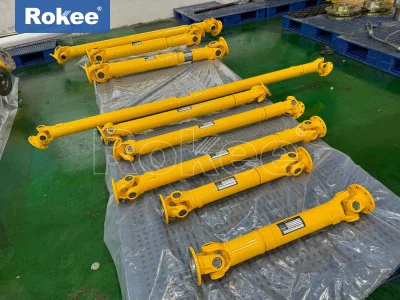
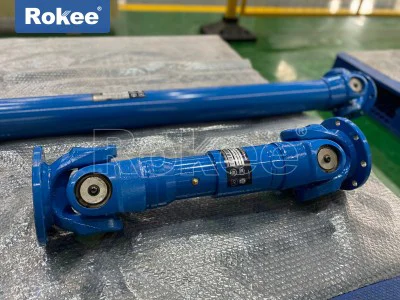
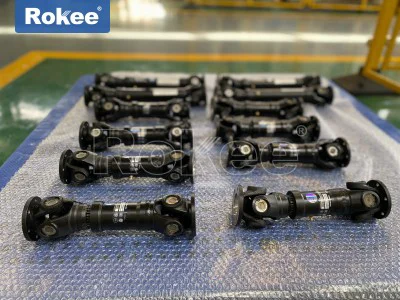
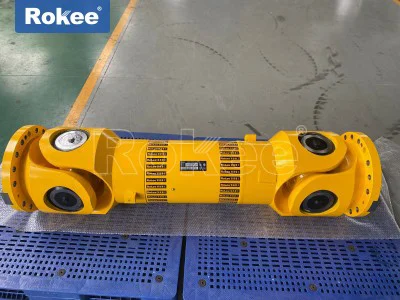
Universal Joint Coupling For Industrial Machinery

Universal joint couplings stand as indispensable flexible transmission components in modern industrial machinery systems, serving as critical connectors that bridge rotating shafts while accommodating complex positional deviations during equipment operation. Unlike rigid couplings that require precise shaft alignment and fail to adapt to dynamic operational changes, these specialized mechanical parts excel at transmitting stable torque and rotational motion between misaligned, offset, or angularly displaced shafts. Their core functional advantage lies in flexible misalignment compensation, which effectively absorbs axial, radial, and angular displacements generated by mechanical vibration, thermal expansion, installation errors, and long-term operational wear. Widely deployed in heavy-duty manufacturing, material processing, power transmission, and automated production equipment, universal joint couplings stabilize mechanical operation, reduce transmission resistance, and mitigate component wear. As a foundational guarantee for continuous and efficient industrial production, they optimize the overall reliability and service life of mechanical transmission systems across diverse industrial scenarios.
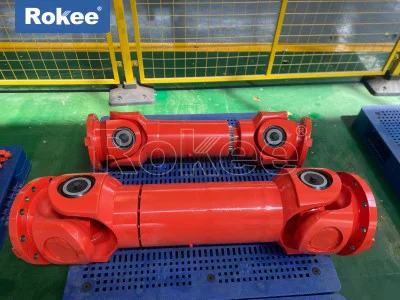
The fundamental working principle of universal joint couplings centers on the flexible rotational coordination of their core structural components, enabling uninterrupted power transmission despite persistent shaft misalignment. The basic structure consists of two yoke assemblies and a central cross spider connected by precision roller bearings, forming a symmetric flexible hinge mechanism that supports multi-directional rotational movement. When industrial machinery operates with angular deviation between driving and driven shafts, the cross spider rotates freely within the bearing seats of the dual yokes, converting offset rotational motion into smooth, continuous torque output without disrupting transmission continuity. This unique structural design eliminates the rigid connection limitations of traditional coupling devices, allowing the system to adapt to real-time dynamic changes in shaft position. The roller bearing configuration minimizes sliding friction during operation, replacing harsh frictional wear with low-resistance rolling motion to maintain consistent transmission efficiency. Even under frequent rotational speed adjustments and intermittent start-stop operations common in industrial production, the coordinated movement of internal components ensures stable power output and avoids torque fluctuation that may affect machining accuracy and equipment stability.
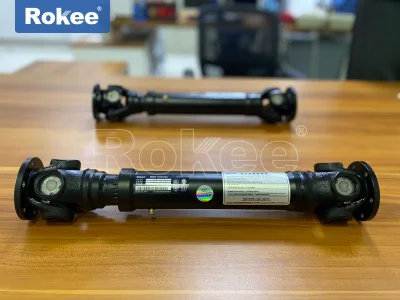
Diverse structural classifications of universal joint couplings enable their adaptive application across differentiated industrial machinery operating conditions, covering light-duty precision transmission to heavy-load high-torque operation scenarios. Single universal joint structures feature compact dimensions and simple assembly, suitable for general industrial equipment with small angular misalignment and low load intensity, achieving basic flexible transmission with minimal structural occupation. Double universal joint configurations integrate two sets of joint structures through intermediate shafts, effectively compensating larger angular deviations and axial displacements that single joints cannot accommodate, making them ideal for medium-load mechanical systems with complex shaft movement. Telescopic universal joint couplings add spline shaft structures to the basic framework, enabling automatic axial length adjustment to offset linear displacement caused by mechanical vibration or thermal expansion, which is widely applicable to mobile industrial machinery and long-distance transmission equipment. Each structural variant is optimized for specific stress characteristics and movement requirements, ensuring that industrial equipment can maintain stable transmission performance under variable working conditions, and effectively expanding the application boundary of flexible transmission technology in modern industrial systems.
The outstanding performance advantages of universal couplings make them superior to many traditional transmission connectors in complex industrial working environments, bringing comprehensive improvements to mechanical operation efficiency and stability. Their most prominent merit is exceptional misalignment tolerance, which supports stable operation under significant angular, radial, and axial shaft deviations, greatly reducing the precision requirements for equipment installation and lowering assembly and debugging costs for industrial machinery. In terms of load resistance, these couplings feature robust structural rigidity and uniform stress distribution, capable of bearing instantaneous impact loads and alternating loads generated by industrial equipment start-up, shutdown, and sudden load changes, avoiding structural deformation or transmission failure under harsh working conditions. Additionally, the optimized internal bearing and sealing structure effectively isolates dust, moisture, and corrosive substances in industrial environments, reducing internal component contamination and wear. Low operational vibration and noise further optimize the industrial operating environment, while high transmission accuracy ensures that torque and rotational speed are accurately transmitted without significant power loss, maximizing the overall operational efficiency of mechanical equipment.
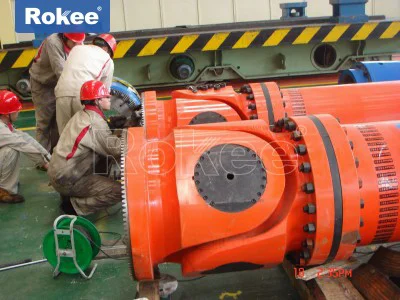
Universal joint couplings have achieved extensive penetration in mainstream industrial machinery fields, becoming a core supporting component for continuous industrial production and automated mechanical operation. In metallurgical and rolling equipment, they undertake high-torque transmission tasks between rolling shafts, adapting to frequent load changes and mechanical vibration during metal rolling processes to ensure consistent product processing accuracy. In engineering and construction machinery, these couplings connect power output shafts and execution shafts, compensating for positional deviations generated by equipment walking and working posture adjustments to maintain stable power transmission under complex construction conditions. In automated production lines and material processing machinery, they coordinate the synchronous operation of multi-group transmission shafts, eliminating transmission jitter caused by mechanical operation errors and ensuring the continuity and stability of assembly, processing, and conveying processes. Meanwhile, they are also widely used in petrochemical, agricultural machinery, and mining equipment, adapting to the diversified working characteristics of different industrial scenarios. Their strong scenario adaptability and reliable operational performance make them a universal core component in the industrial mechanical transmission field.
Scientific installation and commissioning are key prerequisites for universal joint couplings to exert optimal transmission performance and extend service life in industrial machinery operation. Before installation, thorough inspection of all components is required to check for bearing wear, yoke deformation, sealing damage, or foreign matter accumulation, ensuring all parts are intact and clean to avoid initial operational failures caused by defective components. During the assembly process, strict alignment of the driving and driven shaft axes must be ensured within the adaptable deviation range of the coupling, while avoiding excessive installation tension or structural distortion that may cause abnormal stress. The assembly sequence should follow mechanical structural logic to ensure firm connection of fasteners and accurate clamping of bearing components, preventing component loosening during high-speed operation. After installation, no-load trial operation is essential to observe rotational stability, check for abnormal vibration, noise, or jamming, and adjust assembly parameters timely to eliminate potential hidden dangers. Standardized installation and commissioning can effectively avoid premature component wear and transmission efficiency attenuation, laying a solid foundation for long-term stable operation of industrial machinery transmission systems.
Routine maintenance and scientific fault prevention are crucial to maintaining the long-term reliability and operational stability of universal joint couplings in industrial machinery. Regular lubrication maintenance is the core of daily upkeep, as sufficient and high-quality lubricant can reduce internal friction between bearings and cross spiders, slow down component wear, and prevent dry friction damage under high-speed operation. Operators need to regularly inspect the sealing structure to replace aging or damaged sealing parts in a timely manner, blocking external dust, moisture, and corrosive media from entering the internal structure to avoid component rust and performance degradation. Periodic inspection of fastener tightness and structural integrity is also necessary to eliminate loose connections caused by long-term vibration. For common minor faults such as slight rotational jitter and weak transmission fluctuation, timely troubleshooting and parameter adjustment can prevent small faults from evolving into major equipment failures. Systematic maintenance mechanisms effectively reduce equipment failure rates, lower long-term operational and replacement costs, and ensure the continuous and efficient operation of industrial mechanical transmission systems.
With the continuous upgrading of modern industrial machinery toward high speed, high precision, and high intelligence, universal joint coupling technology is also undergoing continuous optimization and innovation to adapt to evolving industrial production demands. Modern industrial equipment puts forward higher requirements for transmission stability, load resistance, and durability of coupling components, driving the structural optimization of universal joints toward miniaturization, high rigidity, and low wear. Advanced processing technologies and high-performance structural materials are widely applied in production, effectively improving the overall mechanical strength, fatigue resistance, and environmental adaptability of products, enabling them to adapt to more extreme high-load and high-frequency operation scenarios. Meanwhile, structural design innovations focus on reducing transmission backlash and improving motion accuracy, meeting the precision transmission needs of automated and intelligent industrial machinery. In the future, universal joint couplings will further integrate lightweight design and intelligent wear monitoring concepts, continuously improving comprehensive performance to provide more reliable and efficient flexible transmission support for the upgrading and development of modern industrial machinery.