Universal Shaft Coupling With Cross Bearing Spider
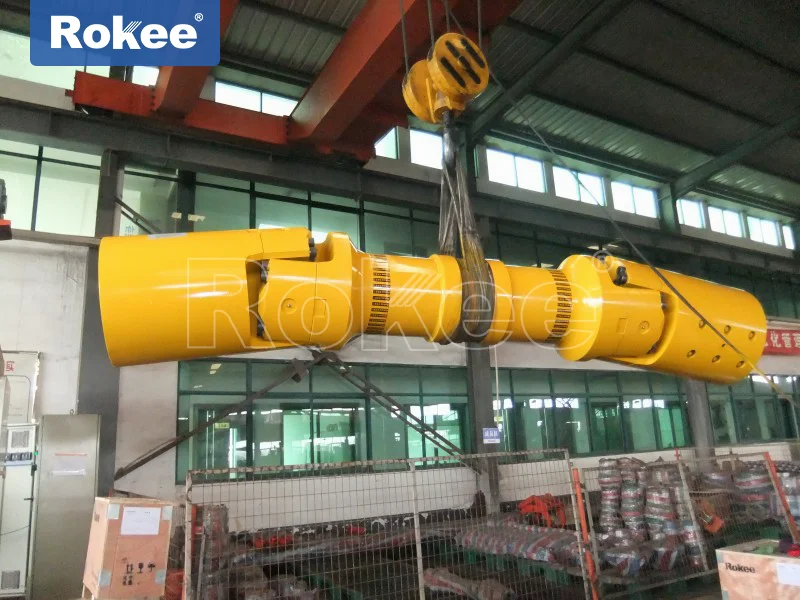
In the complex and interconnected mechanical transmission systems that power modern industrial and mobile machinery, the ability to transfer rotational torque and motion between misaligned shafts stands as one of the most fundamental yet critical engineering requirements. Among the diverse range of transmission components available, the universal shaft coupling with cross bearing spider has emerged as a highly reliable, versatile, and durable solution designed to address the challenges of angular, axial, and radial shaft misalignment while maintaining consistent power transmission efficiency. This specialized coupling integrates precision bearing technology with a robust cross-spider structural design, creating a flexible mechanical linkage that adapts to dynamic operational conditions, absorbs mechanical stress, and ensures stable long-term performance across countless industrial applications. Unlike rigid coupling designs that demand precise shaft alignment and fail to accommodate positional deviations, the cross bearing spider universal coupling is engineered for adaptability, making it an indispensable component in machinery systems where shaft alignment cannot be permanently maintained due to operational vibration, structural deformation, or dynamic movement.
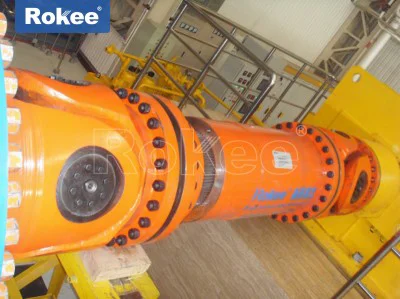
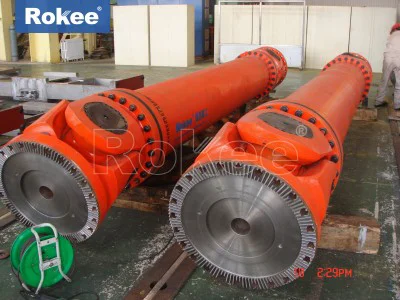
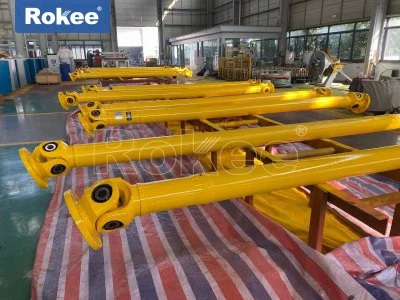
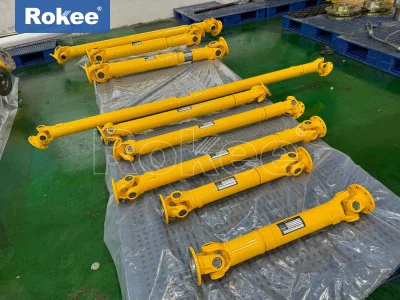
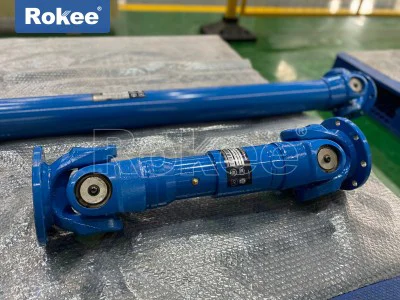
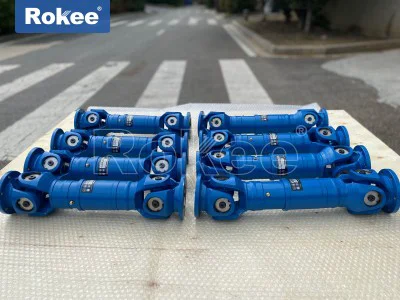
The structural composition of the universal coupling with cross bearing spider embodies a perfect balance of mechanical simplicity and engineering sophistication, with every core component precisely optimized for force transmission and flexible movement. At the center of the entire assembly lies the cross-shaped spider, the core load-bearing and force-transmitting element that defines the coupling’s functional characteristics. Crafted from high-strength, wear-resistant alloy materials through precision forging and finishing processes, the cross spider features four mutually perpendicular shaft trunnions arranged in a symmetrical cross configuration. This symmetrical structural design ensures uniform force distribution in all directional movements, eliminating localized stress concentration and laying the foundation for stable and consistent torque transmission. Each trunnion of the cross spider is fitted with a high-precision needle roller bearing assembly, which serves as the friction-reducing and motion-buffering core between the spider and the two yoke joints connected to the driving and driven shafts respectively.
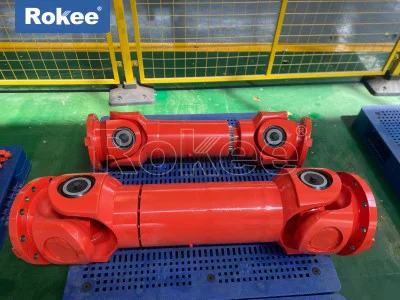
The paired yoke joints, also referred to as fork joints, form the external connection structure of the coupling, with one yoke fixed to the input driving shaft and the other to the output driven shaft. These yoke components are manufactured with high structural rigidity to withstand torsional loads and impact forces during operation, and their open fork-shaped design perfectly accommodates the cross spider and bearing assemblies, enabling free spatial articulation. Complemented by auxiliary sealing rings, lubrication fittings, and fastening components, the complete coupling assembly forms a fully enclosed, self-lubricating transmission unit that effectively isolates internal moving parts from external environmental interference. The integration of cross spider and bearing assemblies transforms rigid shaft connection into flexible movable connection, allowing the two connected shafts to operate stably even with significant angular deviation, axial displacement, and minor radial offset, a capability that rigid couplings completely lack.
The working principle of the universal shaft coupling with cross bearing spider is rooted in spatial kinematic linkage mechanics, enabling continuous and stable power transmission between non-collinear rotating shafts. During equipment operation, the rotational torque of the driving shaft is first transmitted to the connected driving yoke, which drives the cross spider to initiate compound spatial motion through the embedded needle roller bearings. The precision bearings between the spider trunnions and yoke inner walls greatly reduce sliding friction during motion, converting rigid friction into low-resistance rolling friction. As the driving yoke rotates, the cross spider undergoes simultaneous rotational and swinging movements, adapting to the angular deviation between the two shafts in real time, and further transmits torque to the driven yoke and the connected driven shaft. This unique motion mechanism ensures that power transmission remains uninterrupted regardless of the dynamic positional changes between the input and output shafts.
A notable mechanical characteristic of this single-section universal coupling structure is its periodic instantaneous speed variation during operation. When the driving shaft rotates at a constant speed, the rotational speed of the driven shaft fluctuates slightly within a single rotation cycle due to angular misalignment. This subtle speed variation is a natural mechanical feature of the Hooke’s joint principle on which the coupling is based, yet it does not affect the overall operational stability of most conventional machinery systems. For high-precision, high-speed, or heavy-load equipment that requires extremely uniform rotational speed, the dual-section combination design of two universal couplings can be adopted to effectively offset the speed fluctuation of a single joint, achieving highly synchronous constant-speed transmission. This flexible structural expandability further broadens the application scope of the cross bearing spider universal coupling, allowing it to adapt to transmission requirements from conventional general machinery to high-precision industrial equipment.
One of the most prominent advantages of the universal shaft coupling with cross bearing spider is its exceptional load-bearing capacity and operational durability under harsh working conditions. Benefiting from the high-strength integral forging of the cross spider and the uniform load distribution brought by its symmetrical structure, the coupling can withstand large torsional torque, frequent impact loads, and continuous cyclic operation without structural deformation or fatigue damage. The matched needle roller bearings feature high load capacity and wear resistance, maintaining stable rotational flexibility under long-term heavy-load operation and effectively extending the service life of the entire transmission assembly. In practical industrial operation, mechanical vibration and impact are inevitable due to equipment start-stop, load changes, and uneven operation of mechanical components. The flexible connection characteristics of the cross bearing spider coupling can effectively absorb and buffer these mechanical shocks, reduce vibration transmission between shafts, and protect key equipment components such as motors, reducers, and working machinery from impact damage.
In addition to excellent mechanical performance, the coupling also demonstrates outstanding environmental adaptability, enabling stable operation in complex and harsh working scenarios. Its fully enclosed structural design effectively prevents dust, metal debris, moisture, and corrosive substances in the external environment from entering the internal bearing and spider moving pairs, avoiding abrasive wear and electrochemical corrosion of core components. This structural advantage allows the coupling to maintain reliable performance in dusty construction sites, humid processing workshops, and outdoor open-air operating environments. Meanwhile, the specialized lubrication system of the coupling can store and continuously supply lubricating grease for friction pairs, reducing component wear and heat generation during high-speed operation, and ensuring stable transmission efficiency even under long-duration continuous working conditions. Compared with elastic couplings that rely on rubber or polymer elastic elements, the all-metal core structure of the cross bearing spider coupling avoids aging, deformation, and failure of elastic materials, boasting higher temperature resistance, aging resistance, and structural stability.
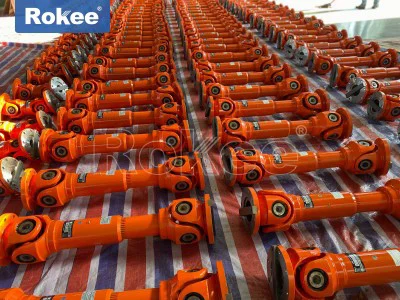
The application scenarios of the universal shaft coupling with cross bearing spider cover almost all mechanical fields that require flexible shaft power transmission, showing extremely high engineering practicability and versatility. In engineering and construction machinery, it is widely applied in the power transmission systems of loaders, excavators, cranes, and bulldozers. These mobile devices often produce severe vibration and structural displacement during walking and working processes, and the flexible compensation capability of the coupling can well adapt to the dynamic shaft misalignment caused by equipment movement and load fluctuation, ensuring continuous power output of walking and working mechanisms. In industrial manufacturing equipment, the coupling serves in the transmission structures of conveyor equipment, mixing machinery, forging and pressing machinery, and packaging equipment, stably transmitting power between power units and working execution units and solving the transmission failure problem caused by installation deviation and equipment operation deformation.
In addition, the coupling also plays an important role in agricultural machinery, transportation equipment, and general mechanical transmission systems. Complex working environments such as farmland operation and road travel often lead to irregular shaft position changes of mechanical equipment, and the strong misalignment adaptation capability of the cross bearing spider universal coupling can fully meet the flexible transmission needs of these devices. Its simple and compact structural form also brings significant installation advantages, allowing it to be normally installed and used in narrow mechanical spaces where large-scale coupling equipment cannot be arranged, greatly improving the space utilization rate of mechanical equipment. Moreover, the standardized structural design of core components makes the coupling easy to disassemble, assemble, and replace, reducing the difficulty and time cost of equipment maintenance and after-sales overhaul.
Scientific and standardized daily maintenance is crucial to maximizing the service life and maintaining the stable performance of the universal shaft coupling with cross bearing spider. The core of maintenance work lies in the long-term stability of the lubrication system, as the friction pairs between the cross spider, bearings, and yokes rely entirely on high-quality lubrication to reduce wear and heat accumulation. During daily equipment inspection, it is necessary to regularly check the sealing integrity of the coupling to prevent lubricant leakage and external impurity infiltration. Timely supplementary injection of special lubricating grease is required according to equipment operating hours and working intensity to ensure sufficient lubrication of internal moving parts. For equipment operating in high-load, high-speed, or dusty environments, the frequency of lubrication maintenance should be appropriately increased to avoid dry friction and excessive wear of bearings and spider trunnions.
In addition to lubrication maintenance, regular inspection of component wear and fastening state is also essential. Long-term cyclic operation may cause minor wear of bearing rollers and cross spider contact surfaces, and regular observation can detect early wear failure in advance and avoid sudden equipment shutdown caused by component damage. At the same time, the fastening bolts of the yoke joints may loosen due to long-term mechanical vibration, so regular tightening inspection is required to ensure the connection rigidity of the coupling and prevent transmission deviation or component shedding caused by loose connection. When abnormal noise, vibration increase, or transmission jitter is found during equipment operation, the coupling should be inspected in a targeted manner to eliminate hidden dangers such as bearing damage, lubricant failure, and component wear in a timely manner.
From the perspective of mechanical design and engineering optimization, the universal shaft coupling with cross bearing spider represents a classic design idea that balances structural simplicity, functional diversity, and operational reliability. Its core design logic abandons the single rigid transmission mode of traditional couplings, and realizes flexible, shock-absorbing, and compensatory power transmission through the organic combination of cross spatial structure and precision bearing movement. This design not only solves various transmission problems caused by shaft misalignment in mechanical operation, but also greatly improves the overall stability and fault tolerance of mechanical systems. In the iterative development of modern mechanical equipment towards high efficiency, high stability, and long service life, this type of coupling continuously optimizes material performance and structural details, further improving load-bearing capacity, wear resistance, and high-speed adaptability, and always maintains strong market applicability and engineering value.
In conclusion, the universal shaft coupling with cross bearing spider is a mature, efficient, and highly adaptable mechanical transmission component. With its unique cross-spider bearing structure, excellent misalignment compensation capability, stable heavy-load transmission performance, and strong environmental adaptability, it provides reliable flexible connection solutions for various mechanical transmission systems. Whether in heavy industrial equipment with harsh working conditions, mobile engineering machinery with dynamic operation, or conventional industrial and agricultural mechanical equipment, it can exert stable and efficient power transmission effects. With reasonable structural design, scientific use, and standardized maintenance, this coupling can maintain long-term excellent working performance, reduce equipment failure rates and operation and maintenance costs, and provide solid basic support for the stable operation of various mechanical systems, embodying profound practical value and broad application prospects in the field of mechanical engineering.