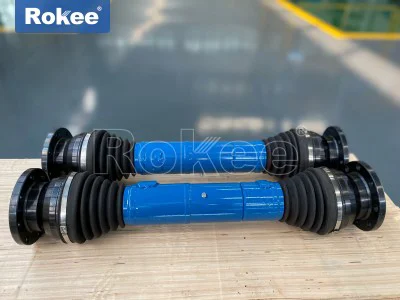
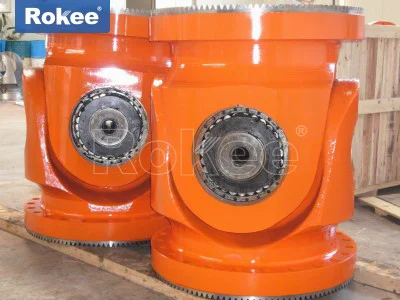
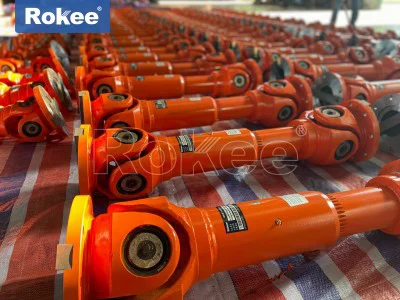
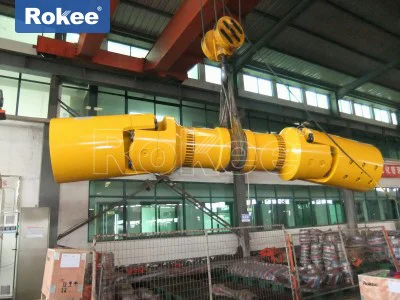
Custom Cardan Drive Shaft
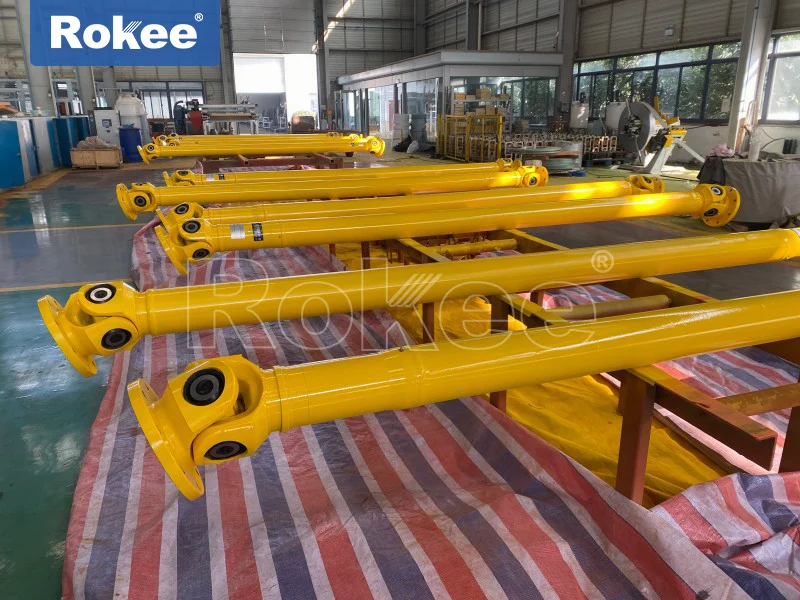
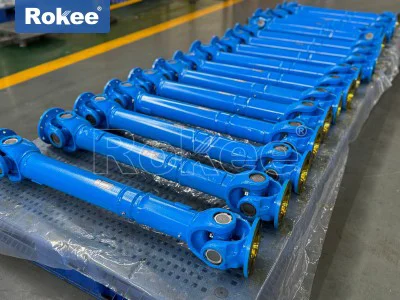
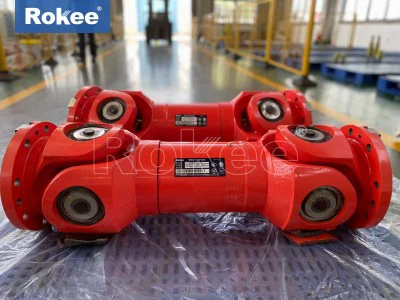
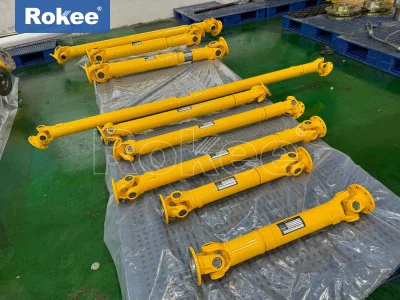
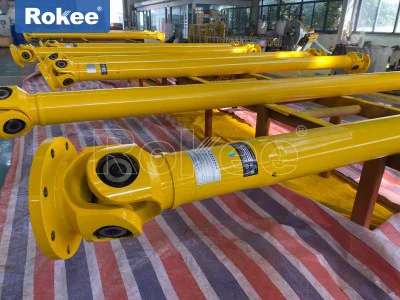
In the intricate ecosystem of mechanical power transmission, custom cardan drive shafts stand out as indispensable flexible transmission components, serving as the critical link that bridges power output terminals and execution mechanisms across diverse mechanical systems. Unlike standardized transmission parts that adopt unified structural parameters and fixed specifications, custom cardan drive shafts are tailor-engineered to match the unique operational conditions, structural layouts, and load characteristics of specific mechanical equipment, delivering targeted and efficient power transmission solutions for complex industrial and mechanical scenarios. Rooted in the classic universal joint transmission principle, this customized mechanical component breaks through the limitations of rigid shaft transmission, enabling stable and continuous torque transmission even when there are angular deviations, axial displacements, and radial offsets between driving and driven shafts, a capability that makes it irreplaceable in high-dynamic and high-precision mechanical operation environments.
The fundamental working mechanism of custom cardan drive shafts relies on the flexible coordination of universal joint articulated structures and spline telescopic assemblies, which constitute the core functional framework of the entire transmission system. The core components include precision-machined yoke joints, cross shaft assemblies, wear-resistant rolling bearings, telescopic spline pairs, and fully sealed protective structures, each part undergoing customized optimization to adapt to specific operating demands. During equipment operation, torque and rotational motion are transmitted from the driving end to the input flange of the cardan shaft, and the cross shaft structure inside the universal joint flexibly adjusts the transmission angle through free rotation, effectively compensating for angular misalignment between the two connected shafts. Meanwhile, the matched spline telescopic structure autonomously adapts to axial distance changes caused by mechanical vibration, structural deformation, or dynamic displacement during equipment operation, ensuring uninterrupted and uniform power transmission throughout the working cycle. This dual compensation capability for angle and displacement fundamentally solves the transmission failure problems such as shaft jamming, torque loss, and component abrasion that easily occur in rigid transmission structures under non-coaxial operating conditions.
The core value of customized cardan drive shafts lies in their ability to break the one-size-fits-all constraints of standard parts and achieve precise matching with diverse complex working conditions. Standard cardan drive shafts, with fixed structural sizes, load thresholds, and angle compensation ranges, can only adapt to conventional and stable operating environments, and often face insufficient load capacity, poor dynamic adaptability, or premature wear when applied to special working scenarios such as heavy-load operation, frequent start-stop cycles, high-speed rotation, and severe vibration. In contrast, the customization process fully considers multiple dimensional factors of equipment operation, including actual load magnitude, rotational speed range, operating angle variation, working frequency, and environmental conditions. Each customized drive shaft is designed with targeted structural optimization, material selection, and process upgrading to eliminate performance redundancy and functional deficiencies, maximizing transmission efficiency and service life while reducing unnecessary mechanical energy consumption and maintenance costs.
Material customization serves as the foundational guarantee for the superior performance of custom cardan drive shafts, as different operating environments put forward distinct requirements for material strength, toughness, wear resistance, and fatigue resistance. For heavy-load mechanical equipment that bears long-term alternating loads and impact forces, high-strength alloy materials with excellent tensile strength and fatigue resistance are selected and processed through multiple heat treatment processes to enhance the overall structural rigidity and impact resistance of the drive shaft, avoiding structural deformation or fracture under extreme load conditions. For high-speed rotating mechanical systems that pursue low vibration and high stability, lightweight and high-rigidity composite materials or refined alloy materials are adopted to reduce the rotational inertia of the drive shaft, effectively suppressing resonance and vibration during high-speed operation and improving the smoothness of power transmission. For equipment operating in harsh environments with dust, moisture, or corrosive media, customized surface treatment processes and fully sealed structural designs are applied to enhance the corrosion resistance and dustproof performance of components, preventing internal bearing wear and structural rust caused by environmental interference and ensuring stable long-term operation of the drive shaft.
Structural customization further amplifies the application flexibility and functional adaptability of custom cardan drive shafts, covering multi-dimensional optimization of joint structure, telescopic stroke, overall length, and installation form. In terms of angle compensation capability, customized structural designs can meet diverse angle adjustment requirements, adapting to small-angle fine-tuning transmission of precision automated equipment and large-angle deflection transmission of engineering machinery during walking and operation. The telescopic stroke of the spline pair is customized according to the dynamic displacement range of mechanical equipment, ensuring that the drive shaft can freely stretch and contract within the full operating stroke of the equipment without transmission lag or structural tension. In terms of installation structure, diversified flange connection forms and end structures are customized to match different equipment installation interfaces and spatial layout constraints, solving the installation matching problems of special-shaped equipment and compact-space mechanical systems. Additionally, for equipment with frequent start-stop and forward-reverse rotation characteristics, the internal friction structure and bearing assembly are optimized to reduce starting impact and reverse transmission clearance, improving the response sensitivity and positioning accuracy of power transmission.
Custom cardan drive shafts have extremely extensive application coverage, penetrating almost all industrial fields that require flexible and stable power transmission. In engineering machinery and heavy equipment, they are applied to large transmission systems that bear heavy loads and complex dynamic changes, stably transmitting power while adapting to structural displacement and angle changes during equipment walking, lifting, and operating processes, effectively avoiding transmission failure caused by equipment body deformation and terrain changes. In automated industrial production lines, customized drive shafts serve as the core transmission components of assembly line conveying equipment, processing machinery, and synchronous transmission systems, ensuring high synchronization and stability of power transmission during continuous and high-frequency operation of automated equipment, and supporting the precise operation of automated production processes. In metallurgy, building materials, and papermaking industries with harsh working environments, custom cardan drive shafts with high wear resistance and corrosion resistance are used to adapt to long-term continuous operation under high dust, high temperature, and humid conditions, reducing equipment downtime caused by transmission component failure.
In addition to industrial equipment, custom cardan drive shafts also play a vital role in special mechanical transmission scenarios such as transportation equipment, agricultural machinery, and environmental protection equipment. Transportation equipment requires drive shafts to adapt to vibration and jolt during movement and frequent power output changes, and customized structural optimization can effectively improve the shock resistance and operational stability of the transmission system. Agricultural machinery often operates in complex and variable field environments with uneven terrain and variable load conditions, and custom cardan drive shafts with strong environmental adaptability and load compensation capability can ensure stable power output of field operation equipment. Environmental protection and energy equipment such as ventilation systems and power generation equipment require long-term stable low-noise operation, and customized lightweight and low-vibration drive shaft structures can reduce operational noise and mechanical loss, improving the overall energy utilization efficiency of the equipment.
The manufacturing process of custom cardan drive shafts follows rigorous precision processing and quality control standards, with every link from design demonstration to finished product delivery focusing on personalized precision control. The whole process starts with in-depth sorting of customer equipment parameters and operating conditions, including on-site verification of equipment spatial layout, dynamic load testing, and operating angle range analysis, to form a targeted customized design scheme. After the design scheme is confirmed, precision machining equipment is used for fine processing of core components such as cross shafts and spline pairs, ensuring high matching accuracy of assembly structures and low friction coefficient of moving parts. Subsequently, heat treatment, surface strengthening, and sealing treatment are carried out according to material and functional requirements to optimize the mechanical properties and environmental adaptability of components. Finally, finished product performance tests including load transmission test, high-speed operation test, and angle compensation test are conducted to verify the stability and reliability of the customized drive shaft under simulated actual working conditions, ensuring that all performance indicators fully meet the personalized use requirements of customers.
Compared with standard cardan drive shafts, customized products have more prominent advantages in operational stability and full-cycle economic benefits. In terms of operational performance, customized structural and material optimization effectively reduces vibration, impact, and friction loss during power transmission, significantly improving transmission efficiency and ensuring the consistency of power output in complex working environments. Standard parts often suffer from accelerated aging and frequent failures due to mismatched performance with working conditions, while custom cardan drive shafts can adapt to long-term high-intensity operation, greatly extending the service life of transmission components. In terms of daily operation and maintenance, the targeted customized design avoids performance defects caused by parameter mismatch, reduces the frequency of equipment failure and shutdown maintenance, and lowers the long-term operation and maintenance costs of mechanical systems. Although customized products require targeted design and personalized processing in the early stage, their high stability and long service life can effectively reduce the comprehensive equipment operation cost throughout the life cycle, bringing more reliable and economical operation solutions for mechanical equipment.
With the continuous upgrading of modern mechanical equipment towards high precision, high efficiency, and high intelligence, the market demand for custom cardan drive shafts is also showing a trend of diversification and high precision. Modern mechanical systems have increasingly stringent requirements for transmission stability, response speed, and environmental adaptability, and standardized general-purpose parts can no longer meet the personalized transmission needs of high-end and special equipment. The customization technology of cardan drive shafts is also constantly iterating, with more refined structural design methods, high-performance new materials, and intelligent processing technologies being applied to the customization process, further improving the precision, stability, and durability of customized products. In the future, custom cardan drive shafts will continue to rely on personalized design and precise matching advantages, becoming an essential core component to support the efficient and stable operation of various complex mechanical systems, and continuously empowering the upgrading and development of industrial mechanical transmission technology.