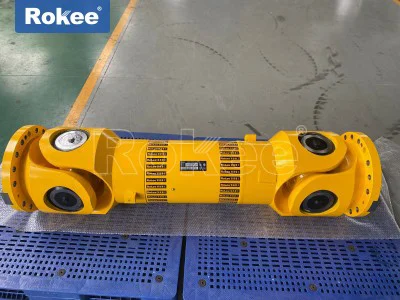
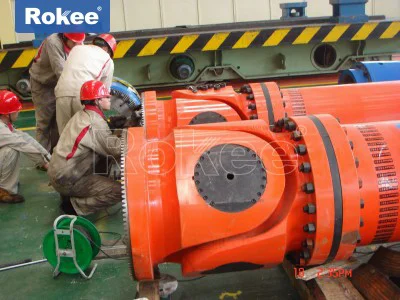
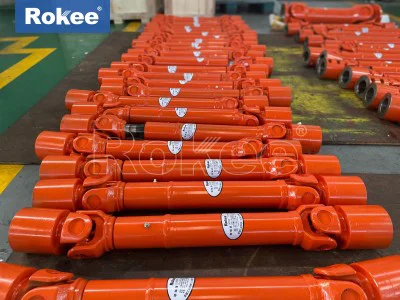
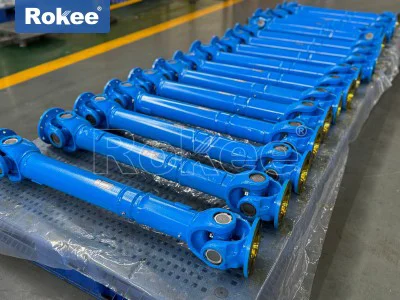
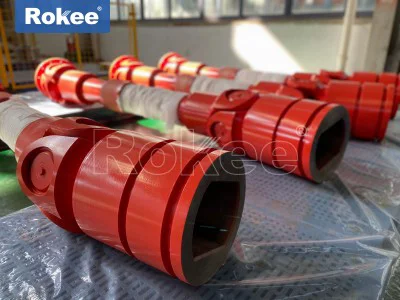
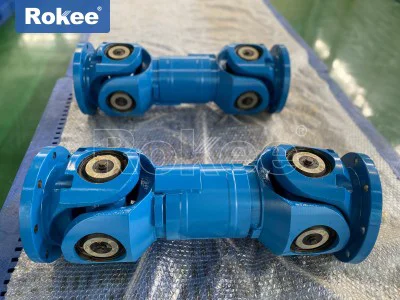
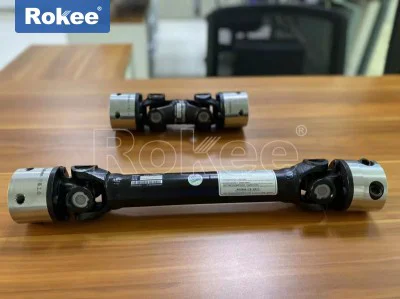
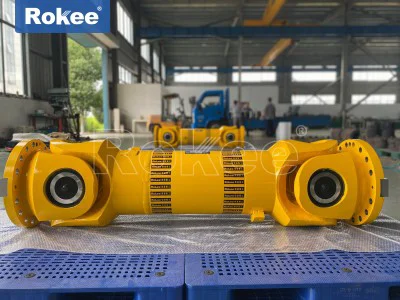
Material Upgrading Scheme And Practice Of Universal Joint Coupling In PU Sandwich Panel Line
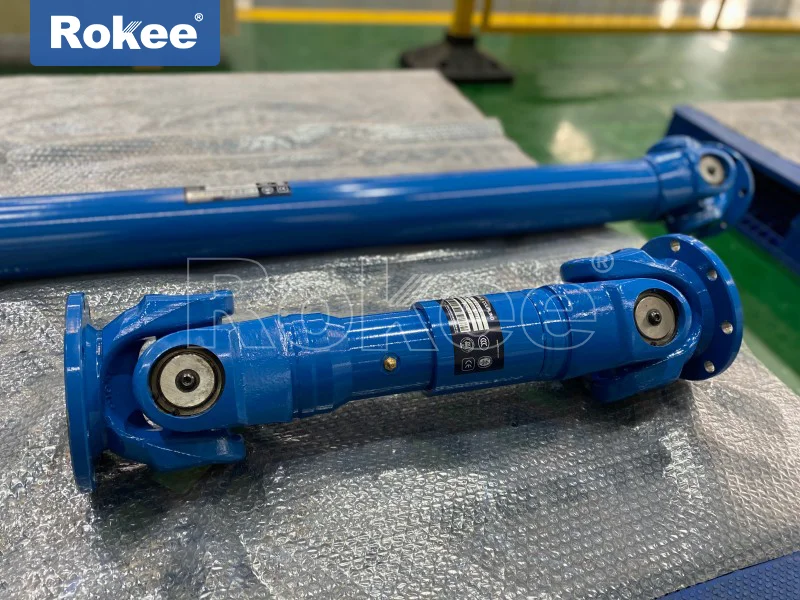
PU sandwich panel production lines are typical continuous industrial production equipment that requires long-cycle, high-load, and stable cyclic operation. The universal joint coupling serves as a core transmission component connecting driving and driven shafts in the production line, undertaking key tasks such as torque transmission, displacement compensation, and operating stability maintenance throughout the production process. In actual operating conditions, the coupling is constantly subjected to alternating torque, mechanical vibration, angular deviation, and friction wear, while the special production environment of PU material foaming and molding also brings subtle temperature and humidity changes that affect component performance. Traditional universal joint couplings adopting conventional carbon steel materials and ordinary processing techniques often expose prominent performance defects after long-term operation, including surface wear, fatigue cracking, reduced transmission accuracy, and weakened displacement compensation capacity. These problems not only increase the frequency of equipment shutdown maintenance and component replacement but also cause unstable transmission efficiency, which indirectly affects the molding consistency and production continuity of PU sandwich panels. Therefore, carrying out targeted material upgrading and matching process optimization for universal joint couplings is of great practical significance for improving the overall operational stability, service life, and production efficiency of PU sandwich panel production lines.
The operational characteristics and failure mechanisms of universal joint couplings in PU sandwich panel line lay a solid foundation for formulating scientific material upgrading schemes. Different from general mechanical transmission scenarios, the working state of couplings in sandwich panel lines presents three typical characteristics. First, the operation is continuous and cyclic. The production line runs uninterruptedly for a long time, making the coupling bear periodic alternating load for a long duration, which easily induces metal fatigue inside the material and gradually produces micro cracks that expand with the extension of operating time. Second, the shaft misalignment is inevitable. Affected by equipment installation errors, long-term operational vibration, and frame slight deformation, the driving and driven shafts of the production line always have certain angular deviation, radial displacement, and axial deviation during operation, requiring the coupling to maintain stable torque transmission under continuous deflection and friction conditions. Third, the working environment has comprehensive influencing factors. The PU foaming process will produce slight heat and trace chemical volatile substances, and the indoor production environment with fixed temperature and humidity will cause slow corrosion and aging on the surface of traditional metal materials, accelerating the wear failure of cross shafts, bearings, and fork parts of the coupling. Statistical analysis of actual operating data of multiple production lines shows that the main failure forms of traditional couplings are surface abrasive wear of key friction pairs, fatigue fracture of stress concentration parts, and increased transmission clearance caused by material aging. These failure problems are essentially caused by the insufficient wear resistance, fatigue resistance, and environmental adaptability of traditional materials, which cannot adapt to the long-term high-intensity operation requirements of PU sandwich panel production lines.
Aiming at the above failure mechanisms and performance defects, this study proposes a systematic material upgrading scheme for universal joint couplings, focusing on optimizing the core material performance and matching heat treatment and processing technologies without changing the mature structural principle of cross shaft universal joints. Traditional couplings mostly adopt ordinary carbon steel, which has low surface hardness, poor wear resistance, and limited core toughness, making it difficult to resist long-term alternating load and friction impact. The upgraded scheme selects high-strength low-alloy steel as the base material for coupling key components including cross shafts and fork bodies. This type of alloy steel optimizes the internal metal microstructure through reasonable component proportioning, achieving a balanced combination of high tensile strength, excellent fatigue resistance, and moderate impact toughness, which effectively avoids sudden fracture failure of components under long-term cyclic load. For the friction and wear parts such as journal surfaces and bearing matching surfaces of the cross shaft, the scheme abandons the traditional single heat treatment process and adopts composite carburizing and quenching treatment. The carburizing process forms a dense high-hardness wear-resistant layer on the component surface, which greatly improves surface wear resistance and scratch resistance, while the subsequent quenching treatment optimizes the core metal structure, maintaining good toughness and impact resistance of the component core. This composite process realizes the complementary performance of hard surface and tough core, perfectly adapting to the working condition of surface friction and internal alternating stress of coupling components.
In addition to the upgrading of base materials and thermal processing, the auxiliary matching materials of the coupling have also been optimized in a targeted manner. The traditional sliding bearings matched with universal joints are made of ordinary copper-based materials, which have poor self-lubricating performance and are prone to dry friction and abrasive wear under long-term continuous operation, leading to increased transmission resistance and enlarged matching clearance. The upgraded scheme adopts self-lubricating composite bearing materials to replace traditional bearings. This composite material integrates high-strength metal matrix and solid lubricating components, which can form a stable lubricating film on the friction surface during operation without frequent auxiliary lubrication maintenance. It effectively reduces the friction coefficient between matching parts, lowers mechanical wear and transmission energy loss, and maintains stable lubricating performance under the conditions of slight temperature change and continuous operation of the PU production line. Meanwhile, for the elastic buffer parts inside the coupling, high-elasticity and aging-resistant polymer composite materials are selected to replace traditional ordinary elastic materials. The new buffer materials have better fatigue resistance and environmental aging resistance, can effectively absorb mechanical vibration and impact load generated during transmission, reduce the rigid impact of alternating torque on metal components, and further improve the stability and mute performance of the transmission system.
On the basis of material upgrading, supporting processing and assembly process optimization are carried out to ensure that the performance advantages of new materials can be fully exerted in practical application. In the component processing stage, high-precision finishing technology is adopted to process the key matching surfaces of the coupling, strictly controlling the dimensional tolerance and surface roughness of each matching part. High-precision processing can reduce assembly clearance and friction resistance, making the torque transmission of the coupling more uniform and stable, and avoiding local stress concentration caused by poor matching accuracy. In the heat treatment process, precise temperature control and staged cooling technology are used to solve the problems of uneven hardness and internal residual stress easily existing in traditional heat treatment. The standardized heat treatment process eliminates internal processing stress of components, prevents component deformation and micro-crack generation in the later operation stage, and improves the dimensional stability of the coupling during long-term service. In the assembly link, standardized precision assembly specifications are formulated. Before assembly, all components are cleaned and inspected to remove processing burrs and impurities that may affect the matching performance. During assembly, the alignment angle and fastening torque of each part are strictly controlled to ensure that the coupling can accurately compensate for shaft deviation during operation and avoid additional eccentric wear caused by improper assembly.
The upgraded universal joint coupling has been applied to multiple continuous PU sandwich panel line for practical verification, and remarkable application effects have been achieved in terms of operational stability, component service life, and production line comprehensive benefit. In terms of operational stability, the upgraded coupling maintains accurate and stable torque transmission under long-term high-load operation. The angular velocity fluctuation and transmission vibration of the transmission system are significantly reduced, effectively solving the problems of unstable equipment operation and occasional jitter caused by coupling wear and clearance increase in the past. The stable transmission state ensures the synchronization of each processing link of the PU sandwich panel production line, making the foaming, molding, and cutting processes more stable, and effectively improving the overall yield of finished panels. In terms of service life, the new material coupling shows excellent wear resistance and fatigue resistance in actual operation. The wear rate of key friction parts is reduced significantly, and the service cycle of the whole coupling component is more than twice that of traditional products. It greatly reduces the frequency of equipment shutdown maintenance and component replacement, avoids production interruption caused by coupling failure, and effectively improves the continuous operation rate of the production line.
In terms of energy consumption and operation cost control, the optimized material and matching lubrication system effectively reduces transmission friction resistance and mechanical energy loss. The power transmission efficiency of the production line transmission system is significantly improved, realizing effective energy saving in the production process. Meanwhile, the extension of component service life and the reduction of failure frequency greatly reduce the labor cost of equipment maintenance and the consumption cost of spare parts, bringing stable economic benefits for long-term production operation. In terms of environmental adaptability, the upgraded materials have excellent aging resistance and weak corrosion resistance, can adapt to the long-term working environment of PU sandwich panel production lines with slight temperature and humidity changes and trace volatile substances, avoid material performance attenuation caused by environmental factors, and ensure the long-term stable performance of the coupling.
In the actual application process, the installation and operation management rules matching the upgraded coupling are also summarized to further standardize the application effect. In the equipment commissioning stage, the shaft alignment accuracy is strictly detected to ensure that the coupling operates within the allowable deviation range, avoiding excessive deflection load that exceeds the material bearing capacity. In daily production operation, regular non-destructive inspection of the coupling key components is carried out to monitor the micro changes of material surface and internal structure, so as to find potential fatigue defects in advance. In the maintenance link, targeted lubrication and protection measures are formulated according to the material characteristics of the new coupling to maintain the optimal working state of the components. The standardized application and maintenance system further gives full play to the performance advantages of material upgrading and ensures the long-term stable and efficient operation of the transmission system.
In conclusion, the material upgrading scheme for universal joint couplings in PU sandwich panel production lines starts from the essential failure problems of traditional components, adopts high-strength alloy base materials, composite heat treatment technology, and optimized auxiliary matching materials, and forms a complete set of upgrading systems combined with precision processing and standardized assembly processes. The practical application results fully verify that the material upgrading scheme can effectively improve the wear resistance, fatigue resistance, environmental adaptability, and transmission stability of universal joint couplings. It solves various production and operation problems caused by insufficient performance of traditional couplings, improves the continuous production capacity and product processing quality of PU sandwich panel production lines, and reduces equipment operation and maintenance costs. This upgrading scheme has strong pertinence and practical applicability, which can provide effective technical reference for the performance optimization and upgrading of transmission components of similar continuous industrial production lines, and has important popularization value for promoting the stable and high-efficiency operation of sandwich panel production equipment.