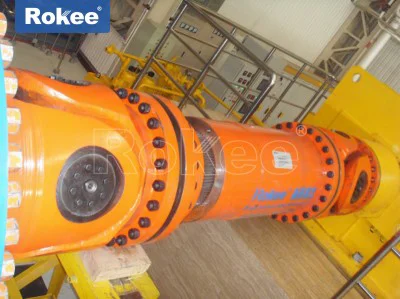
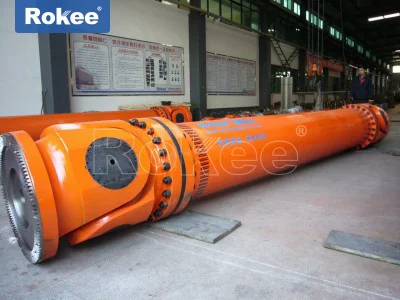
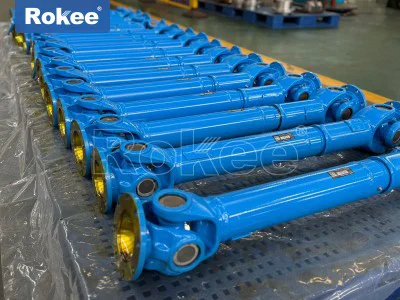
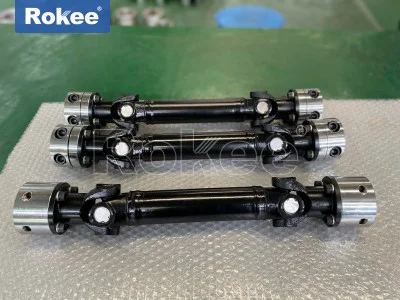
Sealing Optimization Of Universal Coupling Ensures Stable Operation Of PU Sandwich Panel Line
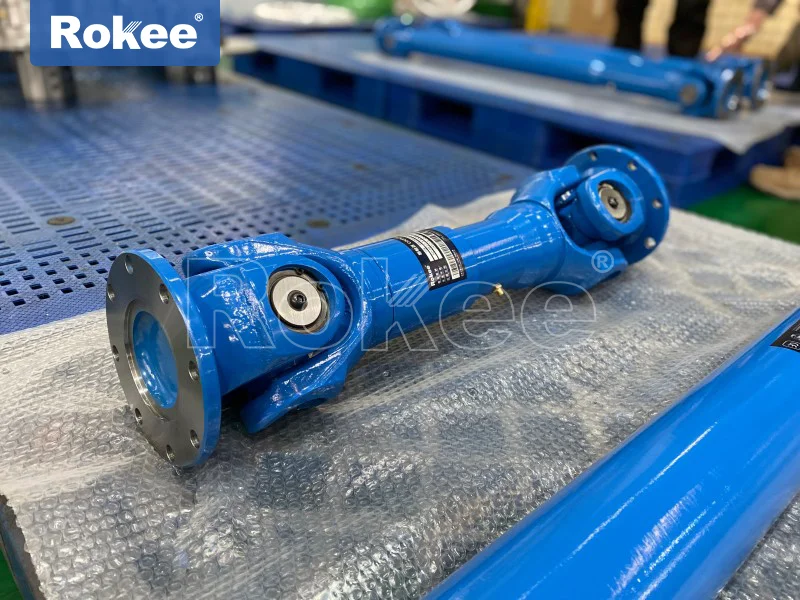
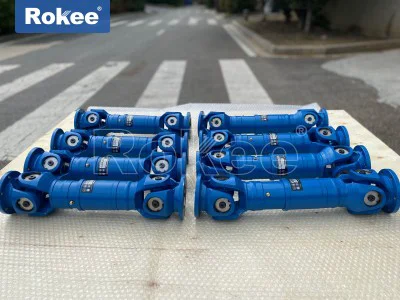
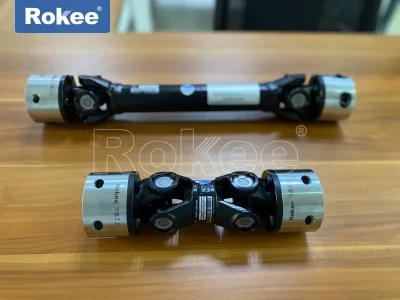
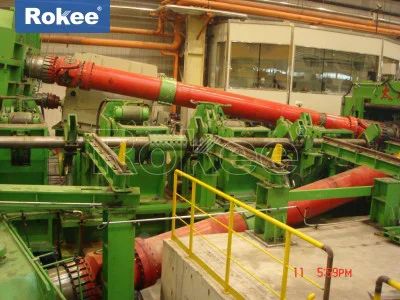
The continuous and stable operation of PU sandwich panel production lines is the core guarantee for efficient and standardized manufacturing of thermal insulation and composite building materials. As a key torque transmission component connecting various driving and driven equipment in the production line, the universal coupling undertakes the important task of adapting to angular deviation, axial displacement and spatial position changes during the operation of mechanical structures. Its operating state directly affects the synchronization accuracy of each process link, including raw material feeding, foam molding, hot pressing curing and finished product cutting. In the actual production environment of PU sandwich panels, the equipment is often exposed to mixed interference factors such as fine powder particles, humid air, residual polyurethane foam impurities and variable temperature changes. The traditional sealing structure of universal couplings is prone to aging, deformation and failure under long-term continuous working conditions, leading to lubricant leakage, external impurity intrusion, internal component wear and a series of abnormal problems. These hidden dangers will gradually cause torque transmission deviation, equipment vibration, operating noise increase and even intermittent shutdowns, seriously restricting the continuous production capacity and product processing accuracy of the PU sandwich panel line. Therefore, targeted sealing optimization of universal couplings is an essential technical means to eliminate equipment operating defects, stabilize production line operation and extend the service life of transmission components.
The operating characteristics and environmental conditions of PU sandwich panel line put forward higher comprehensive requirements for the sealing performance of universal couplings. Different from ordinary mechanical transmission equipment, the PU sandwich panel production process is a continuous cyclic operation mode with uninterrupted long-term operation, and the coupling needs to maintain stable transmission performance under 24-hour continuous load conditions. In the raw material mixing and foaming stage, a large number of fine polyurethane particle debris and dust will be generated in the working space, which have strong adsorption and abrasiveness. These tiny impurities can easily penetrate the gaps of traditional sealing structures and adhere to the surfaces of internal cross shafts, bearings and spline structures of the coupling. In the hot pressing and curing stage of the production line, the ambient temperature will rise significantly, which will accelerate the aging and hardening of ordinary sealing materials, reduce their elasticity and sealing fit degree. At the same time, the humid environment formed by the heat and water vapor volatilization in the curing process will also cause subtle corrosion on the metal matching parts inside the coupling after invading the sealing gaps, destroying the precision matching state of the transmission components. In addition, the frequent start-stop and load fluctuation of the production line will cause periodic extrusion and stretching of the coupling sealing structure, making the traditional single-layer seal prone to fatigue damage after long-term operation, resulting in gradual failure of the sealing system.
Analyzing the common sealing defects of traditional universal couplings applied to PU sandwich panel lines can clarify the key directions of technical optimization. Most traditional universal couplings adopt single lip seal or simple rubber ring sealing structures, which have limited adaptive capacity to complex production environments. First of all, the structural clearance of the traditional sealing design is relatively large, which can only play a basic dust-proof and oil-sealing role in conventional working environments. When facing the fine dust and particle pollutants in the PU panel production process, the tiny gaps cannot be completely isolated, resulting in long-term accumulation of internal impurities. The accumulated dust and debris will mix with the internal lubricating grease of the coupling, reducing the lubrication effect, increasing the friction coefficient between moving parts, and causing abnormal wear of bearings and cross shafts. Secondly, the traditional sealing materials have poor environmental adaptability. ordinary rubber sealing materials are vulnerable to thermal aging under the long-term high-temperature working conditions of the hot pressing process, and are also prone to swelling and deformation after contacting with residual polyurethane chemical components, resulting in reduced sealing tightness and grease leakage problems. Lubricant loss will directly lead to dry friction of internal transmission components, intensify component wear, and cause transmission jitter and torque loss in severe cases.
Moreover, the traditional sealing structure lacks effective anti-loosening and buffer protection design. During the high-speed operation and angle adjustment of the universal coupling, the axial and radial displacement of the internal structure will produce certain extrusion impact on the sealing parts. The unoptimized sealing structure cannot buffer the mechanical impact, which easily causes the sealing ring to deviate, warp and even crack. Once the sealing structure is damaged in local areas, the protective barrier of the coupling internal operating environment will be completely broken. A large number of external impurities and humid air will continuously invade, forming a vicious cycle of impurity accumulation, lubrication failure, component wear and sealing failure. In the actual production process, these potential faults will not cause equipment shutdown in a short time, but will gradually reduce the operating accuracy of the production line, lead to inconsistent transmission speed of each process equipment, affect the flatness and dimensional accuracy of PU sandwich panel products, and increase the rate of defective products in the production process.
The sealing optimization of universal couplings for PU sandwich panel production lines focuses on structural upgrading, material optimization and process matching, so as to build a high-stability and long-life sealing protection system adapted to the special working conditions of panel production. In terms of structural design optimization, the single-layer sealing mode of traditional couplings is abandoned, and a composite multi-stage sealing structure is adopted, combining labyrinth seal and contact seal to form a dual protective barrier. The labyrinth seal structure is arranged on the outer side of the coupling matching surface, and the multi-bend gap design can effectively block the invasion of large-particle dust and debris, and reduce the impact of external airflow and impurities on the inner sealing structure. The inner layer adopts a high-precision contact sealing structure, which closely fits with the rotating shaft body through elastic deformation, completely isolates the internal lubricating cavity from the external environment, and fundamentally prevents grease leakage and fine impurity penetration. At the same time, a buffer protection groove is added at the installation position of the sealing structure, which can effectively absorb the mechanical extrusion and vibration generated during the operation of the coupling, avoid the fatigue damage of the sealing parts caused by long-term mechanical impact, and improve the structural stability of the sealing system.
In terms of sealing material optimization, targeted selection is carried out according to the high temperature resistance, wear resistance, chemical corrosion resistance and aging resistance requirements of PU sandwich panel production environment. The optimized sealing materials have excellent high-temperature stability, which can maintain stable elasticity and structural tightness in the variable temperature environment of hot pressing and curing process, and will not harden or deform due to long-term high-temperature baking. In view of the dust and particle pollution in the production process, the selected materials have high wear resistance and tear resistance, and can resist the friction and erosion of fine solid particles for a long time, avoiding local damage and failure of the sealing surface. In addition, the materials have good chemical inertness, which can resist the slight corrosion of residual polyurethane raw materials and auxiliary agents in the production environment, prevent the sealing structure from swelling, aging and cracking due to chemical reaction, and ensure the long-term and stable sealing performance of the coupling in complex chemical working environments. Compared with traditional ordinary rubber materials, the optimized sealing materials can effectively extend the service life of the sealing system and reduce the frequency of daily replacement and maintenance.
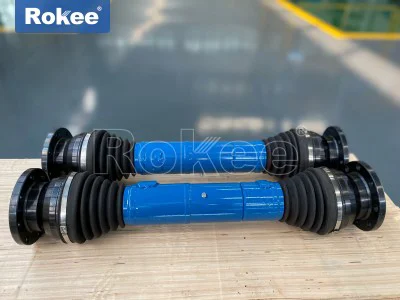
In addition to structural and material optimization, the overall matching optimization of the coupling sealing system and production line working conditions is also an important part of the technical upgrade. The optimized universal coupling integrates a closed protective sealing cover on the basis of the internal sealing structure, which completely wraps the core transmission parts such as the cross shaft and bearings, forming an all-round protective structure. The integral protective cover can avoid the direct contact between the external production environment pollutants and the sealing parts, and further enhance the environmental adaptability of the coupling. At the same time, the optimization design adjusts the matching tolerance between the sealing parts and the rotating shaft, adopts precision machining technology to control the gap within a reasonable range, which not only ensures the flexible rotation of the coupling and free adaptation of angular deviation, but also avoids the excessive gap caused by machining errors leading to sealing failure. In addition, the lubrication channel and the sealing structure of the grease injection port are optimized and upgraded. The improved grease injection port sealing structure can effectively avoid grease leakage during lubrication supplement and prevent external impurities from entering the interior through the grease injection port in daily operation, so as to maintain the cleanliness and stability of the internal lubrication environment for a long time.
The application of the optimized sealing system fundamentally solves the common operating faults of universal couplings in PU sandwich panel production lines, and significantly improves the overall operation stability of the equipment. After the sealing optimization, the internal lubricating grease of the coupling can be kept in a stable and clean state for a long time, without mixing with external dust and impurities, which ensures the continuous and efficient lubrication effect between the moving parts. The friction resistance of the coupling transmission process is kept stable, the wear speed of core components such as bearings and cross shafts is greatly reduced, and the service life of the coupling is effectively extended. The stable lubrication and sealing state eliminate the torque fluctuation and transmission jitter caused by lubrication failure and component wear, ensuring the synchronization and accuracy of power transmission between various equipment of the production line. The operating vibration and noise of the production line are significantly reduced, and the operation state of the equipment is more stable and consistent.
For the PU sandwich panel production process, the stable operation of the optimized universal coupling brings comprehensive improvements in production quality and production efficiency. The consistent transmission speed and stable operating state of the equipment ensure the uniformity of raw material foaming, the stability of hot pressing pressure and the consistency of molding size in each process link. It avoids product quality problems such as uneven foam density, inconsistent plate thickness and surface deformation caused by equipment transmission deviation, and effectively improves the qualification rate and uniformity of finished PU sandwich panels. At the same time, the optimized sealing structure greatly reduces the failure rate of the coupling, eliminates frequent equipment shutdown maintenance caused by sealing failure and component wear, realizes long-term uninterrupted continuous production of the production line, and significantly improves the overall production efficiency. The reduction of component wear and failure frequency also reduces the daily maintenance workload and equipment operation cost, realizing the dual improvement of production stability and economic benefits.
In the long-term equipment operation management of PU sandwich panel line, the sealing optimization of universal couplings also provides a solid guarantee for the intelligent and stable operation of the production line. With the continuous improvement of the automation level of composite material production equipment, the production line has higher and higher requirements for the precision and stability of each transmission component. The optimized high-performance sealing system can adapt to the long-term high-load and high-precision operation requirements of automated production lines, avoid production line data deviation and process parameter fluctuation caused by equipment transmission faults, and lay a foundation for the standardized and intelligent production of PU sandwich panels. In addition, the stable operating state of the coupling reduces the abnormal vibration and impact of the equipment, protects the precision transmission structure of the whole production line, avoids the chain failure of subsequent equipment caused by local coupling faults, and improves the overall operational reliability and safety of the production system.
In conclusion, the sealing optimization of universal couplings is a key technical upgrade targeting the special working conditions and operating pain points of PU sandwich panel production lines. Through the composite optimization of sealing structure, sealing materials and overall matching performance, the defects of traditional coupling sealing failure, easy wear and poor environmental adaptability are completely solved. The optimized universal coupling can maintain stable sealing protection and efficient transmission performance in the complex working environment of PU sandwich panel production, effectively ensure the continuous, stable and precise operation of the production line, improve product quality and production efficiency, and reduce equipment operation and maintenance costs. In the modern composite building material manufacturing industry with increasingly strict production standardization and efficiency requirements, the sealing optimization of universal couplings has important practical application value, and is an indispensable technical means to realize the stable and high-efficiency operation of PU sandwich panel production lines and promote the standardized development of the industry.