Installation Accuracy Control Of Universal Coupling In Rock Wool Sandwich Panel Production Line

In the rock wool sandwich panel production line, the universal coupling serves as a critical connecting component that transmits power between different mechanical units, such as the unwinding mechanism, forming roller, cutting device, and conveying system. Its installation accuracy directly determines the stability of power transmission, the smoothness of the production process, and the quality of the final rock wool sandwich panels. Unlike other mechanical components in the production line, the universal coupling is required to accommodate a certain degree of angular deviation while ensuring efficient torque transmission, which makes its installation accuracy control more complex and crucial. Any slight deviation in installation may lead to increased vibration, abnormal noise, accelerated wear of components, and even production interruptions, resulting in economic losses. Therefore, establishing a scientific and rigorous installation accuracy control system for universal couplings in the rock wool sandwich panel production line is essential to ensure continuous and stable production, improve production efficiency, and extend the service life of the entire production line.
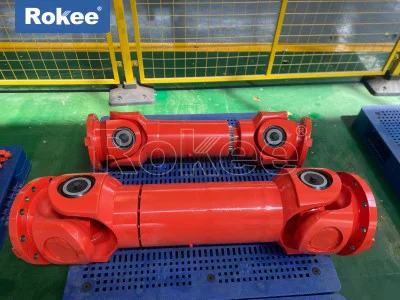
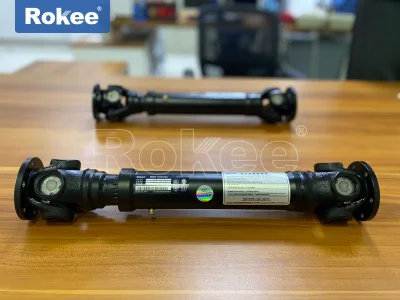
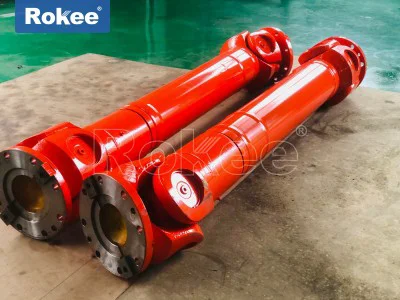
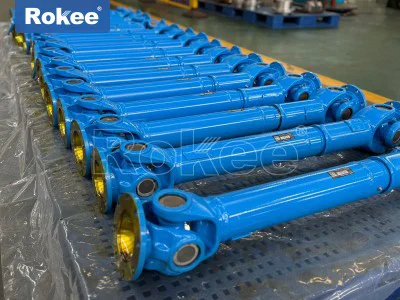
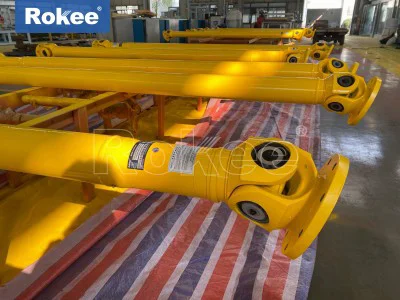
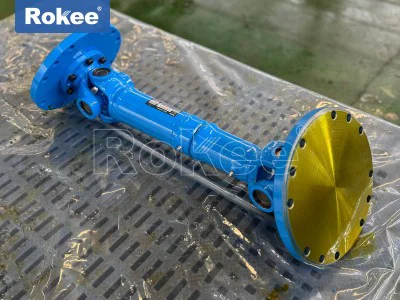
Before the installation of the universal coupling, sufficient preparation work is the premise to ensure installation accuracy, which includes the inspection of the coupling itself, the inspection of the connected shafts, and the preparation of installation tools and the environment. Firstly, the universal coupling should be comprehensively inspected to confirm that there are no defects such as cracks, deformation, rust, or excessive wear on its components, especially the cross shaft, universal fork, needle bearing, spline pair, and flange. The fit clearance between the cross shaft and the bearing should be checked carefully; if the clearance exceeds the allowable range, the components should be replaced in time to avoid affecting the transmission accuracy. At the same time, the surface of each component of the coupling should be cleaned thoroughly to remove oil stains, dust, and impurities, so as to prevent these substances from affecting the fitting accuracy during installation. Secondly, the connected driving shaft and driven shaft in the production line need to be inspected. The coaxiality, end face runout, and surface roughness of the shaft ends should be measured to ensure that they meet the installation requirements of the universal coupling. If the shaft end has burrs, rust, or unevenness, it should be polished and cleaned to avoid causing eccentricity or inclination during the coupling installation. In addition, the installation tools should be prepared in advance, including torque wrenches, laser alignment instruments, dial gauges, feeler gauges, and cleaning tools. These tools should be calibrated in advance to ensure their measurement accuracy, especially the laser alignment instrument and dial gauge, which are directly used to measure the installation deviation and play a key role in accuracy control. The installation environment should also be sorted out to ensure that the installation site is clean, tidy, and free from excessive vibration and temperature changes, as environmental factors such as vibration and temperature difference may affect the installation accuracy during the operation process.
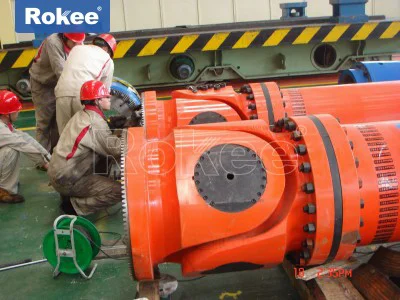
The core link of installation accuracy control lies in the installation operation process, which mainly includes the assembly of the universal coupling, the alignment of the driving and driven shafts, and the fastening of connecting bolts. In the assembly process of the universal coupling, the universal fork should be first connected to the driving shaft and the driven shaft respectively. During the assembly, it is necessary to ensure that the shaft hole fits in place, and there is no looseness or offset. The key to avoiding assembly deviation is to ensure that the key and keyway fit closely; for occasions requiring high precision, the use of expansion sleeve connection can effectively eliminate the fit gap and improve the connection accuracy. When installing the cross shaft into the universal fork, the bearing should be installed smoothly, and after installation, the coupling should be rotated manually to confirm that it can rotate flexibly without jamming or abnormal noise, which indicates that the assembly is in place. The alignment of the driving and driven shafts is the most critical step in the installation of the universal coupling, as the coaxiality and angular deviation between the two shafts directly affect the transmission stability of the coupling. The universal coupling has a certain angular compensation capacity, and the allowable angular deviation of different structural types is generally between 5° and 45°, but this does not mean that precise alignment can be ignored. Excessive deviation will still lead to uneven torque transmission and accelerated wear of components. In the rock wool sandwich panel production line, due to the long length of the production line and the large number of connected equipment, the alignment work is more difficult. Two common alignment methods are usually adopted: the dial gauge measurement method and the laser alignment instrument method. The dial gauge measurement method is suitable for medium and low precision occasions. The dial gauge bracket is installed on one shaft, and the gauge head contacts are respectively pressed against the outer circle and end face of the coupling on the other shaft. Then, the two shafts are rotated synchronously, and the reading is recorded every 90 degrees to calculate the coaxiality and angular deviation. For high-precision requirements, the laser alignment instrument method is preferred. This method has high measurement accuracy, can display the deviation data in real time, and greatly improves the alignment efficiency and accuracy. During the alignment process, the base of the equipment should be taken as the reference, and the position of the driving shaft or driven shaft should be adjusted by adding precision stainless steel adjusting gaskets. It should be noted that the number of gaskets under a single machine foot should not exceed 3 to avoid the "soft foot" effect and reduce the rigidity of the equipment. After the alignment is completed, the coaxiality error should be controlled within 0.1mm/m, and the angular deviation should be controlled within 1°; for high-speed and heavy-load working conditions, the requirements should be more stringent, and the angular deviation should be controlled within 0.05°.
The fastening of connecting bolts is another key link affecting installation accuracy. During the fastening process, the diagonal cross tightening principle should be adopted, and the bolts should be tightened in stages instead of being tightened at one time, so as to avoid the micro-inclination of the coupling caused by uneven pre-tightening force. The torque value of the bolts should be strictly controlled according to the working conditions and the specifications of the coupling. Too loose bolts will lead to loosening during operation, resulting in deviation; too tight bolts will cause deformation of the coupling flange, affecting the coaxiality. After the bolts are fastened, anti-loosening measures such as anti-loosening washers or thread glue can be used to prevent the bolts from loosening due to vibration during the operation of the production line. In addition, after the fastening is completed, the alignment data should be rechecked, because the tightening force of the base bolts may cause the originally aligned axis to shift, and the recheck can ensure that the installation accuracy meets the requirements.
After the installation of the universal coupling is completed, it is necessary to carry out a comprehensive accuracy detection and trial operation to verify whether the installation quality meets the requirements. The accuracy detection mainly includes the measurement of coaxiality, angular deviation, and runout. The coaxiality and angular deviation can be remeasured by using a laser alignment instrument or a dial gauge to confirm that they are within the allowable range. The runout detection mainly measures the radial runout and end face runout of the coupling. The radial runout error should be controlled within a small range to avoid vibration caused by unbalanced rotation during operation. The trial operation is divided into no-load trial operation and load trial operation. Before the no-load trial operation, the coupling should be rotated manually again to check for jamming, abnormal noise, or other abnormalities. Then, the equipment is started for no-load operation, and the vibration, noise, and temperature change of the coupling are monitored. Under normal operation, the coupling should run stably and quietly, and the temperature of the bearing part should not exceed 70℃. If abnormal vibration or noise occurs, it may be caused by excessive alignment deviation, component wear, or insufficient lubrication, and the machine should be shut down immediately for inspection and adjustment. After the no-load operation is normal, the load is gradually added to the rated working condition for load trial operation. During the load trial operation, the operation parameters such as torque transmission, vibration, and temperature are continuously monitored to ensure that the coupling can transmit torque stably without instantaneous overload. After 50 hours of load operation, the connecting bolts should be retightened to eliminate the loosening hidden danger caused by initial operation.
In the process of installation, it is inevitable to encounter various installation errors, and effective error handling measures are needed to ensure the installation accuracy. Common installation errors include coaxiality deviation, angular deviation, bolt pre-tightening force imbalance, and fit gap excessive. For coaxiality deviation, if the deviation is small, it can be adjusted by adding adjusting gaskets or moving the position of the equipment; if the deviation is large, it is necessary to check whether the shaft end is deformed or the base is uneven, and correct or replace the relevant components. For angular deviation, the angle of the universal fork can be adjusted to ensure that the angular deviation between the two shafts is within the allowable range. For the imbalance of bolt pre-tightening force, the bolts should be loosened and re-tightened according to the diagonal cross principle to ensure uniform pre-tightening force. For excessive fit gap, the worn components should be replaced, or the fit surface should be processed to reduce the gap. In the error handling process, it is necessary to avoid blind adjustment, and find out the root cause of the error through measurement and analysis, so as to ensure that the error is completely eliminated and the installation accuracy is not affected.
The installation accuracy control of the universal coupling is not a one-time work, but needs to be combined with daily maintenance and regular inspection to ensure long-term stable operation. In the daily operation of the rock wool sandwich panel production line, the universal coupling should be inspected regularly, including checking the tightness of the connecting bolts, the lubrication of the bearing, the wear of the cross shaft and the universal fork, and the coaxiality and angular deviation. The lubrication of the coupling is particularly important. The lubricating grease should be added regularly according to the working conditions, and the type of lubricating grease should be selected according to the temperature and load of the operation environment to ensure that the moving parts are fully lubricated, reduce friction and wear, and maintain the installation accuracy. For the parts with excessive wear, they should be replaced in time to avoid the expansion of errors and affect the operation of the entire production line. In addition, the influence of environmental factors on the installation accuracy should be paid attention to. For example, the temperature change will cause the thermal expansion and contraction of the shaft and the coupling, leading to changes in the alignment accuracy. Therefore, it is necessary to monitor the temperature change during operation and adjust the alignment in time if necessary. The foundation settlement of the equipment will also affect the coaxiality of the two shafts, so the foundation of the equipment should be inspected regularly to ensure its stability.
The rock wool sandwich panel production line has the characteristics of continuous operation, high load, and high speed, which puts forward higher requirements for the installation accuracy of the universal coupling. The installation accuracy not only affects the service life of the coupling itself but also has a chain reaction on the entire production line. For example, if the installation accuracy of the universal coupling in the forming roller part is insufficient, it will lead to uneven pressure of the forming roller, resulting in uneven thickness of the rock wool sandwich panel, unqualified surface flatness, and even scrapping of the product. In the cutting device part, the inaccurate installation of the universal coupling will cause the cutting knife to run askew, resulting in irregular cutting size and affecting the product quality. In addition, the vibration caused by inaccurate installation will also affect other equipment in the production line, accelerate the wear of bearings, gears, and other components, and increase the maintenance cost of the production line. Therefore, attaching importance to the installation accuracy control of the universal coupling is an important measure to ensure product quality, reduce production costs, and improve production efficiency.
In the actual installation process, it is also necessary to pay attention to the operation specifications and the quality of operators. The operators should be trained professionally to be familiar with the structure and installation requirements of the universal coupling, master the use method of installation tools, and have the ability to judge and handle installation errors. During the installation process, the operation should be standardized, and the measurement data should be recorded in detail for future maintenance and inspection. At the same time, a complete installation quality inspection system should be established. After the installation is completed, the special personnel should conduct a comprehensive inspection and acceptance, and the production can be carried out only after the installation accuracy meets the requirements. For the installation process with high precision requirements, it is possible to introduce intelligent monitoring equipment to monitor the installation accuracy in real time, find out the deviation in time, and adjust it, so as to further improve the reliability of installation accuracy control.
In conclusion, the installation accuracy control of the universal coupling in the rock wool sandwich panel production line is a systematic project involving pre-installation preparation, in-process operation, post-installation detection, error handling, and daily maintenance. Each link is closely linked and indispensable. By doing a good job in pre-installation inspection and tool preparation, strictly standardizing the installation operation process, adopting scientific alignment and fastening methods, conducting comprehensive post-installation detection and trial operation, effectively handling installation errors, and establishing a perfect daily maintenance mechanism, the installation accuracy of the universal coupling can be effectively guaranteed. This not only ensures the stable and efficient operation of the universal coupling but also provides a strong guarantee for the continuous, stable, and high-quality production of the entire rock wool sandwich panel production line. With the continuous development of rock wool sandwich panel production technology, the requirements for installation accuracy will be higher and higher. It is necessary to continuously optimize the installation accuracy control method, introduce advanced measurement and installation technology, and improve the level of installation accuracy control, so as to adapt to the development needs of the production line and promote the healthy development of the rock wool sandwich panel industry.