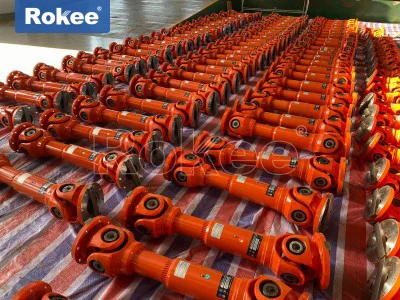
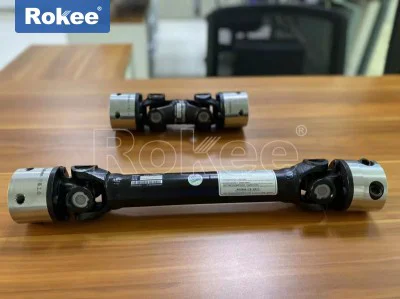
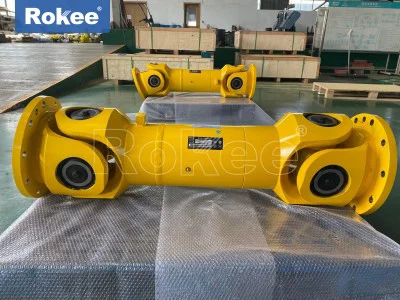
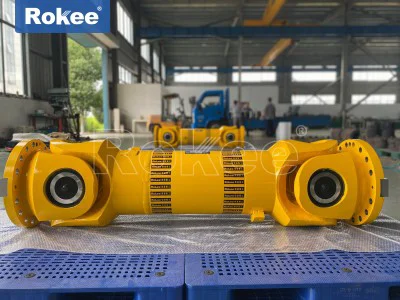
Cardan Drive Shaft Manufacturer
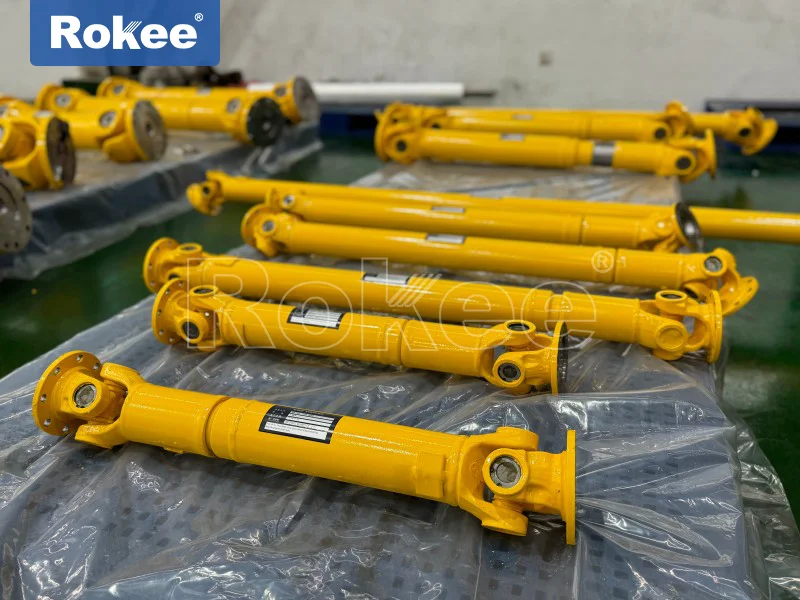
As a core flexible transmission component in modern mechanical systems, cardan drive shafts serve as an indispensable connecting bridge between power sources and execution components across countless industrial and mobile equipment scenarios. Renowned for their exceptional ability to adapt to spatial displacement and angular deviation during operation, these mechanical parts deliver stable and efficient torque transmission even under complex dynamic working conditions, laying a solid foundation for the normal operation of various mechanical devices. Unlike rigid transmission structures that require precise coaxial alignment of connected components, cardan drive shafts feature a flexible structural design, which can effectively compensate for angular deflection, axial displacement and radial offset between driving and driven parts, solving the transmission problems caused by installation errors, equipment vibration and structural deformation during long-term operation. This unique adaptive performance makes them widely applicable in automotive systems, engineering machinery, industrial transmission equipment and other fields that require flexible power transmission.
The basic working principle of cardan drive shafts stems from the coordinated motion characteristics of universal joint articulated structures and telescopic spline mechanisms. The core transmission unit relies on the cross shaft universal joint structure, which achieves multi-directional rotational flexibility through the cooperative operation of cross shafts, bearing assemblies and joint yokes. When the power source outputs rotational torque, the power is first transmitted to the input end flange of the drive shaft, and then transferred to the cross shaft through the driving joint yoke. The cross shaft rotates freely in multiple planes through precision bearings, realizing continuous torque output even when the driving shaft and driven shaft form a certain included angle. To further eliminate the periodic speed fluctuation caused by single universal joint transmission, most high-performance cardan drive shafts adopt a double universal joint matching structure. By setting two universal joints at both ends of the shaft body and matching with a telescopic spline assembly in the middle, the structure can not only offset angular deviation in real time, but also adapt to axial distance changes between components during equipment operation, ensuring constant and stable transmission speed and torque throughout the working process.
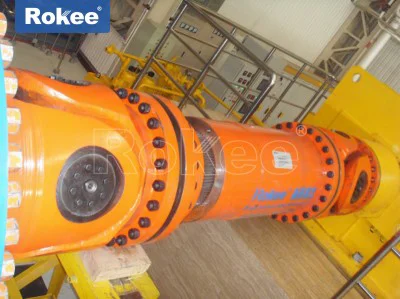
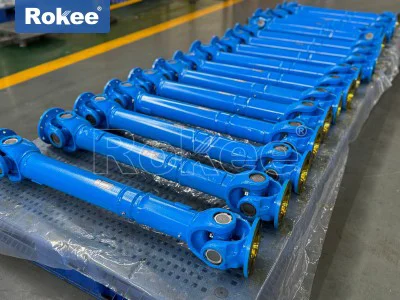
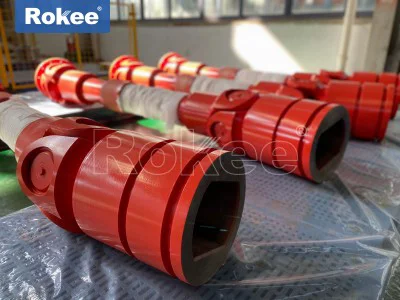
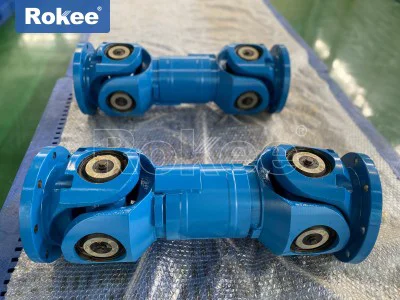
The structural composition of a high-quality cardan drive shaft is elaborate and rigorous, with each component playing a decisive role in overall transmission performance and service life. The main body includes the shaft tube, universal joint assemblies at both ends, telescopic spline components, connecting flanges and sealing protection structures. The shaft tube is usually made of high-strength alloy materials with excellent rigidity and toughness, which can bear large torque loads while avoiding bending deformation and vibration during high-speed rotation. The wall thickness and pipe body symmetry of the shaft tube are precisely optimized through mechanical design, effectively reducing rotational inertia and ensuring dynamic balance during operation. The universal joint assembly, as the core flexible transmission unit, is equipped with high-precision rolling bearings inside. The bearings are tightly matched with the cross shaft and joint yoke, minimizing friction resistance during transmission and improving mechanical transmission efficiency. The telescopic spline structure consists of internal and external splines with high matching precision, which can freely stretch and slide axially to adapt to the distance change between connected equipment parts, while ensuring no torque loss during telescopic movement. The external sealing structure adopts high-performance wear-resistant and aging-resistant materials, which can effectively isolate external dust, moisture and corrosive substances, prevent internal bearing wear and lubricant deterioration, and greatly extend the service cycle of the drive shaft.
The manufacturing process of cardan drive shafts is a highly sophisticated and standardized mechanical processing system, covering multiple links from raw material selection to finished product testing, and every process requires strict precision control. The whole production process starts with raw material screening and inspection. Professional manufacturers select high-quality alloy steel materials with stable mechanical properties, and conduct comprehensive detection of material hardness, tensile strength and internal texture to eliminate raw materials with impurities and performance defects, ensuring the basic strength and fatigue resistance of the product. After material confirmation, precision cutting and blanking are carried out, with professional cutting equipment used to process raw materials into standard shaft tube blanks and component blanks according to design dimensions, controlling cutting errors within a tiny range. Subsequently, multiple finishing processes such as turning, milling and grinding are adopted to process the shaft tube, splines and universal joint accessories, ensuring the dimensional accuracy and surface smoothness of each matching part.
Heat treatment is a key process that determines the comprehensive mechanical performance of cardan drive shafts. Through professional quenching and tempering treatment, the processed shaft body and core components obtain higher surface hardness and core toughness, effectively improving wear resistance, impact resistance and fatigue resistance of the product, so that the drive shaft can maintain stable performance under long-term high-load and high-frequency operation conditions. After heat treatment, precision finishing and dynamic balance correction are carried out. The high-speed rotating characteristics of drive shafts put forward extremely high requirements for dynamic balance. Professional dynamic balance detection equipment is used to test the finished shaft body, and micro correction is carried out for unbalanced parts to eliminate vibration and noise problems caused by unbalanced rotation during operation, ensuring the stability and comfort of equipment operation. Finally, assembly, lubrication and sealing treatment are completed. High-performance lubricating grease is injected into the universal joint and spline matching parts to reduce internal friction and wear, and multi-layer sealing protection is done to form a complete and reliable finished product.
Cardan drive shafts have extremely wide application scenarios, covering almost all mechanical equipment that requires flexible power transmission. In the automotive industry, they are core components of vehicle transmission systems, widely used in rear-wheel drive and four-wheel drive vehicle models, responsible for transmitting power from the gearbox to the drive axle to push the vehicle forward. In engineering machinery fields such as excavators, loaders and tractors, the complex working environment leads to frequent vibration and structural displacement of equipment, and the excellent adaptive compensation performance of cardan drive shafts can well adapt to harsh working conditions, ensuring continuous and stable power output of mechanical equipment. In industrial production fields, they are also widely used in conveyor equipment, metallurgical machinery, mining machinery and large-scale fan equipment, solving the power transmission problems between equipment components with large installation spacing and frequent positional changes.
In addition to conventional industrial and vehicle scenarios, cardan drive shafts also play an important role in special mechanical fields. In high-precision automation equipment, the high-precision transmission characteristics of optimized cardan drive shafts can ensure the accuracy of power transmission and meet the stable operation requirements of precision equipment; in heavy-duty mechanical equipment, high-strength customized cardan drive shafts can bear ultra-large torque loads, adapting to the operation requirements of heavy-load mechanical systems. With the continuous upgrading of mechanical equipment towards high efficiency, high stability and long life, the performance requirements for cardan drive shafts are also constantly improving, driving continuous technological innovation and process optimization in the manufacturing industry.
In actual application and use, the performance advantages of cardan drive shafts are very prominent, which are mainly reflected in strong adaptive capacity, high transmission efficiency, stable operation and long service life. Firstly, their unique multi-dimensional compensation ability can adapt to angular, axial and radial comprehensive displacement errors, which is incomparable to rigid transmission structures, and can still maintain normal transmission function when equipment has minor installation deviations and operational deformation. Secondly, the optimized structural design and high-precision processing technology ensure extremely high mechanical transmission efficiency, with low power loss in the torque transmission process, effectively improving the overall energy utilization rate of mechanical equipment. In terms of operation stability, the dynamically balanced shaft body and high-precision matching components can effectively reduce operation vibration and noise, making the equipment run more smoothly and reducing the failure rate of related transmission systems.
Professional cardan drive shaft manufacturers always take product performance optimization and quality stability as the core of production and operation, and continuously carry out technical iteration and process improvement. In terms of material innovation, manufacturers keep trying new alloy composite materials to further improve the strength, toughness and corrosion resistance of products, so that the drive shafts can adapt to more harsh working environments such as high temperature, low temperature and strong corrosion. In terms of structural optimization, through finite element analysis and mechanical simulation tests, the structural details of drive shafts are continuously optimized, the stress concentration parts of components are improved, the load-bearing capacity and fatigue resistance of products are enhanced, and the product failure rate caused by long-term alternating load operation is reduced.
In terms of production quality control, formal manufacturers have established a complete full-process quality inspection system, covering raw material incoming inspection, semi-finished product process inspection and finished product delivery inspection. Each batch of products will undergo strict performance tests such as torque load test, high-speed rotation test and fatigue life test to ensure that all performance indicators meet the actual use requirements. At the same time, manufacturers also focus on product customization services. According to the different working conditions, load requirements and installation spaces of different customers, they can adjust product specifications, structural parameters and material configurations to provide targeted cardan drive shaft solutions for various mechanical equipment.
With the rapid development of the global mechanical manufacturing industry, the market demand for high-performance cardan drive shafts is showing a steady growth trend. As a basic key component of mechanical transmission systems, the performance of cardan drive shafts directly affects the overall operation efficiency, stability and service life of mechanical equipment. In the future, with the continuous progress of intelligent manufacturing technology and the continuous upgrading of industrial equipment, cardan drive shaft manufacturing will develop towards higher precision, higher strength, longer life and lighter weight. Manufacturers will further integrate advanced processing technology, intelligent detection means and new material application technology to continuously optimize product performance, reduce production costs, improve product cost performance, and provide more reliable and efficient transmission component support for the upgrading and development of various mechanical industries.
In conclusion, cardan drive shafts, as classic and efficient flexible transmission components, have irreplaceable application value in the field of mechanical transmission. Their unique structural design, excellent adaptive performance and stable transmission capacity make them widely used in various industrial, automotive and special mechanical fields. Professional manufacturing technology and strict quality control ensure the reliable performance of cardan drive shafts, and continuous technological innovation and structural optimization will further expand their application scenarios and market value. In the future mechanical transmission system upgrading and equipment iteration process, cardan drive shafts will always occupy an important core position and become an indispensable basic guarantee for the stable operation of modern mechanical equipment.