Universal Shaft Coupling Empowers Sandwich Panel Production Machine To Improve Quality And Efficiency
The modern construction industry is undergoing a profound transformation driven by the dual pursuit of green development and rapid construction progress, making lightweight, heat-insulating, and structurally stable building materials increasingly indispensable for various engineering projects. Sandwich panels, as one of the core composite building materials widely used in industrial workshops, cold storage facilities, prefabricated buildings and enclosure engineering, rely heavily on continuous and stable mechanical processing to achieve consistent structural density, uniform surface flatness and reliable overall bonding performance. The entire production process of sandwich panels involves multiple continuous operating procedures, including raw material unwinding, core material filling, double-sided plate pressing, high-temperature compounding, fixed-length cutting and finished product conveying, all of which require precise and coordinated power transmission between different mechanical components to ensure synchronous operation of each production link. In the actual long-term operation of sandwich panel production lines, the stability of the power transmission system has always been a key factor restricting product quality consistency and continuous production efficiency. Many production fluctuations and product quality defects that frequently occur in actual processing, such as uneven bonding between surface plates and core materials, inconsistent panel thickness specifications, irregular cutting edges and low production line continuous operation cycle, are mostly not caused by raw material quality problems or manual operation errors, but stem from unstable torque transmission, shaft misalignment deviation and mechanical vibration interference in the transmission connection parts of production equipment. As a core basic transmission component in industrial mechanical systems, universal shaft coupling has become an essential upgrade configuration for modern sandwich panel production machines by virtue of its unique structural adaptability, excellent torque transmission performance and reliable vibration damping and buffer capacity, effectively solving various transmission pain points in the production process, comprehensively optimizing the overall operating state of the production line, and steadily promoting the dual improvement of sandwich panel finished product quality and continuous production operational efficiency.
Sandwich panel production machines belong to continuous heavy-duty processing equipment that runs for a long time and operates under variable load conditions, and their internal power transmission structure presents extremely complex operating characteristics different from ordinary light industrial machinery. The entire production line is composed of multiple functional units arranged in sequence, and each functional unit is driven by independent power components, which need to maintain strict synchronous rotation speed and torque output coordination during the production process. In the actual equipment installation and long-term operation process, it is almost impossible to achieve permanent perfect coaxial alignment between the driving shaft and the driven shaft of each transmission node. On the one hand, affected by mechanical manufacturing tolerances and on-site installation and assembly deviations, initial angular deviation, radial displacement and axial gap will inevitably exist between the connected shafts of the equipment at the initial stage of installation. On the other hand, during the long-term continuous high-load operation of the sandwich panel production line, the equipment will generate continuous mechanical vibration, and the mechanical structure will produce slight thermal expansion and contraction due to the change of operating temperature. In addition, the alternating load generated by frequent start-stop operation and switching of different production specifications will further cause real-time dynamic displacement and position deviation between the transmission shafts. For a long time, many traditional sandwich panel production equipment adopts rigid connection structures or ordinary simple couplings to complete shaft connection and power transmission. Such connection methods have extremely low tolerance for shaft misalignment, cannot effectively compensate for various deviations generated during equipment operation, and will directly lead to obvious power loss in the transmission process. More importantly, the unbalanced stress caused by misalignment will be continuously transmitted to the processing execution components of the production line, resulting in inconsistent operating speed of the pressing roller group, unstable conveying speed of raw materials, and uneven pressure distribution in the composite bonding link. These subtle mechanical operation deviations will eventually be directly reflected in the finished sandwich panels, leading to a series of quality problems such as local degumming and hollowing between the surface plate and the core material, uneven overall thickness of the panel, warping and deformation of the plate body after molding, and inconsistent dimensional accuracy of the finished product. These quality defects not only reduce the overall qualification rate of produced sandwich panels, increase the number of reworked and scrapped products, but also affect the structural safety and service life of the panels in subsequent construction and use, bringing unnecessary hidden dangers to project construction. At the same time, the long-term operation of the equipment under the state of uncompensated shaft misalignment will also cause severe friction and impact wear between the internal components of the transmission system, resulting in frequent equipment failure, increased frequency of shutdown maintenance, shortened continuous production time, and seriously restricting the improvement of the overall production and processing efficiency of the production line.
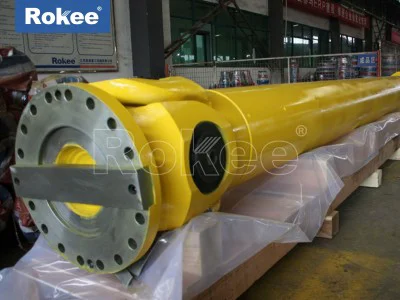
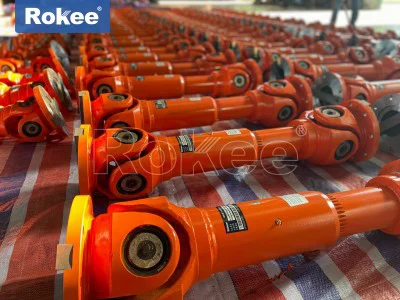
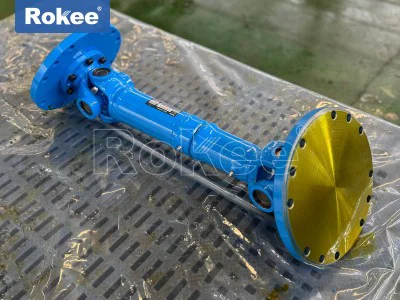
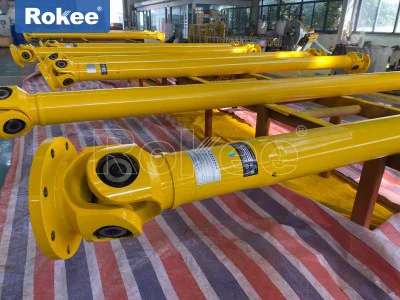
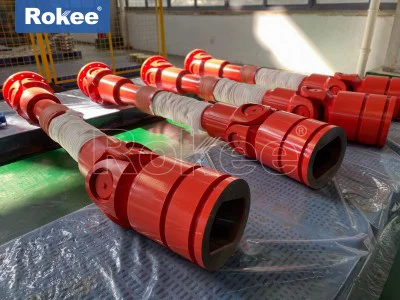
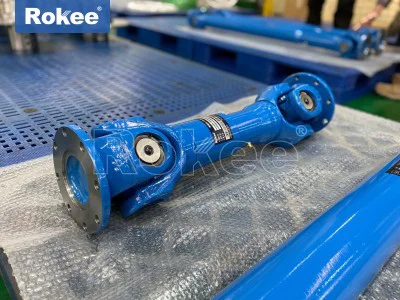
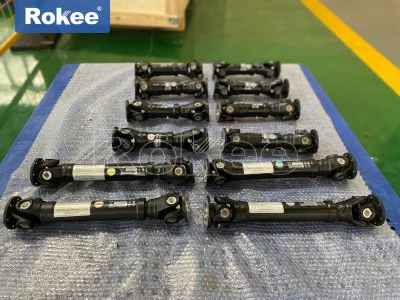
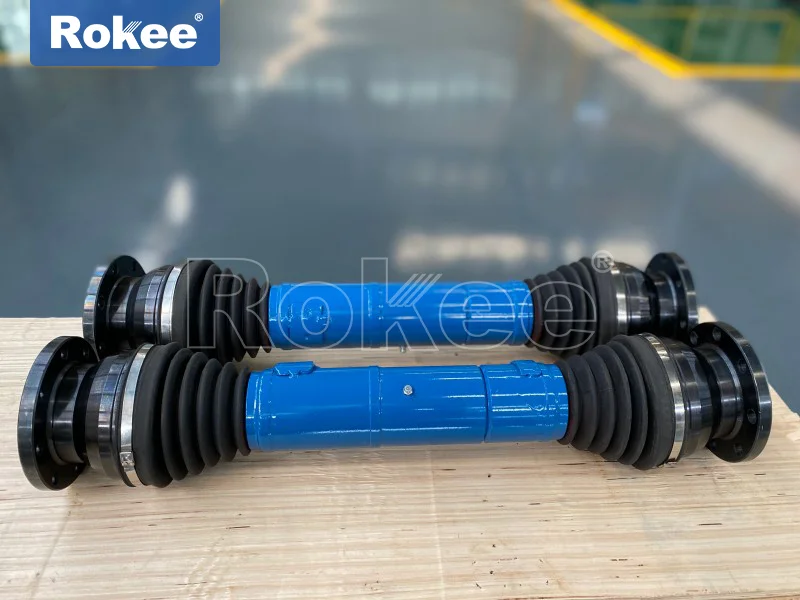
The fundamental advantage of universal shaft coupling applied to sandwich panel production machine lies in its unique mechanical structure design and excellent adaptive compensation performance, which can perfectly solve the shaft misalignment problem that is unavoidable in the operation of production equipment and lay a solid foundation for stable and efficient power transmission of the entire production line. Different from rigid connection parts that require strict coaxial operation, the core structural design of universal shaft coupling adopts articulated flexible connection form, which is composed of fork-shaped joints and cross shaft components with precise matching structure. This special structural form enables the coupling to have strong multi-directional deviation compensation capability in the working process, which can effectively adapt to angular deviation, radial displacement and axial displacement between the driving shaft and the driven shaft generated by equipment installation errors, thermal expansion and contraction, dynamic load changes and long-term vibration operation. Within the allowable operating angle range, the universal shaft coupling can always maintain continuous and stable rotational motion and torque transmission between the connected two shafts without generating additional transmission resistance and mechanical stress, and will not cause power fluctuation and speed jitter due to shaft position deviation. In the daily operation of sandwich panel production lines, this compensation performance directly ensures that the power output by the power component can be accurately and efficiently transmitted to each processing execution roller and conveying mechanism, maintaining the synchronous and consistent operating speed of each functional link from raw material feeding to finished product output. The stable transmission state avoids the speed difference and pressure fluctuation in the pressing and composite processing links, ensures that each sandwich panel can receive uniform pressing force and stable bonding time in the molding stage, effectively guarantees the consistent bonding strength between the surface plate and the core material, and fundamentally reduces the quality problems such as degumming, hollowing and deformation caused by transmission instability. At the same time, the efficient transmission characteristic of universal shaft coupling greatly reduces the power loss in the transmission process, enables the equipment power components to operate in a more energy-saving and efficient working state, avoids the energy waste caused by transmission friction and mechanical resistance, and realizes energy-saving operation while ensuring production power demand.
In addition to the core misalignment compensation and stable power transmission functions, universal shaft coupling also has excellent vibration damping and shock absorption performance, which plays a vital role in optimizing the operating environment of sandwich panel production equipment and extending the service life of mechanical components, further supporting the simultaneous improvement of production quality and operational efficiency. The production process of sandwich panels involves multiple links such as heavy pressure pressing and fixed-length cutting, which will generate obvious instantaneous impact load and periodic mechanical vibration during operation. These vibration and impact forces will be transmitted along the transmission shaft system of the equipment. If not buffered and dissipated in time, they will cause resonance of the whole machine, affect the processing accuracy of the equipment, and accelerate the wear and aging of key components such as bearings and rollers. The internal matching structure of universal shaft coupling can effectively absorb and buffer the instantaneous impact force and vibration generated during equipment operation, reduce the vibration amplitude of the transmission shaft system and the whole equipment, and maintain the stable and low-vibration operating state of the production line. The reduction of mechanical vibration not only makes the operation of each processing mechanism more stable and the processing dimensional accuracy of sandwich panels higher, but also greatly reduces the abnormal wear and tear of key mechanical parts of the equipment. The uniform stress on each component avoids premature failure and damage of parts caused by long-term impact and vibration, effectively reducing the frequency of equipment failure and the workload of daily maintenance and overhaul. For sandwich panel production enterprises, the reduction of equipment failure rate means fewer unplanned shutdowns, longer continuous production cycle, more stable production scheduling and output supply, and the continuous improvement of overall production efficiency. At the same time, the extended service life of mechanical components also reduces the frequency of parts replacement and later maintenance investment, optimizing the long-term operation cost of the production line while ensuring stable production.
The practical application effect of universal shaft coupling in sandwich panel production machine operation is also reflected in its strong working condition adaptability and long-term stable continuous operation capability, which can meet the harsh operating environment and long-time working requirements of industrial production lines. The production workshop of sandwich panels usually has working environment characteristics such as more dust, certain humidity and long-term continuous high-load operation. Many ordinary transmission connection parts are prone to corrosion, aging and structural loosening under such working conditions, resulting in reduced transmission performance and frequent failures. The universal shaft coupling adopts robust overall structural design and high-strength mechanical processing technology, with good structural rigidity and environmental adaptability, and can maintain stable working performance for a long time in dusty, humid and continuous high-load operating environments without structural deformation or functional failure. Its internal matching parts have high processing precision and good wear resistance, and can maintain stable transmission accuracy and compensation performance even after long-term uninterrupted operation, without frequent debugging and calibration due to operational wear. This long-term stable operation capability ensures that the sandwich panel production line can maintain consistent processing accuracy and production efficiency for a long time after equipment commissioning, avoiding production quality fluctuations and efficiency drops caused by performance attenuation of transmission components. Whether it is the production of conventional ordinary sandwich panels or customized sandwich panels with special specifications and thicknesses, the universal shaft coupling can adapt to the torque and speed changes required by different production processes, maintain the stability of the production line in the process of production specification switching, and ensure that the product quality of different batches can reach a unified high standard.
With the continuous upgrading of market demand for high-quality sandwich panels and the increasing requirements of the construction industry for building material performance indicators, the processing accuracy, surface quality and structural stability requirements of sandwich panel products are constantly improving, and the demand for high-efficiency and low-consumption continuous production of production lines is also becoming more urgent. The traditional transmission connection mode of sandwich panel production equipment can no longer meet the current dual requirements of high-quality product processing and high-efficiency continuous production. As an upgraded and optimized core transmission component, universal shaft coupling effectively solves many inherent pain points in the operation of traditional production equipment through its excellent misalignment compensation, stable transmission, vibration damping and long-term reliable operation performance. It not only optimizes the mechanical operating state of the sandwich panel production line from the source, improves the molding processing accuracy and finished product qualification rate of sandwich panels, reduces product quality defects and rework and scrap losses, but also reduces equipment failure shutdown time and maintenance workload, extends continuous production operation time, and realizes the simultaneous improvement of product quality and production efficiency. In the long-term production and operation process, the application of universal shaft coupling also helps production enterprises reduce energy consumption and later operation and maintenance costs, improve the overall production benefit and market competitiveness. As an important mechanical empowerment component for the upgrading and optimization of sandwich panel production machinery, universal shaft coupling will continue to play a key role in promoting the high-quality and high-efficiency development of the sandwich panel production industry, and provide solid mechanical technical support for the stable output of high-performance building composite materials.