Cross Cardan Drive Shaft
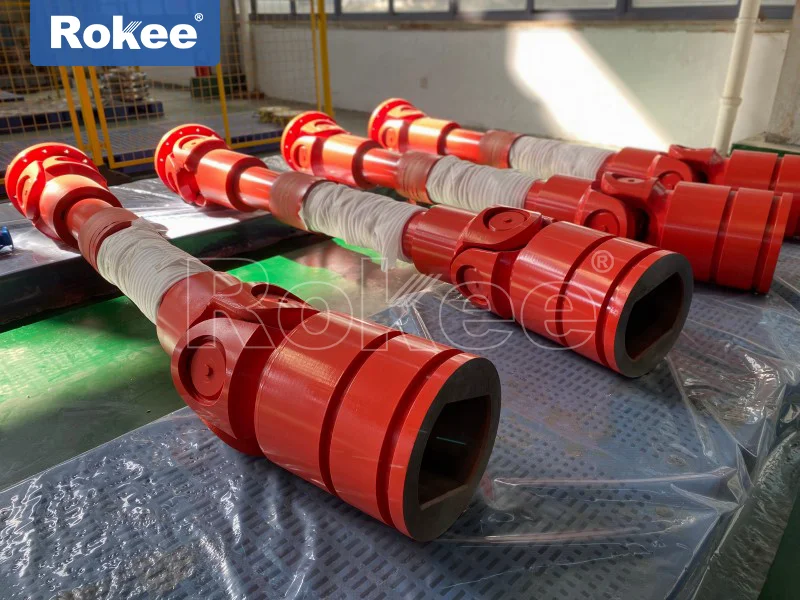
As a core mechanical transmission component widely applied in power transmission systems, the cross cardan drive shaft stands out for its unique angular compensation capability and flexible power transmission performance. Unlike rigid transmission shafts that require precise coaxial alignment of connected components, this mechanical structure can stably transmit torque and rotational motion between two shafts with axis deflection, parallel offset, or dynamic position changes during operation, solving the core engineering problem of power transmission under non-ideal installation and operating conditions. Its ingenious mechanical design, robust structural stability and excellent environmental adaptability make it a foundational component in various mechanical transmission scenarios, ranging from mobile mechanical equipment to fixed industrial transmission systems, delivering reliable and continuous power transmission support for diverse mechanical operations.
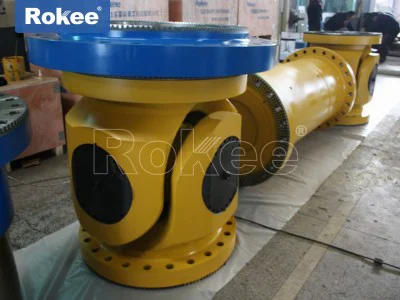
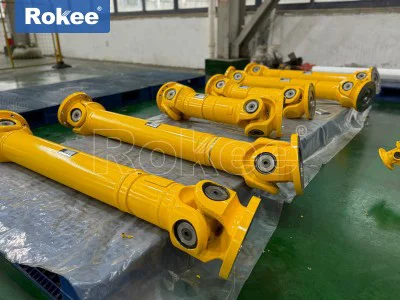
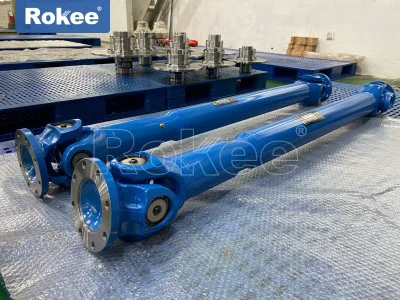
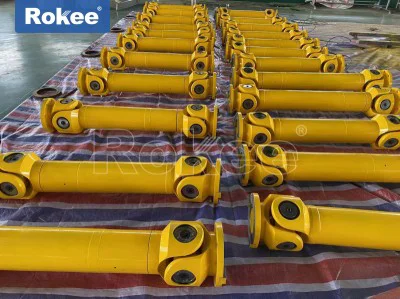
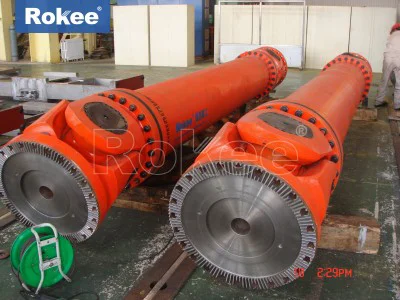
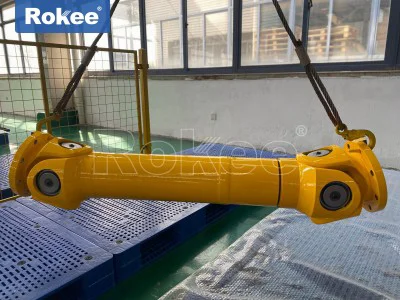
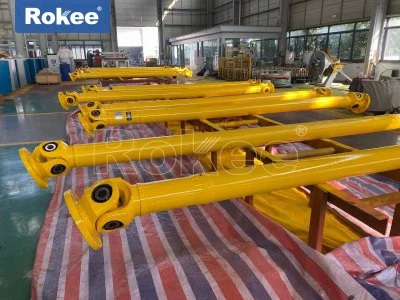
The basic structure of the cross cardan drive shaft adopts a concise and highly integrated mechanical configuration, with every component designed to coordinate efficiently to balance transmission flexibility and structural rigidity. The core functional unit consists of two symmetrical fork-shaped joint yokes and a central cross-shaped spindle, commonly referred to as the spider or crosspiece. The four mutually perpendicular shaft necks of the cross spindle are equipped with high-precision needle roller bearing assemblies, which serve as the key friction-reducing and movable connecting structure between the cross spindle and the joint yokes. Each bearing unit is matched with professional sealing protection components, which effectively isolate external dust, moisture and abrasive particles, prevent lubricant leakage, and maintain long-term stable operation of the rotating pair. Between the two joint yokes is a hollow middle connecting shaft tube, which not only reduces the overall weight of the component while ensuring structural strength, but also can be optimized with a telescopic adjustment structure according to actual working conditions to realize axial displacement compensation and adapt to the linear distance changes between power input and output ends during equipment operation. All key load-bearing parts are processed from high-strength alloy materials through precise forging and finishing processes, with uniform internal organizational structure and excellent mechanical properties, ensuring that the component can withstand long-term alternating torque and impact loads in complex working environments.
The operating principle of the cross cardan drive shaft is based on the classic Hooke’s joint mechanical mechanism, whose core value lies in realizing flexible rotational power transmission between non-collinear shafts. In the working state, one joint yoke is connected to the power input shaft and the other to the power output shaft, and the cross spindle acts as a movable hinge to connect the two yokes into a linked whole. When there is a certain angular deflection between the input and output shafts, the cross spindle can rotate freely around the bearing journals of the two yokes in different planes, converting the fixed-axis rotation of the input end into adaptive spatial rotation, and continuously transmitting torque to the output end. This unique spatial motion characteristic enables the cross cardan drive shaft to adapt to angular deviations within a certain range, eliminating the transmission dead angle caused by shaft misalignment that plagues rigid shaft structures. In actual operation, the allowable deflection angle can be adjusted through structural optimization and parameter matching to meet the flexible transmission needs of different equipment, achieving seamless power transmission in dynamic working states where the axis angle changes in real time.
In-depth analysis of the transmission characteristics of the single-section cross cardan drive shaft reveals typical mechanical motion laws in its power transmission process. When the input shaft rotates at a constant speed and there is a fixed included angle between the input and output shafts, the rotational speed of the output shaft will produce periodic fluctuating changes within a single rotation cycle, forming the inherent instantaneous speed difference characteristic of the single universal joint structure. This speed fluctuation will generate corresponding torsional vibration and alternating shear stress inside the transmission component, and the amplitude of the fluctuation is positively correlated with the deflection angle between the shafts—the larger the axis deflection angle, the more obvious the speed fluctuation and the greater the additional vibration load. Although this instantaneous speed difference does not affect the overall continuous transmission of power, long-term operation will induce minor vibration and noise in the transmission system, and may accelerate the fatigue loss of bearings and connecting structures. To eliminate this inherent transmission defect, the double-section cross cardan drive shaft structure is widely adopted in high-precision and high-stability transmission scenarios. By connecting two single universal joints through an intermediate shaft and reasonably setting the installation phase and deflection angle, the speed fluctuation generated by the first universal joint in the transmission process can be completely offset by the opposite speed error of the second universal joint, realizing approximate constant-speed power transmission and significantly improving the stability and smoothness of the entire transmission system.
The excellent working adaptability of the cross cardan drive shaft is reflected in its outstanding tolerance to complex working conditions and dynamic operating environments. In mechanical equipment with frequent position changes and attitude adjustments, the relative position and axis angle between the power source and the executing mechanism will change in real time with the equipment’s operation. Traditional rigid transmission structures are prone to jamming, deformation or even structural damage under such dynamic changes, while the cross cardan drive shaft can rely on its flexible hinge structure to automatically compensate for angular and axial displacement changes, maintaining stable power output throughout the equipment’s operation cycle. In terms of load adaptability, the optimized structural design and high-strength materials enable it to withstand both steady-state torque and instantaneous impact loads, with strong overload resistance. The hollow shaft tube structure effectively reduces the inertial resistance of rotation, improving the response speed of power transmission and enabling the equipment to complete rapid start, stop and steering actions. Meanwhile, the compact overall structural layout saves installation space, allowing it to be applied in narrow and complex mechanical assembly spaces with high space utilization, which is difficult for many other transmission coupling structures to achieve.
Structural design optimization of cross cardan drive shafts always focuses on balancing transmission efficiency, structural durability and operating stability. In terms of bearing design, the matched needle roller bearings have the advantages of small radial size, large load-bearing capacity and low friction coefficient, which can effectively reduce the friction resistance in the transmission process and improve the overall transmission efficiency of the component. The optimized sealing structure adopts multi-layer protection design, which can adapt to harsh working environments such as high dust, high humidity and variable temperature, avoiding premature wear and failure of internal moving parts caused by external environmental interference. The telescopic spline matching structure reserved on the connecting shaft tube can accurately compensate for the axial distance change between the input and output ends during the operation of mechanical equipment, eliminating the additional axial tension and compression force generated by position changes on the transmission shaft, and protecting the structural integrity of the transmission system. In addition, the overall dynamic balance treatment of the shaft tube effectively suppresses the vibration and resonance phenomenon generated by high-speed rotation, reducing operating noise and improving the running smoothness of the equipment.
The application scope of cross cardan drive shafts covers multiple fields of mechanical transmission, showing strong universal applicability. In mobile engineering machinery, it is used as a key power transmission component between power engines and walking or executing mechanisms, adapting to the attitude changes and vibration displacement of equipment during walking and operation, and ensuring continuous and stable power output of engineering equipment in complex working conditions. In industrial production equipment, it is applied to the power transmission link of various rotating and reciprocating mechanical structures, solving the power transmission problem between offset and spatially staggered shafts, and improving the structural layout flexibility of production equipment. In special mechanical equipment that requires frequent motion adjustment and multi-angle power transmission, its flexible transmission performance can meet the diversified motion coordination needs of the equipment, realizing efficient linkage between different functional components. Compared with other flexible transmission components, the cross cardan drive shaft has lower maintenance cost, stronger structural reliability and longer service life, and will not produce elastic deformation or power loss caused by material fatigue like flexible coupling structures, maintaining stable transmission performance in long-term continuous operation scenarios.
Daily maintenance and reasonable application management are crucial to extending the service life and maintaining the transmission performance of cross cardan drive shafts. The core of maintenance work lies in the lubrication protection of moving pairs and the inspection of sealing structures. Good lubrication can effectively reduce the friction and wear of bearings and cross spindle rotating pairs, avoid dry friction damage caused by insufficient lubricating oil, and reduce transmission resistance and vibration noise. Regular inspection of the sealing components is required to check for aging, deformation or damage, so as to prevent external impurities from entering the internal movement structure and causing abrasive wear and component failure. During equipment operation, excessive deflection angle and long-term overload operation should be avoided as much as possible, to prevent excessive alternating stress from causing fatigue damage to the cross spindle, bearings and shaft tube structures. Regular dynamic balance detection and structural fastening inspection can effectively eliminate potential safety hazards such as loose connection and unbalanced rotation, ensuring that the cross cardan drive shaft always maintains efficient and stable working performance during long-term operation.
With the continuous upgrading of modern mechanical equipment towards high efficiency, high precision and high stability, the technical optimization of cross cardan drive shafts is also advancing continuously. Modern manufacturing processes and material optimization technologies further improve the structural strength, wear resistance and fatigue resistance of components, enabling them to adapt to higher speed, higher load and more harsh working environments. The optimized structural design further reduces the instantaneous speed fluctuation and transmission vibration of the single-section shaft, improving the overall transmission accuracy. As a classic and efficient flexible transmission component, the cross cardan drive shaft will always occupy an irreplaceable core position in the field of mechanical transmission by virtue of its simple and reliable structure, excellent adaptive performance and wide application compatibility, providing stable and efficient power transmission guarantee for the iterative upgrading and stable operation of various mechanical equipment.