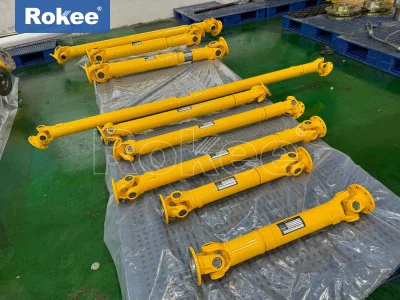
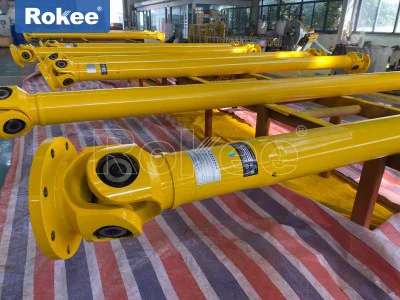
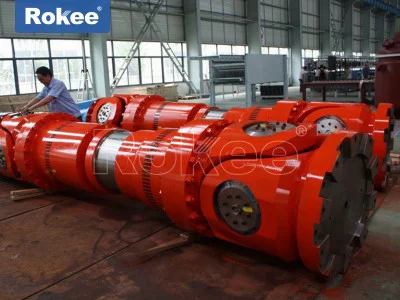
Transmission Shafts

As an indispensable core component of all rotating mechanical systems, the transmission shaft serves as the fundamental carrier for power and torque transmission within mechanical equipment. It acts as a continuous mechanical bridge that connects power-generating units and power-executing units, enabling the smooth transfer of rotational motion and mechanical energy across different functional modules of machinery. In all fields involving mechanical power operation, from small precision industrial equipment to large engineering machinery and mobile transportation devices, the transmission shaft undertakes the critical task of converting original power into usable driving force, laying the foundation for the normal operation of the entire mechanical system. Without well-functioning transmission shafts, the power generated by power sources cannot be effectively distributed and utilized, and complex mechanical movement logic and power matching mechanisms will completely fail to operate.
The core working essence of the transmission shaft lies in bearing and transmitting torsional load, converting the rotational torque generated by power sources such as motors and engines into continuous rotational power that drives the operation of subsequent components. Different from ordinary mechanical connecting parts, its working process is not limited to simple structural connection, but focuses on maintaining stable energy transmission under dynamic operating conditions. During operation, the shaft body rotates synchronously with the power source, carrying axial force, radial force and complex torsional force generated by equipment operation, and stably transmits power to gears, pulleys, walking mechanisms and other executing components. This transmission process needs to minimize energy loss, avoid power attenuation and motion deviation, and ensure that the output power of the equipment matches the actual operating demand in real time.
To fully understand the operational logic of transmission shafts, it is necessary to clarify their internal positioning in mechanical power systems. In a complete power transmission system, the transmission shaft is often arranged between the power input end and the power output end, forming a graded power transmission structure with auxiliary components such as gears, bearings and couplings. The power input end receives the original rotational power from the power source, and after the torque adjustment and motion transmission of the transmission shaft, the power is stably output to the working execution end. In this process, the transmission shaft not only undertakes the basic power transmission work, but also cooperates with gear sets to complete torque amplification and speed conversion, realizing the flexible matching of equipment speed and load capacity under different working conditions. This dual function of power transmission and operating condition adjustment makes the transmission shaft a key component that determines the operating efficiency and working performance of mechanical equipment.
Transmission shafts can be divided into multiple types according to their structural forms, functional attributes and application scenarios, and each type has unique structural characteristics and applicable working conditions. The most common straight shaft is widely used in conventional mechanical equipment, with a simple cylindrical structure, uniform stress distribution on the shaft body, and excellent stability in high-speed and stable operation scenarios. Straight shafts are mostly used for linear power transmission with small spatial span and fixed transmission angle, and can maintain high power transmission efficiency during long-term continuous operation. Another common structural type is the stepped shaft, which is designed with different diameter sections according to the assembly requirements of gears, bearings and other components. The stepped structure can effectively limit the axial displacement of assembled parts, improve the assembly accuracy of the entire transmission system, and disperse local stress concentration, making it more suitable for complex transmission systems with multiple component matching and multi-stage power transmission.
In addition to conventional straight shafts and stepped shafts, special-shaped transmission shafts are designed for complex working conditions and limited installation spaces. Flexible transmission shafts are widely used in equipment with variable transmission angles and offset power transmission paths. They rely on flexible structural characteristics to adapt to slight displacement and angle deviation between power input and output ends, ensuring continuous and stable power transmission even when the relative position of components changes during equipment operation. This structural advantage makes flexible shafts indispensable in mobile mechanical equipment and precision instruments with complex motion trajectories. Hollow transmission shafts are another important special structural form. Compared with solid shafts of the same outer diameter, hollow shafts reduce their own weight while maintaining sufficient torsional strength and rigidity, effectively reducing the overall load and rotational inertia of the transmission system, and significantly improving the energy utilization efficiency of high-speed operating equipment.
According to functional division in the transmission system, transmission shafts can be classified into input shafts, intermediate shafts and output shafts, which cooperate with each other to complete multi-stage power transmission. The input shaft is directly connected to the power source, undertaking the first-stage power reception and preliminary transmission work. Its structural design needs to withstand instantaneous impact load during power start-up and maintain stable rotational accuracy. The intermediate shaft, also known as the countershaft, acts as a power transfer and adjustment component between the input end and output end. It cooperates with different gear sets to complete speed regulation and torque conversion, realizing the switching of multiple operating states of the equipment. The output shaft is the final power output component of the transmission system, which transmits the adjusted power to the equipment execution mechanism, directly determining the operating state and working efficiency of the mechanical equipment. The coordinated operation of the three types of shafts forms a complete closed-loop power transmission logic, meeting the diversified operating needs of mechanical equipment under different loads and speeds.
Material selection is the core factor that determines the service performance, service life and application scope of transmission shafts. The working environment of transmission shafts is complex and harsh for a long time, requiring materials to have excellent torsional strength, fatigue resistance, wear resistance and structural stability. In conventional industrial and mechanical equipment, high-quality alloy structural steel is the most widely used shaft material. This type of material has balanced mechanical properties, with high tensile strength and torsional resistance, and can resist fatigue damage caused by long-term cyclic rotation and alternating load impact. After reasonable heat treatment, alloy steel can further improve surface hardness and internal toughness, avoiding surface wear, shaft body deformation and fracture failure during long-term high-load operation.
For light-load and low-speed precision equipment, high-quality carbon structural steel is often selected as the raw material for transmission shafts. Carbon steel has good processing performance and moderate mechanical strength, which can meet the power transmission needs of conventional light-load equipment. Its excellent cutting and forming performance can realize high-precision processing of complex shaft structures and spline structures, ensuring the assembly accuracy and motion matching degree of the transmission system. In special working scenarios such as high temperature, high humidity and corrosive environments, stainless steel and special alloy materials become the preferred choices. These materials have excellent corrosion resistance and high-temperature structural stability, which can avoid material oxidation, corrosion and performance degradation in harsh environments, ensuring the long-term stable operation of transmission shafts in special working conditions.
In high-end precision equipment and lightweight mechanical devices, high-strength composite materials and lightweight alloy materials are gradually applied to the manufacturing of transmission shafts. These new materials have the characteristics of low density, high specific strength and good fatigue resistance. While ensuring the structural strength of the shaft body, they effectively reduce the self-weight of the transmission system, reduce the energy consumption of equipment operation, and improve the dynamic response speed of mechanical movement. With the continuous upgrading of mechanical equipment towards high speed, high precision and energy saving, the research and application of new shaft materials have become an important direction to improve the overall performance of transmission systems.
The manufacturing process of transmission shafts is a systematic and precise processing system, which determines the dimensional accuracy, structural stability and mechanical properties of the finished shaft body. The entire manufacturing process covers raw material forging, rough machining, heat treatment, finish machining and surface treatment, and each link has strict process standards and technical requirements. The raw material forging process is the foundation of shaft manufacturing. Through die forging or free forging, the internal metal structure of the material is optimized, the internal defects such as pores and loose grains are eliminated, and the overall density and structural uniformity of the material are improved. Forged blanks have better internal toughness and torsional resistance, which can effectively avoid structural fracture caused by internal stress concentration during shaft operation.
Rough machining is mainly used to remove redundant materials on the surface of the forging blank, preliminarily shape the outer circle, end face and key groove of the shaft body, and lay a foundation for subsequent finish machining. In this process, it is necessary to ensure the basic dimensional tolerance and structural symmetry of the shaft body, avoid obvious dimensional deviation and structural eccentricity, and prevent the unbalanced rotation of the shaft body in subsequent operation. Heat treatment is a key process to improve the mechanical properties of transmission shafts. Through quenching and tempering treatment, the shaft body obtains high strength and high toughness matching performance, eliminating the internal processing stress generated during forging and rough machining, and avoiding structural deformation and performance attenuation during long-term operation. For transmission shafts with high wear resistance requirements, surface quenching and carburizing treatment are also required to improve the surface hardness, reduce surface friction loss, and extend the service life of the shaft body.
Finish machining is the core link to ensure the precision of transmission shafts, including precision turning, grinding, spline processing and other processes. Precision turning is used to process the outer circle and end face of the shaft body to ensure the dimensional accuracy and surface smoothness of each shaft section. Grinding processing further optimizes the surface roughness and geometric tolerance of the shaft body, eliminating the tiny processing traces left by turning, ensuring the high matching accuracy between the shaft body and bearings, gears and other accessories. Spline and key groove processing adopts professional precision machining equipment to ensure the matching precision of the transmission structure, avoid power slipping and motion deviation during torque transmission, and improve the stability and efficiency of power transmission.
Surface treatment is the final protective process of transmission shaft manufacturing, which effectively improves the environmental adaptability and service life of the shaft body. Common surface treatment processes include oxidation treatment, plating treatment and anti-wear coating treatment. These processes can form a dense protective layer on the surface of the shaft body, isolating air, moisture and corrosive media, preventing surface oxidation and corrosion. At the same time, the smooth protective layer can reduce the friction coefficient of the shaft surface, reduce the friction loss between the shaft body and matching parts in the rotating process, and improve the overall operating efficiency of the transmission system.
The operating performance of transmission shafts is affected by multiple factors such as structural design, material performance, processing accuracy and working conditions, and any link deviation will lead to the decline of transmission system performance. Structural design is the primary factor affecting the working state of the shaft body. The diameter of the shaft body, the transition radian of variable diameter parts, the setting of key grooves and splines, and the distribution of assembly positions all determine the stress distribution of the transmission shaft in operation. Reasonable structural design can disperse torsional stress and impact load, avoid local stress concentration, and prevent fatigue cracks and structural deformation of the shaft body in long-term operation. Excessively thin shaft body design will lead to insufficient torsional rigidity and easy deformation under high load; unreasonable transition structure will cause stress accumulation, which will gradually expand into fatigue defects with the increase of operating time.
Processing accuracy directly affects the running stability and power transmission efficiency of transmission shafts. The geometric tolerance such as roundness and straightness of the shaft body determines whether the shaft body can run concentrically at high speed. If the processing deviation is too large, the shaft body will have eccentric rotation during operation, resulting in periodic vibration and impact load. This abnormal operation state will not only increase the friction loss of the transmission system and reduce power transmission efficiency, but also accelerate the wear of matching bearings and gears, and even cause structural fatigue damage of the shaft body in severe cases. The precision of spline and key groove matching determines the torque transmission capacity. Low matching accuracy will lead to relative sliding between connecting parts, resulting in power loss and motion lag, affecting the operating accuracy of the entire mechanical equipment.
Working condition changes are important external factors affecting the service state of transmission shafts. In high-speed operating conditions, the shaft body needs to bear large centrifugal force and cyclic torsional load, which puts forward higher requirements for the dynamic balance performance and fatigue resistance of the shaft body. Long-term high-speed operation will accelerate material fatigue aging, so the structural design and material selection of high-speed transmission shafts need to focus on dynamic balance optimization and fatigue resistance improvement. In high-load working scenarios, the shaft body bears huge torsional shear force and axial pressure, which requires the shaft body to have high strength and rigidity to avoid plastic deformation and fracture failure. In variable load and impact load environments, the transmission shaft needs to have good toughness to buffer instantaneous load impact and prevent brittle fracture of the shaft body.
Environmental factors also cannot be ignored in the operation process of transmission shafts. In high-temperature working environments, the material strength and rigidity of the shaft body will decrease, and thermal deformation will occur, resulting in reduced transmission accuracy and unstable operation. In humid and corrosive environments, the surface of the shaft body is prone to oxidation and corrosion, which destroys the surface smoothness and structural integrity, increases friction resistance, and accelerates component wear. In dusty and impurity-containing working environments, tiny impurities will enter the matching gap between the shaft body and accessories, forming abrasive wear, damaging the precision structure of the transmission system, and shortening the overall service life of the equipment. Therefore, targeted structural optimization, material selection and protective treatment are required according to different working environments to ensure the adaptive operation of transmission shafts.
In the long-term operation process, transmission shafts will have various performance degradation and failure problems due to load impact, friction wear, material fatigue and environmental erosion. Common failure forms include fatigue fracture, surface wear, shaft body deformation and connection failure. Fatigue fracture is the most common failure mode of transmission shafts. Under the action of long-term cyclic torsional load and alternating stress, tiny fatigue cracks are generated in the stress concentration parts of the shaft body. With the continuous accumulation of operating time, the cracks gradually expand, eventually leading to the overall fracture of the shaft body. This failure process is hidden and progressive, and it is difficult to detect in the early stage, which will lead to sudden equipment shutdown and mechanical failure in severe cases.
Surface wear mainly occurs in the matching parts of the transmission shaft, such as the journal and spline contact surface. Long-term relative friction and abrasive erosion will cause surface material loss, resulting in increased matching gap, reduced transmission precision and power slipping. Serious wear will lead to unstable power output, abnormal vibration and noise of the equipment, and affect the normal operation of the mechanical system. Shaft body deformation includes elastic deformation and plastic deformation. Short-term overload and instantaneous impact load will cause elastic deformation of the shaft body, which can recover after the load is removed; long-term overload operation and material aging will cause irreversible plastic deformation, resulting in bending and distortion of the shaft body, loss of concentric rotation ability, and complete failure of the transmission function.
Connection failure is mainly caused by the loosening and wear of matching structures such as splines and key grooves. After long-term vibration and torque impact, the connecting gap between components increases, resulting in insufficient torque transmission capacity, power loss and motion deviation. In severe cases, the transmission connection fails directly, and the power transmission system is disconnected. Timely daily maintenance and regular fault detection are effective means to avoid transmission shaft failure and extend service life. Daily maintenance mainly includes cleaning the shaft body surface, checking the lubrication state of matching parts, and ensuring the good lubrication environment of the transmission system, so as to reduce friction wear and buffer load impact.
Regular detection includes dimensional precision detection, structural defect detection and running state monitoring. By detecting the straightness, roundness and matching precision of the shaft body, the tiny deformation and wear defects of the shaft body can be found in time. Through non-destructive testing technology, the internal fatigue cracks and structural defects of the shaft body can be detected to avoid sudden fracture failure. Monitoring the vibration, noise and temperature changes of the transmission shaft during operation can effectively judge the running state of the shaft body, find abnormal working conditions in time, and adjust the equipment operating parameters to avoid long-term overload operation of the transmission shaft.
With the continuous development of mechanical engineering technology, the design, manufacturing and application technology of transmission shafts are also constantly innovating and upgrading. Modern mechanical equipment is developing towards high speed, high precision, lightweight and high efficiency, which puts forward higher technical requirements for transmission shaft performance. In terms of structural design, with the help of computer simulation and finite element analysis technology, the stress distribution and dynamic operation state of transmission shafts under different working conditions can be accurately simulated, realizing targeted structural optimization design. By optimizing the transition structure of stress concentration parts and adjusting the diameter distribution of the shaft body, the structural stability and fatigue resistance of the transmission shaft are effectively improved, and the service life is prolonged.
In terms of manufacturing technology, the popularization of high-precision CNC machining and intelligent processing equipment has greatly improved the dimensional accuracy and surface quality of transmission shafts. The application of automatic production lines realizes the precise control of forging, heat treatment and finish machining processes, eliminates the processing errors caused by manual operation, and improves the consistency and stability of product quality. The innovation of heat treatment technology realizes the precise regulation of the internal structure and mechanical properties of the shaft material, making the strength, toughness and wear resistance of the transmission shaft more matched, and meeting the performance requirements of high-end mechanical equipment for transmission components.
In terms of material innovation, the continuous research and development of new high-strength, lightweight and corrosion-resistant materials provides more choices for the manufacturing of transmission shafts. The application of composite materials and new alloy materials not only reduces the self-weight of the transmission system and improves the energy-saving effect of equipment operation, but also enhances the adaptability of transmission shafts to extreme working conditions, expanding the application scope of transmission components. At the same time, the continuous upgrading of surface treatment technology further improves the wear resistance, corrosion resistance and fatigue resistance of the shaft body, realizing long-term stable operation of transmission shafts in harsh environments.
In the field of industrial application, transmission shafts cover almost all mechanical operation scenarios, and their performance directly determines the operating level of the entire mechanical industry. In the field of industrial manufacturing, transmission shafts are widely used in machine tools, conveyor equipment, processing machinery and automated production lines, providing stable power transmission support for industrial production. High-precision transmission shafts ensure the processing accuracy and operation stability of precision machine tools, and efficient transmission systems improve the production efficiency and operation continuity of automated production equipment.
In the field of engineering machinery, transmission shafts need to adapt to heavy-load, variable-load and complex working environments, and undertake the power transmission work of various large mechanical equipment. The high-strength and high-toughness transmission structure ensures that engineering machinery can maintain stable power output under harsh working conditions such as heavy load, impact and vibration, and meet the operation needs of construction, mining and road construction. In the field of transportation machinery, transmission shafts are the core components of mobile equipment power transmission systems, realizing the power transmission from power sources to walking mechanisms, ensuring the flexible driving and stable operation of transportation equipment.
In the field of precision instruments and intelligent equipment, miniature high-precision transmission shafts play a key role in micro power transmission and precise motion control. These tiny transmission components have extremely high dimensional accuracy and operation stability, which can realize accurate torque transmission and micro motion adjustment, meeting the high-precision operation needs of intelligent equipment and precision instruments. With the rapid development of intelligent manufacturing and automated technology, the demand for high-performance transmission shafts is increasing, which also promotes the continuous technological progress and performance upgrading of the transmission shaft industry.
In general, the transmission shaft, as the core basic component of mechanical power transmission systems, has extremely important application value and industrial significance. Its structural design, material performance, processing technology and operating state are closely related to the efficiency, stability and service life of the entire mechanical equipment. From basic mechanical transmission to high-end intelligent equipment operation, transmission shafts always undertake the key task of power transmission and motion regulation, and are the indispensable basic guarantee for the normal operation of modern mechanical systems. With the continuous progress of mechanical engineering technology, transmission shafts will develop towards higher precision, higher strength, lighter weight and stronger environmental adaptability, constantly meet the diversified and high-performance operation needs of modern mechanical equipment, and provide solid technical support for the upgrading and development of the mechanical manufacturing industry.