Efficient Universal Coupling Helps PU Sandwich Panel Line Improve Quality And Reduce Cost

The polyurethane sandwich panel manufacturing industry faces persistent challenges in balancing product quality consistency and operational cost control within continuous high-volume production environments. As core building and insulation materials, PU sandwich panels require strict uniformity in dimensional accuracy, bonding compactness, surface flatness, and overall structural stability to meet diverse application demands in construction, cold chain, and industrial enclosure fields. Most conventional production lines rely on traditional transmission connection components that struggle to adapt to long-term continuous operation, dynamic mechanical deviations, and complex operating conditions, often leading to unsynchronized equipment operation, unstable transmission output, and frequent product defects. These inherent transmission system flaws not only compromise finished product quality but also trigger frequent equipment adjustments, repeated rework, and excessive energy and component wear, pushing up comprehensive production costs year by year. In modern optimized production configurations, efficient universal couplings have emerged as a pivotal basic mechanical component to resolve these industry pain points, delivering stable and flexible power transmission for PU sandwich panel production lines, fundamentally optimizing production operation logic, and realizing dual breakthroughs in quality upgrading and cost reduction.
PU sandwich panel production is a typical continuous flow industrial process that integrates multiple sequential processing units, including raw material uncoiling, roll forming, polyurethane foaming and filling, composite pressing, fixed-length cutting, and finished product conveying. The entire production procedure requires precise synchronous coordination between front and rear equipment modules, where even minor deviations in transmission speed, torque output, and operating rhythm can trigger chain reactions affecting final product quality. Traditional rigid connection structures used in conventional transmission systems lack adaptive compensation capabilities, making them highly sensitive to installation errors, mechanical vibration, thermal deformation during long-term operation, and slight structural displacement of production line equipment. In actual production scenarios, slight angular deflection and axial misalignment between driving and driven shafts are inevitable due to long-time heavy-load operation and mechanical fatigue accumulation. Rigid transmission components cannot offset these deviations, resulting in uneven power transmission, periodic speed fluctuations, and inconsistent operating status of different processing units.
Such transmission instability directly translates into various quality defects in PU sandwich panels. When the feeding speed of surface materials fluctuates abnormally, the matching ratio and filling uniformity of polyurethane foaming materials will be disrupted, leading to inconsistent core layer density, partial hollowing, and uneven bonding between the core material and metal surface layer. Asynchronous operation of pressing and cutting units will cause deviations in panel thickness, irregular edge dimensions, and inconsistent flatness of finished surfaces. These subtle quality problems, easily overlooked in routine production, will evolve into batch unqualified products in mass production, greatly reducing product yield and increasing rework and scrap volume. Moreover, unstable transmission conditions will exacerbate mechanical vibration and impact during equipment operation, causing gradual wear and deformation of precision parts of the production line, further deteriorating production accuracy and forming a vicious cycle of declining product quality and unstable equipment operation.
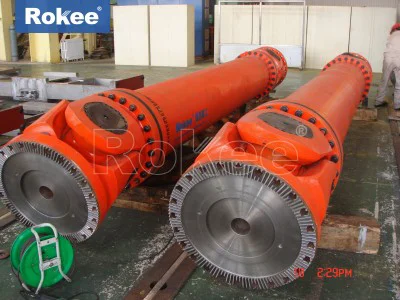
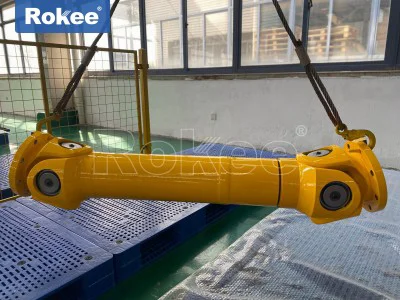
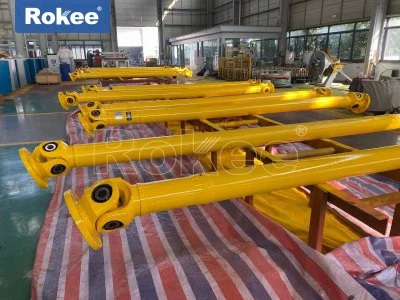
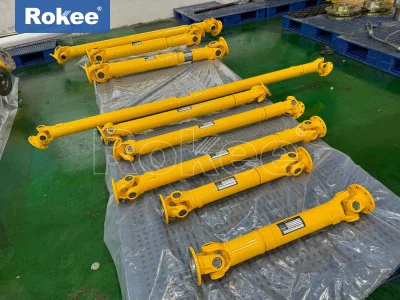
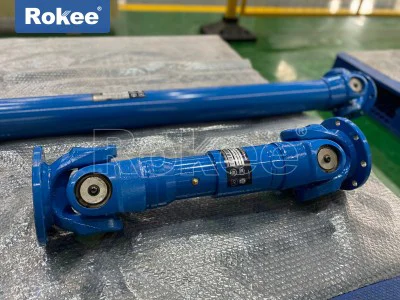
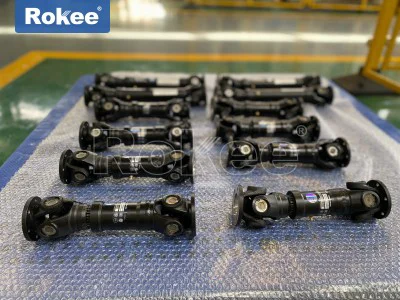
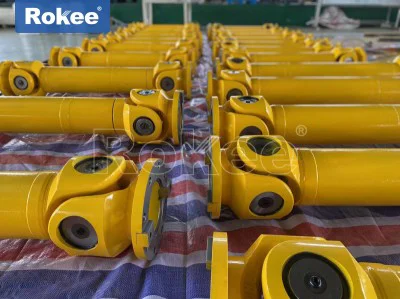
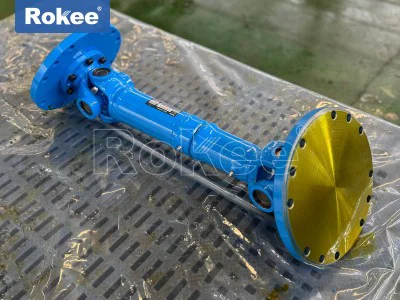
Efficient universal couplings completely reverse this passive production state by virtue of their unique flexible transmission structure and excellent dynamic compensation performance. Different from rigid transmission parts, universal couplings feature a flexible connection design that can effectively compensate for angular deviation, axial displacement, and radial offset generated during the operation of PU sandwich panel line. This adaptive compensation capability ensures continuous, stable, and accurate power transmission between motors, reduction gears, rollers, pressing equipment, and conveying units, even under complex working conditions with minor mechanical deviations. The optimized transmission system eliminates abnormal speed fluctuations and operating asynchronization of each production link, maintaining consistent operating rhythm and precise parameter matching throughout the entire production process from raw material feeding to finished product output.
The improvement of transmission stability directly drives comprehensive upgrading of PU sandwich panel product quality. With synchronous and constant-speed operation of all production units, the feeding volume of metal surface materials and the injection volume of polyurethane foaming materials maintain a highly consistent matching state, ensuring uniform foaming density and full bonding of the sandwich core layer without hollowing or delamination phenomena. The stable pressing pressure and uniform operating speed of composite pressing equipment enable tight and consistent bonding between the core material and surface layer of each panel, effectively avoiding partial degumming and poor adhesion that often occur in traditional production processes. The fixed-length cutting unit operates with stable precision, ensuring consistent dimensional specifications and neat edges of finished panels, greatly reducing dimensional errors and appearance defects. Long-term production practice verifies that production lines equipped with high-performance universal couplings achieve significantly improved product qualification rates, with effectively controlled batch quality differences and remarkably enhanced overall product stability and durability.
In addition to prominent quality improvement effects, universal couplings bring substantial cost reduction benefits for PU sandwich panel production from multiple dimensions including equipment operation, energy consumption, maintenance, and material utilization. First of all, the flexible buffering performance of universal couplings can effectively absorb mechanical vibration and impact load generated during equipment start-up, operation, and variable-speed adjustment. This vibration damping effect greatly reduces friction wear and fatigue damage of key transmission parts and precision equipment components, extending the service life of the entire transmission system and core production equipment. Traditional rigid transmission structures bear rigid impact during operation, leading to frequent aging and damage of parts, requiring regular replacement and frequent equipment maintenance. In contrast, universal couplings reduce equipment failure frequency and part replacement frequency by stabilizing operating conditions, cutting down daily maintenance workload and spare part consumption.
Secondly, efficient transmission performance optimizes energy utilization efficiency of the entire production line. Traditional transmission connections have high power loss during operation due to poor fitting accuracy and unstable power transmission, resulting in invalid energy consumption. High-quality universal couplings achieve extremely high transmission efficiency with minimal power loss in the power transmission process. Under the same production load and output requirements, the optimized transmission system effectively reduces overall energy consumption of the production line, realizing long-term energy-saving operation. For large-scale continuous PU sandwich panel production enterprises, this stable energy-saving effect accumulates into considerable operational cost savings over long-term production cycles, greatly improving the energy utilization level and economic operation efficiency of the production line.
Material waste reduction constitutes another key cost advantage brought by universal couplings. In traditional production modes, product defects and dimensional errors caused by transmission instability generate a large amount of scrap materials and rework costs. Unqualified panels with unqualified bonding, uneven thickness, and dimensional deviation can only be scrapped or repaired repeatedly, resulting in waste of polyurethane raw materials, metal sheet materials, and labor costs. After applying universal couplings to stabilize production accuracy and operation consistency, the scrap rate and rework rate of products are significantly reduced, maximizing the utilization rate of raw materials. The reduction of defective products also saves a large amount of labor resources consumed in product inspection, rework processing, and waste disposal, optimizing human resource allocation and reducing invisible production management costs.
Furthermore, the operational stability of universal couplings effectively improves the continuous production capacity of PU sandwich panel lines. Continuous industrial production is extremely sensitive to equipment shutdown risks; frequent equipment failures, debugging adjustments, and abnormal shutdowns caused by transmission system problems will seriously disrupt production schedules, reduce production efficiency, and delay product delivery cycles. The reliable structural stability and anti-fatigue performance of universal couplings adapt to long-term uninterrupted heavy-load operation, effectively avoiding sudden equipment shutdowns and production interruptions caused by transmission link failures. Stable continuous production operation eliminates efficiency losses caused by frequent start-stop and repeated debugging of equipment, significantly improving unit time output and overall production efficiency of the production line. The improvement of production efficiency enables enterprises to complete production tasks with more compact cycles, optimize production scheduling, and create greater production benefits without expanding production scale.
With the continuous upgrading of the PU sandwich panel manufacturing industry towards high precision, high efficiency, and low consumption, the optimization of transmission system components has become a key breakthrough point for enterprises to enhance core competitiveness. In the past, most production optimization measures focused on upgrading main production equipment and adjusting production processes, while ignoring the important role of basic transmission connecting components in determining production quality and operating costs. The practical application of universal couplings fully proves that seemingly trivial basic mechanical components can produce profound optimization effects on the entire production system. By solving fundamental transmission pain points such as misalignment deviation, unstable power output, and large vibration impact, universal couplings build a stable and efficient operation foundation for PU sandwich panel production lines.
In actual industrial application scenarios, the adaptability of universal couplings is fully reflected in complex production environments. PU sandwich panel production involves variable load changes, temperature changes, and long-term continuous operation, which pose high requirements on the stability and adaptability of transmission components. Universal couplings with optimized structural design can maintain stable working performance under variable working conditions, without transmission efficiency attenuation or structural failure caused by environmental changes and load fluctuations. This excellent environmental adaptability ensures long-term stable operation of the production line, avoiding frequent performance attenuation of transmission components that require regular calibration and replacement, further reducing long-term operation and maintenance costs of enterprises.
The dual value of quality improvement and cost reduction brought by universal couplings also helps PU sandwich panel manufacturing enterprises achieve sustainable and standardized development. Stable product quality can effectively improve product consistency and market reputation, helping enterprises maintain stable market competitiveness in the increasingly homogeneous industry competition. Continuous cost optimization reduces the comprehensive production and operation pressure of enterprises, improves profit margins, and provides sufficient capital and resource support for subsequent process innovation, equipment upgrading, and technological research and development. In the long run, the application of efficient universal couplings is not only a simple equipment component upgrade but also a systematic optimization of production operation mode, guiding the entire production process to develop towards high precision, low loss, and high efficiency.
In conclusion, efficient universal couplings solve the core transmission problems that restrict the quality improvement and cost control of PU sandwich panel production lines through their unique flexible compensation, stable transmission, vibration damping and energy-saving advantages. They eliminate product quality defects caused by unstable transmission, improve product qualification rate and quality consistency, and effectively reduce comprehensive production costs in terms of equipment maintenance, energy consumption, material waste, and production efficiency loss. As an indispensable core basic component of modern optimized PU sandwich panel production lines, universal couplings provide solid mechanical support for the high-quality, low-consumption, and high-efficiency operation of the production industry, and become an important technical means for manufacturing enterprises to realize lean production and benefit upgrading in the context of industrial upgrading.