High Quality Cardan Shaft
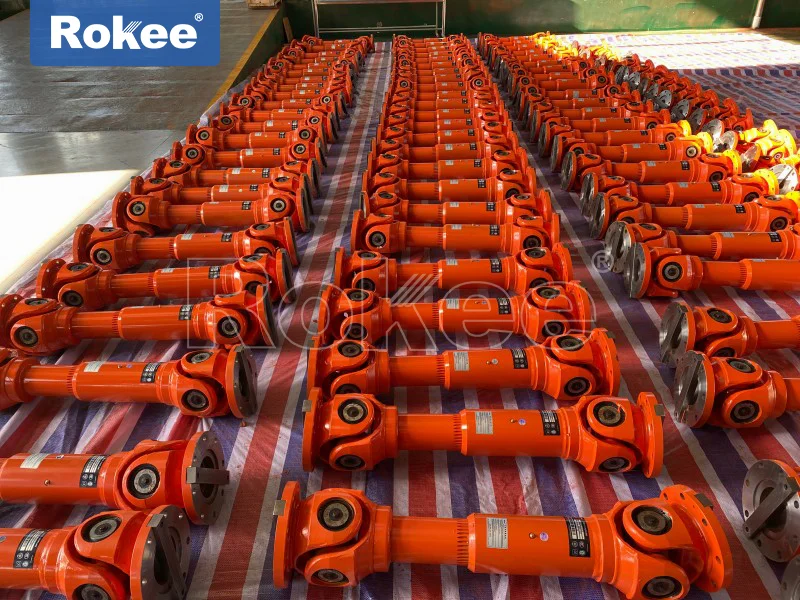
A high-quality cardan shaft, also widely referred to as a universal drive shaft, stands as a cornerstone component in modern mechanical transmission systems, engineered to transfer torque and rotational motion between two shafts that are not aligned on a single axis, with varying degrees of angular, axial, and radial misalignment. Unlike rigid drive shafts that demand perfect shaft alignment and fail to accommodate positional shifts during operation, premium cardan shafts combine robust structural design, precise machining, and durable material selection to deliver consistent performance under diverse operating conditions, making them indispensable across countless industrial and mechanical applications.
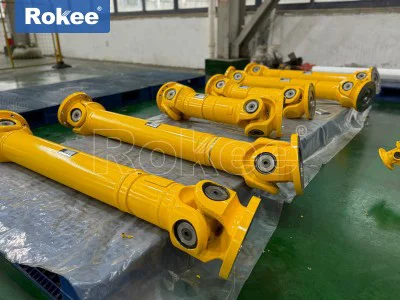
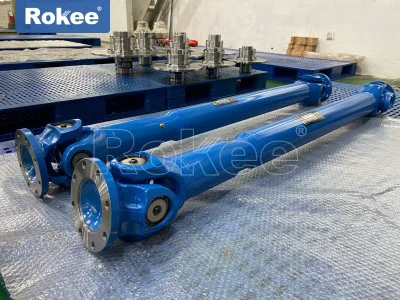
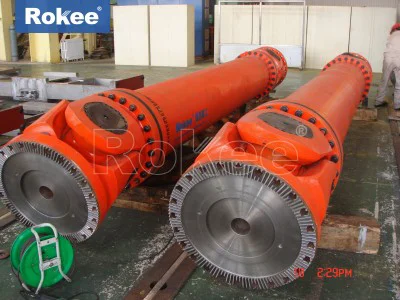
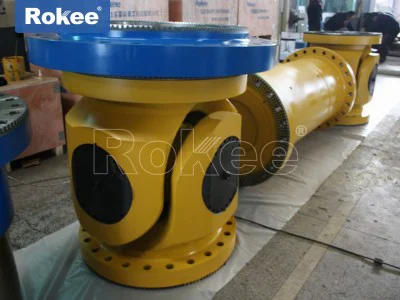
At its core, the structural design of a high-quality cardan shaft is tailored to balance flexibility, load-bearing capacity, and transmission efficiency, with every component crafted to withstand mechanical stress, friction, and environmental wear. The fundamental structure typically consists of several key interconnected parts: universal joint assemblies, a central drive shaft (often telescopic for length adjustment), fork heads, cross shafts, bearing components, and fastening hardware. The universal joint, the heart of the cardan shaft, is most commonly designed as a cross-type joint in standard high-performance models, featuring a rigid cross-shaped pivot that connects two perpendicular fork heads attached to the input and output shafts. This cross-shaft assembly is fitted with precision bearings—usually needle roller bearings or high-strength sliding bearings—at each of its four ends, enabling smooth rotational movement and reducing frictional resistance even under heavy loads. The central shaft body, constructed from high-grade alloy steel or carbon steel with specialized heat treatment, serves as the main torque transmission channel; its telescopic design, achieved through spline or sliding sleeve connections, allows for axial length compensation, addressing installation tolerances and thermal expansion or contraction that occur during continuous operation. High-quality cardan shafts also feature reinforced fork heads with integrated or welded construction, eliminating weak points that could fail under dynamic stress, and precision-machined mating surfaces to ensure tight, stable connections with adjacent mechanical components. Advanced structural optimizations further refine performance, such as balanced shaft profiles to minimize centrifugal vibration at high speeds, sealed bearing cavities to prevent contamination from dust, moisture, or debris, and streamlined profiles to reduce wind resistance in high-speed applications. Every structural element is engineered to work in harmony, ensuring that the cardan shaft can maintain reliable power transmission while accommodating angular misalignments ranging from a few degrees to more than 45 degrees in specialized designs, without compromising torque delivery or operational stability.
The performance characteristics of high-quality cardan shafts are defined by a unique blend of mechanical properties that set them apart from standard transmission components, making them suitable for demanding operating environments. Foremost among these is exceptional torque transmission capacity, engineered to handle both steady static loads and sudden dynamic shocks without deformation or failure. Premium cardan shafts are rated to transmit torque across a wide spectrum, from relatively low values in light-duty precision equipment to extremely high torque loads in heavy industrial machinery, with material strength and structural rigidity calibrated to match these load requirements. Another critical performance trait is angular misalignment compensation, a defining feature that allows the shaft to operate efficiently even when input and output shafts are offset or angled relative to one another; this flexibility eliminates the need for ultra-precise installation alignment and accommodates positional shifts caused by equipment vibration, load fluctuations, or mechanical wear over time. High-quality cardan shafts also exhibit superior transmission efficiency, minimizing power loss through friction and rotational resistance, which not only reduces energy consumption but also lowers heat generation during prolonged operation, extending the service life of both the shaft and connected components. Dynamic balance is a key performance metric for high-speed applications, with precision machining and counterbalancing ensuring minimal vibration and noise even at elevated rotational speeds, preventing premature bearing failure and equipment damage. Durability and wear resistance further enhance performance, with heat-treated components, corrosion-resistant surface finishes, and high-performance bearing materials enabling the shaft to operate reliably in harsh conditions—including extreme temperatures, dusty industrial settings, and moist or mildly corrosive environments. Additionally, these shafts offer consistent operational stability, maintaining uniform torque delivery and rotational speed across varying load conditions, with no significant drop-off in performance even under sustained heavy use. Unlike inferior alternatives, high-quality cardan shafts exhibit minimal backlash, ensuring precise power transmission and reducing mechanical play that can lead to inaccurate motion control in precision machinery. Collectively, these performance attributes make high-quality cardan shafts a reliable choice for applications where consistency, durability, and flexibility are non-negotiable.
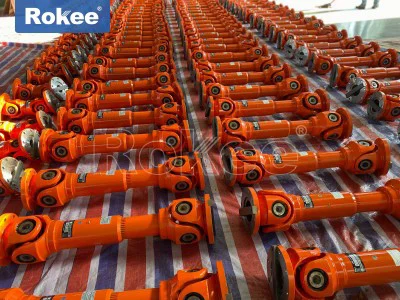
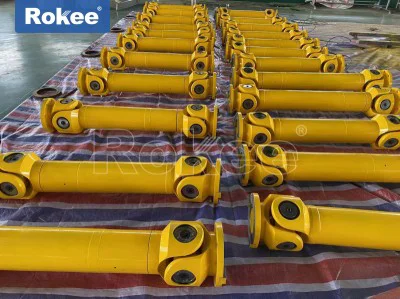
High-quality cardan shafts are classified into distinct categories based on structural design, load-bearing capacity, operational speed, and intended application, with each type engineered to excel in specific operating scenarios. The most common classification is based on load capacity, dividing shafts into light-duty, medium-duty, heavy-duty, and extra-heavy-duty variants. Light-duty cardan shafts feature a compact, lightweight design with smaller cross shafts and fork heads, optimized for low-torque, high-speed applications where space is limited and load demands are moderate; they prioritize smooth operation and precision over extreme load capacity, making them ideal for precision instruments, small industrial machinery, and light automotive systems. Medium-duty cardan shafts strike a balance between load capacity and operational flexibility, featuring reinforced structural components and moderate torque ratings to handle steady intermediate loads and occasional shocks; these versatile shafts are the most widely used across general industrial equipment, commercial vehicles, and agricultural machinery, offering reliable performance for everyday transmission needs. Heavy-duty cardan shafts are built with thickened, high-strength shaft bodies, oversized universal joints, and heavy-duty bearings, engineered to withstand extremely high torque loads, heavy continuous loads, and severe mechanical shocks; they are designed for low to moderate operating speeds, as their robust construction prioritizes load-bearing capacity over high-speed balance. Extra-heavy-duty cardan shafts represent the pinnacle of load-bearing design, featuring massive structural components, specialized alloy materials, and reinforced joint assemblies, capable of handling the most extreme torque and load conditions in large-scale industrial machinery. Classification can also be based on structural design, including single universal joint shafts, double universal joint shafts, and ball cage universal joint shafts. Single universal joint shafts feature a basic design with one joint at each end, simple to manufacture and maintain, suitable for applications with small to moderate angular misalignments; however, they may exhibit minor speed fluctuations at larger angles, making them better suited for low-speed, high-load use. Double universal joint shafts incorporate two sets of universal joints connected by an intermediate shaft, eliminating speed fluctuations and allowing for greater angular misalignment compensation, delivering smoother power transmission for long-distance drive systems and high-speed applications. Ball cage cardan shafts feature a spherical ball and cage assembly instead of a cross shaft, enabling near-constant velocity transmission, smoother operation, and higher speed capability, ideal for precision automotive systems and high-speed industrial equipment where vibration and speed inconsistency must be minimized. Additional classifications include telescopic cardan shafts for axial length adjustment, fixed-length cardan shafts for permanent installations, and specialized shafts for unique operating conditions, each tailored to meet specific mechanical transmission requirements.
The versatility of high-quality cardan shafts, combined with their robust performance and flexible design, has led to their widespread adoption across nearly every sector of modern industry, serving critical roles in a vast array of mechanical systems and equipment. In the automotive and transportation sector, these shafts are integral components of drive systems, connecting the gearbox to the drive axle in passenger vehicles, commercial trucks, buses, and off-road vehicles; they accommodate the vertical movement of suspension systems and angular shifts during steering, ensuring consistent power delivery to the wheels even over uneven terrain. In agricultural machinery, cardan shafts are essential for connecting tractors to a wide range of implements, including mowers, balers, seeders, plows, and harvesters, transmitting power from the tractor’s power take-off to the implement’s working components while adapting to the uneven ground and variable angles encountered in field operations. The construction and heavy machinery industry relies heavily on heavy-duty cardan shafts for equipment such as excavators, loaders, cranes, bulldozers, and concrete mixers, where they transfer high torque in harsh, dusty, and high-vibration environments, enabling the operation of hydraulic systems, rotating booms, and drive mechanisms. In the metallurgical and steel manufacturing industry, extra-heavy-duty cardan shafts are used in rolling mills, continuous casting machines, and metal processing equipment, withstanding extreme torque loads, high temperatures, and continuous operation to drive rolling rollers and conveyor systems. The energy and power generation sector utilizes cardan shafts in wind turbines, water turbines, gas turbines, and generator sets, connecting power sources to drive systems and compensating for shaft misalignment caused by structural movement or thermal expansion. Marine and shipbuilding applications employ specialized cardan shafts for propulsion systems, deck machinery, and steering systems, engineered to resist moisture and corrosion while transmitting power efficiently in marine environments. Precision manufacturing and industrial machinery, including machine tools, printing presses, packaging equipment, and conveyor systems, use light and medium-duty cardan shafts for precise, low-vibration power transmission, ensuring accurate motion control and consistent operational performance. Beyond these core sectors, cardan shafts also find use in aerospace equipment, railway vehicles, mining machinery, and material handling systems, wherever there is a need to transmit rotational power between misaligned shafts. Their adaptability to diverse operating conditions, combined with reliable performance and long service life, makes high-quality cardan shafts a foundational component in the global mechanical engineering landscape, supporting the operation of critical equipment across countless industrial and commercial applications.
In summary, high-quality cardan shafts represent a pinnacle of mechanical transmission engineering, merging thoughtful structural design, exceptional performance capabilities, and targeted classification to meet the diverse needs of modern machinery. Their ability to compensate for shaft misalignment, transmit high torque efficiently, and operate reliably in demanding environments distinguishes them as irreplaceable components in countless transmission systems. As industrial technology continues to advance and equipment demands grow more stringent, the role of high-quality cardan shafts will only expand, with ongoing refinements in material science, structural engineering, and manufacturing processes further enhancing their performance, durability, and versatility. Whether in light-duty precision equipment or heavy-duty industrial machinery, these shafts continue to deliver consistent, efficient power transmission, underscoring their vital importance in the seamless operation of global industrial and mechanical systems.