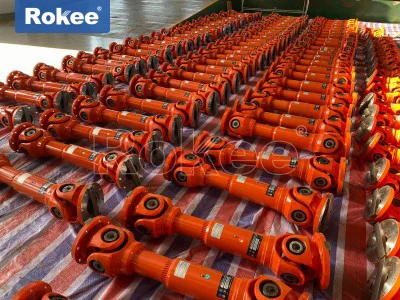
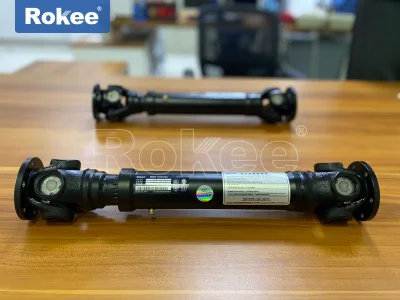
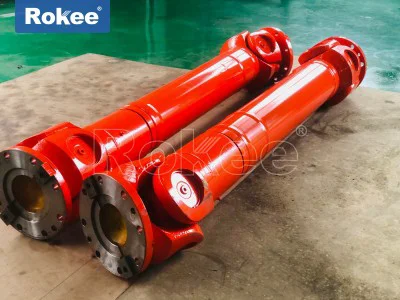
Light Duty Cardan Drive Shaft
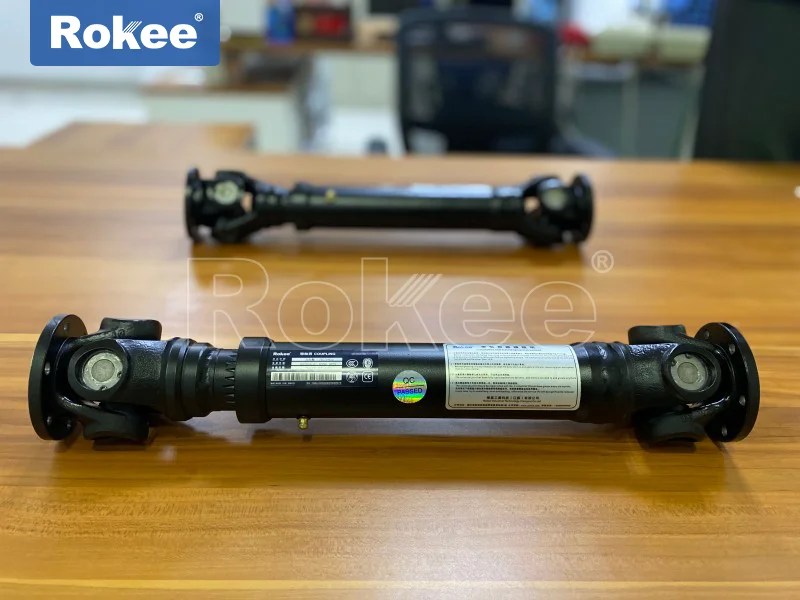
Light duty cardan drive shaft, also known as light-duty universal drive shaft, is a fundamental flexible power transmission component widely applied in light-load mechanical systems. Designed specifically for moderate torque and low-load operating scenarios, this mechanical part serves to transmit rotational power and torque between two non-coaxial shafts, effectively compensating for angular, axial and radial misalignments between driving and driven equipment. Different from heavy-duty cardan shafts built for high-torque and harsh industrial environments, light-duty versions feature a lightweight and compact structure, flexible operation, low friction loss and stable transmission performance. It is commonly configured with precision cross joints, thin-wall hollow shaft tubes and high-precision needle roller bearings, enabling smooth power transmission with minimal mechanical vibration and noise. As a core connecting part in light machinery transmission systems, it supports continuous and stable operation of small automated equipment, household mechanical devices, light commercial machinery and miniature transmission systems, playing an irreplaceable role in optimizing mechanical transmission efficiency and improving equipment operational stability in low-load application scenarios.
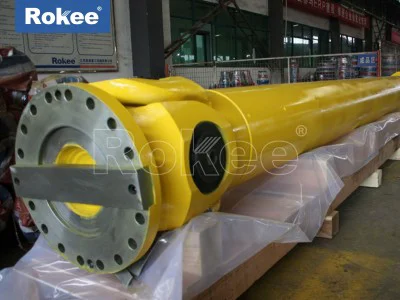
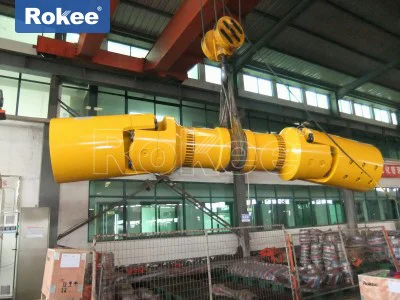
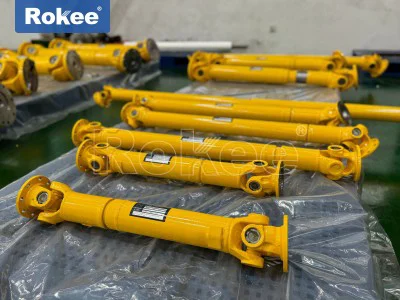
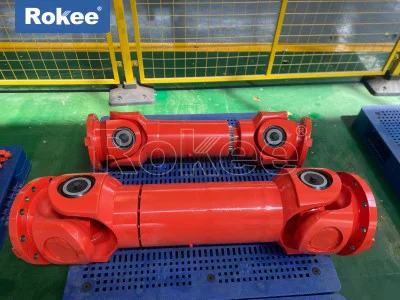
The structural composition of light duty cardan drive shafts is precisely optimized to adapt to light-load working conditions, with every component designed to balance lightweight performance and structural stability. The core structure mainly consists of fork-shaped yokes, a central cross spider, precision needle roller bearings and hollow shaft bodies, forming a flexible universal connection mechanism with high coordination accuracy. The paired yokes are fixed on the input and output shafts respectively, and the central cross spider penetrates the bearing holes of the two yokes to form a mutually perpendicular rotating structure, which allows the shaft to perform angular deflection in multiple directions during operation. Different from heavy-duty solid shaft structures, light-duty cardan drive shafts adopt thin-wall hollow shaft tubes, which greatly reduce the overall weight and rotational centrifugal force without affecting basic torsional rigidity. The built-in needle roller bearings minimize sliding friction between moving parts, avoiding excessive wear and energy loss during long-term continuous operation. All structural components adopt streamlined modular design, which not only simplifies the overall mechanical layout but also ensures that the drive shaft can maintain flexible rotation and stable power output under small-angle deflection and slight position offset conditions, fully adapting to the operational characteristics of light mechanical equipment.
The working principle of light duty cardan drive shafts relies on the flexible deflection characteristics of universal joint structures to realize non-coaxial power transmission. When the power input shaft rotates, the driving yoke drives the central cross spider to move synchronously, and the cross spider further transmits rotational torque to the driven yoke and the output shaft, completing continuous power transmission. The unique spatial motion structure of the cross joint allows the input and output shafts to form a certain angular deviation, realizing normal power transmission even when the two shafts are not completely centered. In the working process, the needle roller bearings between the cross spider and yoke holes can freely roll and adapt to the angle change of the shaft body, effectively eliminating mechanical jamming and transmission lag caused by shaft misalignment. Although single cardan joints will produce slight periodic speed fluctuation under large-angle deflection, this fluctuation is negligible in light-load and low-speed operating environments, which will not affect the overall operation stability of light machinery. For scenarios requiring higher transmission stability, paired double cardan joint structures can be adopted to offset speed differences, ensuring constant and uniform torque output throughout the power transmission process.
Light duty cardan drive shafts possess distinct performance advantages that make them highly adaptable to low-torque and continuous operation scenarios. First of all, its lightweight structural design effectively reduces the overall load of mechanical equipment, lowers the energy consumption required for shaft body rotation, and improves the energy utilization rate of light machinery operation. The optimized friction matching structure greatly reduces mechanical wear during operation, extending the service life of transmission components and reducing frequent replacement and maintenance costs of parts. In addition, this type of drive shaft has excellent vibration damping and noise reduction performance; its flexible connection structure can absorb tiny mechanical vibrations generated during equipment operation, avoid vibration resonance of the transmission system, and reduce operating noise to a low level. It also features strong installation adaptability, allowing a certain range of installation errors and position deviations, which simplifies the equipment assembly process and improves installation efficiency. Under normal working conditions, it can operate stably for a long time without frequent lubrication and debugging, showing high operational reliability and environmental adaptability in conventional indoor and mild outdoor working environments.
The application scope of light duty cardan drive shafts covers various fields of light mechanical transmission, serving as a key connecting component for small and miniature mechanical equipment. In the field of automated miniature production equipment, it is widely used in small conveyor lines, precision sorting equipment and light assembly machinery, realizing stable power transmission between distributed power components and ensuring the precise and continuous operation of automated production processes. In household and civil mechanical equipment, it is applied to small power transmission structures of fitness equipment, small processing machinery and daily mechanical devices, providing flexible and reliable power connection for light-load mechanical movements. In light commercial machinery and auxiliary equipment, it matches the transmission needs of small agricultural machinery, light cleaning equipment and portable mechanical tools, adapting to frequent start-stop and low-load continuous working modes. Moreover, it is also commonly used in experimental mechanical devices and miniature industrial transmission systems, where its compact size, flexible movement and stable transmission performance can fully meet the precise and low-power operation requirements of small mechanical systems.
Material selection for light duty cardan drive shafts focuses on balancing lightweight characteristics, wear resistance and structural toughness to adapt to long-term light-load operation. The shaft body is mostly made of high-quality alloy steel with low density and good torsional resistance, which effectively reduces the self-weight of the drive shaft while ensuring that the shaft body will not deform or twist under rated light torque. The central cross spider adopts quenched and tempered alloy materials, which improve surface hardness and wear resistance, resisting friction loss and mechanical fatigue caused by long-term reciprocating deflection. The needle roller bearings are made of high-precision bearing steel with excellent smoothness and pressure resistance, ensuring flexible rolling movement and reducing transmission resistance. The surface of key components is treated with anti-rust and anti-corrosion processes, which can resist mild environmental erosion such as air humidity and dust, avoiding component rust and performance degradation. The overall material matching abandons heavy high-strength materials used in heavy-duty drive shafts, selecting lightweight and cost-effective materials that meet light-load working standards, realizing the optimal balance between structural performance, equipment energy consumption and service life.
Daily maintenance and fault prevention of light duty cardan drive shafts are simple and convenient, adapting to the low-maintenance operation needs of light mechanical equipment. In conventional use, regular visual inspection of the shaft body, universal joint and bearing components is the core maintenance measure, focusing on checking for surface wear, slight deformation, loose connection and abnormal gaps between components. Appropriate lubrication of the universal joint and bearing parts at regular intervals can effectively reduce friction and wear, avoid dry friction caused by insufficient lubrication, and maintain flexible rotation performance. During equipment operation, attention should be paid to avoiding overload use and excessive deflection angle, as long-term overload torque and ultra-large-angle rotation will accelerate component wear and cause transmission accuracy decline. For long-term idle equipment, regular dust removal and anti-rust protection of the drive shaft are required to prevent dust accumulation and moisture corrosion from affecting subsequent use. Timely replacement of severely worn bearings and aging connecting parts can ensure the long-term stable operation of the transmission system, greatly reducing the failure rate of light mechanical equipment in daily operation.
With the continuous upgrading of light mechanical manufacturing and miniature automation technology, light duty cardan drive shafts are evolving towards more precise, lightweight and intelligent optimization. Modern processing technology is applied to further improve the machining accuracy of shaft bodies and universal joint components, reducing transmission errors and speed fluctuation, and improving the overall precision of power transmission. Structural design is constantly optimized to achieve smaller volume and lighter weight while maintaining basic transmission performance, making it more adaptable to compact miniature mechanical equipment. Meanwhile, new wear-resistant and anti-corrosion composite materials are gradually applied to component manufacturing, further extending service life and enhancing environmental adaptability in complex mild working conditions. In the future, with the rapid development of small intelligent equipment and civilian light machinery industries, light duty cardan drive shafts will gain broader application space, and their performance optimization and structural innovation will continuously support the efficient and stable operation of various light-load mechanical transmission systems.