Impact Resistance Of Industrial Cardan Shaft Adapting To The Working Conditions Of PU Sandwich Panel Line

The stable operation of industrial transmission systems serves as the core guarantee for the continuous production of PU sandwich panel lines, and the industrial cardan shaft, as a key power transmission component connecting driving and driven equipment, undertakes the task of transmitting torsional force and compensating for installation deviation and dynamic displacement during the production process. The working environment and operation rhythm of PU sandwich panel production present unique and complex impact load characteristics, which put forward higher requirements for the impact resistance, structural stability and fatigue resistance of cardan shafts. Different from the uniform and stable operating conditions of general mechanical transmission equipment, the PU sandwich panel line involves frequent start-stop cycles, intermittent material impact, dynamic load fluctuation and continuous vibration impact in the processes of raw material feeding, foaming molding, continuous pressing and fixed-length cutting. These complex dynamic loads will act on the cardan shaft for a long time, easily causing local stress concentration, structural fatigue damage and instantaneous deformation failure of the transmission component. Therefore, in-depth analysis of the impact resistance mechanism of industrial cardan shafts under the special working conditions of PU sandwich panel lines, exploration of the interaction law between structural parameters, material properties and working condition impact loads, and summary of effective adaptive optimization methods are of great significance to improving the service stability and service life of transmission systems in sandwich panel production lines.
The typical working condition impact characteristics of PU sandwich panel line are formed by the continuous and automated production process of composite thermal insulation panels, showing periodicity, intermittency and randomness in load impact. In the continuous pressing and forming stage of PU sandwich panels, the production line equipment maintains high-speed and continuous operation, and the cardan shaft needs to bear stable torsional load for a long time. However, in the link of plate feeding and material switching, the uneven contact between the base plate and the conveying roller table will produce instantaneous impact force, which is transmitted to the cardan shaft through the transmission roller. Meanwhile, the periodic opening and closing of the pressing die and the dynamic adjustment of the pressing gap will cause instantaneous fluctuation of equipment operating resistance, forming periodic torsional impact on the transmission shaft system. In the fixed-length cutting and finished product output stage of the production line, the sudden change of equipment operating load caused by cutting resistance and material unloading will generate random impact loads, which superimpose with the continuous vibration generated by the high-speed operation of the equipment, forming a complex composite impact working environment for the cardan shaft. In addition, the long-term continuous operation mode of industrial production lines makes the cardan shaft in a state of alternating impact load for a long time. The repeated action of micro-impact and instantaneous strong impact will continuously accumulate structural fatigue damage, which is the main inducement of transmission component failure in daily production.
The impact resistance performance of industrial cardan shafts is fundamentally determined by material mechanical properties and structural design characteristics, and excellent material toughness and reasonable structural configuration are the core basis for adapting to the impact working conditions of PU sandwich panel lines. High-quality alloy steel materials processed by professional heat treatment processes are widely used in the manufacturing of heavy-duty industrial cardan shafts, which have excellent comprehensive mechanical properties of high strength and high toughness. After carburizing, quenching and tempering composite heat treatment, the surface layer of the shaft body and universal joint parts forms a high-hardness wear-resistant structure, while the core part maintains a high-toughness matrix structure. This gradient mechanical property distribution enables the cardan shaft to resist surface wear and instantaneous impact extrusion damage under dynamic load, and the tough core can absorb and buffer impact energy through micro elastic deformation, avoiding instantaneous brittle fracture of the structure under strong impact load. Compared with ordinary carbon steel materials, optimized alloy steel materials have better impact energy absorption capacity and fatigue crack growth resistance, which can effectively cope with the repeated alternating impact loads in the continuous production process of sandwich panels.
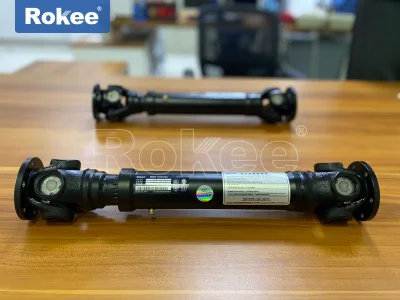
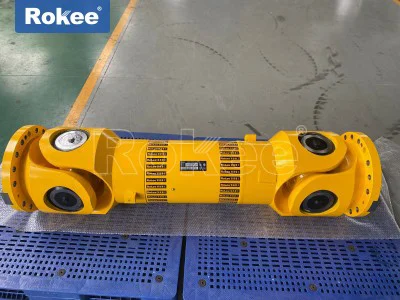
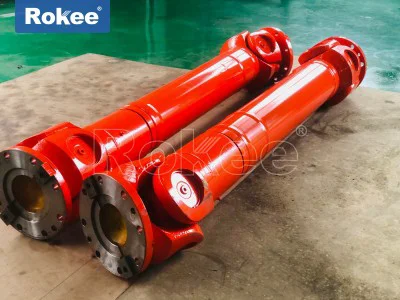
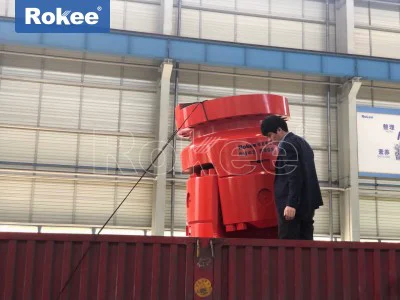
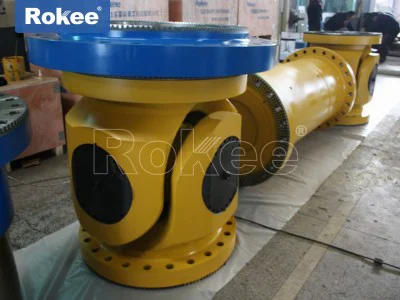
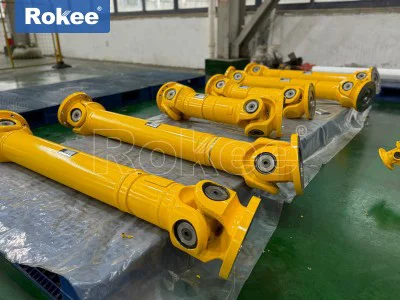
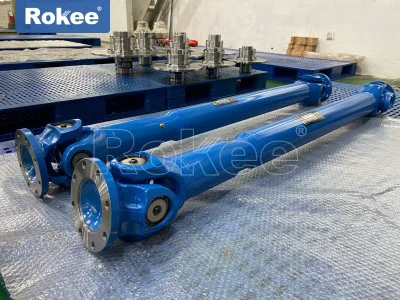
Structural design optimization further enhances the impact resistance and dynamic stability of cardan shafts in complex working conditions. The universal joint part, as the key stress and impact bearing area of the cardan shaft, adopts reinforced oversized bearing structure and optimized arc transition design at the stress concentration position. The enlarged contact area of the bearing pair reduces the unit stress under impact load, avoids local overload deformation and friction ablation, and improves the structural impact bearing limit. The integrated casting and forming process of the shaft fork eliminates structural defects such as assembly gaps and welding stress existing in traditional assembled structures, making the internal metal structure more compact and uniform, effectively improving the overall structural rigidity and impact resistance. The middle shaft tube adopts a lightweight and high-rigidity structural design, with reasonable wall thickness matching and dynamic balance calibration, which can effectively reduce the vibration amplitude and dynamic load superposition caused by high-speed operation, and weaken the secondary impact effect of equipment operation on the transmission shaft system. In addition, the telescopic sliding structure of the cardan shaft can automatically compensate for the axial displacement and angular deviation of the equipment during operation, avoid additional bending stress and torsional impact caused by installation deviation and equipment vibration, and further improve the adaptive capacity of the shaft system to variable impact working conditions.
In the actual operation process of PU sandwich panel lines, the failure modes of cardan shafts caused by impact loads show obvious industrial characteristics, mainly including fatigue crack initiation and expansion, universal joint wear and jamming, and shaft body deformation and torsion failure. Under the long-term action of periodic micro-impact loads, tiny stress concentration points are easily formed at the transition fillet, bearing installation position and structural section mutation of the cardan shaft. With the increase of production operation time, the accumulated fatigue damage leads to the initiation of micro-cracks, and the continuous impact load will promote the gradual expansion of cracks. When the crack extends to the critical size, the structural bearing capacity drops sharply, resulting in shaft body fracture and transmission system failure. The frequent instantaneous impact will also cause relative impact friction between the universal joint cross shaft and the bearing, resulting in early wear of the bearing roller and raceway, reducing the rotation flexibility of the universal joint. Severe wear will lead to jamming of the universal joint during operation, causing instantaneous overload of the transmission system and forming stronger impact feedback, which accelerates the damage of the transmission components. In addition, the superposition of extreme instantaneous impact load and long-term torsional load will cause irreversible plastic deformation of the shaft body, resulting in shaft bending, torsional deformation and other problems, making the transmission operation unstable and affecting the forming accuracy and production continuity of PU sandwich panels.
To adapt to the severe impact working conditions of PU sandwich panel lines, the impact resistance optimization of industrial cardan shafts needs to be carried out from multiple dimensions of material modification, structural improvement and dynamic matching. In terms of material optimization, on the basis of selecting high-toughness alloy steel, the heat treatment process parameters are precisely adjusted to optimize the depth of the carburized layer and the matching of surface and core hardness, so as to ensure that the structure has both high wear resistance and sufficient impact toughness, and improve the fatigue resistance under repeated impact loads. The surface precision grinding process is adopted to reduce the surface roughness of key stress parts, eliminate tiny surface defects that may induce stress concentration, and delay the initiation of fatigue cracks under impact load. In terms of structural optimization, finite element dynamic simulation technology is used to analyze the stress distribution and impact response characteristics of the cardan shaft under the actual working condition load of the production line, identify the weak structural parts under impact load, and carry out local reinforcement and structural rounding optimization to eliminate stress concentration points. The optimized universal joint pivot structure and reinforced bearing assembly design can improve the structural impact resistance and load uniformity, and avoid local overload damage.
The dynamic matching optimization between the cardan shaft and the production line equipment working condition is also a key link to improve the impact resistance adaptability. According to the operating speed, load fluctuation range and impact frequency of the PU sandwich panel line, the torsional rigidity and dynamic response parameters of the cardan shaft are reasonably matched to avoid the resonance phenomenon between the transmission shaft system and the equipment vibration, reduce the superposition of vibration impact and load impact, and stabilize the transmission load state. The reasonable lubrication system configuration can form a stable lubricating oil film on the friction pair surface of the universal joint and bearing, buffer the contact impact between moving parts, reduce friction and wear caused by impact load, and maintain the flexible rotation state of the transmission structure for a long time. In addition, the regular dynamic balance detection and correction of the cardan shaft during equipment operation can eliminate the unbalanced dynamic load caused by structural wear and deformation, reduce the vibration impact generated during high-speed operation, and maintain the long-term stable impact resistance of the shaft system.
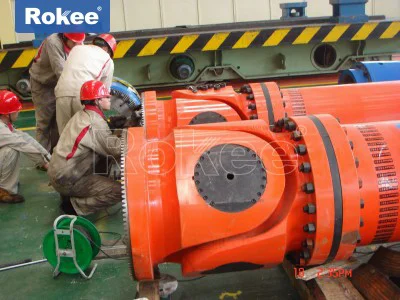
Engineering application practice shows that the optimized industrial cardan shaft has excellent impact resistance adaptability in the working environment of PU sandwich panel lines. The optimized material and structural design can effectively absorb and buffer instantaneous impact loads in feeding, pressing, cutting and other links, inhibit the initiation and expansion of structural fatigue cracks, reduce the wear and failure rate of universal joint components, and significantly extend the service cycle of transmission components. Under the condition of long-term continuous industrial operation, the optimized cardan shaft can maintain stable torsional transmission accuracy and structural integrity, avoid production interruption and product quality fluctuation caused by transmission component failure, and effectively improve the overall operation efficiency and production stability of the PU sandwich panel production line. Compared with ordinary cardan shafts, the impact-resistant optimized cardan shaft has stronger tolerance to variable impact loads and better dynamic stability, which can fully adapt to the continuous and high-intensity operation characteristics of modern automated sandwich panel production lines.
In conclusion, the complex periodic and random impact loads generated in the production process of PU sandwich panels are the key factors affecting the operating performance and service life of industrial cardan shafts. The impact resistance of cardan shafts depends on the comprehensive coordination of material mechanical properties, structural design rationality and working condition dynamic matching. Through the optimization of high-toughness wear-resistant materials, improved impact-resistant structure and dynamic working condition matching design, the industrial cardan shaft can effectively resist various impact loads in the production process, reduce fatigue damage and structural failure risks, and maintain long-term stable power transmission performance. With the continuous improvement of the automation and high-efficiency production level of PU sandwich panel lines, the working condition load of transmission equipment will become more complex and changeable. Further in-depth research on the impact dynamic response mechanism of cardan shafts, development of more efficient impact resistance optimization schemes, and improvement of the adaptive matching ability of transmission components to industrial working conditions will provide stronger technical support for the stable and efficient operation of composite plate production equipment.