Cardan Coupling Price
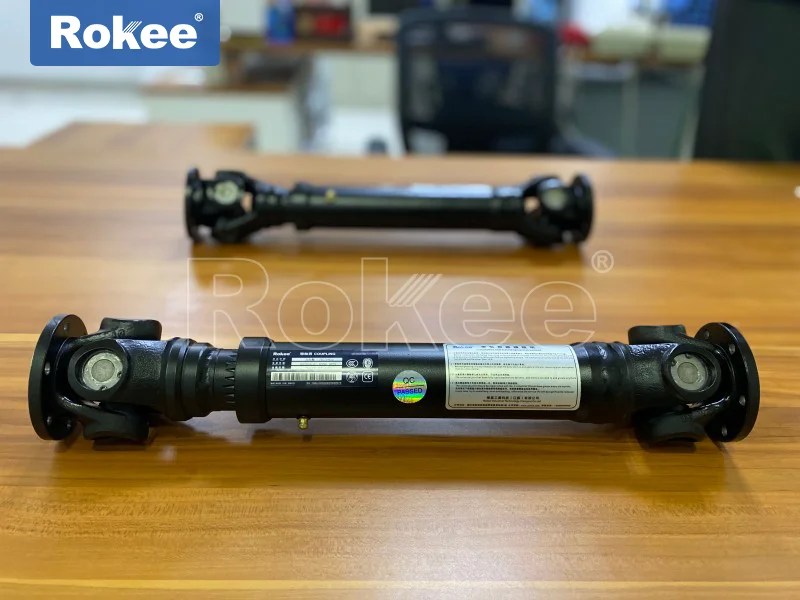
As a core flexible transmission component in modern mechanical systems, cardan coupling, also commonly known as universal joint coupling, occupies an irreplaceable position in industrial transmission fields by virtue of its unique structural flexibility and stable torque transmission capacity. Unlike rigid coupling structures that require precise coaxial alignment of transmission shafts, this mechanical component is specially designed for power transmission scenarios with angular deviation, axial displacement and dynamic shaft position changes. Its inherent structural flexibility enables continuous and efficient transmission of rotational motion and torque between two non-collinear intersecting shafts, solving the core technical pain point that traditional rigid transmission structures cannot adapt to complex and variable working conditions. With the continuous upgrading of industrial machinery, automotive transmission engineering, construction equipment and intelligent mechanical systems, the market demand for cardan coupling has maintained a steady growth trend, and its comprehensive application value and technical maturity have become key factors affecting the overall cost performance of mechanical transmission systems.
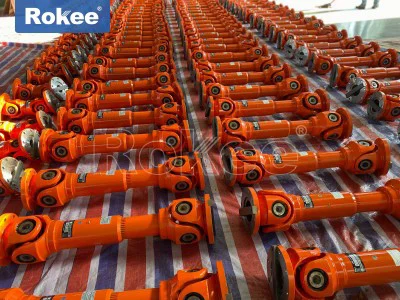
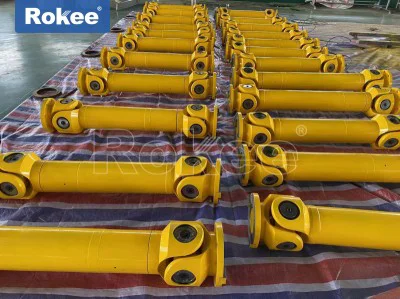
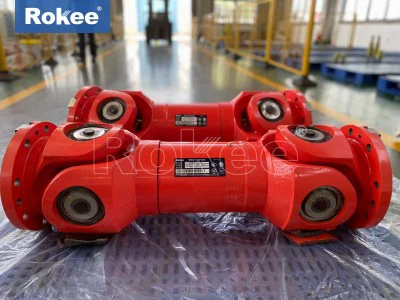
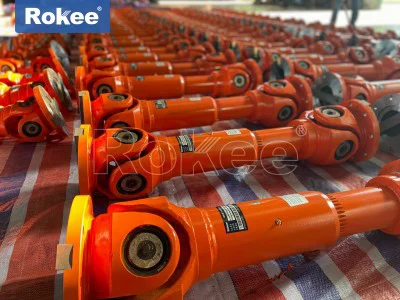
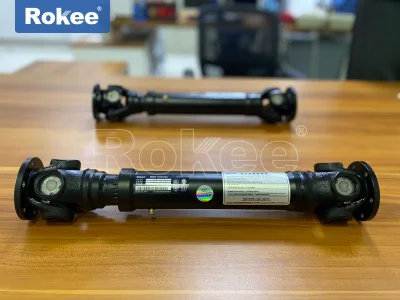
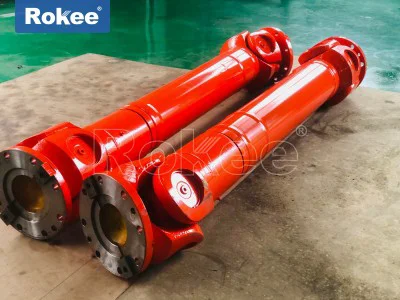
The basic structure of cardan coupling follows a classic and optimized mechanical design, which is composed of two fork-shaped yoke structures and a central cross-shaped spider component. The cross spider acts as the core connecting pivot, penetrating the bearing structures at the end of the two yokes to form two groups of mutually perpendicular hinge motion pairs. This special geometric structure allows the driving shaft and driven shaft to form a certain included angle during operation, and realizes flexible rotation compensation within a specific angle range. In conventional working scenarios, the allowable deflection angle of a single cardan coupling can cover multiple angle ranges, meeting the daily operation needs of most general mechanical equipment. For industrial scenarios requiring larger angle compensation and more stable transmission, double cardan coupling structures are widely adopted. By combining two sets of single universal joint structures with intermediate connecting components, this optimized design effectively compensates the periodic velocity fluctuation of single-joint transmission, realizing constant-speed torque transmission under large angular deviation conditions and greatly improving the stability and accuracy of power output.
The excellent working performance of cardan coupling stems from its unique mechanical motion principle and structural characteristics. In the working process, the driving shaft drives the connected yoke to rotate, and the cross spider converts the unidirectional rotational motion of the driving end into flexible rotational motion with angular compensation, and then transmits the power to the yoke and shaft body of the driven end. The hinge structure formed by the cross spider and bearings can freely adapt to the dynamic angle change between the two shafts during equipment operation. Whether the shaft angle deviation is fixed or dynamically changing with the equipment operation state, the coupling can maintain continuous power transmission without mechanical jamming, shaft body torsion or power interruption. This flexible transmission characteristic fundamentally avoids the mechanical damage caused by rigid extrusion and torsion of the shaft body in traditional coaxial transmission structures when there is installation deviation or operating displacement, and effectively extends the service life of the entire transmission system.
In terms of structural performance advantages, cardan coupling has outstanding load-bearing capacity and environmental adaptability. Its main body is made of high-strength metal materials with excellent mechanical properties, which can withstand high torque impact and alternating load in long-term industrial operation. The optimized bearing and pivot structure reduces friction resistance during rotation, ensuring high transmission efficiency while maintaining low energy consumption. Different from elastic couplings that rely on flexible deformation for compensation, the cardan coupling realizes mechanical rigid flexible compensation through pure mechanical hinge movement, which has stronger structural stability, better fatigue resistance and longer service cycle under high-load and high-frequency working conditions. In addition, the spline matching structure configured in most cardan coupling products can realize a certain range of axial displacement compensation, which can adapt to the axial shrinkage and position offset of the shaft body caused by equipment operation vibration, temperature change and mechanical wear, further improving the adaptability of the transmission system to complex working environments.
The wide application scope of cardan coupling is an important support for its stable market demand and sustainable application value. In the automotive industry, this component is a key part of the vehicle drive train system, responsible for connecting the transmission shaft and the driving wheel shaft. During vehicle driving, the suspension system will continuously produce jitter and displacement with road conditions, resulting in real-time changes in the angle and position of the drive shaft. The cardan coupling can flexibly adapt to these dynamic changes, ensuring stable and continuous power output from the engine to the wheels, and avoiding power attenuation or mechanical failure caused by chassis vibration and displacement. It is widely used in various passenger vehicles, commercial vehicles and special engineering vehicles, and is one of the essential core components to ensure vehicle driving stability and power performance.
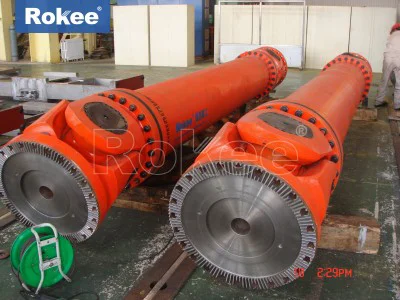
In the field of engineering machinery and construction equipment, the application value of cardan coupling is more prominent. Large-scale equipment such as excavators, loaders, cranes and bulldozers often operate in harsh working environments such as uneven ground, complex terrain and high-load operation. The internal transmission shafts of these equipment often have large angular deviation and irregular displacement due to equipment posture adjustment and load changes. The high-load cardan coupling can bear strong torque impact and severe mechanical vibration, and stably complete power transmission between the engine, hydraulic pump and walking mechanism. Its reliable flexible compensation performance effectively solves the transmission failure problem easily occurring in the operation of heavy-duty engineering equipment, and improves the overall operation stability and construction efficiency of the equipment.
In general industrial manufacturing scenarios, cardan coupling is widely used in conveyor systems, processing machinery, automation equipment and power transmission devices of mechanical processing production lines. In industrial production, affected by installation errors of equipment, mechanical wear after long-term operation and vibration during equipment operation, the coaxiality of transmission shafts is difficult to maintain absolute precision. The use of cardan coupling can effectively compensate for these installation and operation deviations, ensure the stable operation of the transmission system, reduce the failure rate of equipment shutdown caused by transmission shaft deviation, and improve the continuous operation capacity of industrial production lines. At the same time, its compact structural design saves installation space, which is suitable for various limited installation environments of industrial equipment, and has strong universal applicability.
With the rapid development of modern intelligent equipment and precision machinery, cardan coupling has also been further promoted and applied in emerging fields such as robotic equipment, aerospace auxiliary transmission systems and precision electromechanical devices. For precision mechanical equipment that requires high transmission accuracy and low vibration operation, the optimized precision cardan coupling structure can realize low-jitter and high-stability power transmission under small-angle deviation conditions, meeting the high-precision operation requirements of intelligent equipment. The diversification of application scenarios promotes the continuous iterative upgrading of cardan coupling technology, and also makes its market demand present a hierarchical and diversified development trend.
The overall value of cardan coupling in the mechanical market is not only reflected in its wide applicability, but also in its excellent comprehensive cost performance throughout the life cycle. In the equipment assembly stage, the flexible compensation performance of the coupling reduces the installation precision requirements of the transmission shaft system, lowers the assembly difficulty and time cost of equipment production, and improves the production efficiency of mechanical equipment. In the equipment operation stage, its stable transmission performance reduces the vibration and impact of the transmission system, effectively protects the engine, motor, bearing and other core components of the equipment, reduces the wear rate of key parts, and greatly lowers the daily operation failure rate and maintenance frequency of the equipment. In the long-term use process, the long service life and low maintenance characteristics of qualified cardan coupling products can effectively reduce the later operation and maintenance cost of mechanical equipment, bringing continuous economic benefits for equipment operation enterprises.
The performance differentiation of cardan coupling in the market is mainly reflected in structural design optimization, material selection precision processing technology and load adaptation range. Different application scenarios have completely different performance requirements for couplings. Light-duty precision equipment needs products with high precision, low friction and small rotation gap, while heavy-duty engineering equipment requires couplings with high strength, high torque resistance and strong impact resistance. The continuous progress of mechanical processing technology enables manufacturers to adjust the structural parameters, material formula and processing precision of products according to different application needs, forming differentiated product series covering light, medium and heavy load levels. This diversified product layout enables cardan coupling to accurately match the needs of different mechanical systems and further expand its market application space.
In terms of technical development trends, with the continuous improvement of industrial equipment's requirements for energy conservation, efficiency and stability, the upgrading of cardan coupling is mainly focused on structural lightweight, transmission efficiency optimization, wear resistance improvement and noise reduction. The application of new high-strength and wear-resistant materials makes the coupling lighter in weight while maintaining high load-bearing capacity, which helps reduce the overall weight of mechanical equipment and realize energy-saving operation. The optimized bearing matching and surface finishing process reduce the friction loss during operation, further improve power transmission efficiency, and reduce operating noise and vibration. At the same time, the integrated and modular structural design simplifies the installation and disassembly process of the coupling, facilitates the daily maintenance and replacement of equipment, and improves the convenience of product use.
In the entire mechanical transmission component market, cardan coupling maintains strong market competitiveness by virtue of its irreplaceable flexible transmission performance and extremely high scenario adaptability. Compared with other types of transmission couplings, it has unique advantages in solving angular deviation transmission problems. Elastic couplings are limited by the deformation range of flexible materials and cannot adapt to large-angle deviation and high-load working conditions; rigid couplings have high requirements for shaft body alignment and are prone to mechanical damage in dynamic working environments; gear couplings have complex structures and high manufacturing and maintenance costs. In contrast, cardan coupling has a balanced comprehensive performance, with simple and reliable structure, wide adaptation range of working conditions and excellent cost performance, making it the preferred transmission component for most mechanical systems with non-coaxial transmission requirements.
In practical industrial application and market selection, users usually focus on the matching degree between the performance parameters of cardan coupling and the actual working conditions, including operating angle range, rated torque, axial compensation range, operating speed and environmental adaptability. Reasonable model selection can maximize the service performance of the coupling, ensure the long-term stable operation of the mechanical transmission system, and avoid equipment failure caused by improper model selection. At the same time, the processing precision and assembly process of the product directly determine the operation stability and service life of the coupling. High-precision processing can ensure the tight matching of hinge parts, reduce rotation clearance and vibration, and make the power transmission more smooth and accurate.
Looking at the overall industrial development trend, the continuous expansion of industrial automation, intelligent manufacturing, engineering construction and modern transportation industries will continue to drive the market demand for cardan coupling. As a basic mechanical component supporting the operation of various mechanical equipment, its technical upgrading and product iteration will also keep pace with the development of downstream industries. In the future, with the in-depth application of new materials and new processes, cardan coupling will develop towards higher precision, higher load resistance, longer service life and lower energy consumption, and its application value in modern mechanical systems will be further highlighted. Stable performance, wide adaptability and excellent life-cycle cost performance will always be the core advantages of cardan coupling in the market, and also the key reasons for its long-term popularity in the field of mechanical transmission.