Cardan Shaft Empowers PU Sandwich Panel Machine For More Precise Transmission
In the modern construction materials manufacturing industry, the demand for high-quality, high-efficiency, and precise production equipment is constantly rising, especially for PU sandwich panel machines, which play a crucial role in producing insulation, sound insulation, and structural composite panels widely used in building energy conservation, cold chain logistics, and industrial insulation fields. The core of a PU sandwich panel machine lies in its transmission system, as the stability and precision of power transmission directly determine the quality of the final products, including the uniformity of panel thickness, the firmness of material bonding, and the consistency of production efficiency. Among various transmission components, the cardan shaft, also known as the universal joint shaft, has gradually become an indispensable core component in PU sandwich panel machines, thanks to its unique structural advantages and excellent transmission performance, empowering the equipment to achieve more precise, stable, and efficient power transmission, and thus promoting the overall upgrading of the PU sandwich panel manufacturing industry.
To understand how the cardan shaft empowers PU sandwich panel machines, it is first necessary to clarify the working principle and core transmission requirements of PU sandwich panel machines. A PU sandwich panel machine is a complex automatic production system that integrates multiple processes, including uncoiling of surface materials, preheating, foam pouring, composite molding, cooling, and cutting. Each link requires precise power transmission to ensure the coordination and synchronization of all components. The surface materials, usually color steel plates, galvanized plates, or aluminum sheets, need to be uncoiled at a stable speed and conveyed to the preheating zone; the polyurethane raw materials need to be accurately mixed and evenly sprayed on the surface materials through a foaming system; the composite materials then enter the double-track machine for shaping and curing, and finally are cut into products of specified lengths by a cutting machine. In this entire process, any deviation in power transmission will lead to problems such as uneven conveying speed of surface materials, uneven foam spraying, inconsistent panel thickness, and inaccurate cutting length, which will not only affect the product quality but also reduce production efficiency and increase production costs. Therefore, the transmission system of PU sandwich panel machines must have high precision, stability, and flexibility to adapt to the dynamic changes of each production link and ensure the smooth operation of the entire production line.
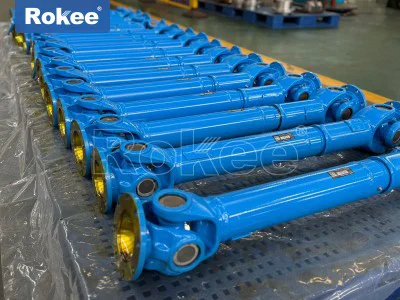
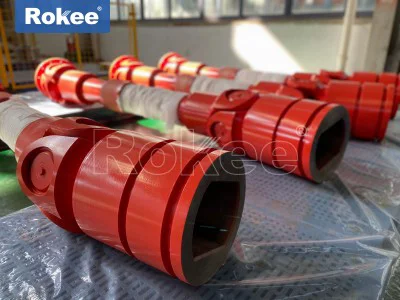
The cardan shaft, as a key transmission component, is designed to solve the problem of power transmission between non-coaxial shafts, which is precisely in line with the structural characteristics and transmission needs of PU sandwich panel machines. Unlike rigid couplings that require strict coaxial alignment between the driving shaft and the driven shaft, the cardan shaft can transmit torque and rotational motion stably even when there is an angular deviation, axial displacement, or radial offset between the two shafts. This flexibility is particularly important for PU sandwich panel machines, because the various components of the equipment, such as the uncoiler, foaming machine, double-track machine, and cutting machine, are often installed in different positions due to the layout of the production line, resulting in inevitable misalignment between the shafts of each component. Without a flexible transmission component, the power transmission will be affected by the misalignment, leading to vibration, noise, and even component wear, which will seriously affect the transmission precision and equipment service life.
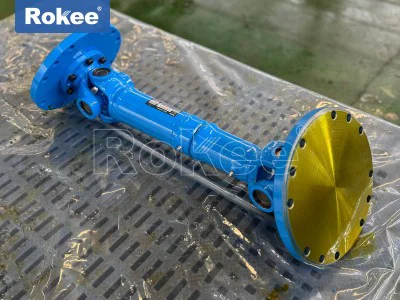
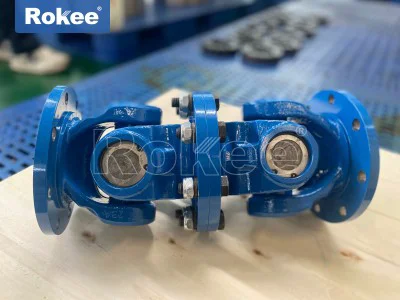
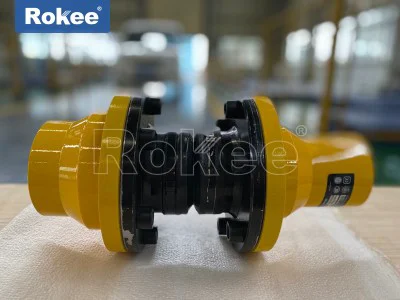
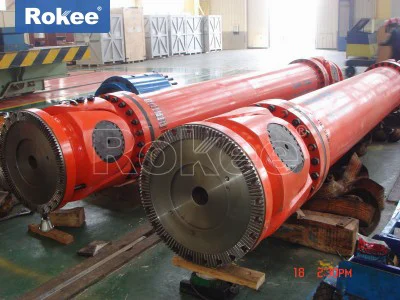
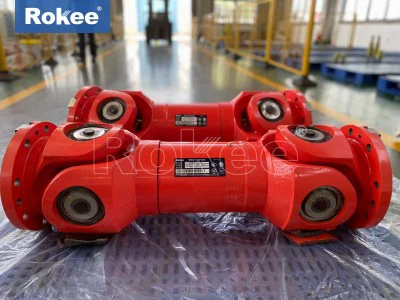
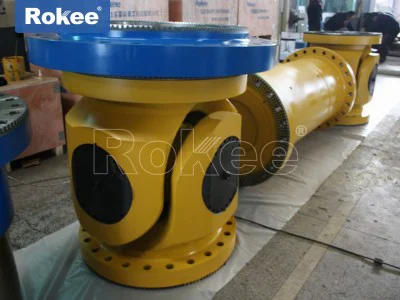
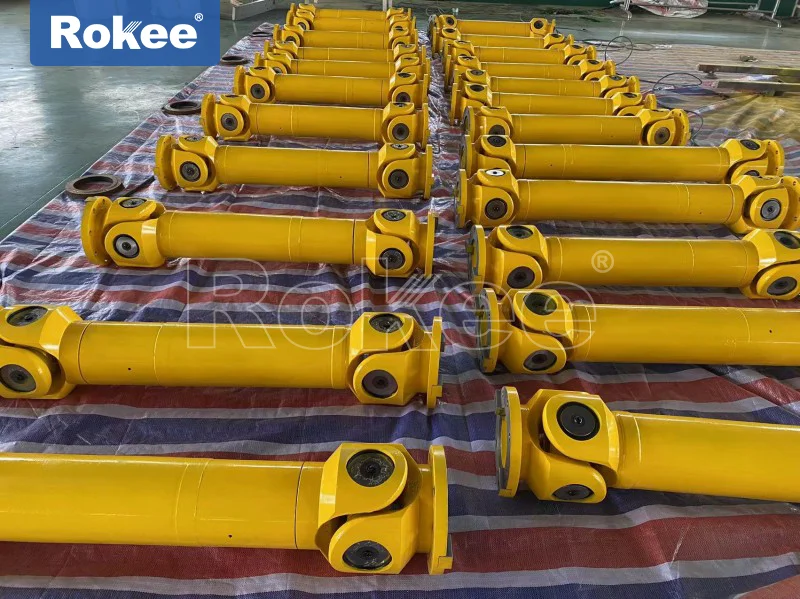
The core structure of the cardan shaft includes two yokes and a cross shaft, with bearings installed at the connection of the cross shaft and the yokes to reduce friction and ensure smooth rotation. When the driving shaft rotates, the cross shaft drives the driven yoke to rotate, and the special geometric structure of the cardan shaft allows the two shafts to deflect within an angle range of 5° to 45° while maintaining the continuity and stability of motion. This angular compensation capability enables the cardan shaft to adapt to the installation errors of PU sandwich panel machine components and the slight displacement caused by equipment operation, ensuring that the power is transmitted stably and evenly to each working unit. In addition, the cardan shaft can also compensate for axial and radial displacements, which is particularly useful in the foaming and composite molding links of PU sandwich panel machines. For example, when the double-track machine adjusts the height to control the panel thickness, the axial displacement generated by the lifting of the track can be effectively compensated by the cardan shaft, avoiding the impact on power transmission and ensuring the stability of the track operation.
The precise transmission performance of the cardan shaft is mainly reflected in its high torque transmission accuracy and low speed fluctuation. In the production process of PU sandwich panel machines, the conveying speed of surface materials, the mixing speed of polyurethane raw materials, and the running speed of the double-track machine all need to be kept stable and consistent. Even a small speed fluctuation will lead to uneven foam coating, inconsistent panel thickness, and other quality problems. The cardan shaft, through precise manufacturing processes and balance adjustment, can ensure that the speed fluctuation is controlled within a very small range, generally less than ±2% when running at a low speed, which fully meets the precise transmission requirements of PU sandwich panel machines. Moreover, the cardan shaft has strong load-bearing capacity, which can transmit large torque stably, adapting to the heavy-duty operation requirements of PU sandwich panel machines during continuous production. Whether it is the high torque required for uncoiling thick surface materials or the stable power transmission required for long-term operation of the double-track machine, the cardan shaft can meet the demand, ensuring the continuous and efficient operation of the production line.
Another important advantage of the cardan shaft in empowering PU sandwich panel machine is its excellent durability and reliability, which can reduce equipment maintenance costs and improve production efficiency. PU sandwich panel machines usually operate continuously for a long time, and the transmission components are under high load and frequent operation, which puts forward high requirements for their durability. The cardan shaft is usually made of high-strength steel or alloy materials, which have good wear resistance, corrosion resistance, and fatigue resistance, and can withstand the harsh working environment of industrial production. In addition, the structure of the cardan shaft is relatively simple, with fewer wearing parts, and regular maintenance only needs to check the bearings and lubrication status, which is convenient and fast. Compared with other transmission components that are prone to failure due to misalignment, the cardan shaft can operate stably for a long time, reducing the number of equipment shutdowns caused by transmission component failures, thus improving the overall production efficiency of the PU sandwich panel machine.
In the specific application of PU sandwich panel machines, the cardan shaft is widely used in various key transmission links, playing a key role in improving transmission precision and product quality. In the uncoiling link, the cardan shaft connects the motor and the uncoiler, transmitting power to the uncoiler stably. Due to the large volume and weight of the surface material coil, the uncoiler needs stable torque transmission to avoid uneven uncoiling speed or coil deviation. The cardan shaft can compensate for the slight misalignment between the motor shaft and the uncoiler shaft, ensuring that the uncoiler operates at a constant speed, so that the surface material is unfolded smoothly and evenly, laying a good foundation for the subsequent preheating and foam coating links. In the preheating link, the cardan shaft transmits power to the preheating roller, ensuring that the preheating roller rotates at a stable speed, so that the surface material is heated evenly. Uniform preheating can not only improve the bonding effect between the surface material and the polyurethane foam but also enhance the structural stability of the final panel. If the transmission speed is unstable, the surface material will be heated unevenly, leading to poor bonding with the foam and even cracks on the panel surface.
In the core foaming and composite molding links, the role of the cardan shaft is even more critical. The foaming machine needs to spray the mixed polyurethane raw materials evenly on the surface material at a constant speed, which requires the power transmission between the motor and the foaming pump to be precise and stable. The cardan shaft ensures that the foaming pump operates at a constant speed, so that the foam is sprayed evenly, avoiding local density unevenness of the foam core. At the same time, the double-track machine, which is responsible for shaping and curing the composite panel, relies on the cardan shaft to transmit power to the track roller. The stable operation of the track roller ensures that the composite panel is pressed evenly, and the thickness is consistent. The cardan shaft can compensate for the axial displacement generated when the track adjusts the height, ensuring that the pressure on the panel is uniform everywhere, thus improving the flatness and structural strength of the panel. In the cutting link, the cardan shaft connects the motor and the cutting machine, ensuring that the cutting blade rotates at a stable speed and moves horizontally accurately, so that the panel is cut neatly and the length error is controlled within a small range. This precise cutting is crucial for the subsequent installation and use of PU sandwich panels, as it can reduce the waste of materials and improve the construction efficiency.
The application of the cardan shaft also brings significant improvements to the energy efficiency of PU sandwich panel machines. In the process of power transmission, the cardan shaft has high transmission efficiency, generally above 95%, which means that most of the power generated by the motor can be transmitted to the working components, reducing energy loss. Compared with other transmission components with low efficiency, the cardan shaft can help PU sandwich panel machines save energy consumption, reduce production costs, and meet the requirements of green and energy-saving production. In addition, the stable operation of the cardan shaft can reduce the vibration and noise of the equipment, creating a better working environment for operators, and also reducing the impact of equipment vibration on the surrounding environment.
To ensure that the cardan shaft can continuously play its role in empowering PU sandwich panel machines, proper maintenance and maintenance are essential. Regular inspection of the cardan shaft's bearings, cross shaft, and yokes is required to check for wear, looseness, or damage. If any problems are found, they should be repaired or replaced in a timely manner to avoid affecting the transmission precision. At the same time, regular lubrication of the cardan shaft is necessary to use appropriate lubricants to reduce friction between components, extend the service life of the cardan shaft, and ensure its smooth operation. The lubricant should be selected according to the working environment and load of the cardan shaft, and the lubrication cycle should be strictly followed to avoid insufficient lubrication leading to component wear and failure. In addition, during the installation and adjustment of the equipment, the alignment of the cardan shaft should be checked to ensure that the angular deviation and displacement between the shafts are within the allowable range, so as to give full play to the transmission performance of the cardan shaft.
With the continuous development of the PU sandwich panel manufacturing industry, the requirements for equipment precision and efficiency are getting higher and higher, which also puts forward new requirements for the performance of the cardan shaft. In the future, through the continuous improvement of manufacturing technology and material science, the cardan shaft will be more precise, durable, and efficient. For example, the use of new high-strength and lightweight materials can reduce the weight of the cardan shaft, improve the transmission efficiency, and reduce the energy consumption of the equipment; the adoption of advanced processing technology can further improve the precision of the cardan shaft, reduce the speed fluctuation, and meet the more stringent transmission requirements of PU sandwich panel machines. In addition, the integration of intelligent technology into the cardan shaft will also become a development trend. By installing sensors and monitoring equipment on the cardan shaft, the real-time monitoring of its operation status can be realized, and potential faults can be predicted in advance, so as to carry out maintenance in a timely manner, reduce equipment downtime, and further improve production efficiency.
In conclusion, the cardan shaft, as a key transmission component, plays an irreplaceable role in empowering PU sandwich panel machines to achieve more precise transmission. Its unique structural advantages, such as angular compensation, high transmission precision, strong load-bearing capacity, and good durability, perfectly meet the transmission needs of PU sandwich panel machines in various links, from uncoiling and preheating to foaming, composite molding, and cutting. By ensuring stable and precise power transmission, the cardan shaft not only improves the quality and consistency of PU sandwich panels but also enhances the production efficiency of the equipment, reduces energy consumption and maintenance costs, and promotes the healthy and sustainable development of the PU sandwich panel manufacturing industry. As the industry continues to upgrade, the cardan shaft will continue to optimize and innovate, bringing more powerful support to the precision production of PU sandwich panel machines, and contributing to the development of the modern construction materials industry.