Cardan Drive Shaft Helps PIR Sandwich Panel Making Machinery Run Accurately
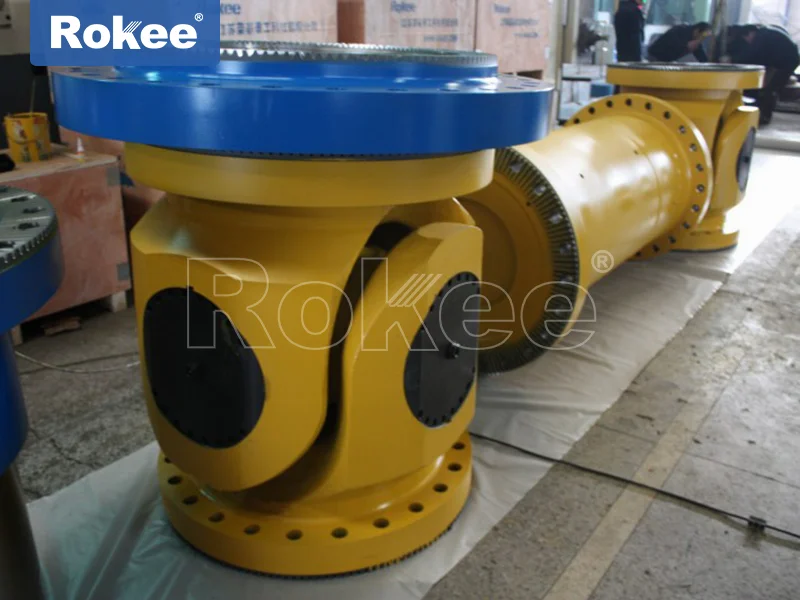
In the modern construction and industrial sectors, the demand for energy-efficient and fire-resistant building materials has been steadily rising, driving the continuous advancement of manufacturing technology for PIR (Polyisocyanurate) sandwich panels. These panels, composed of a PIR foam core sandwiched between two outer layers, are widely recognized for their excellent thermal insulation, high mechanical strength, and superior fire-retardant properties, making them indispensable in industrial buildings, cold storage facilities, public structures, and temporary constructions. The production of high-quality PIR sandwich panels relies heavily on the precise and stable operation of specialized manufacturing machinery, and among the numerous components that ensure this precision, the cardan drive shaft stands out as a critical and irreplaceable part. Its unique structural design and exceptional transmission performance enable the machinery to maintain consistent operation even under complex working conditions, directly influencing the quality, efficiency, and reliability of the entire production process.
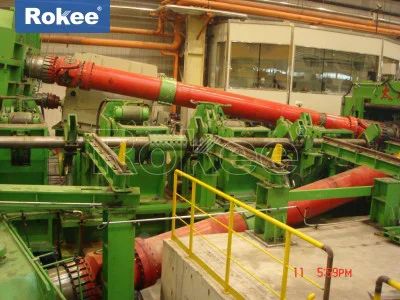
To fully understand the role of the cardan drive shaft in PIR sandwich panel making machinery, it is first necessary to grasp the working characteristics of the machinery itself. A typical PIR sandwich panel production line is a complex integrated system that combines mechanical, electrical, hydraulic, and chemical reaction technologies, consisting of multiple sequential processes such as material uncoiling, roll forming, preheating, high-pressure foaming, lamination, curing, cutting, and stacking. Each of these processes requires precise coordination and synchronized operation, as even the slightest deviation in any link can lead to defects such as uneven panel thickness, poor adhesion between the core and outer layers, foam overflow, or incorrect cutting lengths—all of which reduce product quality and increase material waste. The machinery’s transmission system, which is responsible for transferring power from the motor to each executing component, plays a decisive role in ensuring this synchronization. However, due to the limitations of the production process and the overall structure of the equipment, the driving shafts and driven shafts of different subsystems (such as the uncoiling system, roll forming system, and cutting system) are often not perfectly aligned, resulting in angular, radial, or axial misalignments. Additionally, during long-term continuous operation, the machinery generates vibration and thermal expansion, which further change the relative positions of the shafts. This is where the cardan drive shaft comes into play, as it is specifically designed to address these challenges and ensure stable and accurate power transmission.
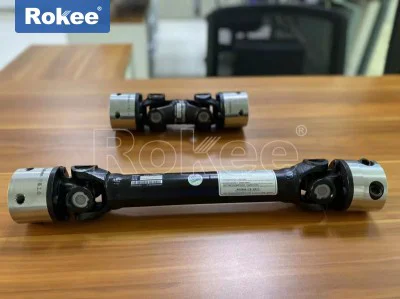
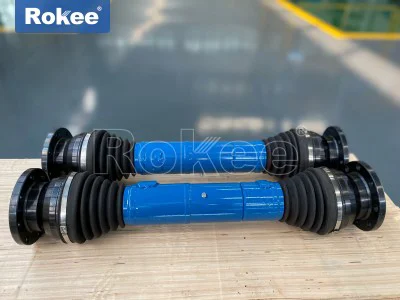
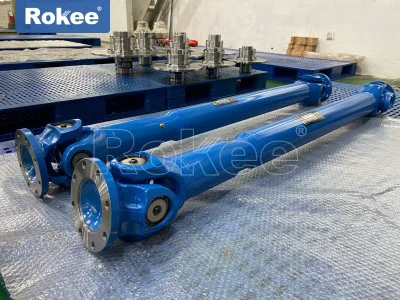
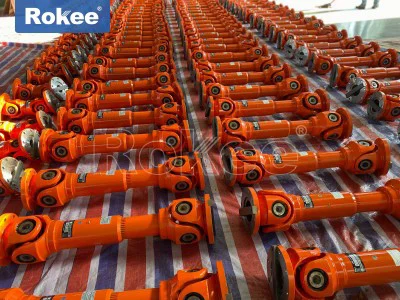
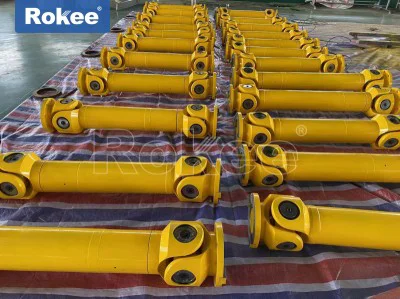
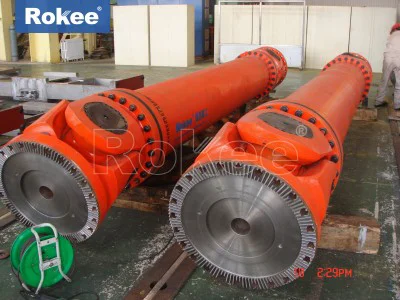
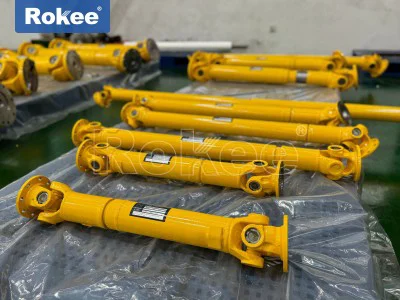
The cardan drive shaft, also commonly referred to as a universal joint drive shaft, is a mechanical transmission component that enables the transfer of rotational motion and torque between two shafts that are not coaxial. Its core structure typically includes universal joints at both ends, a splined section for length compensation, and a balanced shaft body. The universal joints, which consist of a cross shaft and two fork-shaped connectors, allow the shafts to deflect within a certain angular range—usually between 5° and 45°—while maintaining continuous and smooth motion transmission. This flexibility is crucial for PIR sandwich panel making machinery, as it compensates for the inherent misalignments between different subsystems, eliminating the stress and vibration that would otherwise occur with rigid couplings. Unlike rigid couplings that require perfect coaxial alignment, the cardan drive shaft adapts to the dynamic changes in the machinery’s operation, ensuring that power is transmitted efficiently and consistently to every component.
One of the key reasons why the cardan drive shaft is essential for the accurate operation of PIR sandwich panel making machinery is its ability to maintain constant torque and speed transmission. The production of PIR sandwich panels requires strict control over various parameters, especially during the foaming and lamination processes. The PIR foam core is formed by the reaction of polyols and isocyanates, mixed with blowing agents and other additives, which is then injected between the two outer layers under high pressure. This process requires the foaming system to operate at a stable speed to ensure uniform mixing of the foam components and consistent injection volume. Any fluctuation in speed or torque during this stage can lead to uneven foam density, voids, or overflow, which directly affects the thermal insulation performance and structural integrity of the final panel. The cardan drive shaft, with its robust design and precise transmission capabilities, ensures that the power from the motor is delivered to the foaming pump and other key components at a constant rate, minimizing fluctuations and maintaining the stability of the foaming process.
In the roll forming process, which shapes the outer layers of the sandwich panels into the desired profiles, the cardan drive shaft also plays a critical role in ensuring accuracy. The outer layers, often made of thin-gauge metal sheets such as galvanized steel or aluminum, need to be fed into the roll forming machine at a consistent speed and with uniform tension. Any deviation in the speed of the roll forming rollers can cause the metal sheets to deform, resulting in surface waviness or incorrect profile shapes. The cardan drive shaft connects the motor to the roll forming rollers, transmitting power smoothly and evenly to ensure that each roller rotates at the same speed, maintaining the integrity of the outer layer profiles. This precision is particularly important for panels used in architectural applications, where aesthetic appearance and structural consistency are key requirements.
Another important aspect of the cardan drive shaft’s contribution to the accurate operation of PIR sandwich panel making machinery is its ability to withstand heavy loads and harsh operating conditions. PIR sandwich panel production lines often operate continuously for long periods, with the transmission system subjected to high torque and constant mechanical stress. The cardan drive shaft is typically manufactured using high-grade materials such as heat-treated alloy steel, which provides exceptional strength and durability, allowing it to withstand these demanding conditions without deformation or failure. Additionally, advanced bearing systems and specialized lubricating mechanisms are integrated into the cardan drive shaft to reduce friction and wear, extending its service life and ensuring long-term reliable operation. Regular lubrication, using appropriate greases such as lithium-based extreme pressure (EP) greases that meet NLGI 1 or 2 specifications, is essential to maintain the performance of the universal joints and other moving parts, preventing premature wear and ensuring smooth operation.
The adaptability of the cardan drive shaft also makes it well-suited for PIR sandwich panel making machinery, which often needs to produce panels of different specifications to meet diverse market demands. By adjusting the parameters of the machinery, manufacturers can change the thickness of the foam core, the type of outer layers, and the overall dimensions of the panels. This adjustment requires the transmission system to be flexible enough to adapt to changes in speed and torque requirements. The cardan drive shaft, with its ability to compensate for misalignments and transmit power stably across varying operating conditions, allows the machinery to switch between different production specifications seamlessly. For example, when producing thicker panels with a more robust foam core, the machinery requires higher torque to drive the foaming system and roll forming rollers, and the cardan drive shaft efficiently transmits this increased torque without compromising stability or accuracy. This flexibility not only improves the versatility of the production line but also enables manufacturers to respond quickly to market changes and customer needs.
Vibration control is another critical factor in ensuring the accurate operation of PIR sandwich panel making machinery, and the cardan drive shaft plays a significant role in minimizing vibration. Excessive vibration in the machinery can lead to a range of issues, including inaccurate cutting, uneven foam distribution, and increased wear on other components. The cardan drive shaft’s balanced design, which involves precise machining and dynamic balancing techniques, reduces vibration during operation. The universal joints, with their articulated structure, absorb and dampen vibrations generated by the motor and other moving parts, preventing them from being transmitted to the critical components of the production line. This not only improves the accuracy of the production process but also extends the service life of the machinery, reducing maintenance costs and downtime.
In addition to its role in ensuring the accuracy of the production process, the cardan drive shaft also contributes to the overall efficiency and productivity of the PIR sandwich panel manufacturing line. By enabling stable and reliable power transmission, it reduces the likelihood of equipment breakdowns and unplanned downtime, allowing the production line to operate continuously. This is particularly important in large-scale manufacturing facilities, where even a short period of downtime can result in significant losses in productivity and revenue. The cardan drive shaft’s durability and low maintenance requirements also contribute to its cost-effectiveness, as it reduces the need for frequent repairs and component replacements. Regular inspections and maintenance, such as checking for wear or damage, ensuring proper lubrication, and maintaining balance, can further extend the service life of the cardan drive shaft and optimize its performance.
The importance of the cardan drive shaft in PIR sandwich panel making machinery is further highlighted when considering the potential consequences of its failure. A faulty or worn cardan drive shaft can lead to uneven power transmission, resulting in defects in the sandwich panels such as inconsistent thickness, delamination, or incorrect dimensions. These defects not only reduce the quality of the product but also increase material waste, as defective panels often need to be discarded. In severe cases, a failed cardan drive shaft can cause the entire production line to shut down, leading to significant downtime and financial losses. Therefore, selecting a high-quality cardan drive shaft and implementing regular maintenance practices are essential for ensuring the smooth and accurate operation of the machinery.
As the demand for PIR sandwich panels continues to grow, manufacturers are constantly seeking ways to improve the efficiency and accuracy of their production lines. The cardan drive shaft, with its unique combination of flexibility, durability, and precise transmission capabilities, is poised to play an even more important role in this evolution. Advances in material science and manufacturing technology are leading to the development of more advanced cardan drive shafts, such as those with modular designs for easier maintenance and composite materials for reduced weight and increased strength. These innovations will further enhance the performance of PIR sandwich panel making machinery, enabling the production of higher-quality panels at a lower cost.
In conclusion, the cardan drive shaft is an indispensable component in PIR sandwich panel making machinery, playing a crucial role in ensuring the accurate, stable, and efficient operation of the production line. Its ability to compensate for shaft misalignments, maintain constant torque and speed transmission, withstand heavy loads, and minimize vibration directly contributes to the quality and consistency of the final PIR sandwich panels. As the manufacturing industry continues to advance, the cardan drive shaft will remain a key factor in driving the efficiency and precision of PIR sandwich panel production, supporting the growing demand for energy-efficient and fire-resistant building materials in the global market. By understanding the importance of the cardan drive shaft and implementing proper maintenance practices, manufacturers can optimize the performance of their machinery, reduce costs, and stay competitive in an increasingly demanding industry.