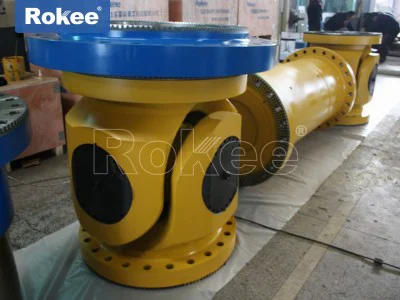
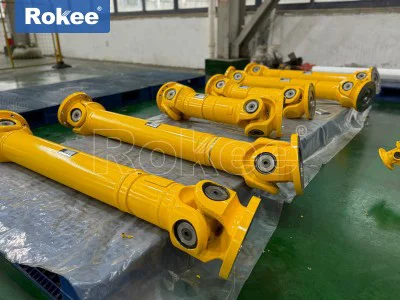
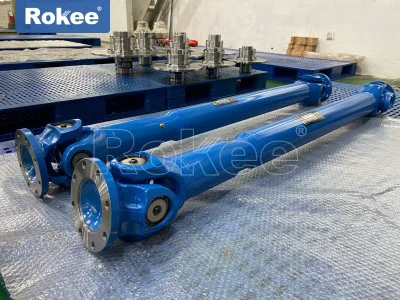
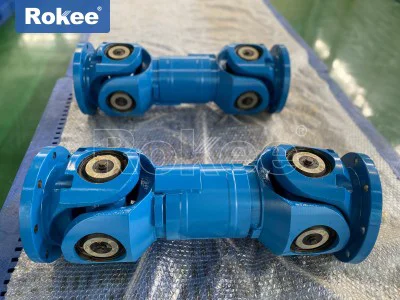
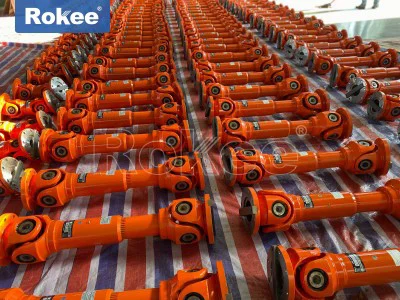
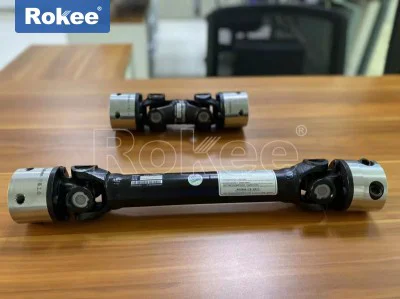
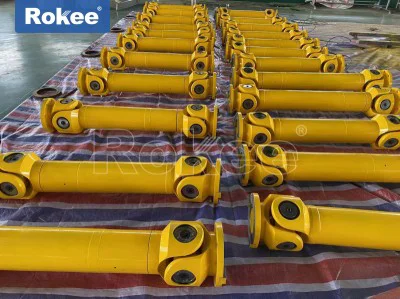
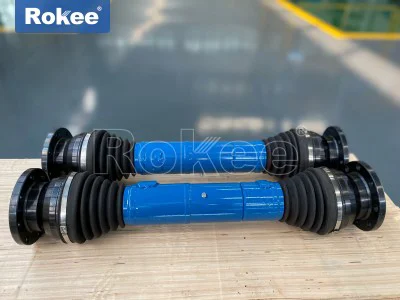
Telescopic Universal Coupling For Rolling Mill
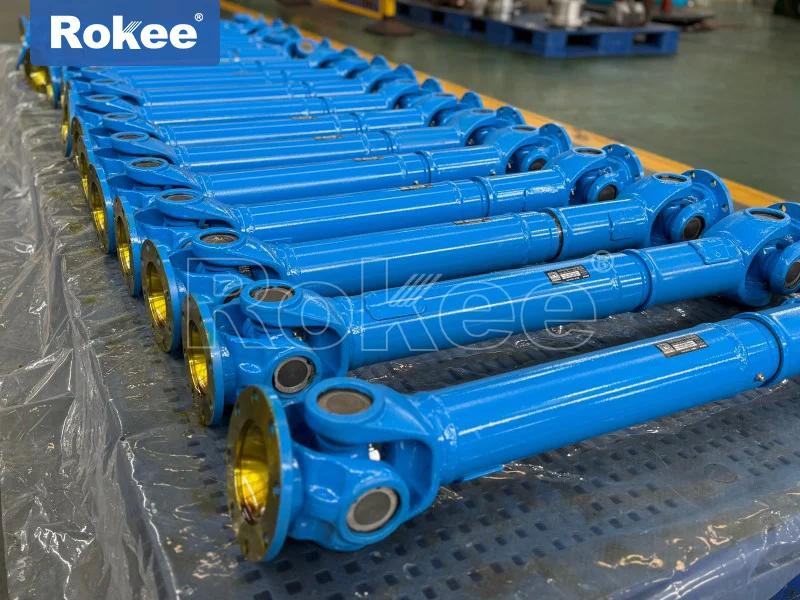
Telescopic universal couplings serve as core transmission components specially optimized for the harsh and dynamic working conditions of modern rolling mill systems, undertaking the critical task of stably transmitting torque and rotational power between driving and driven shafts in steel rolling production lines. Unlike conventional fixed couplings, this specialized integrating structure combines universal angle compensation and telescopic axial adjustment functions, perfectly adapting to the frequent shaft misalignment, axial displacement and thermal deformation generated during rolling mill operation. In high-load and continuous rolling scenarios, equipment vibration, roller gap adjustment and long-term thermal expansion will cause deviations in the relative position of transmission shafts, and ordinary transmission parts are prone to stress concentration, abrasion and transmission failure. The telescopic universal coupling effectively solves these pain points by virtue of its flexible structural design, ensuring continuous and stable power output, reducing equipment operation failure rates, and improving the overall operational efficiency and service life of rolling mill equipment. It has become an indispensable key component in cold rolling, hot rolling and various profile rolling production processes.
The structural composition of telescopic universal couplings for rolling mills is scientifically designed to adapt to heavy-duty industrial rolling environments, with each core component undertaking independent and collaborative functional responsibilities. The overall structure mainly includes universal joint fork assemblies, cross shaft transmission mechanisms, telescopic spline pairs and sealed protection components, forming a complete power transmission and displacement compensation system. The paired joint forks are forged with high-strength alloy materials, featuring excellent rigidity and impact resistance to bear the instantaneous heavy torque generated during rolling mill start-up, operation and load fluctuation. The cross shaft, as the central force-bearing and rotating connecting part, adopts a precision machined integrated structure, cooperating with high-load rolling bearings to realize flexible angle rotation between the two shafts, which can effectively compensate for angular misalignment caused by equipment installation errors and operational vibration. The telescopic spline pair composed of inner and outer spline sleeves is the core functional unit for axial adjustment, enabling free sliding and length change within a certain stroke range to adapt to axial displacement caused by roller position adjustment and equipment thermal expansion. All matching parts are equipped with professional sealing structures to isolate dust, iron oxide scale and cooling water in the rolling mill working environment, avoiding internal component abrasion and lubricant leakage, and maintaining long-term stable structural performance.
The core working principle of telescopic universal couplings focuses on dual compensation of angular deviation and axial displacement, realizing efficient and lossless power transmission under dynamic working conditions. In the actual operation of rolling mills, the transmission shaft system cannot maintain absolute coaxial alignment all the time due to mechanical vibration, load impact and thermal deformation. The universal joint structure with cross shaft transmission breaks through the transmission limitation of fixed-axis couplings, allowing a certain range of angular deflection between the driving shaft and driven shaft. When angular deviation occurs, the cross shaft and bearing assembly can flexibly rotate and adjust, evenly dispersing transmission stress and avoiding torsional deformation and local overload of the shaft body. Meanwhile, the telescopic spline mechanism works synchronously to cope with axial position changes of the shaft system. During the rolling process, the rolling roller will be adjusted vertically and horizontally according to the processing specifications of steel materials, and the equipment will produce thermal expansion and contraction after long-time high-temperature operation, resulting in axial spacing changes of the transmission shafts. The sliding fit of the inner and outer splines can automatically adapt to such axial displacement, eliminating extra axial tension and compression stress on the coupling and transmission shaft. The coordinated operation of the two mechanisms ensures that torque can be stably transmitted without dead angle and loss in complex and variable shaft position states, meeting the continuous operation requirements of rolling mills.
Telescopic universal couplings exhibit unique performance advantages that make them highly adaptable to the extreme working conditions of rolling mill production lines. First of all, they possess outstanding heavy-load torque transmission capacity, with structural strength fully optimized for the high-power and high-torque operating characteristics of rolling equipment. The high-strength forging process and precision heat treatment endow the coupling with excellent fatigue resistance and impact resistance, enabling it to withstand frequent instantaneous load impacts during rolling mill start, stop and material biting, and avoiding structural fracture and transmission failure. Secondly, the dual compensation function of angle and axial direction greatly improves the fault tolerance of the transmission system, effectively offsetting various installation and operation deviations, reducing the assembly precision requirements of the equipment, and lowering the failure probability caused by shaft system misalignment. In addition, the integrated sealing and lubrication design enables the coupling to adapt to harsh environments with high dust, high humidity and cooling water splashing in rolling workshops. The stable lubricating state reduces component friction and wear, while the sealing structure prevents external impurities from invading the interior. Moreover, the telescopic adjustable structure features strong versatility, which can be flexibly matched with different types of cold and hot rolling mills and profile rolling equipment, realizing adaptive adjustment of different installation strokes and working strokes.
The application scenarios of telescopic universal couplings cover the whole field of steel rolling production, showing irreplaceable practical value in different rolling processes and equipment configurations. In hot rolling mill production lines, the equipment works in a high-temperature environment for a long time, and the transmission shaft system is prone to obvious thermal expansion and deformation, accompanied by severe vibration and load impact during steel rolling. The telescopic and angle compensation functions of the coupling can well adapt to the thermal deformation and dynamic shaft deviation of hot rolling equipment, ensuring stable power transmission for high-temperature steel rolling. In cold rolling mill systems, which pursue high-precision rolling quality, the coupling’s stable transmission performance effectively avoids transmission jitter and torque fluctuation, ensuring the flatness and dimensional accuracy of cold-rolled steel sheets. In addition, it is also widely used in various profile rolling equipment such as angle steel, channel steel and steel pipe rolling mills. Different profile rolling processes require frequent adjustment of roller gaps and positions, and the telescopic structure can freely adjust the transmission length to adapt to equipment parameter changes. Whether it is a single-unit rolling mill with intermittent operation or a continuous rolling production line with long-term uninterrupted operation, the coupling can maintain stable working performance, effectively reduce equipment shutdown maintenance frequency, and improve the continuous production capacity of the rolling line.
Material selection and manufacturing process determine the comprehensive service performance and service life of telescopic universal couplings for rolling mills, forming a rigorous and professional production and processing system. In terms of material selection, core force-bearing components such as joint forks and cross shafts are mostly made of high-quality alloy structural steel with excellent comprehensive mechanical properties. This type of material has high tensile strength, hardness and toughness, which can resist long-term friction, impact and fatigue load in heavy-duty working environments, and is not easy to deform or damage. The spline pair components adopt precision alloy materials with high wear resistance, and the surface is processed by special strengthening processes to improve the sliding smoothness and wear resistance of the telescopic structure, avoiding jamming and excessive abrasion during long-term telescopic movement. In the manufacturing process, precision forging is adopted for integral forming of key components to ensure uniform internal material density and avoid internal defects such as pores and cracks. Subsequent finishing processes such as fine turning, grinding and gear shaping ensure the matching precision of splines, bearings and cross shaft structures. Strict heat treatment processes including quenching and tempering are implemented to optimize the hardness and toughness of components, eliminate processing internal stress, and improve the structural stability and fatigue resistance of the coupling. Each processing link is strictly controlled to ensure that the finished product can adapt to long-term high-intensity operation of rolling mills.
Daily maintenance and fault prevention of telescopic universal couplings are crucial to maintaining the long-term stable operation of rolling mill equipment and reducing production costs. In routine operation and maintenance, regular lubrication maintenance is the core link. The coupling’s internal bearing and spline sliding parts need stable lubricating oil film protection to reduce friction and wear. It is necessary to regularly check the lubrication state, supplement and replace special lubricants according to the operation cycle, and avoid dry friction and component abrasion caused by lubricant failure. Meanwhile, the sealing structure should be inspected regularly to check for aging, damage and leakage, ensuring that external dust, iron oxide and cooling water cannot enter the interior to protect internal precision components. In addition, the operating state of the coupling should be monitored in real time during equipment operation, focusing on abnormal vibration, noise and torque fluctuation. Timely inspection and adjustment of shaft system alignment and telescopic stroke can avoid long-term eccentric operation and over-telescopic limit operation. Regular disassembly and inspection of key components such as cross shafts and bearings are required to replace worn parts in time and eliminate potential faults. Scientific and standardized maintenance can effectively extend the service life of the coupling, reduce equipment failure shutdown time, and ensure the efficient and stable operation of the entire rolling mill production line.
With the continuous upgrading and intelligent development of modern rolling mill equipment, the technical optimization and development trend of telescopic universal couplings for rolling mills is becoming increasingly clear. At present, rolling production is developing towards high speed, high precision and high intelligence, which puts forward higher requirements for the transmission stability, compensation accuracy and durability of supporting coupling components. Future product optimization will focus on structural lightweight and high strength, adopting new high-performance alloy materials and optimized structural design to reduce the self-weight of components while improving load-bearing capacity, reducing equipment operation energy consumption and improving transmission efficiency. In terms of functional performance, the compensation accuracy and response sensitivity of telescopic and angle adjustment will be further improved to adapt to more precise rolling parameter adjustment and more complex dynamic shaft system changes. In addition, intelligent monitoring functions will be gradually integrated into the coupling structure, realizing real-time monitoring of operating temperature, vibration amplitude, wear degree and lubrication state, which can feed back equipment operation data in real time, facilitate predictive maintenance, and avoid sudden equipment faults. The continuous technical iteration of telescopic universal couplings will further match the development pace of modern rolling mill industry and provide more reliable core support for high-efficiency and high-quality steel rolling production.