Cardan Drive Shaft Adapts To Efficient Transmission Of Sandwich Panel Making Machinery
In the modern construction and manufacturing industry, sandwich panels have become an indispensable material due to their excellent thermal insulation, structural stability, sound insulation, and lightweight properties. These panels, composed of two outer facing materials and a core material such as polyurethane foam, rock wool, or glass wool, are widely used in external walls, roofs, cold storage facilities, prefabricated buildings, and various industrial structures. The growing demand for high-quality sandwich panels has driven the continuous upgrading of sandwich panel making machinery, which is evolving towards higher automation, faster production speed, and more stable performance. At the core of these advanced machines, the transmission system plays a decisive role in ensuring the smooth operation of the entire production line, and the cardan drive shaft, as a key component of the transmission system, has gradually become the preferred choice for efficient power transmission in sandwich panel making machinery due to its unique structural advantages and excellent adaptability.
The cardan drive shaft, also known as a universal joint drive shaft, is a mechanical component designed to transmit torque and rotational motion between two shafts that are not perfectly aligned. Unlike rigid couplings that require precise coaxial alignment of the driving and driven shafts, the cardan drive shaft can flexibly compensate for angular, radial, and axial deviations between shafts, making it highly suitable for the complex structural layout of sandwich panel making machinery. Sandwich panel production is a continuous and integrated process that involves multiple links, including uncoiling of facing materials, roll forming, preheating, core material foaming or filling, lamination, curing, and cutting. Each of these links is equipped with independent power sources and executing components, and the installation positions of these components are often not on the same axis due to the limitations of the production process and equipment structure. For example, the uncoiling device and the roll forming device are usually arranged at different heights and angles to adapt to the feeding direction of the facing materials, while the foaming system and the lamination system need to be placed in a specific position to ensure the uniformity of the core material and the bonding firmness of the panels. In such cases, the cardan drive shaft can effectively bridge the alignment gap between the shafts of different components, ensuring that power is transmitted stably and efficiently, thereby maintaining the synchronization and consistency of the entire production line.
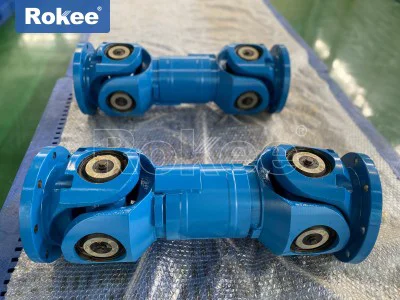
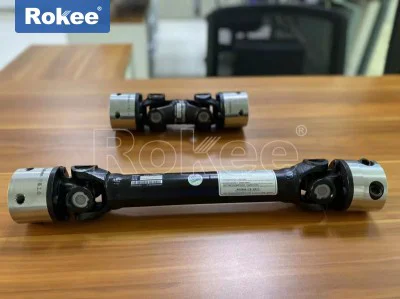
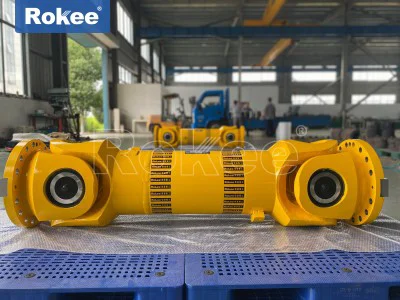
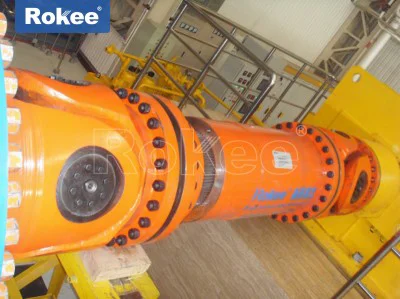
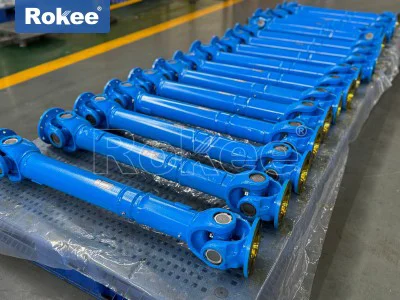
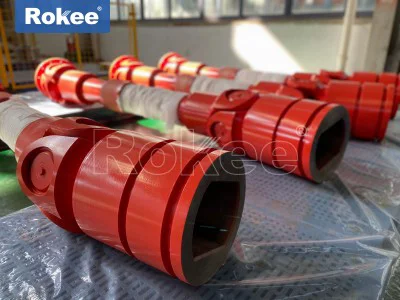
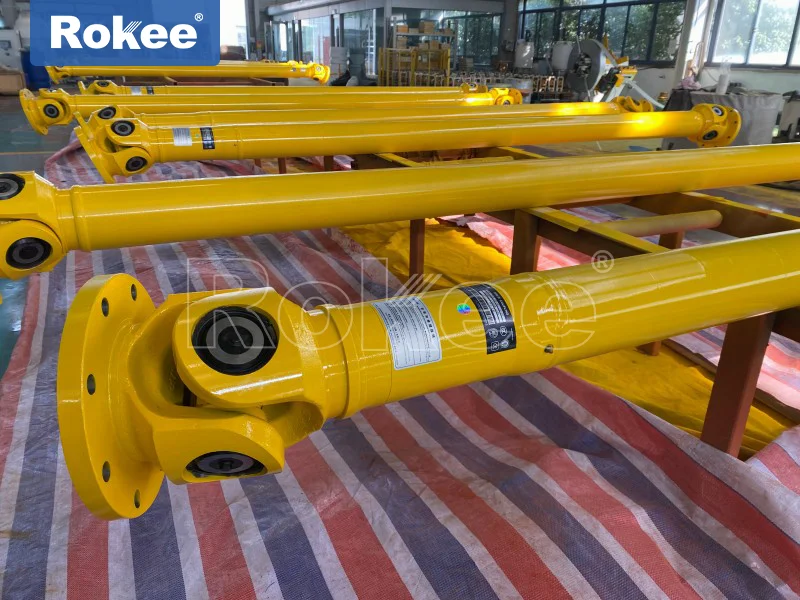
The working principle of the cardan drive shaft is based on the flexible connection of universal joints, which allows the shaft to deflect within a certain angle range while maintaining continuous torque transmission. A typical cardan drive shaft consists of universal joints at both ends, a shaft body, and connecting flanges or yokes. The universal joints, usually composed of cross shafts and fork-shaped joints, can rotate freely around the cross axis, enabling the two connected shafts to form an included angle between 5° and 45° without affecting the transmission efficiency. This angular compensation capability is particularly important for sandwich panel making machinery, as the equipment will generate slight vibrations and thermal expansion during long-term continuous operation, leading to changes in the relative position of the shafts. The cardan drive shaft can automatically adapt to these changes, avoiding excessive stress on the transmission components and reducing the risk of equipment failure. In addition, the shaft body of the cardan drive shaft is often made of high-strength alloy steel through precision machining and heat treatment processes, which enhances its load-bearing capacity and fatigue resistance, enabling it to withstand the high torque and continuous operation requirements of sandwich panel making machinery.
One of the key reasons why the cardan drive shaft is widely used in sandwich panel making machinery is its excellent adaptability to different production processes and equipment configurations. Sandwich panel making machinery has various types and specifications, including polyurethane sandwich panel production lines, rock wool sandwich panel production lines, and color steel sandwich panel production lines, each with different structural designs and production requirements. For example, the polyurethane sandwich panel production line requires precise control of the foaming process, which needs the transmission system to provide stable and uniform power to ensure the density and uniformity of the foam core. The cardan drive shaft can adjust its transmission speed and torque according to the actual production needs, ensuring that the foaming machine, mixing head, and lamination device operate in a coordinated manner. For the rock wool sandwich panel production line, which involves the transportation and compaction of bulk rock wool materials, the cardan drive shaft can withstand the impact load generated during the material transportation process, maintaining stable power transmission even under harsh operating conditions. Moreover, the modular design of modern cardan drive shafts allows for flexible adjustment of length and connection methods, making it easy to install and replace in different types of sandwich panel making machinery, reducing the difficulty of equipment maintenance and replacement.
Efficient transmission is the core requirement of sandwich panel making machinery, as it directly affects production efficiency, product quality, and energy consumption. The cardan drive shaft has significant advantages in improving transmission efficiency compared to other transmission components. Firstly, the friction coefficient of the universal joints in the cardan drive shaft is very low, which reduces energy loss during power transmission. Unlike belt drives or chain drives that have large friction losses and are prone to slipping, the cardan drive shaft transmits torque through rigid connections, ensuring that almost all the power generated by the motor is transmitted to the executing components. Secondly, the cardan drive shaft has high torsional stiffness, which can minimize angular deflection during torque transmission, ensuring that the rotating speed of the driven shaft is consistent with the driving shaft. This is particularly important for the cutting link of sandwich panel production, where precise speed control is required to ensure the cutting accuracy of the panels and avoid burrs or uneven cuts. In addition, the cardan drive shaft can operate stably at high speeds, adapting to the high-speed production needs of modern sandwich panel making machinery. With the continuous improvement of production efficiency requirements, many sandwich panel production lines have increased their production speed to 10-15 meters per minute, and the cardan drive shaft can maintain stable transmission performance under such high-speed operating conditions, providing reliable power support for the production line.
The stability and durability of the transmission system are crucial for reducing the downtime of sandwich panel making machinery and improving production efficiency. The cardan drive shaft is designed to withstand long-term continuous operation and harsh operating environments, making it highly durable and reliable. The materials used in the cardan drive shaft, such as high-strength alloy steel, have excellent mechanical properties, including high tensile strength, yield strength, and impact toughness, which can withstand the high torque and alternating loads generated during the operation of the machinery. The universal joints are equipped with high-quality bearings, such as needle roller bearings or sliding bearings, which have good wear resistance and lubrication performance, reducing the wear of the components during operation. In addition, the surface of the cardan drive shaft is often treated with anti-corrosion and anti-rust processes, such as galvanization or painting, to prevent corrosion caused by dust, moisture, and other environmental factors in the production workshop. These design and manufacturing measures ensure that the cardan drive shaft has a long service life, reducing the frequency of maintenance and replacement, and thus reducing the production cost of enterprises.
In the actual operation of sandwich panel making machinery, the cardan drive shaft also plays an important role in improving product quality. The production of sandwich panels requires strict control of the thickness, flatness, and bonding strength of the panels, which all depend on the stable operation of the transmission system. If the transmission system is unstable, it will lead to uneven speed of the production line, resulting in inconsistent thickness of the panels, uneven bonding between the facing materials and the core material, and even damage to the panels. The cardan drive shaft ensures the stable transmission of power, making each component of the production line operate in a synchronized manner. For example, in the lamination link, the cardan drive shaft transmits power to the lamination rollers, ensuring that the pressure applied to the panels is uniform and stable, which enhances the bonding firmness of the facing materials and the core material, and improves the structural stability of the sandwich panels. In the roll forming link, the stable power transmission of the cardan drive shaft ensures that the facing materials are formed accurately according to the designed shape, avoiding deformation or wrinkling of the materials, thus improving the appearance quality of the sandwich panels.
With the continuous development of intelligent manufacturing and industrial automation, sandwich panel making machinery is also moving towards intelligence and integration, which puts higher requirements on the transmission system. The cardan drive shaft, as a key component of the transmission system, is also constantly being upgraded and improved to adapt to the new development needs. Modern cardan drive shafts are often equipped with intelligent monitoring devices, such as torque sensors and vibration sensors, which can real-time monitor the operating status of the shaft, including torque, speed, vibration, and temperature. These monitoring data can be transmitted to the control system of the production line, allowing operators to timely find potential faults and take maintenance measures, avoiding serious equipment failures and production interruptions. In addition, the design of the cardan drive shaft is becoming more and more lightweight and compact, which not only reduces the overall weight and volume of the machinery but also improves the space utilization of the production workshop, facilitating the integration and layout of the production line.
Another important advantage of the cardan drive shaft in sandwich panel making machinery is its strong adaptability to different working environments. Sandwich panel production workshops often have complex working conditions, including high temperature, high humidity, dust, and vibration. The cardan drive shaft is designed to withstand these harsh conditions, ensuring stable operation under various environmental factors. For example, in the foaming link of polyurethane sandwich panels, the workshop temperature is usually maintained at 40-60℃ to promote the foaming reaction, and the cardan drive shaft can maintain stable transmission performance at this temperature without being affected by thermal expansion. In workshops with high dust content, the sealed structure of the universal joints prevents dust from entering the internal components, avoiding wear and failure caused by dust. The vibration resistance of the cardan drive shaft also ensures that it can operate stably even when the machinery generates large vibrations during operation, reducing the impact of vibration on the transmission system and the entire production line.
The application of the cardan drive shaft in sandwich panel making machinery also brings significant economic benefits to enterprises. By improving transmission efficiency and reducing energy loss, the cardan drive shaft can reduce the energy consumption of the production line, thereby reducing the production cost of enterprises. The high durability and reliability of the cardan drive shaft reduce the frequency of maintenance and replacement, saving maintenance costs and downtime. In addition, the stable operation of the transmission system ensures the consistency of product quality, reducing the number of defective products, and improving the competitiveness of enterprises in the market. With the increasing demand for sandwich panels in the construction industry, enterprises need to improve production efficiency and product quality to meet market demand, and the cardan drive shaft, as an efficient and reliable transmission component, provides strong support for enterprises to achieve this goal.
In conclusion, the cardan drive shaft has become an indispensable key component in the transmission system of sandwich panel making machinery due to its excellent adaptability, high transmission efficiency, stability, and durability. Its unique structural design allows it to flexibly compensate for the alignment deviation between shafts, adapting to the complex structural layout of sandwich panel making machinery. The high-strength materials and precision manufacturing processes ensure that it can withstand high torque and long-term continuous operation, providing stable power support for the production line. With the continuous upgrading of sandwich panel making machinery towards intelligence and high efficiency, the cardan drive shaft will also continue to be optimized and improved, playing a more important role in promoting the efficient and stable development of the sandwich panel production industry. Whether in the production of polyurethane sandwich panels, rock wool sandwich panels, or other types of sandwich panels, the cardan drive shaft has proven to be a reliable and efficient transmission solution, contributing significantly to the improvement of production efficiency, product quality, and economic benefits of enterprises.