Universal Joint Coupling Supplier
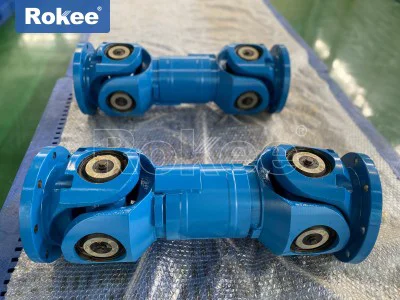
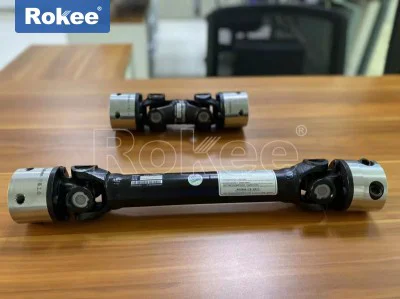
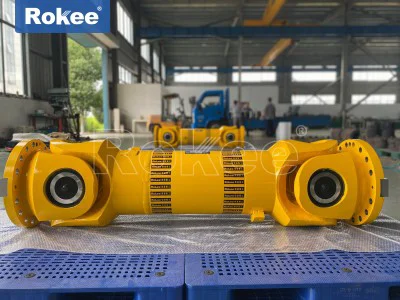
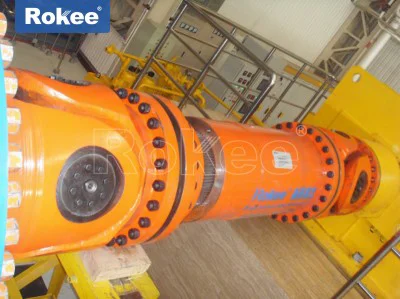
The universal joint coupling remains one of the most versatile mechanical transmission components available to modern engineering projects, and a capable universal joint coupling supplier serves as a critical partner for any operation that relies on controlled torque transfer across misaligned shafts. Unlike rigid couplings that demand near-perfect shaft alignment and can suffer premature breakage when movement or angular offset occurs, universal joint couplings are engineered to transmit rotational force while accommodating angular, axial, and minor radial displacement between connected shafts. This fundamental design advantage makes them essential wherever equipment frames shift under load, thermal expansion alters component positions, or assembly tolerances create unavoidable misalignment. A competent supplier understands that the true value of these components extends far beyond simple manufacturing. Their role begins long before production starts, as technical teams work to interpret customer operational conditions, assess dynamic load cycles, vibration levels, and environmental exposure that will shape the final product design. Many industrial buyers underestimate how much operating variables affect service life; continuous shock loads, abrasive dust, moisture, or extreme temperature swings can degrade a poorly selected universal joint coupling quickly, even if static torque requirements appear manageable. Suppliers bridge this knowledge gap by translating practical field conditions into material choices, structural adjustments, and lubrication recommendations. Without this collaborative engineering support, customers risk unexpected downtime, frequent component replacement, and cascading damage to expensive connected machinery. The most trusted suppliers view themselves not just as part vendors, but as transmission solution advisors who help clients match the right coupling configuration to the unique demands of each application.
Selecting a universal joint coupling supplier requires careful evaluation of engineering capacity, because product performance originates from thoughtful design rather than generic stock parts alone. Each universal joint coupling relies on carefully matched yokes, cross assemblies, bearing surfaces, and sealing structures to distribute torque evenly and minimize friction during cyclic rotation. A supplier with strong internal engineering capability can adjust these core features for light-duty precision motion or heavy-duty continuous operation, balancing compact size, rotational smoothness, and load resistance according to customer needs. Engineering teams analyze bending stress, contact pressure on bearing surfaces, and fatigue performance over millions of rotation cycles to identify potential failure points before production begins. They also explore ways to reduce backlash and vibration, which are common concerns in automation and precision processing systems. In many cases, customers present only partial operational data, leaving the supplier’s engineers to ask targeted questions about rotation speed, peak torque spikes, movement range, and maintenance access. This consultative approach prevents over-specification, which raises unnecessary material usage, and under-specification, which leads to early component failure. Even for non-custom orders, skilled suppliers maintain a broad portfolio of structural variants, including single joint, double joint, and telescopic formats, allowing customers to select pre-developed designs that closely match their operating profile. The depth of this engineering expertise often separates reliable long-term suppliers from basic resellers who simply ship off-the-shelf units without technical context.
Material selection stands as another core competency of a professional universal joint coupling supplier, as material properties directly determine wear resistance, strength, impact tolerance, and long-term reliability under varying working environments. Different alloy formulations respond uniquely to repeated mechanical stress, corrosion, and temperature fluctuation, and experienced suppliers select base materials based on the intended operating environment rather than relying on a single material option for all orders. Components built for heavy load scenarios use materials with high tensile strength and resistance to fatigue cracking, while versions intended for humid or chemically active environments prioritize corrosion resistance. After raw material selection, thermal treatment processes refine surface hardness and internal toughness, a delicate balance that prevents surface wear without making parts brittle and prone to sudden fracture under shock loading. Machining surfaces must also be finished with controlled precision, as rough contact areas accelerate bearing wear and generate excess heat during rotation. Suppliers carefully track raw material consistency, because subtle variations in material composition can create uneven performance across batches. Many projects combine multiple material types within a single assembly, pairing hardened contact surfaces with ductile yoke structures to absorb sudden load shocks. A knowledgeable supplier will also explain the trade-offs inherent to each material path, outlining maintenance expectations and service life trends for each option, so buyers can make informed decisions aligned with their operational priorities and maintenance schedules.
The manufacturing workflow maintained by a universal joint coupling supplier directly shapes dimensional accuracy, assembly consistency, and overall product uniformity across batch production. Production begins with raw material preparation, followed by forming or machining to shape yokes, cross pieces, and housing structures. Modern machining equipment delivers tight dimensional control on critical mating surfaces, ensuring that bearing seats and connection interfaces fit together smoothly without binding or excessive play. After machining, thermal treatment and surface finishing steps modify material characteristics, followed by cleaning to remove residual debris that could damage bearing assemblies once the coupling enters service. Assembly is handled by trained technicians who verify component fitment, install sealing elements, and apply appropriate lubricant for the intended operating conditions. Each manufacturing phase includes routine checks to catch dimensional drift, surface defects, or assembly errors before units move to final testing. Suppliers must balance flexible small-batch production for prototype or custom requests with efficient large-batch manufacturing for recurring bulk orders. This dual capability supports customers at different project stages, from initial equipment prototyping through full-scale production deployment. A well-organized production layout also reduces lead time variability, helping customers plan equipment assembly and maintenance shutdowns with greater certainty. Inconsistent manufacturing control creates subtle dimensional differences between units, which can lead to uneven vibration, accelerated wear, and unpredictable service life when couplings are installed side by side on identical machines.
Rigorous product testing is embedded within the workflow of a reputable universal joint coupling supplier, serving to validate design assumptions and confirm real-world performance before products reach end users. Testing regimes cover multiple performance dimensions, including static torque capacity, dynamic cyclic loading, rotational smoothness, resistance to angular movement, and sealing integrity under fluctuating environmental conditions. Dynamic cycle testing simulates thousands of operating cycles to reveal fatigue weaknesses that may not appear in static load checks. Sealing tests evaluate how well assemblies block contaminants from entering bearing areas, a critical feature in dusty, wet, or outdoor operating environments. Test data is recorded and reviewed by engineering teams to identify design refinements. For custom developed couplings, bespoke test routines may be created to replicate the exact load and movement patterns described by the customer. Testing also helps suppliers understand failure modes, allowing iterative improvements to designs and manufacturing processes over time. It is important to note that testing is not a one-time activity limited to new product launches. Ongoing sampling from regular production batches ensures that manufacturing quality does not drift as production runs continue. When test results reveal performance gaps, suppliers adjust machining parameters, material treatments, or assembly procedures. This commitment to continuous validation reduces the likelihood of unexpected field failures and builds confidence for customers operating equipment in high-stakes environments where unplanned shutdowns carry substantial operational costs.
Customization capability represents a major advantage offered by leading universal joint coupling suppliers, as many mechanical systems cannot rely entirely on standard product dimensions and configurations. Customization may involve adjusting overall dimensions, bore sizes, connection interface geometry, angular movement limits, or modifying sealing and lubrication arrangements to fit constrained installation spaces or unusual operating conditions. The process typically starts when customers share technical drawings, dimensional constraints, torque and speed parameters, and environmental details. Supplier engineers then evaluate feasibility, propose design revisions where needed, and create prototype units for validation. Prototyping allows customers to test fitment and basic operation before committing to full production runs. Some applications require compact profiles to fit inside tight equipment housings, while others demand extended telescopic travel to accommodate large axial movement during operation. Custom work can also include special surface treatments to resist specific corrosive agents found in certain processing environments. Suppliers manage customization efficiently by building modular design frameworks that reduce repeated engineering effort for similar modified units. Communication is central throughout the custom development cycle, with regular updates on design progress, prototype status, and anticipated lead times. Successful custom projects depend on clear exchange of technical information between customer engineering teams and supplier specialists, ensuring that every functional requirement is captured and addressed within the final coupling design.
Application expertise separates accomplished universal joint coupling suppliers from general component resellers, as deep familiarity with diverse operating environments allows them to recommend optimal configurations for a wide spectrum of machinery systems. Universal joint couplings transfer power in equipment ranging from light automation machinery to heavy rotating equipment, each setting bringing unique load patterns and environmental challenges. In mobile machinery systems, couplings must absorb vibration and repeated shock loads while maintaining reliable power transfer during frame movement. In processing equipment, they often operate within environments filled with fine particulate matter that can quickly wear bearing components if sealing is inadequate. Automated handling systems require smooth rotation with minimal backlash to preserve positioning accuracy, while pumping and compression equipment must sustain steady torque transfer over long continuous run times. Each application imposes distinct priorities: some prioritize compact footprint, others low maintenance, extended service intervals, or quiet operation. Suppliers draw on accumulated field experience to recognize hidden challenges within each use case, such as resonance risks at specific rotation speeds or thermal expansion effects on shaft spacing. They can also advise on installation best practices, including proper alignment setup, lubrication intervals, and routine inspection points to maximize component service life. This broad application knowledge helps customers avoid common pitfalls that arise when selecting transmission components based solely on peak torque ratings without considering real-world operating dynamics.
After-sales and technical support form an essential part of the service package delivered by a professional universal joint coupling supplier, extending value well beyond the moment of product delivery. Even well-designed components require proper installation, periodic inspection, and maintenance to achieve their full service life. Supplier technical teams provide guidance on assembly procedures, lubricant selection, and maintenance schedules tailored to each coupling design and operating environment. When customers encounter abnormal vibration, temperature rise, or unusual noise after installation, support specialists help diagnose root causes, distinguishing issues originating from coupling performance versus misalignment, improper mounting, or problems elsewhere in the drive train. Support also includes spare part planning, helping customers identify which wear components should be stocked to minimize downtime during maintenance events. For custom projects, documentation detailing assembly geometry and maintenance requirements is provided alongside finished units. Responsive technical communication becomes especially valuable during equipment commissioning phases, when small fitment or setup issues can delay full system startup. Reliable suppliers maintain knowledge archives from previous projects, enabling faster troubleshooting and solution development for recurring operational challenges. This ongoing partnership mindset helps customers build more robust maintenance strategies and reduces total ownership costs over the equipment lifecycle, rather than focusing only on initial component acquisition.
Supply chain stability and production flexibility are key considerations when evaluating a universal joint coupling supplier, particularly for customers managing long-term equipment programs and spare part inventories. Stable supply operations ensure consistent product quality and predictable lead times across repeated orders, whether the customer needs small prototype quantities, scheduled recurring shipments, or emergency replacement units. Reliable suppliers maintain carefully managed stock of commonly used base components and semi-finished parts, which shortens lead times for standard configurations while preserving capacity for custom machining work. They also plan raw material inventory to buffer against supply fluctuations, avoiding sudden production interruptions that delay customer equipment builds or maintenance work. Production scheduling systems balance incoming orders across standard and custom lines to prevent bottlenecks, and clear communication around lead time estimates helps customers coordinate project timelines effectively. Flexibility also supports adjustment of order quantities as project plans evolve, accommodating scaling from initial pilot deployment to full production rollout. Suppliers with resilient operations can sustain consistent output over extended periods, which is critical for customers who rely on identical replacement parts many years after original equipment manufacture. Consistent component interchangeability across production batches simplifies maintenance planning and reduces the need for repeated fitment testing when replacing worn couplings in field equipment.
The long-term partnership potential between a customer and a universal joint coupling supplier emerges when both sides prioritize collaborative problem-solving, continuous improvement, and a shared focus on reliable mechanical transmission. Over successive projects, suppliers build understanding of a customer’s equipment design philosophy, operating environments, and performance priorities, allowing recommendations to become more targeted and efficient with each new requirement. Feedback from field performance is collected and reviewed internally, feeding design refinements that improve future product generations. Customers benefit from this cycle of improvement through enhanced component durability, reduced maintenance frequency, and fewer unexpected drive-train disruptions. A strong supplier relationship also supports innovation in equipment design, as engineering teams work together to explore new coupling layouts that enable more compact machinery designs or higher operating efficiency. This collaborative approach moves procurement beyond simple transactional purchasing. Instead of merely ordering mechanical parts, customers gain access to accumulated engineering insight that strengthens the overall reliability of their mechanical systems. In the end, the greatest benefit of partnering with a capable universal joint coupling supplier is the confidence that power transmission connections will perform steadily through variable operating conditions, supporting uninterrupted equipment operation and lowering the total cost of ownership across the full service life of industrial machinery.