Cardan Drive Shaft For Rolling Mill

Cardan drive shafts stand as a core transmission component tailored for rolling mill systems, serving as the vital bridge between power drive units and rolling rollers in metal rolling production. Unlike conventional rigid transmission shafts that rely on strict coaxial alignment, this specialized mechanical part is engineered to adapt to complex operating deviations unique to rolling mill equipment, including angular misalignment, axial displacement, and radial offset generated during continuous production. In high-intensity rolling environments featuring heavy load impact, frequent speed changes, and thermal deformation of mechanical structures, the cardan drive shaft stably transmits torque and rotational power while buffering mechanical vibration and impact force. It effectively solves the transmission failure problems caused by structural deformation and position deviation of rolling mill equipment during long-term operation, guarantees the continuity and uniformity of metal rolling processing, and lays a solid foundation for the efficient, stable, and safe operation of the entire rolling production line, becoming an indispensable key part of modern metallurgical rolling machinery.
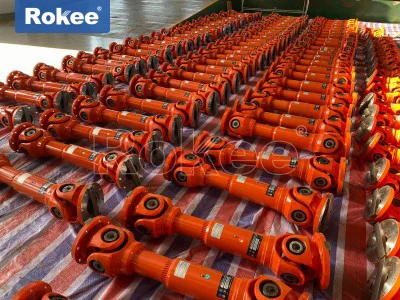
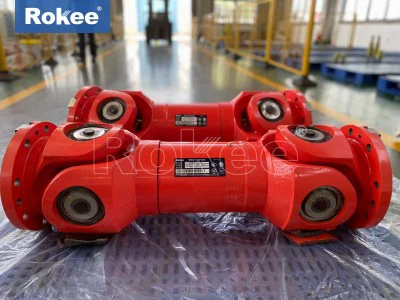
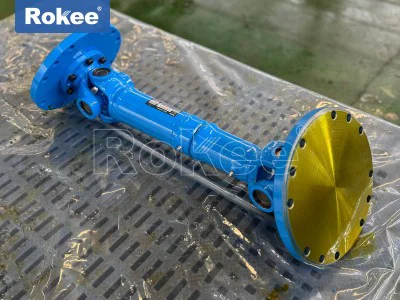
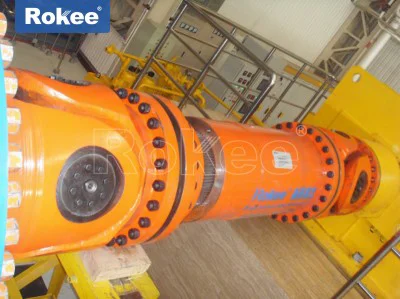
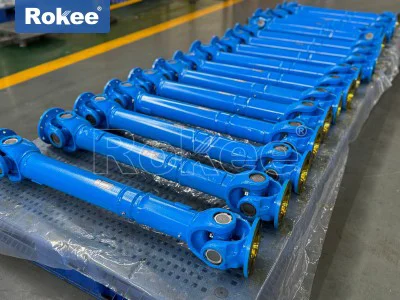
The structural design of cardan drive shafts for rolling mills is highly specialized and optimized to adapt to the harsh working conditions of rolling production, with each core component undertaking distinct and critical functional responsibilities. The overall structure mainly consists of universal joint assemblies, intermediate shaft bodies, and connecting flange structures, forming a complete flexible transmission system. The universal joint, as the core functional unit, adopts a cross-shaped hinge structure, which enables the drive shaft to realize multi-angle flexible rotation and displacement compensation. This structural feature allows the equipment to maintain stable power transmission even when the driving end and driven end produce angle deviations due to roller adjustment, equipment vibration, or thermal expansion. The intermediate shaft body is usually designed with a hollow structure, which effectively reduces the overall weight of the component while ensuring high structural rigidity, avoiding excessive inertial resistance during high-speed operation and improving transmission sensitivity. The connecting flange adopts an integrated forging structure with high fitting precision, which ensures tight connection with rolling mill power components, eliminates connection gaps, and prevents torque loss and abnormal vibration during operation. All structural parts are tightly matched and coordinated, forming a durable and efficient transmission structure that adapts to the variable working states of rolling mills.
Material selection is the key factor determining the service performance and service life of rolling mill cardan drive shafts, and all raw materials are selected based on the extreme working characteristics of rolling production. Rolling mill equipment bears continuous heavy torque, frequent impact loads, and long-term high-temperature radiation in the production process, so the drive shaft materials must have excellent comprehensive mechanical properties. The main shaft body is mostly made of high-strength alloy steel with good toughness and fatigue resistance, which can resist long-term alternating load friction and mechanical fatigue damage, and avoid shaft body deformation or fracture under heavy load. The core cross shaft and hinge parts of the universal joint adopt carburized and quenched high-hardness steel materials, which enhance surface wear resistance and impact resistance, reducing abrasion and clamping stagnation caused by frequent flexible rotation. The connecting flange and fastener parts are made of high-tensile structural steel to ensure stable connection strength under high vibration and high torque conditions. In addition, the surface of key components is treated with anti-oxidation and anti-corrosion processes to adapt to the dusty and high-temperature working environment of rolling workshops, effectively delaying component aging and failure, and ensuring long-term stable operation of the drive shaft.
The core working principle of the cardan drive shaft for rolling mills lies in its flexible torque transmission and displacement compensation capability, which fundamentally makes up for the defects of rigid transmission components in industrial rolling scenarios. In the rolling mill transmission system, the power output by the motor and reducer needs to be stably transmitted to the rolling rollers to drive the continuous rolling of metal materials. During the actual production process, the rolling rollers will produce tiny position changes and angle deviations due to equipment debugging, material extrusion force, and thermal expansion and contraction of metal structures. Traditional rigid shafts cannot adapt to such deviations, which will lead to increased transmission resistance, component wear, and even equipment jamming. The universal joint structure of the cardan drive shaft can flexibly adjust the transmission angle in real time according to the position change of the rollers, maintain constant torque transmission efficiency, and compensate for axial and radial displacement errors in the transmission process. This flexible working mode not only ensures the synchronization of power output and roller operation but also disperses and buffers the instantaneous impact force generated during material feeding and rolling, protecting the entire transmission system from impact damage.
Cardan drive shafts exhibit irreplaceable application advantages in various types of rolling mill production lines, covering hot rolling, cold rolling, and special material rolling scenarios. In hot rolling production, the equipment is in a high-temperature environment for a long time, and the mechanical structure is prone to thermal deformation and position offset. The good displacement compensation performance of the cardan drive shaft can effectively adapt to structural changes caused by temperature differences, ensuring continuous and stable power transmission for high-temperature rolling. In cold rolling processes with high precision requirements, the drive shaft can maintain low-vibration and low-jitter transmission status, avoid roller rotation deviation caused by transmission fluctuation, and improve the dimensional accuracy and surface quality of finished metal products. For heavy-duty rolling mills that process thick metal blanks, the high torque bearing capacity of the cardan drive shaft can withstand ultra-heavy load impact, ensuring stable operation under high-strength working conditions. Moreover, its compact structural design is suitable for the narrow installation space of rolling mill equipment, realizing efficient power transmission without occupying excessive equipment space, and improving the overall integration and operational efficiency of the rolling production line.
Daily maintenance and scientific inspection are crucial to extending the service life and maintaining stable performance of rolling mill cardan drive shafts, forming a complete set of standardized operation procedures suitable for industrial production. In routine production management, regular lubrication of the universal joint hinge and rotating parts is the core maintenance work, which can reduce friction and wear between moving parts, avoid dry friction damage and abnormal noise, and ensure flexible rotation of the universal joint. It is necessary to regularly check the tightness of flange connecting fasteners to prevent bolt loosening caused by long-term equipment vibration, which may lead to transmission deviation and torque loss. Meanwhile, staff need to observe the surface state of the shaft body regularly to check for fatigue cracks, deformation, or surface abrasion, and timely handle minor defects to avoid expanded damage affecting production safety. In addition, regular cleaning of dust and oxide scale attached to the drive shaft surface and moving parts can prevent foreign matter from entering the fitting gap, ensuring the precision of flexible movement. Scientific maintenance can effectively reduce component failure rate, avoid unplanned shutdown losses, and improve the continuous operation efficiency of rolling mill equipment.
Common failure forms and targeted optimization solutions of rolling mill cardan drive shafts provide important support for improving the reliability of rolling production systems. In long-term industrial operation, the most common failures include universal joint wear, shaft body fatigue deformation, and connection loosening. Universal joint wear is mostly caused by insufficient lubrication or long-term overload operation, which will lead to flexible rotation jamming and reduced transmission efficiency. Shaft body fatigue deformation usually occurs after long-term bearing of alternating heavy loads, resulting in shaft body bending and torque transmission instability. Connection loosening is mainly caused by long-term mechanical vibration, leading to inconsistent transmission accuracy of the equipment. For these common problems, targeted optimization measures can be adopted in actual production, including upgrading high-performance lubrication systems, formulating scientific load operation standards, and optimizing component connection structures. At the same time, combining the operating frequency and load characteristics of different rolling mills to customize the maintenance cycle can effectively reduce failure probability and maintain the long-term stable working performance of the drive shaft.
With the continuous upgrading of modern metallurgical rolling technology, the performance optimization and development trend of rolling mill cardan drive shafts are gradually moving towards high efficiency, high durability and intelligent adaptation. Modern rolling production is developing in the direction of high-speed, high-precision and heavy-duty, which puts forward higher requirements for the torque bearing capacity, displacement compensation accuracy and fatigue resistance of drive shafts. In terms of structural optimization, the integrated lightweight design is gradually popularized, which further reduces transmission inertia while ensuring structural strength and improves the dynamic response speed of the rolling system. In terms of material technology, new high-strength and wear-resistant alloy materials are continuously applied to improve the adaptability of components to extreme working conditions. In addition, the combination of precision processing technology and dynamic balance calibration technology effectively reduces transmission vibration and improves the stability and accuracy of power output. In the future, with the integration of intelligent monitoring technology, the cardan drive shaft will realize real-time monitoring of operating state, fault early warning and adaptive adjustment, providing more reliable core support for the intelligent and efficient development of modern rolling mill production lines.